
AI
Alpha School’s Greenwich Campus Is Opening in New York
Alpha School is selling a $65,000 Greenwich campus in Port Chester, N.Y., while its East Elm Street file stays a pre-application.

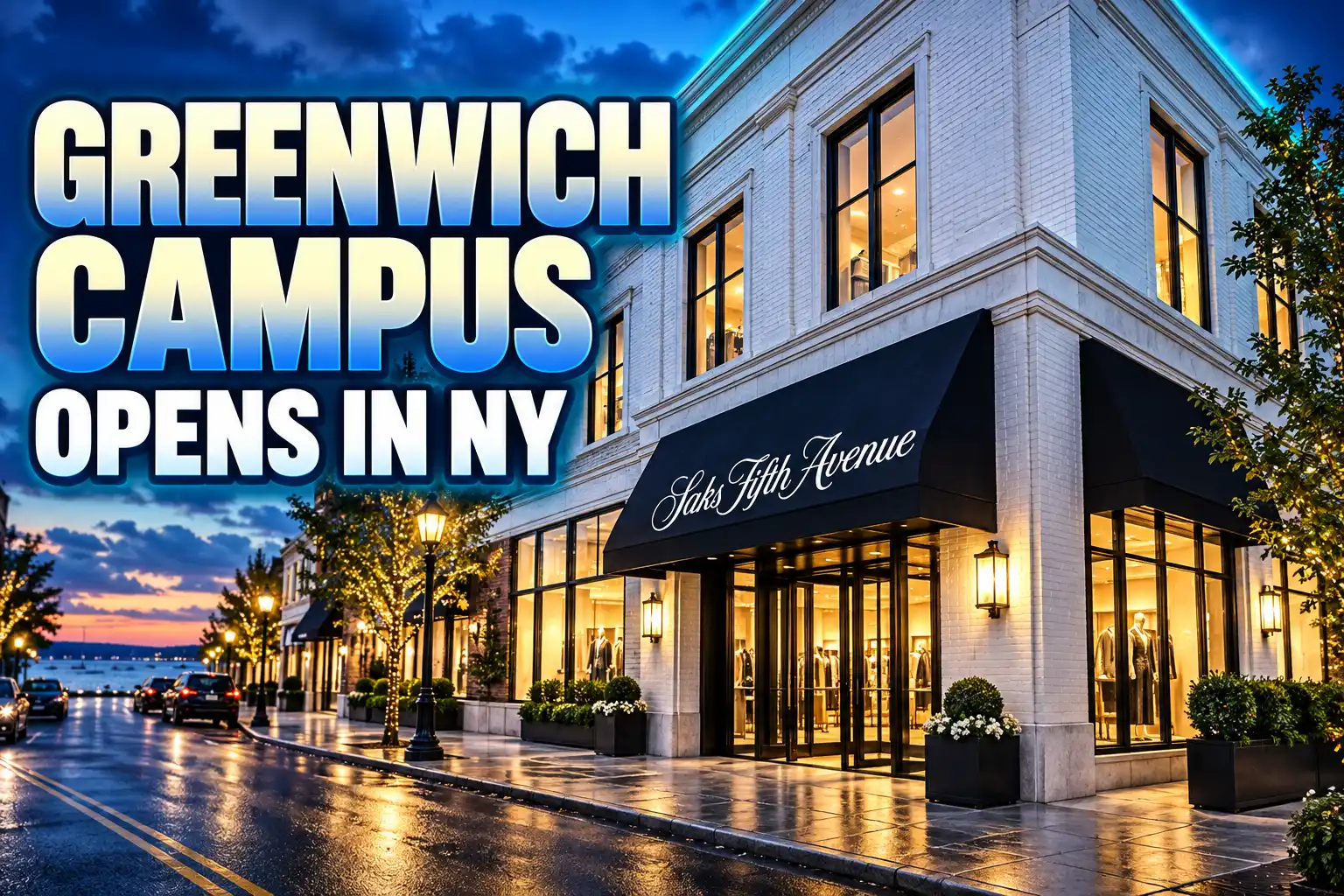
Alpha School’s Greenwich campus is now listed at 575 King Street in Port Chester, N.Y., at $65,000 a year. The Connecticut site it filed in July, 20 East Elm Street, is still a pre-application on the town list.
In August the Austin chain put Greenwich on a national fall roster and kept selling the town name. The lease it is advertising sits across the state line.
A Pre-Application Still Sits on East Elm
Attorney William Haslun filed for Alpha in July, asking Greenwich Planning and Zoning to change 20 East Elm Street from retail to a school through eighth grade. The school would take the first floor. Haslun wrote that Alpha “anticipates having a maximum of 10 employees on site upon reaching full student enrollment,” with students dropped off, picked up, on a bus, or walking.
The pre-application puts the building at 17,669 square feet and the school’s slice at about 9,220 square feet. School use is allowed in the CGB zone, but a special permit and site plan are still required, and the applicant expected parking and drop-off to dominate the hearing. The owner of record is Elm Street RSK LLC, with New England Property Management Corp. also listed.
Those July plans for the former newsroom described a first Connecticut campus in a 1929 building later expanded in 1960, once home to a daily paper from 1937 to April 2008, then Urban Outfitters (closed 2014), a Saks Fifth Avenue shoe shop, and medical offices. Saks had already said it would fold that shop into its main Greenwich store.
THE EAST ELM FILE
- July 7, 2026: Haslun’s pre-application seeks a change of use, special permit, and site plan for a K-8 program on the first floor.
- July 20, 2026: Co-founder MacKenzie Price says the Greenwich site is on track for fall, with room for up to 100 students.
- August 5, 2026: Alpha’s own release names Greenwich among 27 campuses opening for 2026-27.
- September 2026: Town Hall still lists PLPZ202600275 as a pre-application, and Alpha’s Greenwich page points to Port Chester.
On the town site, the row is blunt: a pre-application for 20 East Elm Street to change retail to school use. It has not been replaced by a final site plan. It also has not been pulled.
Alpha Kept Greenwich in the Name
Alpha’s Greenwich campus page does not send families to East Elm. It sends them to a $65,000 K-8 campus in Port Chester at 575 King Street, billed as “Alpha Greenwich Port Chester” and “the Future of Education in Greenwich,” launching in fall 2026. The locations directory posts the same price for a second Westchester site, Alpha Greenwich Armonk, at 20 Old Post Road.
The product on those pages is the chain’s standard pitch. Students “crush their academics in 2 hours,” classes “rank in the top 1% nationally,” and afternoons go to workshops in leadership, grit, financial literacy, and entrepreneurship. Info sessions are open. The Connecticut hearing is not on the calendar.
Joe Liemandt, the Trilogy Software founder who serves as Alpha’s principal, had already named the market he wanted. In February he wrote that Westchester and Greenwich had the most founding-family momentum, and that other private schools would need more time and proof before copying the model.
Westchester and Greenwich have the most founding-family momentum.
I’ve spoken with many private schools about adopting the Alpha School model. It will take more time and proof before they begin adopting it.
— liemandt (@jliemandt) February 19, 2026
That order of operations is the tell. The parent pool was the asset. The floor plate was a lease. When East Elm did not move, the same tuition and the same two-hour software went to New York, and Greenwich stayed in the headline.
A 27-Campus List That Named Greenwich
On August 5, Alpha said it was opening 27 new campuses across the country for 2026-27, with enrollment open at alpha.school. Greenwich sat in that FAQ list beside Kirkland, Denver, Chicago, Nashville, Boston, Atlanta, Miami Beach, and a string of Texas and California suburbs. Price called it one of the network’s biggest expansions, driven by families who want pace set by software and afternoons spent on workshops.
The chain was founded in Austin in 2014. Posted tuition on the locations hub now runs from about $10,000 in Brownsville, Texas, to the $65,000 band used in Port Chester, Armonk, and Miami Beach. Austin’s PK-8 campus is listed at $40,000. Jamaica Plain is $60,000. Park City is $50,000.
POSTED TUITION AT SELECTED CAMPUSES
| Campus | City | Posted tuition |
|---|---|---|
| Alpha Greenwich Port Chester | Port Chester, N.Y. | $65,000 |
| Alpha Greenwich Armonk | Armonk, N.Y. | $65,000 |
| Alpha Jamaica Plain | Boston | $60,000 |
| Alpha Austin (PK-8) | Austin, Texas | $40,000 |
Price has said guides, the adults Alpha puts in rooms instead of traditional teachers, are paid a minimum of $100,000 a year, which is part of how the school explains the sticker. Liemandt has said he put $1 billion into the project, with a longer aim of a cheap tablet that teaches the same two-hour load. The Greenwich-priced campuses are the high end of that stack, not a local one-off.
Guides Coach While the Software Teaches
Alpha’s homepage is blunt about who does the teaching. An “AI tutor” gives 1:1 coursework at each student’s pace. Adults become “guides,” dropping grading and lesson plans so they can “mentor, motivate, and coach.” Mornings are the two-hour academic block. Afternoons are life-skills workshops. Mastery, not seat time, is supposed to gate the next unit.
HOW AN ALPHA DAY IS SOLD
- Morning block: About two hours on core academics through adaptive software, with a guide in the room.
- Mastery rule: Students move on when they show they know the concept, not when the period ends.
- Afternoon workshops: Public speaking, entrepreneurship, teamwork, leadership, and other life-skills sessions.
- Staff title: Guides coach and motivate; they are not billed as subject lecturers writing the day’s lessons.
Price has used a simple classroom picture when parents flinch at the AI label. Two seven-year-olds can sit side by side, she has said, one on algebra and the other on addition, because the software sets the level. In July she also said the Greenwich location would open that fall with up to 100 students and that seats were still open, while the East Elm file had not been set for a hearing.
People imagine this dystopian, non-social environment, but it couldn’t be further from the truth.
MacKenzie Price, co-founder, Alpha School
Kristen Quick, a Greenwich High School parent, said she was “a little scared” of AI in school and did not think two hours would cover the material. That is the local version of a fight Alpha is already having with charter boards. The software pitch travels faster than a special permit.
The Texas Scores Behind the Top 1% Claim
Alpha tells parents its classes sit in the top 1% nationwide and that students learn twice as fast in two hours. Those figures come from the school’s own reading of MAP and other tests. Independent researchers have not been given the underlying files, and several analysts have argued the growth math inflates small gains, especially for students who already score high.
When Alpha took the same engine into a struggling Austin charter, Texas Preparatory School, the public numbers were not the jump leaders described to state officials. An Alpha leader told Texas education officials in May 2025 that passing rates moved from most students failing to 50% to 60% passing after the two-hour platform went in. Figures from the Texas Education Agency, reviewed with researchers, do not show that swing.
TEXAS PREPARATORY SCHOOL, STATE TESTS
| Measure | Before the Alpha partnership | After |
|---|---|---|
| Approaches grade level (lowest passing band) | 19% | 21% |
| At grade level | 10% | 0% |
| State rating | Already failing | Third consecutive F |
Toni Templeton, a research scientist at the University of Houston Education Research Center, said she did not see the extreme growth. The state later shut the charter down, allowing the campus to finish the year. In Arizona, the one state that approved an Alpha-affiliated charter, first-year English proficiency came in at 28% against a 65% target Alpha had filed.
I don’t believe their claims that typical students will see rapid improvements. There are tons of reasons to be skeptical of that claim.
Justin Reich, director of the Teaching Systems Lab, MIT
Charter boards in Texas, North Carolina, Utah, Pennsylvania, and Arkansas raised the same doubts: two hours, uncertified “life coach” adults, and a model tested mainly on families who can pay private tuition. Texas rejected the charter bid. Alpha then entered the state’s new voucher program through the comptroller, which checks operations, accreditation, two years of history, and a yearly test, not curriculum alignment. Keven Ellis, a Republican on the Texas State Board of Education, had said he was “a little skeptical of those types of gains.” Tiffany Clark, a Democrat who voted no on the charter, called the voucher route a “backdoor approach.”
That is not a Greenwich zoning issue. It is the academic collateral that arrives with the brand Greenwich parents are being asked to buy at $65,000.
The Greenwich Label Still Sells the Seat
Greenwich is not a town short on private classrooms. Brunswick, Greenwich Country Day, Sacred Heart, and a cluster of smaller schools already take a large share of local K-12 seats, and they charge accordingly. Alpha is not cheaper than that market. It is priced with New York, and it is selling time back: two hours of academics, then workshops, with no homework in the usual sense.
Liemandt’s February note makes the targeting explicit. He had talked with other private schools about adopting the model and did not expect them to move yet. The founding-family push was in Westchester and Greenwich. A downtown address off Greenwich Avenue would have been the trophy version of that push, in a building people in town can point to. A King Street address in Port Chester still draws the same households. It just does not need a Greenwich special permit to open the doors.
The chain can do that because the expensive piece is not the historic shell. It is the software, the guide salaries, and the right to put Greenwich in the URL. East Elm was a prestige wrapper on a product that already runs in office floors, former Montessori buildings, and downtown towers. Port Chester is another wrapper. The tuition did not drop when the map pin moved.
Port Chester Gets the School Anyway
Alpha is still collecting interest for a Greenwich-branded K-8 at 575 King Street. The Armonk page is live at the same price. Some of the other names on the August list, including Charlotte and Kirkland, have already welcomed students. East Elm remains what it was in July: a pre-application, a traffic study still to be argued, and a first-floor plan that has not had its hearing.
WHAT WE KNOW
- Posted campus: Alpha Greenwich Port Chester, 575 King Street, K-8, $65,000, fall 2026 launch on the school’s site.
- Second pin: Alpha Greenwich Armonk, 20 Old Post Road, also $65,000.
- Connecticut file: PLPZ202600275 is still a pre-application to change 20 East Elm Street from retail to school use.
WHAT IS UNCONFIRMED
- East Elm fate: Whether Alpha will still seek a final site plan and special permit for the Greenwich, Conn., floor, or leave the pre-application idle.
- Headcount: Whether the “up to 100 students” figure from July applies to Port Chester, to a future East Elm site, or to both.
- Opening day: A public first-day count for the King Street campus has not been posted on the town or school calendars reviewed here.
The downtown Connecticut campus is still a folder at Town Hall. The school Greenwich is being offered sits in New York, at $65,000, with the town’s name on the door.

Twelve South’s $40 Cube Fills the Wired CarPlay Gap

The Yemen Cell Kept Claude’s Flight Code After the Ban

Unofficial AI Pages Beat Marshall County’s Sheriff to Every Scare

The SEC Crypto Rule Leaves Exchanges Still Exposed

Brian Bengs Bets His Senate Race on an AI Stop

Fable 5 Came Back Under a Commerce On-Off Switch

Google’s SpaceX GPU Lease Has a Sept. 30 Deadline

Plasma One’s XPL Locks Face a 1.81 Billion Cliff

DGO’s Rs 549 World Cup Pass Cost Fans Sleep and Data

Moonshot AI’s $30 Billion Ask Became a $35 Billion Close
-
 AI3 months ago
Fable 5 Came Back Under a Commerce On-Off Switch
-
 AI4 months ago
Google’s SpaceX GPU Lease Has a Sept. 30 Deadline
-
 CRYPTO4 months ago
Plasma One’s XPL Locks Face a 1.81 Billion Cliff
-
 APPS4 months ago
DGO’s Rs 549 World Cup Pass Cost Fans Sleep and Data
-
 AI4 months ago
Moonshot AI’s $30 Billion Ask Became a $35 Billion Close
-

 NEWS4 months ago
ColorOS 17 Device List Spans Oppo, OnePlus and Realme
-

 GAMING4 months ago
Xbox Cuts 3,200 Jobs After Five Years of Thin Returns
-

 GAMING3 months ago
The RTX 4050 Under Rs 70,000 Hides a Wattage Gap