
AI
Broadcom’s $35 Billion AI XPV Deal Is a Chip Lease
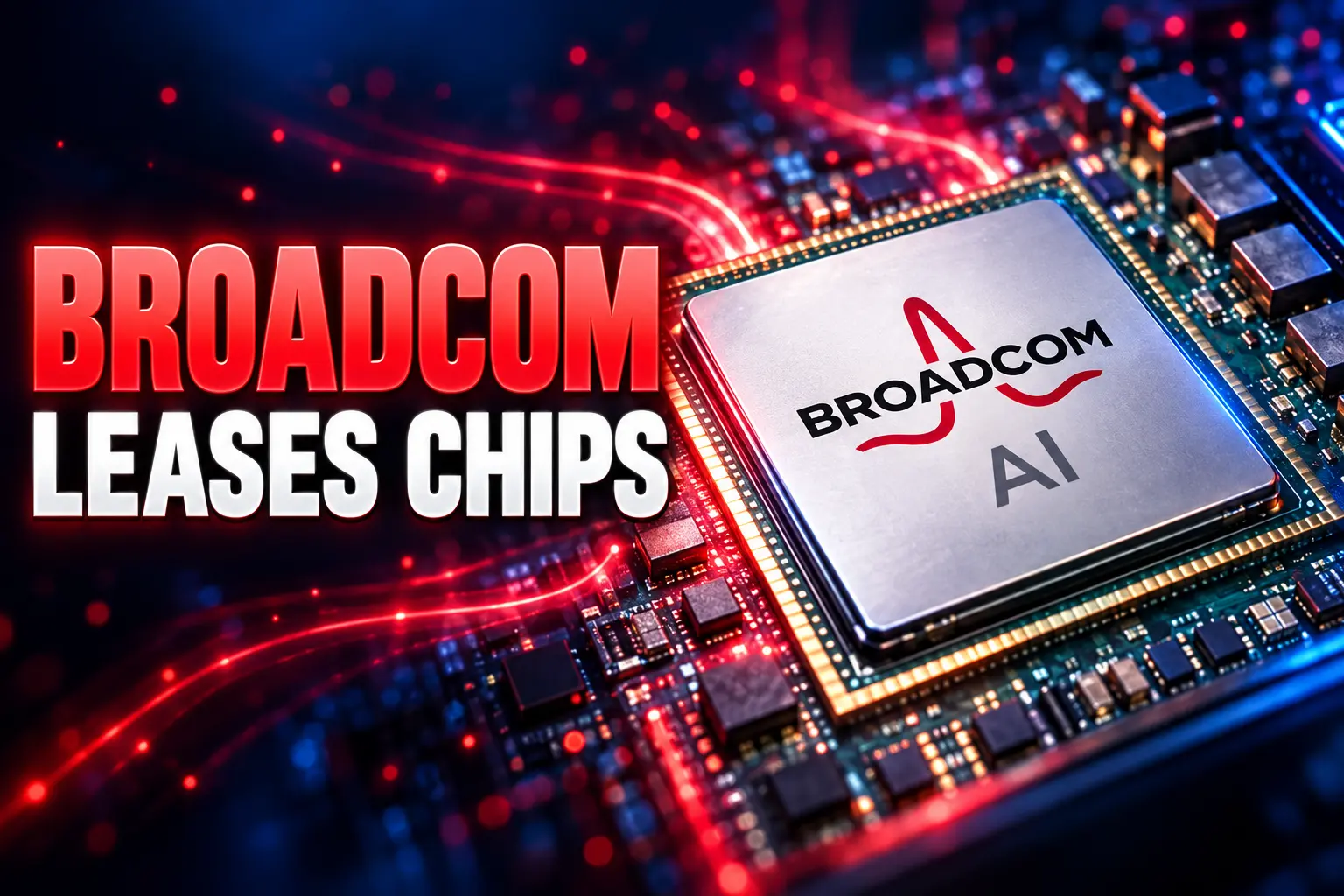
Broadcom’s AI XPV Platform is a $35 billion chip lease for more than 1 gigawatt at Anthropic, not a 20 gigawatt product order.

Broadcom closed a $35 billion AI XPV Platform slice in June to lease more than 1 gigawatt of chips to Anthropic. Apollo-managed funds led the money with Blackstone’s credit and insurance arm as co-anchor. The platform is built to enable more than 20 gigawatts of Broadcom XPUs and networking for Anthropic and OpenAI through 2028.
That $35 billion is not Broadcom booking a $35 billion chip order. A special-purpose vehicle buys the accelerators, including Google TPUs that Broadcom co-designs, and rents them to Anthropic so the hardware never sits on the lab’s balance sheet.
The $35 Billion Buys One Gigawatt, Not Twenty
The launch on June 9, 2026 put three logos on one release and invited readers to mash the check size into the gigawatt target. The closed money is tighter. It funds Anthropic’s already announced expansion of more than 1 gigawatt, for training and inference, at sites run by Fluidstack. Install work was set to start in mid-2026. Broadcom later said that first gigawatt is already going in.
THE FIRST SLICE IN PLAIN FIGURES
- The check: Apollo-managed funds and affiliates led an initial $35 billion capital solution, in partnership with Blackstone, with a multi-year draw schedule rather than a single dump of cash.
- The tenant: Anthropic is the first named user. OpenAI is named on the platform, not on this lease.
- The ceiling: The vehicle is designed for more than 20 gigawatts of XPU-based compute through 2028, about the power of 20 new nuclear plants, which is a later build target, not what the first notes bought.
- The rating claim: People close to the financing said the senior notes were rated investment grade and that Apollo’s insurance arm Athene is taking a large share, with banks and other insurers in the syndicate.
Hock Tan, Broadcom’s president and chief executive, called the hookup a way to pair long-term capital with the company’s XPU roadmap and to give fast-growing customers, starting with Anthropic, speed and certainty. Jim Zelter, Apollo’s president, said the check reflects conviction in Broadcom’s silicon and in Anthropic’s model roadmap. Jon Gray, Blackstone’s president, pointed at compute demand as a reason to put the credit and insurance book to work, not only the real-estate book that spent years buying data-center shells.
How a Special-Purpose Vehicle Rents Claude Its Chips
The legal wrapper is the whole product. An SPV raises the debt, buys the chips, and leases them to Anthropic. Lease payments service the notes. Holding the modules in the vehicle keeps them off Anthropic’s books, which matters for a private lab that wants to look clean if it lists, because public markets often punish heavy debt.
Apollo Partner Jamshid Ehsani went further in the firm’s own release, calling the deal the largest private financing ever executed and describing AI compute as a new asset class with contracted cash flows. Won Kim, Broadcom’s head of corporate development and AI infrastructure partnerships, said demand is growing faster than ordinary capital markets can clear, and that this first close is the first pillar of the XPV platform.
HOW THE MONEY MOVES
- Raise: The vehicle takes in debt and some equity, with committed capital meant to draw over several years as racks actually ship.
- Buy: It purchases Broadcom XPUs and networking, including Google TPUs that Broadcom co-designs, rather than leaving Anthropic to cut a cash check for the same iron.
- Lease: Anthropic pays rent. Those payments, not Broadcom’s operating cash, are what lenders underwrite first.
- Syndicate: Apollo named an A1 tranche arranged by Wells Fargo, BNP Paribas, Citi and UBS, and an A2 tranche placed by Goldman Sachs, Bank of America and Morgan Stanley. Goldman Sachs, Wells Fargo and Citi advised Apollo. Morgan Stanley led advice to Broadcom, with JPMorgan Chase as co-advisor.
AI compute is rapidly emerging as one of the most compelling new asset classes in finance, characterized by contracted cash flows, mission-critical utility and a supply-demand dynamic that continues to intensify.
Jamshid Ehsani, Partner, Apollo, June 9, 2026 release
That framing is the second-order shift. For five years the same sponsors bought buildings. This structure lends against the contents, which age faster than a roof. Google has pushed through several TPU generations in a short span, and that is exactly why residual-value language showed up in the credit work.
Fluidstack Hosts the First Gigawatt at US Sites
Fluidstack is the operator, not the owner of the accelerators. The June release puts the first Anthropic capacity in Fluidstack-based sites. The cloud firm supplies the halls, power hookups and hands-on running of the clusters. The SPV holds the silicon. Anthropic consumes the tokens.
That split is how a lab can add a gigawatt without parking tens of billions of depreciating chips on its own balance sheet. Anthropic already trains and serves Claude across AWS Trainium, Google TPUs and Nvidia GPUs, and still names Amazon as its primary cloud and training partner on Project Rainier. The XPV racks sit beside that mix, rather than replacing it.
The lab’s own April 6, 2026 note said run-rate revenue had surpassed $30 billion, up from about $9 billion at the end of 2025, and that more than 1,000 business customers were each spending over $1 million a year, double the count it gave with its Series G raise in February. Krishna Rao, Anthropic’s chief financial officer, tied a new Google and Broadcom pact for multiple gigawatts of next-generation TPU capacity, due online from 2027, to that customer load. Most of that newer compute is slated for the United States, on top of a November 2025 pledge to put $50 billion into American AI infrastructure.
The lease only works if those customers keep paying. The chips cannot be rolled to a new tenant overnight, and a used TPU is not a used warehouse.
The Residual-Value Backstop Broadcom Will Not Size
Someone has to stand behind the notes if Anthropic stops paying and a fire sale of used accelerators does not cover the debt. Broadcom’s chief financial officer told analysts on the fiscal third-quarter call that the firm may provide modest residual value guarantees, which it treats as low-risk contingent liabilities, backed by the labs’ profit path and by the remaining value of the assets. She also said third-party sponsors independently underwrite the vehicles, rather than Broadcom lending the money itself.
People familiar with the June financing have described a residual-value support agreement on the senior notes: if lease payments stop and a sale of the chips still leaves a hole, Broadcom covers the shortfall for those senior holders. Broadcom has not put a dollar figure on that exposure in its public remarks, and the same CFO said there was nothing new to announce on backstops beyond what was already done.
WHAT WE KNOW
- Closed money: The first $35 billion tranche closed in June for Anthropic’s 1 gigawatt deployment, which Broadcom said is underway.
- Guarantee class: Broadcom has confirmed it may write modest residual-value guarantees and calls them contingent liabilities.
- Senior split: Apollo’s release names separate A1 and A2 notes with different bank groups, which is the public skeleton of a stacked credit.
WHAT IS UNCONFIRMED
- Exact coupons: Secondary accounts have listed A1, A2 and junior B-note sizes and yields. Those figures have not appeared in the Apollo or Blackstone releases.
- Follow-on size: August market talk of a much larger second package was not matched by a new Broadcom announcement on the September call.
- Lease term: The rent schedule and tenor have not been published by the companies.
The backstop is the piece that makes the paper look like infrastructure credit instead of venture risk. It is also how a chip vendor helps a customer buy more of its own product without booking the loan. Nvidia has since stood up its own third-party financing platforms with a similar residual-value idea for GPU factories, while Nvidia’s capped OpenAI compute guarantee shows how even a named support line gets a ceiling once the dollars get large.
Land and Power Now Gate the Next Tranches
On that same call, Tan walked through what Broadcom actually thinks it will ship, which is a different ledger from the XPV design target. He put Broadcom content in a range from $20 billion to $30 billion per gigawatt, and said that dollar load should hold as each chip draws more power. He also said a gigawatt of deployed compute could support about $30 billion of annual recurring revenue at the labs, which is why he is willing to help two cash-hungry customers finance racks.
BROADCOM’S STATED GIGAWATT PATHS
| Customer | 2026 | 2027 | 2028 |
|---|---|---|---|
| Anthropic | 1 GW of Ironwood | 5 GW of TPU v8i | Incremental 10 GW |
| OpenAI | Not broken out as a 2026 XPU wave | 1.3 GW of Jalapeño | Over 5 GW of Jalapeño and the next XPU |
| XPV platform | First tranche closed; Anthropic 1 GW underway | Future slices unannounced | Designed for more than 20 GW across both labs |
Tan said Anthropic is on track to become Broadcom’s largest XPU customer in 2027 and to hold that rank in 2028. He also said land, power and the building shell now set the calendar more than wafer starts, and that substrates, HBM and even system memory can each become the bottleneck in a given quarter. The XPV vehicle can write a check. It cannot conjure a substation.
A New Asset Class for Apollo and Blackstone
Apollo reported about $1.03 trillion of assets under management as of March 31, 2026. Blackstone’s about section in the joint release put its own book above $1.3 trillion. Those are the balance sheets that can absorb a $35 billion first print and still call it a template. Morgan Stanley has estimated the wider AI build will need about $1.5 trillion of outside financing through 2028, most of it private credit.
THE CREDIT PATH INTO THE RACK
- March 2026: Blackstone anchors CoreWeave’s $8.5 billion loan, secured against Nvidia chips.
- May 2026: Blackstone puts $5 billion of equity into a joint venture with Google to sell TPU capacity.
- June 9, 2026: Apollo leads the $35 billion XPV slice for Broadcom silicon leased to Anthropic, with Blackstone’s credit and insurance business as co-anchor.
- September 2026: Broadcom tells investors the first tranche is closed and the Anthropic gigawatt is underway.
Gray’s line in the joint release was that compute demand created a chance to invest across the stack, including through credit and insurance, not only by buying campuses. Zelter called the model collaborative because no single book, not even Apollo’s, funds a 20 gigawatt dream on day one. The joint more than 20 gigawatts of compute capacity language is the option on later slices, written while the first gigawatt is still being bolted down.
Insurers sitting behind Athene and Blackstone’s insurance sleeve are the quiet holders. They want long, rated cash flows. They do not want to repossess a warehouse of last-generation TPUs. That is why Broadcom’s residual language, however modest the company says it is, sits at the center of the credit, and why a miss on Claude usage would travel into those portfolios rather than showing up first as unsold Broadcom inventory.
OpenAI Is Named on the Same Platform
The June text lists OpenAI next to Anthropic as a lab the platform is customized for. It does not say OpenAI is drawing the first $35 billion. Broadcom’s CFO said future tranches will carry features tailored to each lab and each investor group, which is a polite way of saying the Anthropic lease is not a cookie cutter.
OpenAI is already on a separate Broadcom silicon track. Tan said OpenAI’s first custom chip with Broadcom, Jalapeño, is aimed at 1.3 gigawatts in 2027, with line of sight to more than 5 gigawatts in 2028 including the next XPU, which would make OpenAI Broadcom’s second-largest XPU customer. He also said Broadcom is creating these financing vehicles for two of its six XPU customers, Anthropic and OpenAI, while the other four can fund themselves.
He put a two-year AI semiconductor outlook of $115 billion in fiscal 2027 and $230 billion in fiscal 2028, $350 billion in total, and warned that not every gigawatt in the customer plans will light up inside that window. Shipping a chip and plugging it into a live hall are different jobs. The XPV platform exists to close the cash gap on the second job for the two labs that cannot float it on their own.
Broadcom’s chief financial officer said the first $35 billion tranche is closed and Anthropic’s gigawatt is already going in. Future slices, she said, will be built deal by deal. The modules are moving into Fluidstack halls. The credit around them is still a first-of-its-kind stack, with a residual-value promise Broadcom will not put a number on in public.
Disclaimer: This article is news reporting and analysis of a financing and infrastructure announcement. It is informational only and is not investment advice, a solicitation to buy or sell any security, or a recommendation on Broadcom, Apollo, Blackstone, Anthropic or OpenAI. Readers who are weighing a position in any of these firms, or in related credit, should consult a licensed financial adviser who can review their own holdings, risk limits and time horizon. Deal terms, gigawatt plans, residual-value exposure and deployment status are taken from company statements and other sources available for this report and can change as later tranches are written or as installs slip.

Instagram Plus Tests a Read-Only Mode That Cuts Stories

Altman Asks the Public to Accept Some AI Harm

Google Freezes OSS VRP Product Reports After AI Flood

AI Agents Make Payment Rails the Scarce Prize

Turkey’s Crypto Boom Now Runs Through Three Banks

Fable 5 Came Back Under a Commerce On-Off Switch

Google’s SpaceX GPU Lease Has a Sept. 30 Deadline

Plasma One’s XPL Locks Face a 1.81 Billion Cliff

DGO’s Rs 549 World Cup Pass Cost Fans Sleep and Data

Moonshot AI’s $30 Billion Ask Became a $35 Billion Close
-
 AI4 months ago
Fable 5 Came Back Under a Commerce On-Off Switch
-
 AI4 months ago
Google’s SpaceX GPU Lease Has a Sept. 30 Deadline
-
 CRYPTO4 months ago
Plasma One’s XPL Locks Face a 1.81 Billion Cliff
-
 APPS4 months ago
DGO’s Rs 549 World Cup Pass Cost Fans Sleep and Data
-
 AI4 months ago
Moonshot AI’s $30 Billion Ask Became a $35 Billion Close
-

 NEWS4 months ago
ColorOS 17 Device List Spans Oppo, OnePlus and Realme
-

 GAMING4 months ago
Xbox Cuts 3,200 Jobs After Five Years of Thin Returns
-
 GAMING4 months ago
The RTX 4050 Under Rs 70,000 Hides a Wattage Gap