
AI
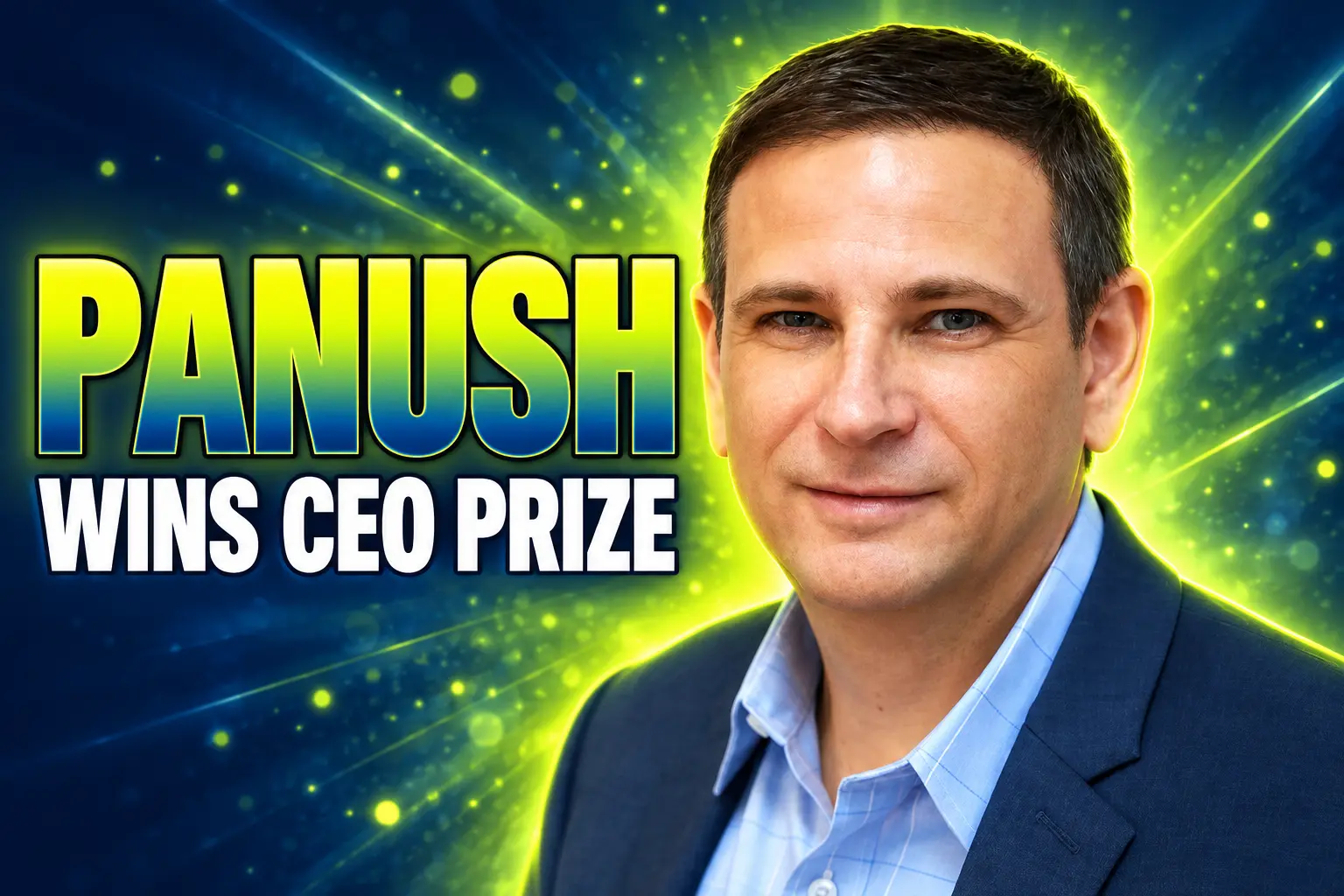
Panush’s Hybrid Inference Bet Earns Ceva the AI CEO Prize
Amir Panush’s 2023 hybrid-inference wager won Ceva the 2026 AI CEO prize, even as NeuPro royalties still wait on silicon from those licenses.

Ceva named chief executive Amir Panush Artificial Intelligence Company CEO of the Year on June 25, 2026, for a hybrid-inference bet he placed after taking the job. The Rockville, Maryland licensor (NASDAQ: CEVA) does not ship chips of its own. It sells the silicon and software IP that other companies drop into theirs.
The prize from the 9th annual AI Breakthrough Awards treats that bet as already read. Panush’s own books treat it as half cashed. Licensing from NeuPro neural processors is up. Royalties from those same designs are still waiting on silicon.
Panush Bet on Hybrid Inference in 2023
The Ceva board appointed Panush chief executive effective January 1, 2023, after Gideon Wertheizer retired. He arrived from InvenSense, the TDK group company where he had been chief executive of the MEMS sensors business. Earlier stops included Qualcomm, Atheros, and Texas Instruments, all on the wireless and sensing side of the stack rather than the cloud-model side.
The call he made was not “move AI from the cloud to the edge.” In the company’s June 25 statement that announced him as Artificial Intelligence Company CEO of the Year, Ceva described a hybrid split: the right model in the right place at the right time, with cloud still in the mix. The local half is where power, latency, cost, and privacy make a round trip to a data center a bad fit.
That is a different product problem from training giant models. It is a problem for people who already license Bluetooth, Wi-Fi, cellular IoT, and DSPs, and who now need an on-device infer block that can sit beside them in the same die. Panush’s wager was that Ceva could sell that whole local half as one portfolio instead of a pile of separate cores.
AI inference is increasingly a distributed challenge. The cloud will always play a role, but billions of connected devices need to sense, reason and act locally. We built our portfolio to address exactly that need, and the market is now moving squarely in that direction.
Amir Panush, Chief Executive Officer, Ceva
Steve Johansson, managing director of AI Breakthrough, tied the prize to that same read of the market, saying Panush had “anticipated where AI inference was heading and built the portfolio to support it.”
The Local Half Runs on Connect, Sense and Infer
Ceva packages that portfolio as AI Fabric, with three pillars the company now repeats in almost every release. The names are marketing. The contents are old IP lines pointed at a new job.
THE THREE PILLARS INSIDE AI FABRIC
- Connect: Bluetooth, Wi-Fi, UWB, cellular IoT, and 5G IP that already sit in high-volume consumer and industrial chips.
- Sense: Audio DSPs, vision paths, and MotionEngine-class sensor fusion that turn microphones, cameras, and IMUs into usable signals.
- Infer: NeuPro NPUs and AI DSPs that run those signals on the device instead of shipping them to a rack.
The company says more than 2 billion devices with Ceva technology ship each year, and that more than 20 billion have shipped since 2003 across 400-plus customers. In 2025 the annual count was a record 2.1 billion, up 6%, which Ceva put at more than 66 Ceva-powered devices sold every second. Most of that volume is still radios, not neural nets. The bet is that the same customers who already pay for the radio will add the infer block, and that content per device will rise.
Needham analyst Charles Shi initiated coverage on June 15, 2026, with a Buy rating and the same Physical AI frame: cars, drones, and robots need more than compute and memory, and Ceva’s wireless, sensing, and DSP/NPU mix is built for that. Shi also said broad Physical AI adoption is likely still more than two years away. That clock is the honest one. The trophy does not shorten a chip design cycle.
Ten NeuPro Licenses Put AI Over 20% of Licensing
The first hard print on the wager came with 2025 results, released February 17, 2026. Ceva said it had 10 NeuPro NPU agreements signed that year, and that AI contributed more than 20% of annual licensing revenue. Full-year revenue was $109.6 million, up 2%. Licensing grew 6% to $63.6 million. Royalties were $46.0 million. Smart edge markets, meaning everything except classic mobile, were 86% of revenue. The company signed 54 licensing deals in the year.
Named NeuPro customers in that print included Microchip Technology, which took a full NeuPro portfolio license for use across product families; a leading global PC OEM that picked high-performance NeuPro cores as foundational IP for on-device AI compute; plus ALi Corp and Nextchip in consumer video and automotive ADAS. Several of those NPU wins were existing high-volume connectivity customers adding AI, which is the content-per-device path in practice. Ceva also sold AI DSPs into automotive and consumer designs, often sitting beside an NPU to pre-process camera and audio data.
By the June 25 award, Ceva had lifted the NeuPro count to more than a dozen licensing wins across consumer IoT, industrial, automotive, infrastructure, and PC. On March 12, 2026, NeuPro-Nano, the ultra-low-power end of the family, won the Artificial Intelligence category of the embedded award at embedded world in Nuremberg. Ceva puts the NeuPro range at tens of GOPS on tiny devices through hundreds of TOPS on bigger ones.
THE BET ON THE PAGE, 2025 VERSUS Q2 2026
| Period | Licensing | Royalties | Devices shipped | AI note |
|---|---|---|---|---|
| Full year 2025 | $63.6 million, up 6% | $46.0 million | 2.1 billion, up 6% | 10 NeuPro deals; AI more than 20% of licensing |
| Q2 2026 | $18.2 million, up 21% | $10.8 million, up 1% year over year | 567 million, up 16% | 10 IP deals; NeuPro-M platform customer |
Licensing is the signature fee. Royalties are the per-chip rent after a customer tapes out and ships. The table is the wager in two columns: the left one is moving. The middle one is not, at least not yet on the AI designs.
What a U.S. Software Platform Is Building on NeuPro-M
Eleven days after the trophy, Ceva announced a landmark AI licensing deal with a major U.S. software and AI platform company. The customer was not named. The product was. It licensed NeuPro-M neural processing unit IP as the foundation for a custom AI silicon program aimed at next-generation intelligent computing devices.
That customer class is the tell. Ceva’s historic buyers are semiconductor firms and device OEMs. A software platform that owns the operating system and now wants its own infer silicon is trying to do what CPU and GPU vendors did in earlier cycles: lock the stack from the model down to the die. Panush called it one of the most strategically significant AI licensing agreements in Ceva’s history, and said the architecture is meant to run generative, multimodal, and emerging agentic workloads inside the power and thermal limits of portable devices.
Q2 2026, reported August 10, showed the fee. Total revenue was $29.0 million, up 13%. Licensing and related revenue was $18.2 million, up 21%, the highest quarterly licensing print in three years. Trailing-twelve-month licensing and related revenue was $69.6 million, up 13%. Ceva signed 10 IP licensing agreements in the quarter, including two with first-time customers and two directly with OEMs. The company raised its full-year 2026 revenue growth outlook to 13% to 15%.
The unnamed platform deal is also the cleanest test of hybrid inference as a product, not a slogan. If a company that already runs models in the cloud still pays to put NeuPro-M in a custom edge chip, the “right model, right place” split is a purchase order, not a keynote.
Royalties Still Wait on Silicon From Those Licenses
The unpaid half of the wager is on the royalty line. Q2 royalties were $10.8 million, up 1% from a year earlier and up 17% from the prior quarter. Shipments of Ceva-powered devices were 567 million, up 16%. The mix shows what is actually shipping today.
WHAT PAID THE BILLS IN Q2 2026
- Bluetooth: 295 million units, up 16% year over year, still the volume engine.
- Wi-Fi: 80 million units, up 28%, the fastest large radio line in the quarter.
- Cellular IoT: 68 million units, a record, up 3%.
- Handset modems: 61 million units, a smaller slice than the IoT radios.
Those radios are the Connect pillar doing what it has done for years. Automotive AI royalties and a ramping AI SoC for surveillance are in the print as early infer rent, not as the main check. Across all NeuPro agreements signed in 2025, Ceva said six customers are expected to have silicon back by the end of 2026. That is the conversion window. Until those parts leave the fab, AI shows up as a license fee, not as a per-unit royalty.
That lag is not a scandal. IP licensing works on design-win time, which runs in years, not quarters. It is the reason a CEO prize in June and a three-year licensing high in August can sit beside a royalty line that barely moved year over year. The award certified the strategy. The royalty print will certify the shipments.
Arm, Cadence and the Rest of the NPU IP Shelf
Ceva is not the only vendor selling a licensed neural block. Arm licenses Ethos-U NPUs into microcontroller-class chips, including NXP’s i.MX 93. Cadence sells Neo NPUs that it rates from well under 1 TOPS up past 80 TOPS, with a Tensilica host in many designs. Synopsys has been exiting processor IP, with GlobalFoundries buying the ARC line, including the NPX NPU, in a deal aimed at Physical AI custom silicon.
The crowded shelf is why Panush’s bet is a portfolio bet, not an NPU-benchmark bet. A customer that already licenses Ceva Bluetooth or Wi-Fi can add NeuPro without opening a second IP relationship. A customer that already standardized on Ethos or Neo has less reason to switch. Microchip taking the full NeuPro family, and old connectivity accounts adding an NPU, only pay off if that bundling holds when the SoC is costed.
The awards program itself split the edge hardware trophies. Qualcomm’s Snapdragon X2 series took AI Edge Innovation. Lattice Semiconductor’s sensAI took AI Edge Solution of the Year. Panush’s category sat under Industry Leadership, one prize in a field AI Breakthrough said drew thousands of nominations from more than 20 countries. The CEO title is a read of strategy. It is not a claim that NeuPro outran every licensed NPU on the market.
Six Customers Are Due to Have Silicon by Year End
The rest of 2026 is a date check, not a new thesis. Ceva already told investors which proof would count.
THE WAGER’S CHECKPOINTS
- January 1, 2023: Panush becomes CEO and points the DSP and connectivity house at hybrid on-device inference.
- 2025: Ten NeuPro licenses land and AI clears more than 20% of licensing revenue.
- March 12, 2026: NeuPro-Nano wins the embedded world Artificial Intelligence award.
- June 25, 2026: AI Breakthrough names Panush AI Company CEO of the Year.
- July 6, 2026: An unnamed U.S. software and AI platform company licenses NeuPro-M for custom silicon.
- August 10, 2026: Q2 licensing hits a three-year high; royalties are up 1% year over year.
- End of 2026: Six NeuPro customers are due to have silicon back, the first real royalty on-ramp for those deals.
If those six parts tape out on that calendar, the local half of hybrid inference starts to look like a royalty stream, not a slide. If they slip, the trophy still hangs on the wall and the radio lines still pay the rent. Shi’s more-than-two-year clock on Physical AI sits past that silicon date, which is another way of saying the CEO prize arrived early in the shipment cycle, not late.
Panush’s own test is simpler than the award copy. Billions of connected devices, he said, need to sense, reason, and act locally. The licenses say buyers agree. The royalties will say whether those devices actually shipped with his infer block inside.
Frequently Asked Questions
When Did Amir Panush Become CEO of Ceva?
The board named him chief executive effective January 1, 2023, after Gideon Wertheizer retired at year-end 2022 and stayed on as a director and adviser. Panush joined from InvenSense, a TDK group company, where he was CEO and general manager of TDK’s MEMS Sensors Business Group. The 2022 transition plan said he had been based in the United States for 17 years and would relocate to Israel.
What Is Ceva’s NeuPro NPU Family?
NeuPro is licensed neural-processor IP, not a chip Ceva fabs. NeuPro-Nano targets tiny, power-tight devices and won the Artificial Intelligence category at embedded world 2026. NeuPro-M scales up for PCs, automotive, and custom AI silicon, including generative and multimodal workloads. In October 2025 Ceva and embedUR systems launched ModelNova, a catalog of developer-ready models for NeuPro-Nano that the companies said would extend to NeuPro-M.
What Does Ceva Mean by Physical AI?
Ceva uses Physical AI for systems that connect, perceive, and run inference in the real world rather than only in a data center. The company’s hybrid-inference claim is that some models stay in the cloud and others run on the device, chosen by power, latency, cost, and privacy. AI Fabric is the product name for the IP bundle meant to build that on-device half.
Who Runs the AI Breakthrough Awards?
AI Breakthrough is part of Tech Breakthrough, a Los Angeles market-intelligence and recognition platform. The 2026 program was its ninth year and published winners across dozens of categories, from agentic AI and large language models to AI hardware and industry leadership. Steve Johansson, the managing director, is the official who commented on Panush’s prize.
Disclaimer: This article is news reporting and analysis of Ceva’s award, strategy, and published financial results. It is informational only and is not investment advice, a recommendation to buy or sell CEVA or any other security, or a forecast of future royalties or shipments. Readers who are considering a position in semiconductor IP stocks should consult a licensed financial adviser who can review their own objectives and risk limits. Revenue, shipment, license, and guidance figures reflect company statements and filings as of the dates named above and can change with later quarters.

Instagram Plus Tests a Read-Only Mode That Cuts Stories

Altman Asks the Public to Accept Some AI Harm

Google Freezes OSS VRP Product Reports After AI Flood

AI Agents Make Payment Rails the Scarce Prize

Turkey’s Crypto Boom Now Runs Through Three Banks

Fable 5 Came Back Under a Commerce On-Off Switch

Google’s SpaceX GPU Lease Has a Sept. 30 Deadline

Plasma One’s XPL Locks Face a 1.81 Billion Cliff

DGO’s Rs 549 World Cup Pass Cost Fans Sleep and Data

Moonshot AI’s $30 Billion Ask Became a $35 Billion Close
-
 AI4 months ago
Fable 5 Came Back Under a Commerce On-Off Switch
-
 AI4 months ago
Google’s SpaceX GPU Lease Has a Sept. 30 Deadline
-
 CRYPTO4 months ago
Plasma One’s XPL Locks Face a 1.81 Billion Cliff
-
 APPS4 months ago
DGO’s Rs 549 World Cup Pass Cost Fans Sleep and Data
-
 AI4 months ago
Moonshot AI’s $30 Billion Ask Became a $35 Billion Close
-

 NEWS4 months ago
ColorOS 17 Device List Spans Oppo, OnePlus and Realme
-

 GAMING4 months ago
Xbox Cuts 3,200 Jobs After Five Years of Thin Returns
-

 GAMING4 months ago
The RTX 4050 Under Rs 70,000 Hides a Wattage Gap