
AI
EU Orders Meta to Open WhatsApp to Rival AI Chatbots
The European Commission ordered Meta to give rival AI chatbots free access to WhatsApp within five working days, in a rare interim measures decision.

The European Commission on Tuesday ordered Meta to give rival AI chatbots free access to WhatsApp within five working days, a rare interim measures decision that escalates the EU’s antitrust fight with the U.S. company. The order came after a months-long investigation that began when Meta moved to lock third-party general-purpose AI assistants out of WhatsApp in October 2025.
The Commission told Meta to restore access to the WhatsApp for Business Application Programming Interface under the same terms that existed before 15 October 2025, when access was free of charge. The measures must remain in place until the investigation is closed. If Meta fails to comply, the Commission can fine it up to 10% of its total annual turnover and impose daily periodic penalty payments of up to 5% of average daily turnover.
The Order and the Five-Day Clock
The order is the second time the European Commission has imposed interim measures under Regulation 1/2003, the procedural rule that governs enforcement of EU competition law, as confirmed in the EU’s interim measures order against Meta. The first was the Broadcom case, in which the Commission acted to halt a suspected antitrust practice before its full investigation concluded.
Interim measures sit at the rare end of the Commission’s toolkit. Under Article 8(1) of Regulation 1/2003, the regulation that defines how EU competition law is enforced, the Commission can act on a case before its full investigation concludes if it shows that an infringement of EU competition rules is apparent ‘at first sight’ and that there is an urgent need to prevent serious and irreparable harm. The standard reflects the regulator’s view that, in fast-moving markets, the damage from a slow ruling can outlast the ruling itself.
Teresa Ribera, the Commission’s executive vice-president for clean, just and competitive transition, said the decision preserved ‘choice for citizens across Europe on the AI assistants they want to use with WhatsApp’. There is no legal deadline for the underlying antitrust investigation to be completed.
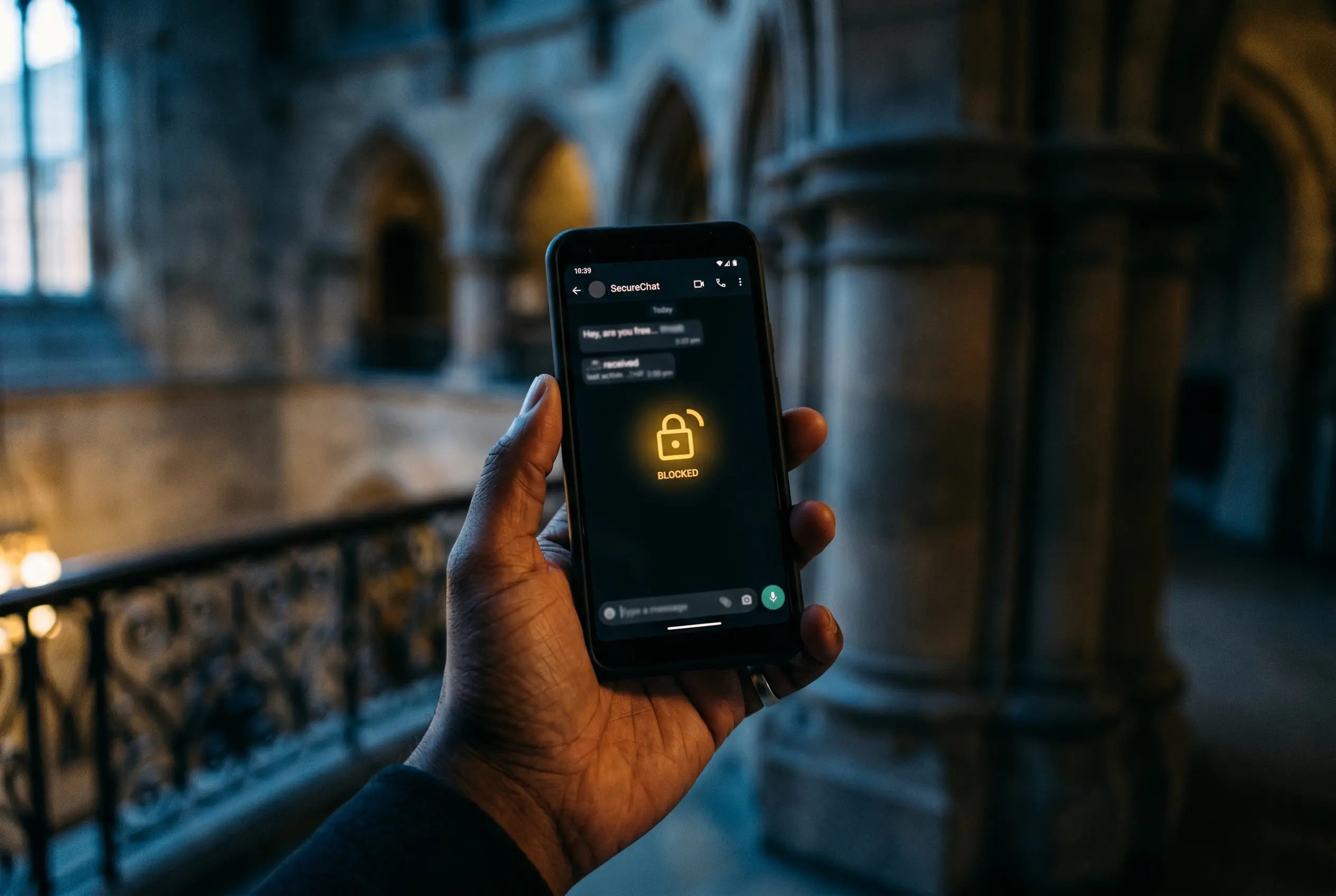
Why Meta Closed WhatsApp to Rival AI
On 15 October 2025, Meta updated the WhatsApp Business Solution Terms to prohibit AI providers from using the API when AI is the primary service offered, as documented in the EU’s December 2025 investigation announcement. The change took effect for AI providers already on the platform on 15 January 2026. As a result, only Meta’s own general-purpose AI assistant, Meta AI, remained accessible on WhatsApp.
OpenAI’s ChatGPT, Microsoft’s Copilot, and Perplexity all left WhatsApp on 15 January 2026. In a transition notice to users, OpenAI said ‘more than 50 million of you chat, create, and learn with ChatGPT on WhatsApp’ and urged them to link their phone numbers to keep their conversation history, according to OpenAI’s WhatsApp transition page. Microsoft announced that access to Copilot via WhatsApp would end on the same date, citing the Meta policy update.
Meta recently acquired another general-purpose AI assistant, Manus AI, adding a second in-house product to a messaging platform that had become one of the world’s largest distribution channels for conversational AI chatbots.
- 15 October 2025: Meta updates WhatsApp Business Solution Terms, banning third-party general-purpose AI assistants from the platform’s Business API.
- 4 December 2025: European Commission opens formal antitrust investigation into the new policy.
- 15 January 2026: ChatGPT, Microsoft Copilot, and Perplexity stop working on WhatsApp as the ban takes effect for AI providers already on the platform.
- 9 February 2026: Commission sends a first Statement of Objections, signalling it may impose interim measures.
- 4 March 2026: Meta revises the policy, re-admitting third-party AI assistants but introducing a fee for access.
- April 2026: Commission issues a supplementary Statement of Objections, calling the fee equivalent in practice to the original ban.
- 9 June 2026: Commission imposes interim measures, ordering Meta to restore free access within five working days.
The Fee That Wasn’t a Fix
Meta’s response to the Commission’s February warning was to publish a revised policy on 4 March 2026 that re-admitted third-party AI assistants but charged them a fee. In a supplementary Statement of Objections sent in April, the Commission told Meta that the paid framework was, ‘at first sight’, in practice equivalent to the previous access ban, as set out in the EU’s April 2026 supplementary charge sheet. The revised policy, the Commission wrote, risked blocking competitors from entering or expanding in a ‘rapidly growing’ market at a moment when smaller players and new entrants could realistically challenge the largest incumbents.
The supplementary charge sheet gave Meta an opportunity to respond, and on 9 June the Commission concluded that the company’s revised policy still failed the test. The order tells Meta to reinstate access to the WhatsApp for Business API under the pre-October 2025 terms, in which access was free of charge for all third-party general-purpose AI assistants. The measures must remain in force until the Commission reaches a final decision on the case, and the underlying substantive investigation is still ongoing.
What Makes This Order Procedurally Rare
This is the second time the European Commission has used interim measures under Regulation 1/2003. The previous decision came in the Broadcom case, which dealt with suspected anticompetitive practices in the semiconductor market. Interim measures let the Commission halt conduct it suspects of breaching EU competition law while the full investigation continues, on the basis that delay itself could cause irreversible harm to the market.
Teresa Ribera, the Commission’s executive vice-president for clean, just and competitive transition, defended the order as a defence of market structure during a critical window in the AI assistant market.
In rapidly evolving markets, competition can be lost long before a final decision is adopted. This is why these interim measures will remain in place for the duration of the investigation.
Failure to comply with the order exposes Meta to a fine of up to 10% of its total annual turnover in the preceding business year. The Commission can also impose daily periodic penalty payments of up to 5% of Meta’s average daily turnover for each day of non-compliance. There is no legal deadline for the underlying antitrust investigation to wrap up.
Rivals Regain the Door Meta Shut
The Commission concluded that Meta has, ‘at first sight’, held a dominant position in the EEA-wide market for consumer communication applications since at least January 2023, and that the October 2025 policy amounted to a refusal to provide access to an infrastructure that had previously been open to third parties. The intervention explicitly aimed to give smaller AI providers and new entrants room to compete with the largest names.
With ChatGPT alone claiming 50 million WhatsApp users before its January exit, the addressable audience for rival AI products on the platform was substantial. The Commission’s order brings its investigation into line with parallel proceedings opened by the Italian Competition Authority, which had been running its own review of the same conduct. In April, the Commission expanded its investigation to cover all of the EEA, including Italy, in cooperation with the Italian authority.
- 5 working days: Meta’s deadline to restore free third-party AI access to the WhatsApp for Business API.
- 10%: Maximum fine the Commission can impose as a share of Meta’s total annual turnover for any intentional or negligent breach of the order.
- 5%: Maximum periodic penalty payment as a share of Meta’s average daily turnover for each day of non-compliance.
- 2: Times the European Commission has imposed interim measures under Regulation 1/2003, the Broadcom case being the only prior instance.
Meta Fires Back
Meta called the decision regulatory overreach. In a statement, the company said the European Commission had ‘decided that OpenAI and some of the largest companies in the world can use the paid-for WhatsApp Business product for free’, and that this was ‘subsidised by the many European companies that pay’. Meta announced it will appeal.
The company’s framing positioned a U.S. tech giant against European businesses, casting the EU’s enforcement action as a transfer of value from European fee-payers to American AI leaders. The order remains in force while any appeal proceeds, and Meta has not yet asked a court to suspend the obligation to restore access.
Brussels’ Wider Squeeze on Big Tech
The WhatsApp order is the latest in a string of EU actions against Meta, several of them in the past year. The Commission is also looking into how Meta protects users’ physical and mental wellbeing, and the ‘addictive’ design of Facebook and Instagram. In April, EU regulators found Meta in breach of the bloc’s digital content rules for failing to keep under-13s off Facebook and Instagram.
- WhatsApp AI access (Article 102 TFEU): Restore free third-party AI access; case number AT.41034; full investigation ongoing.
- €200 million DMA fine (under appeal): Imposed last year under the Digital Markets Act; the $231 million equivalent was contested by Meta.
- Digital Services Act breach finding (April 2026): Meta found to have failed to keep under-13s off Facebook and Instagram.
- Wellbeing and ‘addictive’ design probes: Continuing investigations into Facebook and Instagram design practices and their impact on minors.
- Italian Competition Authority case: Earlier separate national probe, now folded into the EU’s expanded investigation covering the full EEA.
The WhatsApp order is also part of a wider transatlantic fight over the Digital Markets Act. On Monday, Apple blamed the DMA for delays to the AI-enhanced Siri rollout, a complaint the EU flatly rejected. The Trump administration has argued that the EU and other jurisdictions are unfairly targeting U.S. tech firms. Brussels, for its part, has said it cannot let ‘large digital incumbents leverage their dominance of the past to dictate who in Europe gets to compete and who gets to innovate in AI’.
Frequently Asked Questions
What did the EU order Meta to do?
On 9 June 2026, the European Commission ordered Meta to restore free access for third-party general-purpose AI assistants to the WhatsApp for Business Application Programming Interface under the same terms that applied before 15 October 2025. The order took effect immediately and must be complied with within five working days, remaining in force until the Commission finishes its antitrust investigation.
Why did the EU use interim measures against Meta?
Interim measures are an emergency procedural tool reserved for cases where delay would itself damage competition. Under Article 8(1) of Regulation 1/2003, the Commission must show that an infringement of EU competition rules is apparent ‘at first sight’ and that there is an urgent need to prevent serious and irreparable harm. The Commission has used this power only once before, in the Broadcom case.
How much could Meta be fined for non-compliance?
If Meta intentionally or negligently fails to comply with the order, the Commission can fine it up to 10% of its total turnover in the preceding business year, and impose periodic penalty payments of up to 5% of its average daily turnover for each day of non-compliance.
When will third-party AI chatbots return to WhatsApp?
The order requires Meta to restore free access within five working days of receipt. Meta has announced it will appeal, and any court suspension of the order could delay the return of services such as ChatGPT and Microsoft Copilot to the messaging app.
Is Meta appealing the EU order?
Yes. Meta has called the decision ‘regulatory overreach’ and said it will appeal. The order remains in force while any appeal is heard, unless a court grants a stay.


Sony’s 10 Percent Disc Drop Leaves the 2028 Cutoff Intact

Chip Allocation Sidelines the Base iPhone 18 This Fall

Miami-Dade Fights the Vice City Brand It Already Wears

IFA 2026 Awards Put Tecno Ahead of Flagship Phones

USB-C Gadgets Made the Junk Drawer Rechargeable

Pixel 11 Pro Asks $1,099 for a Light Google Locked

The iPhone Ultra Sells Two Retired Minis as One Foldable

Google Opens Gmail to Voice and Gates Docs Live

Lenovo Prices the IdeaPad Vibe Against Apple’s $699 Neo

Xbox Caps Game Pass Cloud Gaming at 15 Hours

Oracle Cuts 21,000 Jobs in a Year, Cites AI in 10-K Filing

Fable 5 and Mythos 5 Return as US Lifts Anthropic Export Controls

SpaceX’s Google Deal Turns a Rocket Company Into a Cloud Landlord

CD Projekt Red Co-CEO: Redemption Arc Isn’t Done, Witcher 4 in 2027

XPL Rallies 30% Ahead of Plasma One Card Tier Launch

Google Search Profiles Build a Follow Graph Inside Discover

DGO App Brings Rs 549 Mobile Pass for FIFA World Cup 2026 in Nepal

Moonshot AI Targets $30 Billion in China’s Fastest AI Funding Sprint

Oppo’s ColorOS 17 Eligibility List Leaves A-Series Buyers Behind

Microsoft Xbox Layoffs Start in July as Sharma Slams 3% Margin
-
 AI2 months ago
Oracle Cuts 21,000 Jobs in a Year, Cites AI in 10-K Filing
-
 AI2 months ago
Fable 5 and Mythos 5 Return as US Lifts Anthropic Export Controls
-
 AI3 months ago
SpaceX’s Google Deal Turns a Rocket Company Into a Cloud Landlord
-
 GAMING3 months ago
CD Projekt Red Co-CEO: Redemption Arc Isn’t Done, Witcher 4 in 2027
-
 CRYPTO3 months ago
XPL Rallies 30% Ahead of Plasma One Card Tier Launch
-
 NEWS3 months ago
Google Search Profiles Build a Follow Graph Inside Discover
-
 APPS3 months ago
DGO App Brings Rs 549 Mobile Pass for FIFA World Cup 2026 in Nepal
-
 AI3 months ago
Moonshot AI Targets $30 Billion in China’s Fastest AI Funding Sprint