
AI
IHG Hotels Joins ChatGPT, Letting OpenAI Shape the Search
IHG Hotels launched a ChatGPT app for 7,000-plus properties on June 3, routing bookings to its channels while handing hotel discovery to OpenAI’s platform.

IHG Hotels & Resorts launched an app inside ChatGPT on June 3, 2026, giving travelers natural-language search across the chain’s 7,000-plus properties in more than 100 countries. Bookings route to IHG’s own channels; conversational search is also coming to IHG.com and the IHG One Rewards loyalty app, which counts more than 160 million members.
IHG isn’t alone in the rush. Wyndham Hotels & Resorts landed inside ChatGPT four weeks earlier. Hilton launched a generative AI planner on its website in March. Marriott’s CEO confirmed a natural-language search build on a May earnings call. What’s unfolding across the sector is the same channel scramble hotels ran in the early 2000s, with OpenAI playing the role Booking.com occupied then.
How the App Handles Discovery
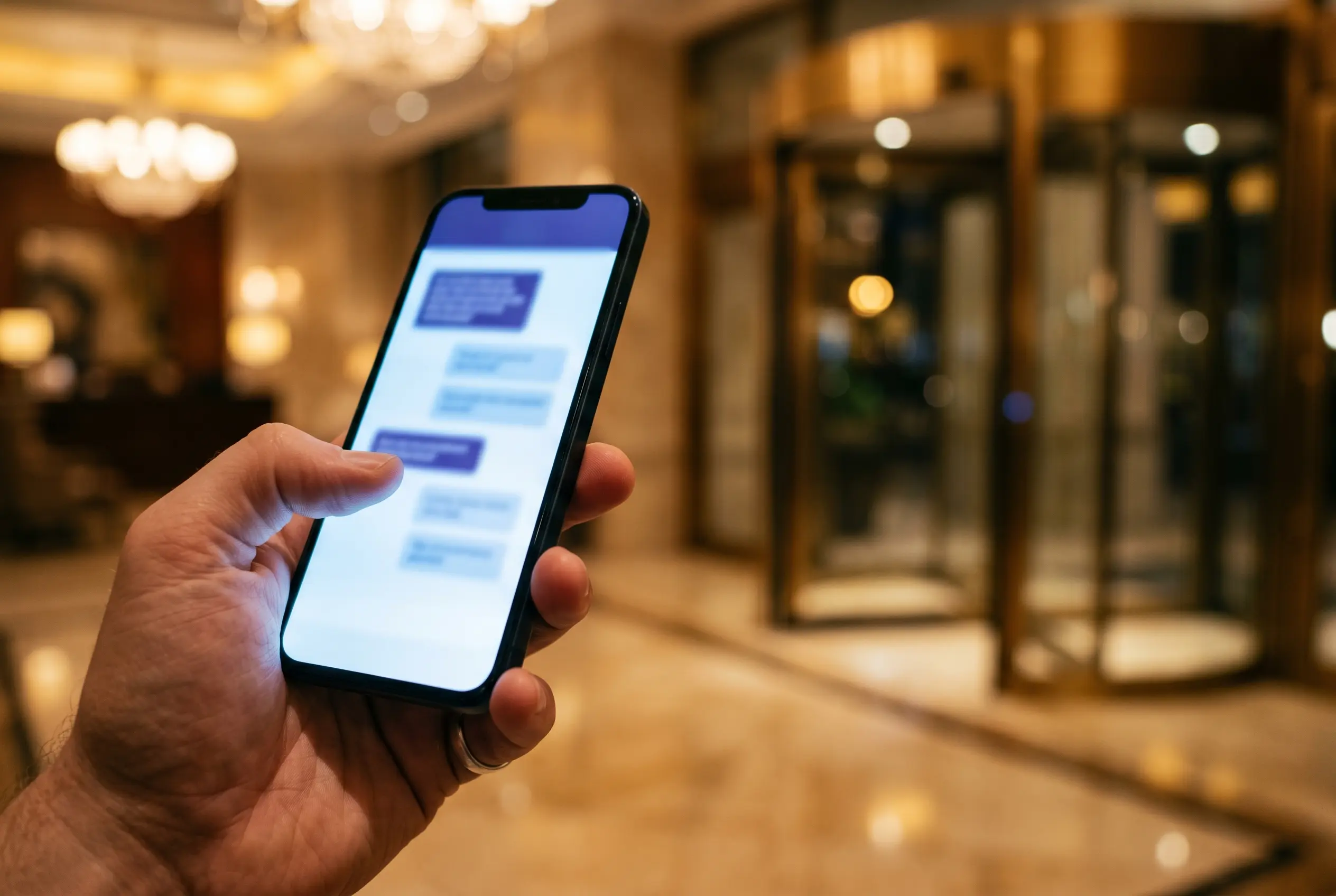
The IHG app operates at the top of the booking funnel. A traveler types a query inside ChatGPT, asking for a business hotel near a specific airport or a family resort in a coastal region, and the app returns matching IHG properties with live rates, room availability and amenity details. Interactive maps place each result in its neighbourhood context. When a property is selected, ChatGPT routes the user to IHG’s direct booking channels for payment and confirmation.
Per IHG’s June 3 official announcement, the app covers the full portfolio across 21 brands, from InterContinental and Kimpton at the luxury and lifestyle tier to Holiday Inn Express and avid among the essentials.
Traditional keyword search requires a destination, dates and a price range. The ChatGPT app understands intent and context: a user who types “somewhere warm and quiet for a week, nothing too touristy” gets a different property set than one who asks for a business hotel near Heathrow Terminal 5 available next Tuesday. The feature set inside ChatGPT:
- Natural-language hotel search replacing rigid dropdown filters and keyword-only queries
- Real-time availability, pricing and amenity information from IHG’s live inventory
- Interactive map view for location and neighbourhood context
- Direct handoff to IHG.com or the IHG One Rewards app to complete reservations
The next phase extends this inside IHG’s own platforms. Conversational search will arrive on IHG.com and the IHG One Rewards app, letting guests find properties in their own words. IHG described the full arc as moving “from inspiration to reservation” without the constraints of structured queries.
The Traveler Behavior Behind the Launch
The timing maps to a documented shift in how people find trips. Phocuswright, the travel research firm, found in a March 2026 study that more than half of American travelers now use AI tools before, during or after their journeys, a change the firm called “Travel’s Fastest Behavioral Shift in a Decade.” Parallel survey data from TakeUp, drawn from 300 U.S. leisure travelers polled in January 2026, put awareness of AI travel tools at 90% and active adoption at 38%, with uptake accelerating fastest among Millennials and Gen Z.
- 56% of U.S. travelers use AI for trip planning, booking or in-destination assistance (Phocuswright, March 2026)
- 90% of U.S. travelers are aware that AI can help plan or book travel (TakeUp, January 2026)
- 38% have actively used AI for trip planning, with adoption climbing fastest among younger travelers (TakeUp)
The gap between awareness and active use in those figures points to where the adoption curve sits right now. Nine in ten American leisure travelers know these tools exist; fewer than four in ten have committed to using them. Hotel chains integrating with ChatGPT today are positioning for the larger cohort that will adopt AI planning over the next one to two years.
When more than half of American travelers already consult an AI platform before choosing a hotel, ChatGPT presence becomes a distribution-channel question for hotel groups. Jolie Fleming, IHG’s chief product and technology officer, framed the company’s position in the announcement:
Guest expectations are evolving quickly, and we’re evolving with them.
Fleming joined IHG in 2021 after more than 25 years in technology businesses. She noted in the same statement that IHG hosts more than one million guests globally each night and framed AI as connecting each part of the journey, from planning through to the stay itself. Before IHG, she held a senior digital leadership role at E*TRADE by Morgan Stanley, where she led the platform’s award-winning digital channels and banking products.
A Race Across Hotel Chains
IHG’s launch came 28 days after Wyndham Hotels & Resorts debuted its own native ChatGPT app on May 6. Wyndham’s version covers approximately 8,400 hotels and builds on a technology investment of more than $450 million since 2018, per Wyndham’s investor press release. Wyndham had already gone live on Anthropic’s Claude large language model (LLM, an AI system that processes and generates natural-language responses) in 2025; a Google AI Mode integration is pending.
The speed at which major chains have committed tells you how urgent the channel feels:
| Brand | ChatGPT Status | Other AI Channels | Booking Destination |
|---|---|---|---|
| Wyndham | Live (May 6, 2026) | Claude (2025), Google AI Mode (pending) | WyndhamHotels.com |
| IHG | Live (June 3, 2026) | IHG.com + IHG One Rewards (soon) | IHG direct channels |
| Hilton | AI planner live (March 2026) | Website concierge subset | Hilton.com |
| Marriott | Announced (May 2026) | Natural-language search in development | Marriott.com |
Marriott CEO Anthony Capuano confirmed plans for a conversational, natural-language search build during an earnings call in May. Hilton went live in March with an AI planner available to a subset of users on its website, a narrower deployment than either Wyndham’s or IHG’s ChatGPT integrations. Expedia and Booking.com had already built their own apps inside ChatGPT before any of the hotel chains arrived; hotel groups are moving now partly to establish their inventory inside AI-driven search before OTA-curated results become the default recommendation.
Who Controls the Recommendation Moment
The OTA Parallel
Hotel chains spent most of the 2010s trying to cut Booking.com and Expedia out of the guest relationship. “Book direct” campaigns, loyalty program perks for non-OTA reservations, sustained pressure on commission rates that historically ran 15 to 25% per booking; the industry ran every play available. The core problem was structural: OTAs had taken ownership of the discovery layer. Travelers searched on Booking.com’s interface and ranked results through its algorithm; the platform’s reviews closed the trust loop. The chain’s brand came second to the platform’s logic.
The AI channel has the same architecture. A traveler who asks ChatGPT to find a hotel does so inside OpenAI’s platform, on terms OpenAI sets. The recommendations the system generates reflect algorithmic choices hotel brands can observe but do not control. The booking may close on IHG.com. The recommendation moment, the instant that shapes the guest’s final choice, belongs to OpenAI’s platform.
Hotel groups are racing to secure ChatGPT integrations precisely to avoid being filtered out of that layer before the market consolidates. Hotels without direct integration in AI platforms cede discovery entirely to intermediaries who already have established positions, a structural replay of the OTA problem in a faster-moving channel.
OpenAI’s March Pullback from Booking
A complication sits underneath the enthusiasm. In March 2026, OpenAI stepped back from handling reservations natively inside ChatGPT, redirecting transactions to third-party platforms. OpenAI later confirmed the shift to Skift, framing it as prioritizing discovery over direct transactions. Hotel bookings proved too complex to absorb within a conversational interface: payments, cancellations, refund chains and inventory synchronization across disconnected systems resist the single-click model that works in retail. The market’s reaction was immediate: Expedia’s share price rose 12% on the news, Booking Holdings gained 8%, as investors concluded the AI-as-OTA-replacement thesis had paused.
OpenAI’s retreat from native booking confirmed what the IHG integration was already designed to be: a discovery tool. ChatGPT handles research and comparison before routing the user to IHG.com to complete the transaction. That division suits hotel chains for now. The longer-term question is whether recommendation rankings inside ChatGPT will increasingly reflect whichever hotel brands invest most in structured, machine-readable property data, the same data infrastructure OTAs built long before the chains did.
IHG’s Internal Build
The ChatGPT app sits on top of a technology stack IHG has been assembling for several years. In January, the company appointed Wei Manfredi as senior vice president of AI and architecture, an executive whose career spans McDonald’s, Google Cloud, Lululemon and Visa, with advisory roles across major technology boards. Manfredi has been named one of the 100 most influential AI leaders in America and will guide IHG’s AI strategy and data architecture while building partnerships with technology organizations across the industry.
The infrastructure underneath the ChatGPT integration includes a revenue management system deployed across more than 6,700 hotels worldwide, a new property management system (PMS, software managing reservations, check-ins and housekeeping) rolled out across 2,000 hotels, and machine translation covering more than 20 brands. Conversational search on IHG.com and the IHG One Rewards app will draw from the same real-time data layer.
IHG CEO Elie Maalouf had teased the ChatGPT launch on the company’s first-quarter 2026 earnings call in May, describing IHG’s direction as making its platforms “more AI-forward.” With a development pipeline of a further 2,300 properties beyond the current estate, every hotel IHG adds also expands the inventory accessible inside ChatGPT’s discovery engine.
The more hotel chains feed their inventory into ChatGPT’s discovery engine, the harder it becomes to remember who was supposed to own the guest.
Frequently Asked Questions
Can I book a hotel through the IHG ChatGPT app?
The IHG ChatGPT app handles search, comparison and discovery. Once a property is selected, it routes users to IHG’s own booking channels to complete payment and confirmation. Booking natively inside ChatGPT is not available in the current integration; in March 2026, OpenAI stepped back from hosting travel transactions directly, so all reservation completions happen on IHG’s own platforms.
Which IHG hotel brands can I search in ChatGPT?
The app covers IHG’s full 21-brand portfolio across more than 7,000 hotels in over 100 countries. Brands span from InterContinental, Regent, Six Senses and Kimpton at the luxury and lifestyle tier to Crowne Plaza, voco and Hotel Indigo in the premium segment, and Holiday Inn, Holiday Inn Express, avid and Garner among the essentials.
Is the IHG ChatGPT app free to use?
Using the IHG app inside ChatGPT requires a ChatGPT account but carries no additional charge from IHG beyond whatever subscription the user already holds. IHG does not charge separately for the search and discovery feature.
Will conversational search come to the IHG One Rewards app?
Yes. IHG confirmed that AI-powered conversational search is coming to both IHG.com and the IHG One Rewards app, allowing members to search properties in natural language without switching to a third-party platform. IHG One Rewards has more than 160 million members globally.


South Korea Retail Investors Face Reckoning After KOSPI AI Rally Collapses

Surrey AI Maps Three Heart Attack Paths and Their Molecular Roots

Germany Locks Neutral Apple ATT Prompts Across Most of Europe

Apple’s 5% EU Fee Quietly Rewrites Alternative App Store Math

Apple’s EU Fee Truce Cuts Complexity but Leaves Rivals Fuming

Pixel 11 Pro Fold Trades Thinness for Durability and Seven-Year Stay

Mayo AI Flags HCM Obstruction From Everyday Ultrasound Videos

Indian Brands Quietly Scale Landmark Screens and Home Tech

Navin Vatsa Turns Grief Into a Lifetime of Quiet Seeing

Google Bets Pixel 11 Agentic AI Will Redefine Phones

Oracle Cuts 21,000 Jobs in a Year, Cites AI in 10-K Filing

Fable 5 and Mythos 5 Return as US Lifts Anthropic Export Controls

SpaceX’s Google Deal Turns a Rocket Company Into a Cloud Landlord

CD Projekt Red Co-CEO: Redemption Arc Isn’t Done, Witcher 4 in 2027

XPL Rallies 30% Ahead of Plasma One Card Tier Launch

Google Search Profiles Build a Follow Graph Inside Discover

DGO App Brings Rs 549 Mobile Pass for FIFA World Cup 2026 in Nepal

Moonshot AI Targets $30 Billion in China’s Fastest AI Funding Sprint

Oppo’s ColorOS 17 Eligibility List Leaves A-Series Buyers Behind

Microsoft Xbox Layoffs Start in July as Sharma Slams 3% Margin
-
 AI2 months ago
Oracle Cuts 21,000 Jobs in a Year, Cites AI in 10-K Filing
-
 AI2 months ago
Fable 5 and Mythos 5 Return as US Lifts Anthropic Export Controls
-
 AI3 months ago
SpaceX’s Google Deal Turns a Rocket Company Into a Cloud Landlord
-
 GAMING2 months ago
CD Projekt Red Co-CEO: Redemption Arc Isn’t Done, Witcher 4 in 2027
-
 CRYPTO3 months ago
XPL Rallies 30% Ahead of Plasma One Card Tier Launch
-
 NEWS3 months ago
Google Search Profiles Build a Follow Graph Inside Discover
-
 APPS3 months ago
DGO App Brings Rs 549 Mobile Pass for FIFA World Cup 2026 in Nepal
-
 AI3 months ago
Moonshot AI Targets $30 Billion in China’s Fastest AI Funding Sprint