
AI
India’s Courts Battle AI Deepfakes as a Quieter Rule Takes Over
Indian courts keep granting injunctions against celebrity deepfakes, but a February rule already forces platforms to erase fake content within three hours.

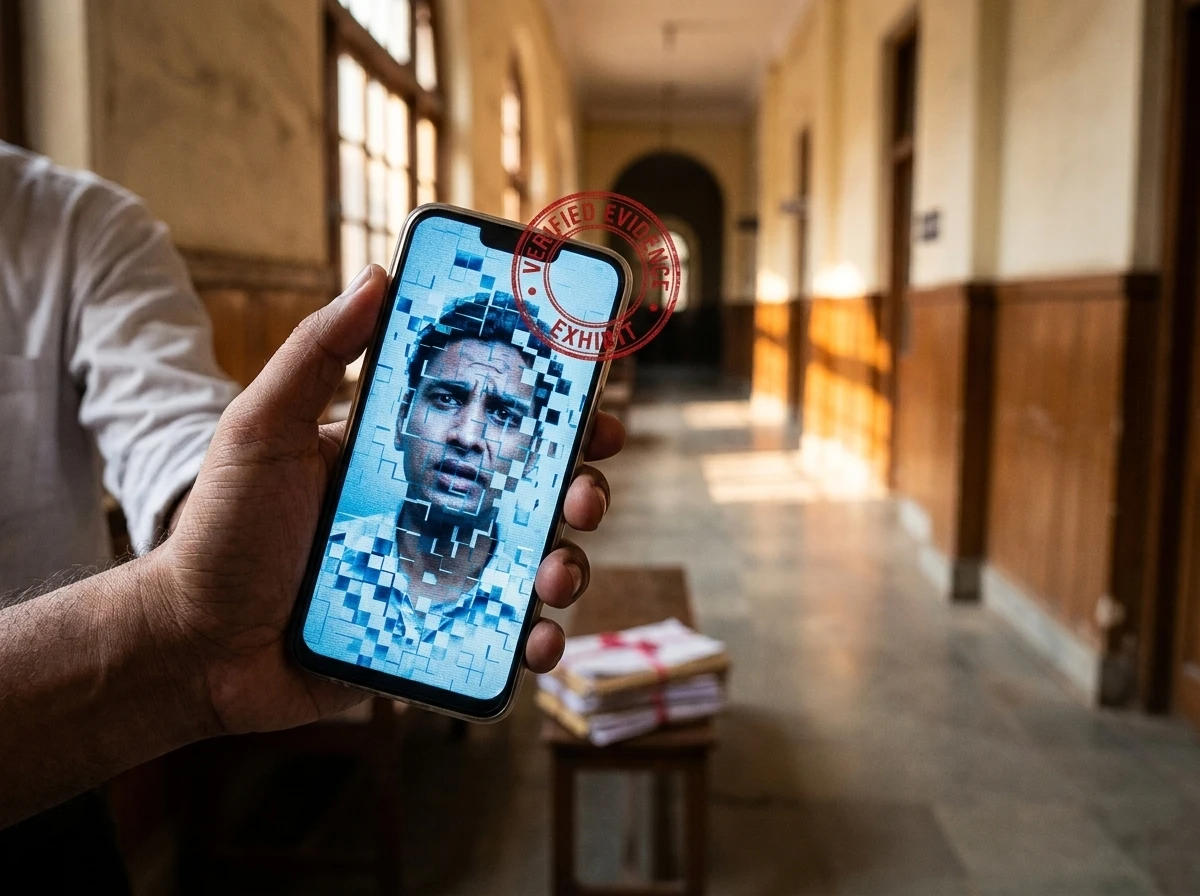
A Delhi court barred forty-four defendants in May from cloning Aman Gupta’s face and voice to sell fake endorsements. Gupta cofounded the audio brand boAt and judges the reality show Shark Tank India. It was the fifth major Indian court ruling since 2024 to protect a person’s identity, even though Parliament has never passed a law defining that right.
Five months earlier, a quieter fix had already reached every platform in India. A rule that took effect in February forces companies to erase a flagged deepfake within three hours, whether the victim is a Bollywood star or somebody nobody has heard of.
Ashok Kumar Orders Do the Heavy Lifting
India has no personality rights statute. Judges have built the doctrine case by case instead, leaning on the constitutional right to free expression, the right to life and liberty, the Copyright Act, the Trade Marks Act and the Information Technology Act, 2000, according to lawyers who track the cases.
“Courts don’t grant personality rights, they recognise them,” said Isheta T Batra, founder of the law firm TrailBlazer Advocates. “What the court examines is whether your identity has acquired enough commercial weight that someone profiting off it without consent constitutes an actionable wrong.”
When the infringer is unknown, Indian courts issue what lawyers abroad call John Doe orders and what Indian courts call Ashok Kumar orders, restraining anyone, named or not, from repeating the violation. Lavin Hirani, managing partner at Hirani & Associates, said these now often ride alongside dynamic injunctions that bind platforms directly, letting a plaintiff add new infringers later without returning to court each time.
There is no statutory definition of a celebrity in India. Courts instead run claims through a working test built largely from the Arijit Singh case: public recognition, identifiability from the disputed use, and commercial exploitation, Batra said. “Film stars and singers naturally succeed more easily, but the door is not closed to others,” Hirani said, adding that success still usually turns on proving real commercial harm.
Five Rulings Since Arijit Singh
The doctrine’s clearest test case remains Arijit Singh versus Codible Ventures, decided by Justice R.I. Chagla of the Bombay High Court in July 2024 after the playback singer found AI tools cloning his voice, his likeness sold as merchandise and fake domains registered in his name.
Chagla’s ad-interim order restrained thirty-eight named and unnamed defendants, including platforms that taught users to mimic Singh’s voice, and it doubled as a dynamic injunction that could reach infringers added later. It has become the template lawyers cite in nearly every case since.
| Case | Court | When | Person Protected | What the Order Covered |
|---|---|---|---|---|
| Arijit Singh v. Codible Ventures | Bombay High Court | July 2024 | Playback singer | AI voice cloning, fake domains, merchandise |
| Aishwarya Rai Bachchan v. Aishwaryaworld.com | Delhi High Court | 2025 | Actor | Deepfakes, face morphing, 72-hour platform takedown |
| Jubin Nautiyal v. Jammable Ltd | Delhi High Court | 2026 | Singer | AI voice models, digital avatars, metaverse use |
| Aman Gupta order | Delhi High Court | May 2026 | boAt cofounder, Shark Tank India judge | 44 defendants, fake endorsements, impersonation bots |
| Devi Shetty matter | Not specified in reporting | Not specified | Cardiac surgeon | AI-generated fake endorsements |
Batra pointed to the Devi Shetty matter to show the doctrine already reaches past entertainment. “The Dr Devi Shetty case shows that this doctrine is not limited to Bollywood,” she said. The Jubin Nautiyal ruling went further still, restraining AI voice models and avatar impersonation across the metaverse, a case one legal tracker’s recent rulings guide lists alongside the Aman Gupta order as proof the shield now covers founders and singers alike, not just actors.
Who Actually Pays When a Deepfake Hits?
The financial damage usually lands on ordinary fans, not the celebrities who sue. A McAfee survey found ninety percent of Indians have encountered a fake AI-generated celebrity endorsement, and victims who fell for one lost an average of ₹34,500, about $400, because a court injunction protects a star’s brand rather than a fan’s bank balance.
- 90% of Indians say they have been exposed to a fake AI-generated celebrity endorsement, per McAfee’s Most Dangerous Celebrity report.
- ₹34,500 was the average amount lost by Indians who fell for a deepfake scam, roughly $400.
- ₹70,000 crore a year is what a Pi-Labs analysis projects deepfake-enabled fraud could cost India, after such cases surged 550 percent since 2019.
- ₹22,495 crore was lost to cybercrime overall in India in 2025, per figures attributed to the government’s Indian Cyber Crime Coordination Centre, with tens of thousands of cases tied to synthetic content.
Bollywood superstar Shah Rukh Khan topped McAfee’s list of India’s most exploited celebrity identities in 2025, ahead of actor Alia Bhatt and Tesla’s Elon Musk. “Deepfakes have changed the game for cybercriminals,” said Pratim Mukherjee, senior director of engineering at McAfee, describing scammers as now “hacking human trust” rather than computer systems.
Personality rights violations are increasingly being used as vehicles for financial fraud, with unsuspecting consumers misled by fabricated endorsements, said Gitika Suri, director of patents at Cyril Amarchand Mangaldas. Ankit Sahni, a partner at Ajay Sahni & Associates, said such cases now raise consumer protection and public discourse concerns that go well beyond pure economic harm. A separate Pi-Labs projection of nationwide deepfake losses puts the same trend in blunter terms: the fraud is scaling faster than the courts hearing individual cases.
A Three-Hour Clock Nobody Noticed
Five months before the Aman Gupta order, the rulebook for every platform in India had already changed. On February 10, 2026, the Ministry of Electronics and Information Technology, known as MeitY, notified amendments creating a new legal category called synthetically generated information, or SGI.
- Synthetically Generated Information (SGI) – audio, visual or audio-visual content that is artificially or algorithmically created or altered to appear real, authentic or true, and is likely to be perceived as indistinguishable from an actual person or event, under India’s amended IT Rules.
The amendments took effect on February 20, 2026, giving platforms a ten-day window to comply. They introduced a three hour takedown deadline for unlawful content flagged by a court or government order, down from thirty-six hours, and a two-hour deadline for non-consensual intimate imagery or morphed pictures.
Unlike personality rights doctrine, the rules do not ask whether the person depicted is famous. They cover synthetic content depicting any individual or event, and require labelling plus permanent metadata identifying the content’s origin, on pain of platforms losing their safe harbour protection under the IT Act. A film star and an anonymous college student get the same three-hour clock.
Where the Shield Still Has Gaps
Personality rights claims are not automatic wins. Defendants can contest a case by showing the plaintiff lacks public recognition, that there was no commercial exploitation, or that the disputed content is satire, commentary or journalism protected under free expression.
“Miscreants typically target famous persons, not random individuals,” said Shwetank Tripathi, a partner designate of ANM Global, though he added that ordinary Indians are not without remedies and can lean on other legal protections, including the new IT Rules. Underreporting still complicates the picture: nearly two thirds of cyber fraud cases go unreported, one cybersecurity tracker found, making it hard to know how many disputes never reach a courtroom at all.
Every lawyer interviewed pointed toward the same missing piece: a dedicated statute. Courts have improvised well, but posthumous rights, fair use and AI-specific obligations remain undefined, leaving each new case to relitigate the same first principles.
A focused Personality Rights legislation would bring clarity and predictability
Hirani said the gap shows up most in cases involving deceased celebrities or ambiguous commercial use, areas a standalone law would still need to settle. For now, every ruling starts from the same blank page: no statute defines what a personality right actually is.
Frequently Asked Questions
Can a Deepfake Victim Recover Money Lost to a Scam?
Not automatically. A court or platform takedown removes the fake content but does not return stolen funds on its own. Victims have a better chance if they act fast, calling India’s 1930 cybercrime helpline or filing at cybercrime.gov.in immediately, the route credited with helping freeze roughly ₹8,189 crore in 2025.
Do Personality Rights Survive After a Celebrity Dies in India?
Indian courts have not settled the question. Posthumous rights are one of the specific gaps lawyers, including Hirani, say a dedicated personality rights statute would need to close, since current protection is built around a living person’s ability to sue.
Which Companies Must Follow the Three-Hour Takedown Rule?
The clock applies broadly to intermediaries, with extra duties on Significant Social Media Intermediaries, the large platforms such as Facebook and Instagram that face tighter obligations, including telling users about the consequences of non-compliance every three months instead of once a year.
Does Indian Law Protect Ordinary People From Deepfakes, Not Just Celebrities?
Yes, through a different channel than personality rights. The IT Rules define synthetic content by what it depicts, any individual or event, rather than by fame, which is why a private citizen targeted with AI-generated explicit images can seek a fast takedown without ever proving celebrity status.
What Should Someone Do if They Find a Deepfake of Themselves Online?
Capture screenshots as evidence, file a complaint at cybercrime.gov.in or call 1930, and request removal directly from the platform citing the IT Rules. Consulting an advocate helps if the content involves commercial exploitation rather than personal harm alone.
Disclaimer: This article explains India’s evolving personality rights and deepfake regulations for general information only, not legal advice; anyone facing identity misuse should consult a licensed advocate or approach India’s cybercrime portal, and figures are accurate as of publication.


Sony’s 10 Percent Disc Drop Leaves the 2028 Cutoff Intact

Chip Allocation Sidelines the Base iPhone 18 This Fall

Miami-Dade Fights the Vice City Brand It Already Wears

IFA 2026 Awards Put Tecno Ahead of Flagship Phones

USB-C Gadgets Made the Junk Drawer Rechargeable

Pixel 11 Pro Asks $1,099 for a Light Google Locked

The iPhone Ultra Sells Two Retired Minis as One Foldable

Google Opens Gmail to Voice and Gates Docs Live

Lenovo Prices the IdeaPad Vibe Against Apple’s $699 Neo

Xbox Caps Game Pass Cloud Gaming at 15 Hours

Oracle Cuts 21,000 Jobs in a Year, Cites AI in 10-K Filing

Fable 5 and Mythos 5 Return as US Lifts Anthropic Export Controls

SpaceX’s Google Deal Turns a Rocket Company Into a Cloud Landlord

CD Projekt Red Co-CEO: Redemption Arc Isn’t Done, Witcher 4 in 2027

XPL Rallies 30% Ahead of Plasma One Card Tier Launch

Google Search Profiles Build a Follow Graph Inside Discover

DGO App Brings Rs 549 Mobile Pass for FIFA World Cup 2026 in Nepal

Moonshot AI Targets $30 Billion in China’s Fastest AI Funding Sprint

Oppo’s ColorOS 17 Eligibility List Leaves A-Series Buyers Behind

Microsoft Xbox Layoffs Start in July as Sharma Slams 3% Margin
-
 AI3 months ago
Oracle Cuts 21,000 Jobs in a Year, Cites AI in 10-K Filing
-
 AI2 months ago
Fable 5 and Mythos 5 Return as US Lifts Anthropic Export Controls
-
 AI3 months ago
SpaceX’s Google Deal Turns a Rocket Company Into a Cloud Landlord
-
 GAMING3 months ago
CD Projekt Red Co-CEO: Redemption Arc Isn’t Done, Witcher 4 in 2027
-
 CRYPTO3 months ago
XPL Rallies 30% Ahead of Plasma One Card Tier Launch
-
 NEWS3 months ago
Google Search Profiles Build a Follow Graph Inside Discover
-
 APPS3 months ago
DGO App Brings Rs 549 Mobile Pass for FIFA World Cup 2026 in Nepal
-
 AI3 months ago
Moonshot AI Targets $30 Billion in China’s Fastest AI Funding Sprint