
AI
India’s Sovereign Cloud Boom Has More Builders Than One Startup Admits
Island Computing calls itself India’s first sovereign cloud, but Yotta, Tata and E2E already sell the same pitch, and the GPUs underneath are still imported.

Vishal Sirohi calls his year-old startup India’s first fully managed sovereign cloud platform. At least half a dozen Indian companies already sell cloud services under that exact label, and the chips running nearly all of them, including his, are still fabricated outside India.
Sirohi is the CEO and co-founder of Island Computing, a Bangalore infrastructure startup built by engineers who spent years at Amazon Web Services (AWS). In a recent interview with CXOToday, he laid out a case that India’s cloud market, worth an estimated $26.4 billion in 2026 and headed toward $60 to $80 billion by 2030, runs mostly on foreign law, and that new rules from Delhi are about to make that a design problem instead of a legal footnote. The argument is sound. The framing that no one has built this yet is not.
The Rules Changed Before the Market Did
Two years ago, compliance with India’s Digital Personal Data Protection Act (DPDP Act) meant adding a clause to a foreign cloud contract. Sirohi told CXOToday that requirement has hardened into something else: proof of exactly where each piece of data sits, who can access it, and which country’s courts can force it open.
That proof increasingly has to come from the infrastructure itself, not a services agreement bolted on afterward. Four frameworks are driving that shift at once.
- DPDP Act: requires documented evidence of data location and access control, not contractual promises.
- RBI localisation rules: require payments and banking data to sit on Indian soil.
- SEBI advisories: tighten cybersecurity controls for exchanges, depositories and market intermediaries.
- CERT-In’s breach directive: requires incidents to be reported within six hours, alongside 180-day log retention.
The sharpest recent move came from the Ministry of Electronics and Information Technology (MeitY). On March 20, 2026, it issued an addendum classifying government cloud workloads into tiers. Data marked Top Secret or Secret cannot go on any cloud platform at all. Everything else splits into Category A, high-impact data tied to national security or operations, and Category B, lower-risk official use data, each mapped to specific procurement routes through empanelled providers.
Every government department now has to sort its own data before it can even pick a vendor. Sirohi calls that the clearest signal yet of where enforcement is heading next, for banks, hospitals and startups alike, not just ministries.
A Crowded Field Already Sells Sovereignty
Sirohi describes India’s existing domestic cloud players as OpenStack wrappers, VMware white labels or data-centre operators repositioning as cloud companies. Some of that criticism lands. But the word sovereign is already on the shelf, attached to products with real infrastructure and real government customers behind them.
| Provider | Ownership | Sovereign Pitch | Notable Detail |
|---|---|---|---|
| Island Computing | Bangalore startup, founded 2025 | “First fully managed” sovereign cloud | Rust based data plane, microVM isolation, team of 1 to 10 |
| Yotta | Hiranandani Group | Shakti Cloud, “sovereign hyperscale” | Deploying over 20,000 NVIDIA Blackwell Ultra GPUs |
| Tata Communications | Tata Group | Vayu Cloud, “India’s sovereign cloud” | 100% of data and metadata hosted inside India |
| E2E Networks | NSE listed | Self-described “Sovereign Hyperscaler” | MeitY empanelled, Mumbai and Delhi NCR regions |
| CtrlS | Independent data-centre operator | Rated-4, banking-grade sovereignty | Asia’s largest Rated-4 data centre network |
| AWS, Azure, Google Cloud | US hyperscalers | Also MeitY empanelled | Roughly 80% combined share of India’s cloud spend today |
Tata Communications markets Vayu Cloud as fully compliant with MeitY, SEBI, RBI and IRDAI mandates, aimed at exactly the regulated banking and insurance workloads Sirohi says his platform was built for. E2E Networks, meanwhile, already holds its own MeitY Cloud Service Provider empanelment and brands itself a sovereign hyperscaler on its homepage.
Even the incumbents Island Computing wants to displace are not locked out of the sovereignty conversation. AWS, Microsoft Azure and Google Cloud all carry active MeitY empanelment today, audited by the same Standardisation Testing and Quality Certification (STQC) Directorate that reviews Indian applicants. Foreign law still governs the parent company. But the empanelment stamp, the actual gate to government and PSU contracts, is not exclusively Indian-owned turf.
The cost pitch is not new either. Rival Indian providers routinely advertise 30 to 60 percent savings against hyperscaler list prices, driven by simpler pricing and free or cheap in-region egress. Island Computing’s own claim of up to 30 percent lower total cost of ownership sits inside that existing range rather than ahead of it.
The Engineering Bet Behind Island Computing
Set the marketing claims aside and the technical story holds up better. Island Computing was incorporated in Bangalore in 2025, according to corporate filings that list Sirohi and Shelly Kumari as directors. Public startup trackers put the team at one to ten people, small by cloud-infrastructure standards but consistent with a company still in build mode.
The founding team’s AWS pedigree checks out independently of the interview. Co-founder and chief technology officer Bhavik Kothari announced on LinkedIn that he was joining after 15 years at Amazon. Principal database researcher Dinesh Salve worked alongside Sirohi in Amazon’s fintech organisation for more than a decade before the two reunited at Island.
What We Know And What Remains Unconfirmed
- Confirmed: Bangalore incorporation in 2025, an AWS-veteran founding team, a Rust-based data plane, and a microVM hypervisor built for per-tenant isolation.
- Confirmed: the platform claims a 90-second Island startup and a three-minute path to a production-grade deployment.
- Unconfirmed: any external funding round, current paying customer count, or third-party benchmark of the Rust performance and TCO figures.
- Unconfirmed: whether Island Computing itself yet holds MeitY empanelment, the credential its own target customers in banking, healthcare and government will ask for first.
The technical design, tenant isolation enforced at admission time rather than at the account boundary, is a real answer to a real gap. Multi-account architectures and cross-account permission sprawl are a documented pain point for SaaS teams building on AWS today. Building tenancy into the substrate rather than bolting it on afterward is a legitimate engineering position, whoever ships it first.
Where the 30 Percent Savings Number Comes From
Sirohi’s cost argument rests on complexity. He points out that AWS now exposes more than 240 services and over 1,800 instance types, a configuration surface that has grown for two decades. He cites the FinOps Foundation’s State of FinOps 2026 survey, which he says put annual enterprise cloud waste at $44.5 billion, and AWS’s own Partner Ecosystem Multiplier 2025 study, which he says found partners capture $7.13 in services revenue for every $1 of AWS technology sold.
Island’s answer, on the company’s own published benchmark, breaks into four pieces: shared multi-tenant hardware pools instead of dedicated per-customer overhead, free in-region data egress, rupee billing with no forex spread, and a leaner cost base overall, with R&D and platform build claimed at under 10 percent of operating cost versus roughly 60 percent at large incumbents.
None of those figures come from an independent auditor. They are Island’s numbers, about Island, describing a market Island is trying to enter. That does not make them wrong. It means they should be read as a pitch, not a verified result, until a customer or a third party publishes its own comparison.
Sovereignty Stops at the Silicon
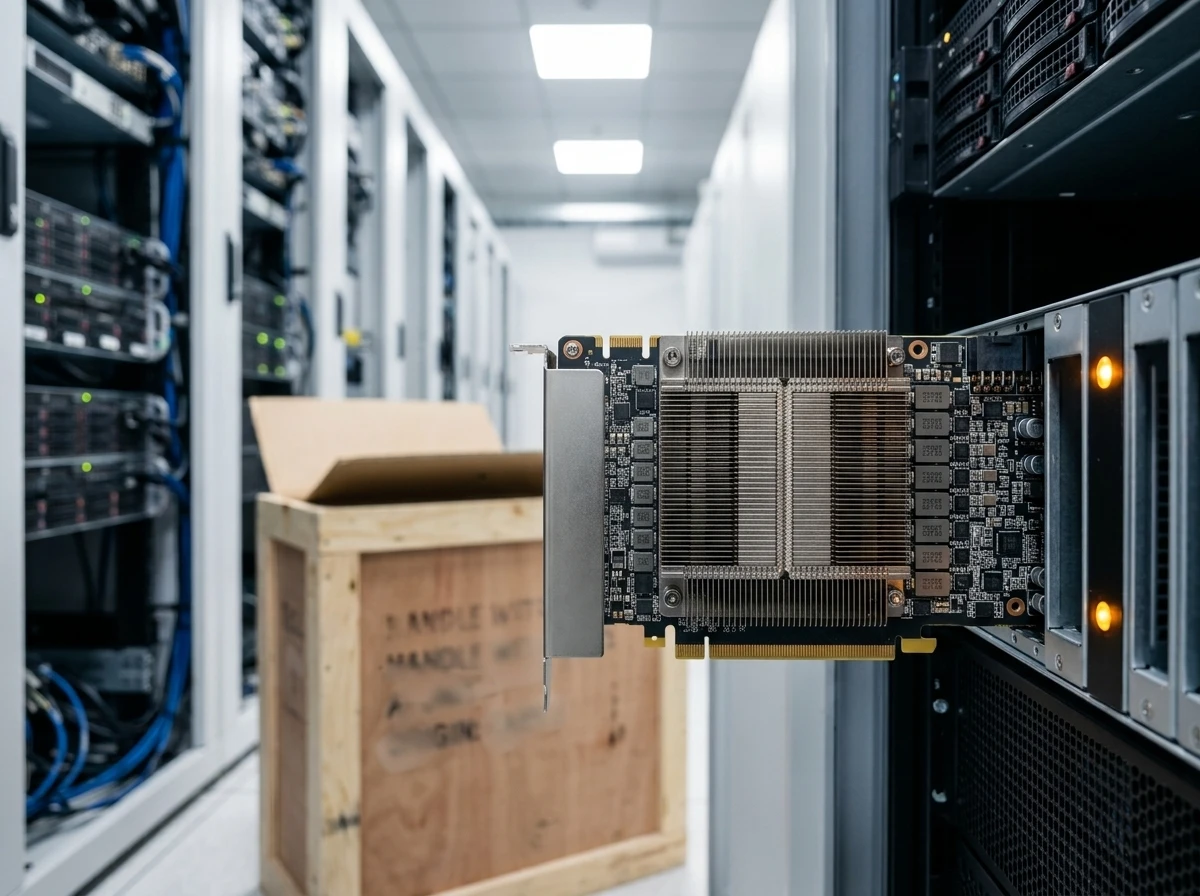
Here is the gap in the sovereignty argument that no interview about control planes and audit logs resolves: the graphics processing units (GPUs) underneath every one of these platforms, Island Computing included, are still made overseas.
The IndiaAI Mission has onboarded more than 40,000 subsidised GPUs for startups and researchers, a number that keeps climbing month to month. Nearly all of that hardware is NVIDIA silicon, fabricated by Taiwan Semiconductor Manufacturing Company (TSMC) in Taiwan. Yotta alone is installing more than 20,000 NVIDIA Blackwell Ultra GPUs across its Greater Noida and Navi Mumbai campuses, chasing what it calls one of Asia’s largest AI superclusters.
India’s own chip programme is real, but it is behind schedule. The India Semiconductor Mission has approved 12 projects worth roughly 1.64 lakh crore rupees, including one true fabrication plant, two compound semiconductor fabs and nine packaging and testing units. The flagship, a Tata Electronics joint venture with Powerchip Semiconductor Manufacturing Corporation (PSMC) in Dholera, Gujarat, was meant to produce first silicon by the middle of 2026. As of June 2026, independent tracking found the clean room still incomplete, with first silicon now pushed to the first half of 2027.
The one facility that is actually running, Micron’s assembly and test plant in Sanand, only packages finished wafers shipped in from Taiwan, Korea and Japan, and its output serves Micron’s global supply chain rather than Indian-specific demand. Packaging adds roughly 10 to 15 percent of a chip’s total value. Taken together, independent analysis estimates all three active Indian semiconductor projects will cover under 15 percent of the country’s chip consumption at full capacity. The remaining share, more than 85 percent, keeps arriving from abroad.
A cloud platform can own its code, its control plane, its identity systems and its data centre and still hand its compute bill to a foreign chipmaker every quarter. Sovereign compute, on the hardware that actually exists in India today, is aspirational rather than achieved.
Has Island Computing Cleared MeitY Empanelment?
No public record surfaced showing Island Computing holds MeitY Cloud Service Provider empanelment as of this writing. Established rivals, including AWS, Google Cloud, E2E Networks, ESDS and CtrlS, already carry that credential, some for years, following an STQC audit process the government treats as mandatory for selling to public sector banks, PSUs and government agencies.
That distinction matters more than any architecture diagram. Sirohi’s own examples of the workloads sovereignty is meant to protect, banking transactions, patient records, citizen identity, payments, are precisely the categories MeitY’s empanelment list gates. A platform can be fault-tolerant, Rust-based and isolated by design and still be unable to legally sell into the regulated workloads its founder describes as the whole point, until the empanelment paperwork clears.
Sirohi’s own numbers occasionally wobble on the scale of the problem he is describing. He tells CXOToday foreign operators capture approximately 80 percent of India’s cloud spend early in the conversation, then cites 87 percent later discussing the same dependency. Both may be directionally right. Neither is precisely audited, which is itself the argument for infrastructure that produces its own evidence rather than asking readers to take a founder’s word for it.
Frequently Asked Questions
Are Global Cloud Giants Like AWS and Azure Already MeitY-Empanelled?
Yes. Amazon Web Services, Microsoft Azure and Google Cloud all hold active MeitY Cloud Service Provider empanelment today, audited by the STQC Directorate the same way Indian applicants are, which lets them sell to government departments and public sector banks despite being foreign-owned platforms.
What Is the STQC and Why Does It Matter for Cloud Buyers?
The Standardisation Testing and Quality Certification Directorate is the government body that audits every cloud provider seeking MeitY empanelment. It checks data localisation, ISO 27001, 27017 and 27018 certification, and quality management standards before a provider can legally bid on government or PSU contracts.
How Long Would It Take India to Build Its Own AI Chips at Scale?
A NITI Aayog roadmap published in May 2026 estimates India needs six to ten additional fabrication plants at the scale of the Dholera project, each costing roughly $11 billion, plus $120 to $180 billion in total ecosystem investment over the next decade to meaningfully reduce chip imports.
Does Lower Cloud Cost Always Mean Better Compliance?
No. Industry comparisons of Indian sovereign cloud providers note explicitly that a cheaper, India-hosted platform does not automatically mean stronger compliance or security. Buyers in banking, healthcare or government still need to verify MeitY empanelment status and audit history for each specific workload, not just the vendor’s marketing label.


Sony’s 10 Percent Disc Drop Leaves the 2028 Cutoff Intact

Chip Allocation Sidelines the Base iPhone 18 This Fall

Miami-Dade Fights the Vice City Brand It Already Wears

IFA 2026 Awards Put Tecno Ahead of Flagship Phones

USB-C Gadgets Made the Junk Drawer Rechargeable

Pixel 11 Pro Asks $1,099 for a Light Google Locked

The iPhone Ultra Sells Two Retired Minis as One Foldable

Google Opens Gmail to Voice and Gates Docs Live

Lenovo Prices the IdeaPad Vibe Against Apple’s $699 Neo

Xbox Caps Game Pass Cloud Gaming at 15 Hours

Oracle Cuts 21,000 Jobs in a Year, Cites AI in 10-K Filing

Fable 5 and Mythos 5 Return as US Lifts Anthropic Export Controls

SpaceX’s Google Deal Turns a Rocket Company Into a Cloud Landlord

CD Projekt Red Co-CEO: Redemption Arc Isn’t Done, Witcher 4 in 2027

XPL Rallies 30% Ahead of Plasma One Card Tier Launch

Google Search Profiles Build a Follow Graph Inside Discover

DGO App Brings Rs 549 Mobile Pass for FIFA World Cup 2026 in Nepal

Moonshot AI Targets $30 Billion in China’s Fastest AI Funding Sprint

Oppo’s ColorOS 17 Eligibility List Leaves A-Series Buyers Behind

Microsoft Xbox Layoffs Start in July as Sharma Slams 3% Margin
-
 AI3 months ago
Oracle Cuts 21,000 Jobs in a Year, Cites AI in 10-K Filing
-
 AI2 months ago
Fable 5 and Mythos 5 Return as US Lifts Anthropic Export Controls
-
 AI3 months ago
SpaceX’s Google Deal Turns a Rocket Company Into a Cloud Landlord
-
 GAMING3 months ago
CD Projekt Red Co-CEO: Redemption Arc Isn’t Done, Witcher 4 in 2027
-
 CRYPTO3 months ago
XPL Rallies 30% Ahead of Plasma One Card Tier Launch
-
 NEWS3 months ago
Google Search Profiles Build a Follow Graph Inside Discover
-
 APPS3 months ago
DGO App Brings Rs 549 Mobile Pass for FIFA World Cup 2026 in Nepal
-
 AI3 months ago
Moonshot AI Targets $30 Billion in China’s Fastest AI Funding Sprint