
AI
Microsoft Swaps OpenAI and Anthropic for Its Own MAI in Office
Microsoft is replacing OpenAI and Anthropic in Office apps with its own MAI models, the same week it cut 4,800 jobs and pushed Xbox into a major restructure.

Microsoft is quietly pulling OpenAI and Anthropic out of the AI workloads that sit inside Excel and Outlook. The swap has been happening for weeks, and tens of thousands of Office prompts each week now run on Microsoft’s own MAI family rather than on third-party models.
The change was first reported by Bloomberg and confirmed in passing by Microsoft AI chief Mustafa Suleyman at the company’s Build developer conference in June. The goal, according to a person familiar with the work, is to shrink the bill Microsoft pays to external AI labs for the routine prompts that flow through its productivity apps. A Microsoft spokesperson declined to comment when approached by Bloomberg.
The shift still represents a small share of Microsoft’s total AI usage, and the OpenAI partnership that made Microsoft the world’s largest enterprise customer of frontier models is not being torn up. But the routing change touches the two Office apps hundreds of millions of workers open every day, and it is the clearest sign yet that the company plans to challenge its own suppliers from inside.
What Microsoft’s AI Chief Said at Build
At Build 2026 in San Francisco, Suleyman unveiled seven new in-house models, including MAI-Code-1-Flash for software development, MAI-Thinking-1 for reasoning, and a transcription model bound for Teams. The most pointed line was reserved for Anthropic.
“We pay a lot of money to Anthropic – so our goal is to reduce and ultimately eliminate that cost,” Suleyman told Bloomberg at the time. The pitch: one of the new MAI models matches the coding abilities of a prior-generation Anthropic model that remains very popular, Opus 4.6, at a reduced cost. MAI models are now also available inside GitHub Copilot, and the transcription model is set to roll into Teams and other products in the coming months. Microsoft still draws OpenAI tokens at a discount under its long-running partnership, but Suleyman has framed the open-ended spend as a vulnerability the firm is working to close.
4,800 Jobs Out, Xbox Takes the Heaviest Hit
The same week, Microsoft announced its largest corporate cost cut since 2023. The company is eliminating 4,800 jobs, equal to 2.1% of its global workforce, with the biggest hit landing at Xbox.
Amy Coleman, Microsoft’s chief people officer and a 27-year company veteran, told staff the cuts are needed to keep pace with “a fast-changing industry.” The Xbox unit will shed about 3,200 people in total: 1,600 on Monday and the rest spread through fiscal year 2027. Four Xbox studios will spin out of the company. Compulsion Games and Double Fine Productions will return to independent management with their game catalogues and intellectual property. Ninja Theory and Undead Labs have terms in place to join new owners, with funding to complete Senua’s Saga and State of Decay 3. France-based Arkane Studios is in formal consultation with its works council over strategic options.
The cuts arrive at a sobering moment for Microsoft stock. Microsoft is the worst performer among the megacap technology stocks so far in 2026, down roughly 19% year to date as of the Friday before the announcement. The market is weighing the possibility that generative AI tools could erode parts of Microsoft’s enterprise software franchise, even as the company’s own AI products have yet to become breakout hits.
April brought a one-time voluntary retirement offer for U.S. employees at the senior director level and below, a first for Microsoft. More than a third of eligible staff accepted, and Coleman said similar offers are being considered again. Most of those cuts are not being replaced by AI directly, Coleman wrote, but the work is changing. Microsoft’s 4,800 layoffs and Xbox studio spin-offs
- 4,800 jobs eliminated, Monday 7 July 2026
- 2.1% of Microsoft’s global workforce
- 3,200 Xbox cuts scheduled through fiscal 2027
- 1,600 Xbox roles removed on Monday
- 4 Xbox studios being spun off
- 3-10x the gap between Xbox margins and peer publishers
- 19% Microsoft’s year-to-date decline in 2026 through Friday
‘Our Business Today Is Not Healthy’: Sharma’s Reset Memo
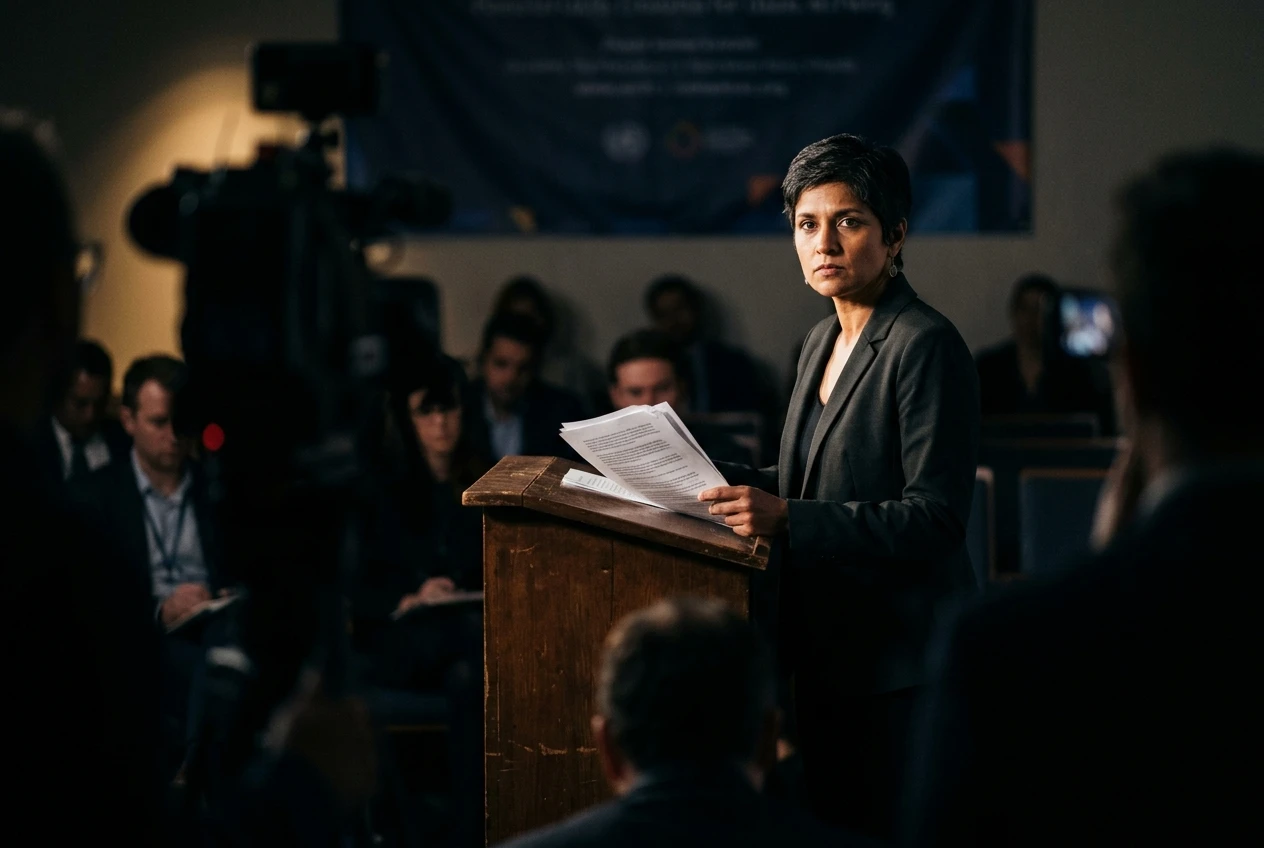
The reset at Xbox was laid out by Asha Sharma, who took over as Xbox CEO in June. Sharma’s email to staff, which she then posted in full on X, is unusually blunt by the standards of Microsoft corporate communication.
Our business today is not healthy. We are operating at margins that are 3-10x lower than comparable platform and publishing businesses.
She blamed years of aggressive studio acquisitions and a hedge on Game Pass, multi-platform publishing, and a wider content portfolio. Those bets created value but failed to grow at the pace Microsoft needed, she wrote, weakening the core business. The hardware side of gaming is now in what Sharma called “the most severe hardware crisis in its history.” Microsoft platform teams inside Xbox are 40% larger than they were at the start of this console generation, and work in some places passes through 14 layers of management. Sharma will cap layers at five, and sometimes three, and named Helen Chiang, a 19-year Xbox veteran who led Mojang, as the unit’s first chief operating officer.
Mojang and King will now report directly to Sharma, with Xbox framing both studios as platforms in their own right given their monthly active user counts. Asha Sharma’s full restructuring note to Xbox staff
Nadella Wrote an Essay Warning About AI Concentration
The same weekend, Microsoft chief executive Satya Nadella posted a long essay on X titled “A frontier without an ecosystem is not stable.” The argument is not subtle: a small number of frontier models absorbing the institutional expertise of entire industries is a political-economy risk the public will not tolerate.
The last thing any of us want is a world where every company across every sector is ceding value to a few models that eat everything they see.
Nadella compared the dynamic to the first phase of globalization, when industrial regions were hollowed out by offshoring while headline GDP figures stayed healthy. His prescription is a “frontier ecosystem, not just a frontier model,” built around what he called human capital and token capital. Companies, he wrote, should keep the learning loop on their own data and rotate models underneath it. Other chief executives have made similar warnings this year, among them Snowflake’s Sridhar Ramaswamy and Box’s Aaron Levie.
Microsoft itself has been acting on parts of the argument, even where the public message is messier. The Experiences and Devices division, which builds Windows client software and Surface, was cancelling the majority of its internal Claude Code licenses, with usage rates hitting 84% to 95% of monthly capacity by April 2026. That episode turned into a small cautionary tale about exactly the consumption pattern Nadella describes: when a tool is metered by the token, more productivity means a higher bill. The same week the essay went up, Reuters reported a proposed class-action shareholder lawsuit in Seattle federal court accusing Microsoft of inflating its stock price by failing to disclose slowing Azure cloud growth and rising AI infrastructure costs. Nadella is named in the suit alongside Chief Financial Officer Amy Hood. Microsoft reported $37.5 billion of capital spending in its prior quarter, up nearly 66% year on year. Satya Nadella’s essay on AI concentration risk · Salesforce and SAP racing to own the AI data layer
Other Companies Are Hitting the Same AI Bill
The Microsoft moves are part of a broader reset across the technology and consulting sectors. The pattern is the same in every case: deploy the tools aggressively, measure usage, then try to walk back the spend.
The shift has acquired an industry nickname, the “tokenpocalypse,” coined after leaked audio from a recent Accenture internal meeting was published by 404 Media. Agentic AI strategy lead Justice Kwak told colleagues the heaviest users inside the consulting firm were not engineers. “We’re seeing from some of the data internally at least that it’s actually not our engineers that are driving the token consumption. It’s a lot of the non-engineers that are doing some of those behaviors,” Kwak said, in audio reviewed by 404 Media.
- Uber told staff to “use AI as much as possible,” then ran through its 2026 budget in four months. The company later capped use of agentic coding tools including Claude Code and Cursor.
- Accenture’s leaked audio shows non-engineers burning tokens on tasks such as converting PDFs into slide decks, prompting a rethink of internal usage policy.
- GitHub began charging customers per token rather than a flat subscription, exposing companies whose flat budgets ran hot.
- Microsoft is cancelling most of its internal Claude Code licenses in its Experiences and Devices division effective 30 June 2026.
For Microsoft, the cost-control move carries a particular tension. The same week the company cut thousands of jobs and warned in a court filing that AI infrastructure bills are higher than the market has been told, the chief executive of record published an essay arguing AI concentration itself is a threat. The pieces fit together if you accept that Microsoft sees its AI suppliers as a strategic liability and its customers as an AI-dependent workforce that needs protecting from concentration at the top of the stack. Accenture and Uber scrambling to curb AI token spending
Frequently Asked Questions
What did Microsoft actually change with MAI in Excel and Outlook?
Microsoft began routing tens of thousands of AI prompts each week inside Excel and Outlook through its own MAI models instead of OpenAI and Anthropic. The change is incremental, not a wholesale swap, and the MAI share of Microsoft-wide AI usage is still small.
How big is the Xbox piece of the 4,800 layoffs?
Xbox is taking about two-thirds of the cuts. About 3,200 people will leave the gaming unit through fiscal 2027, with 1,600 of those cuts announced on Monday. Four Xbox studios are being spun out as independent companies or absorbed by new owners.
Why is Satya Nadella publicly warning about AI concentration?
In his X essay, Nadella framed the rise of a few frontier models absorbing enterprise expertise as a political-economy risk on par with the first wave of globalization. His argument lines up with the MAI push inside Microsoft: keep the learning loop in-house, then rotate models underneath.
Which other companies are pulling back on AI spending?
Uber, which burned through its 2026 AI budget in four months; Accenture, which is reviewing usage policy after leaked internal audio showed non-engineers were the heaviest users; and Microsoft itself, which is cancelling most of its internal Claude Code licenses.


Lunit Turns Routine H&E Slides Into a Lung Pre-Screen

Meta’s Muse Agent Wants Your Inbox and Your Card

Police Chase Mules as AI Chatbots Run Romance Scams

Ticketmaster’s Personalized App Is Built to Move Empty Seats

Software Deals Now Hinge on Filing Accuracy, Not Beats

Iowa Counties Warn Workers That ChatGPT Keeps Their Files

Shaalan Beg’s Oncology AI Hits an Enrollment Wall

Exowatt Warns Gas-Fired AI Campuses May Not Last a Decade

Philips Splits Innovation and Hands AI to Partovi

Chrome 153 Puts the Whole Web on a Two-Week Clock

Oracle Cuts 21,000 Jobs in a Year, Cites AI in 10-K Filing

Fable 5 and Mythos 5 Return as US Lifts Anthropic Export Controls

SpaceX’s Google Deal Turns a Rocket Company Into a Cloud Landlord

CD Projekt Red Co-CEO: Redemption Arc Isn’t Done, Witcher 4 in 2027

XPL Rallies 30% Ahead of Plasma One Card Tier Launch

Google Search Profiles Build a Follow Graph Inside Discover

DGO App Brings Rs 549 Mobile Pass for FIFA World Cup 2026 in Nepal

Moonshot AI Targets $30 Billion in China’s Fastest AI Funding Sprint

Oppo’s ColorOS 17 Eligibility List Leaves A-Series Buyers Behind

Microsoft Xbox Layoffs Start in July as Sharma Slams 3% Margin
-
 AI3 months ago
Oracle Cuts 21,000 Jobs in a Year, Cites AI in 10-K Filing
-
 AI2 months ago
Fable 5 and Mythos 5 Return as US Lifts Anthropic Export Controls
-
 AI3 months ago
SpaceX’s Google Deal Turns a Rocket Company Into a Cloud Landlord
-
 GAMING3 months ago
CD Projekt Red Co-CEO: Redemption Arc Isn’t Done, Witcher 4 in 2027
-
 CRYPTO3 months ago
XPL Rallies 30% Ahead of Plasma One Card Tier Launch
-
 NEWS3 months ago
Google Search Profiles Build a Follow Graph Inside Discover
-
 APPS3 months ago
DGO App Brings Rs 549 Mobile Pass for FIFA World Cup 2026 in Nepal
-
 AI3 months ago
Moonshot AI Targets $30 Billion in China’s Fastest AI Funding Sprint