
COMPUTERS
Nvidia RTX Spark Is a Smart Corporate Bet on Laptops
Nvidia’s RTX Spark laptop chip launched at Computex 2026 with 1 petaflop of AI compute and 128GB of memory, but no battery figures for gaming or AI agents.

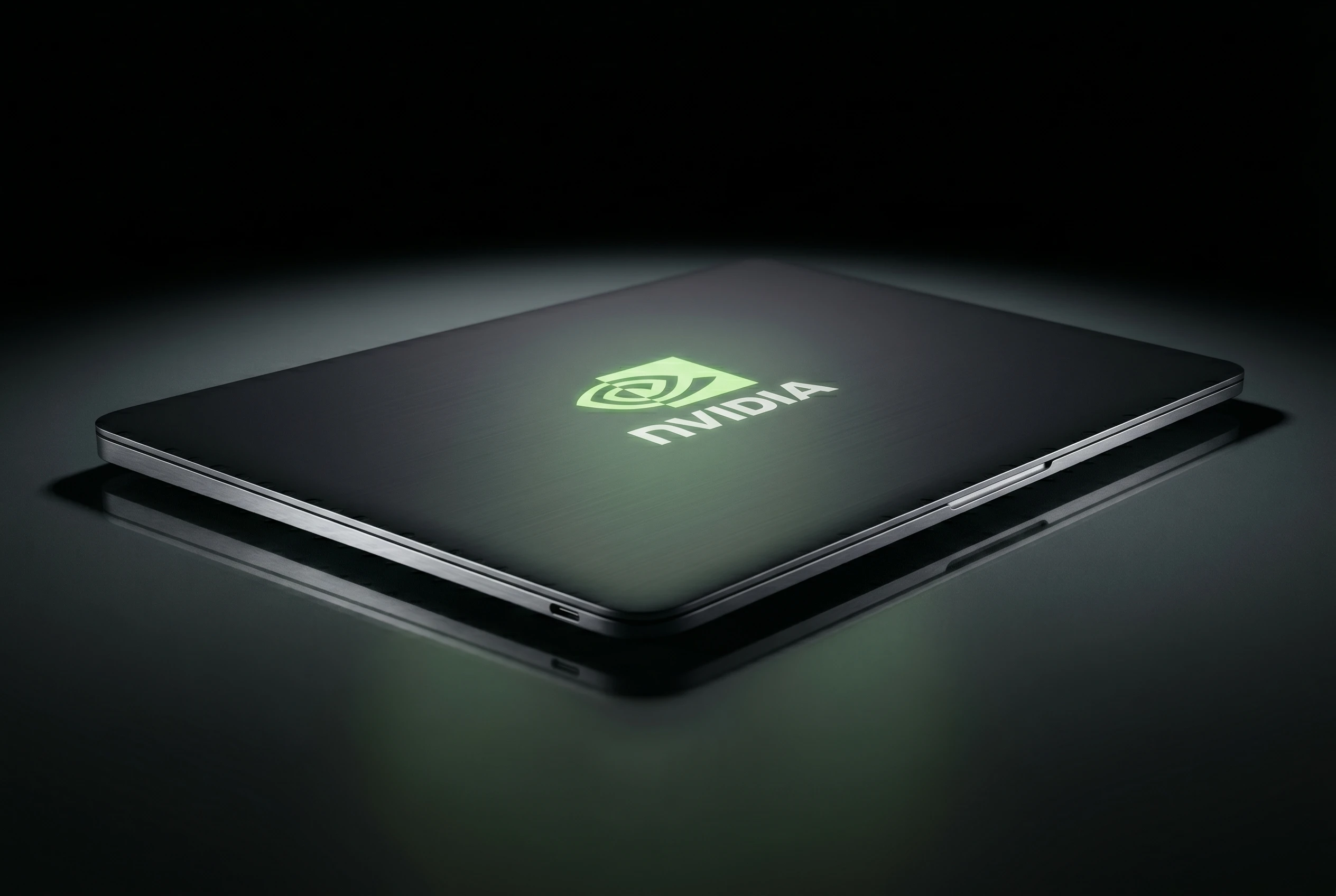
Nvidia unveiled the RTX Spark superchip at Computex 2026 in Taipei on June 1, its first consumer Arm processor and the company’s direct challenge to laptop chips from Intel, AMD, and Qualcomm. The silicon pairs a 20-core Arm Grace CPU with a Blackwell GPU carrying 6,144 CUDA (Compute Unified Device Architecture) cores and up to 128GB of unified memory. Machines from Dell, Hewlett Packard, Lenovo, Asus, MSI, and Microsoft’s Surface brand are due in fall 2026.
Nvidia hasn’t published battery figures for gaming or AI agent workloads, the exact tasks the chip promises to transform. With data center chips at nearly 90% of fiscal 2026 revenue, the laptop business is a hedge regardless of where the benchmarks land.
Why Nvidia Needs a Laptop
Nvidia’s data center segment generated $193.7 billion of the company’s $215.9 billion in fiscal year 2026 revenue, about 90 cents of every dollar, as Nvidia’s Q4 fiscal 2026 earnings release shows. In the first quarter of fiscal 2027 (ended April 26, 2026), that concentration deepened: data center revenue of $75.2 billion accounted for more than 92% of the $81.6 billion quarterly total.
That lopsidedness creates exposure. AI server demand has been extraordinary, and the data center segment grew 68% year on year in fiscal 2026, but a single category dominating nine-tenths of revenue leaves little cushion if hyperscaler capital spending slows, export restrictions expand, or a major customer moves chip design in-house. Gaming, Nvidia’s second-largest segment, contributed $16 billion in fiscal 2026, roughly 7% of total revenue.
Consumer laptops, if RTX Spark earns real market share, add a revenue line that moves independently of cloud infrastructure budgets. Nvidia’s 2026 equity investment portfolio, which crossed $40 billion in disclosed AI bets, reflects the same diversification logic the laptop chip serves in the operating business.
Tom’s Guide compared the launch’s ambition to Apple’s M1 transition in 2020, when Apple moved its Mac lineup from Intel to its own Arm silicon and transformed MacBook battery life. The CUDA toolchain Nvidia already owns is the differentiator in that comparison: every serious AI researcher, 3D artist, and game developer already depends on it, and all of it runs natively on RTX Spark without developer porting effort.
- $215.9B – Nvidia’s total fiscal 2026 revenue
- $193.7B – Data center revenue, approximately 90% of the total
- $16B – Gaming revenue, Nvidia’s second-largest segment
- 30+ – Confirmed RTX Spark laptop models arriving fall 2026
What the RTX Spark Superchip Contains
Per Nvidia’s Computex press release, RTX Spark combines a 20-core Arm Grace CPU (co-developed with semiconductor company MediaTek) alongside a Blackwell RTX GPU carrying 6,144 CUDA cores and fifth-generation Tensor Cores with FP4 (4-bit floating point) precision. The CPU and GPU connect through NVLink C2C (chip-to-chip interconnect) and share a pool of 128GB of LPDDR5X (Low Power Double Data Rate 5X) unified memory, which both chips draw from without copying data across a bus. Wccftech, reporting on the Computex announcement, noted the chip is built on TSMC’s 3nm process node and contains approximately 70 billion transistors.
The headline AI figure is 1 petaflop of compute, which Nvidia says is sufficient to run local LLMs (large language models) at up to 120 billion parameters with context windows of one million tokens. Nvidia’s DGX Spark mini-PC, the Linux-based developer machine that proved the unified Arm-plus-Blackwell memory architecture in 2025, handled a smaller model scale on the same basic design; RTX Spark brings that to Windows for consumers.
The chip also carries the NVLink C2C interconnect Nvidia built for its server GPUs, delivering the bandwidth needed to prevent the CPU from waiting on the GPU during AI inference tasks. That low-latency link is one reason Nvidia says agents can run continuously in the background without degrading foreground performance.
In gaming terms, Nvidia benchmarks RTX Spark against its own laptop RTX 5070 discrete graphics card. TechRadar confirmed that figure from a conversation with an Nvidia employee at Computex. The full RTX stack carries over: DLSS 4.5 (Deep Learning Super Sampling, Nvidia’s AI-driven frame-rate upscaling), G-Sync, Reflex, and hardware ray tracing, capabilities Qualcomm’s and Apple’s laptop platforms can’t match on CUDA-dependent game titles. Nvidia says RTX Spark laptops will weigh as little as three pounds and measure under 0.55 inches thick, and performance stays consistent whether the machine is plugged in or on battery, per the chip’s official product page.
The Competition Nvidia Is Walking Into
Apple’s M4 Max MacBook Pro ships today. Qualcomm’s Snapdragon X2 Elite Extreme, with a prime core rated at 5.0GHz and a third-generation Oryon CPU, already powers Windows on Arm machines like the Asus Zenbook A16, starting at $1,599. The Arm laptop market is not waiting for RTX Spark to define it.
| Spec | NVIDIA RTX Spark | Apple M4 Max |
|---|---|---|
| CPU cores | 20 (Arm Grace) | 16 (Apple Silicon) |
| GPU | 6,144 CUDA cores (Blackwell RTX) | 40-core Apple GPU |
| Peak AI compute | 1 petaflop (FP4 precision) | 32-core Neural Engine |
| Unified memory | Up to 128GB LPDDR5X | Up to 128GB LPDDR5 |
| Local LLM capacity | Up to 120B parameters | Approx. 70B parameters |
| OS | Windows 11 | macOS |
| Availability | Fall 2026 | Available now |
Sources: Nvidia Newsroom (RTX Spark specs); Apple product specifications (M4 Max specs). LLM parameter capacities based on reported unified memory configurations.
Nvidia’s unified memory pool supports local model inference at up to 120 billion parameters, compared to approximately 70 billion for Apple’s M4 Max with the same 128GB memory ceiling. For AI developers running large models without cloud compute, that gap in capacity is measurable.
The Qualcomm comparison matters more for mainstream buyers. Snapdragon X laptops delivered strong battery life and solid productivity performance, but users documented concrete compatibility problems: x86 printer drivers that wouldn’t install on Arm, competitive games blocked by anti-cheat software that hadn’t been ported, and x64 app emulation that added performance overhead and occasional instability. Qualcomm’s Snapdragon C push into sub-$300 Windows laptops shows the company is still building out the Windows on Arm catalog; the compatibility problems that plagued early Snapdragon X buyers haven’t been fully resolved at the premium tier.
Nvidia enters with one asset Qualcomm never had: a developer base that already writes for CUDA. AI frameworks, graphics pipelines, and game engines that compile against CUDA don’t need porting to an unfamiliar architecture. That changes the compatibility picture relative to Qualcomm’s Hexagon NPU (neural processing unit), though day-one Windows on Arm compatibility isn’t automatic even with CUDA behind it.
Gaps in the Launch Disclosure
Nvidia has been precise about the numbers that make the chip look impressive and quiet about the ones real users will test first.
Gaming battery life is the clearest omission. At a pre-Computex briefing, Mark Aevermann, Nvidia’s RTX Spark product marketing lead, called it


South Korea Retail Investors Face Reckoning After KOSPI AI Rally Collapses

Surrey AI Maps Three Heart Attack Paths and Their Molecular Roots

Germany Locks Neutral Apple ATT Prompts Across Most of Europe

Apple’s 5% EU Fee Quietly Rewrites Alternative App Store Math

Apple’s EU Fee Truce Cuts Complexity but Leaves Rivals Fuming

Pixel 11 Pro Fold Trades Thinness for Durability and Seven-Year Stay

Mayo AI Flags HCM Obstruction From Everyday Ultrasound Videos

Indian Brands Quietly Scale Landmark Screens and Home Tech

Navin Vatsa Turns Grief Into a Lifetime of Quiet Seeing

Google Bets Pixel 11 Agentic AI Will Redefine Phones

Oracle Cuts 21,000 Jobs in a Year, Cites AI in 10-K Filing

Fable 5 and Mythos 5 Return as US Lifts Anthropic Export Controls

SpaceX’s Google Deal Turns a Rocket Company Into a Cloud Landlord

CD Projekt Red Co-CEO: Redemption Arc Isn’t Done, Witcher 4 in 2027

XPL Rallies 30% Ahead of Plasma One Card Tier Launch

Google Search Profiles Build a Follow Graph Inside Discover

DGO App Brings Rs 549 Mobile Pass for FIFA World Cup 2026 in Nepal

Moonshot AI Targets $30 Billion in China’s Fastest AI Funding Sprint

Oppo’s ColorOS 17 Eligibility List Leaves A-Series Buyers Behind

Microsoft Xbox Layoffs Start in July as Sharma Slams 3% Margin
-
 AI2 months ago
Oracle Cuts 21,000 Jobs in a Year, Cites AI in 10-K Filing
-
 AI2 months ago
Fable 5 and Mythos 5 Return as US Lifts Anthropic Export Controls
-
 AI3 months ago
SpaceX’s Google Deal Turns a Rocket Company Into a Cloud Landlord
-
 GAMING2 months ago
CD Projekt Red Co-CEO: Redemption Arc Isn’t Done, Witcher 4 in 2027
-
 CRYPTO2 months ago
XPL Rallies 30% Ahead of Plasma One Card Tier Launch
-
 NEWS3 months ago
Google Search Profiles Build a Follow Graph Inside Discover
-
 APPS2 months ago
DGO App Brings Rs 549 Mobile Pass for FIFA World Cup 2026 in Nepal
-
 AI3 months ago
Moonshot AI Targets $30 Billion in China’s Fastest AI Funding Sprint