
NEWS
Philippines Bill Seeks Regional K9 Shelters for Retired Dogs
HB 9948 would establish a regional K9 adoption shelter in every Philippine administrative region, with PNP and PDEA handling turnover and monitoring.

Pampanga First District Rep. Carmelo “Pogi” Lazatin Jr. filed House Bill 9948 on June 25, requiring a regional K9 adoption shelter in every Philippine administrative region for retired police dogs. The Manila Standard reported the filing on July 2, 2026. The bill would build a national shelter network with the Philippine National Police (PNP) and the Philippine Drug Enforcement Agency (PDEA) coordinating turnover, medical records, and post-adoption monitoring.
Lazatin’s measure bets that institutionalizing the retirement process, with standardized screening, mandatory records, and regional accountability, will produce better outcomes than the current system, in which each K9’s placement depends on whichever agency handled its working life. The bill is the second animal welfare measure Lazatin has filed in 2026, following his March 19 push for “no-kill” shelters and public veterinary clinics nationwide.
How HB 9948 Builds a Regional K9 Shelter Network
HB 9948 would put at least one Regional K9 Adoption Shelter in every administrative region, a structural shift from the case-by-case placement of retired working dogs that has operated without a single national framework. The shelter would be established and operated by the host provincial government or local government unit identified in the implementing rules and regulations, in coordination with the PNP and PDEA, and in accordance with animal welfare standards. The Manila Standard’s report on HB 9948 text and Lazatin’s quoted rationale lays out three operational pillars: adoption, veterinary care, and post-adoption monitoring, each meant to outlive the moment of handoff.
The bill’s machinery reads like a delivery specification. The LGU takes operational ownership. The PNP and PDEA supply the dogs and the medical file. The shelter runs the placement and the records, and the registry persists for the life of the animal, with the local government unit held accountable for compliance.
The framework leans on existing animal-welfare accreditation rules rather than creating a parallel system. The same Bureau of Animal Industry (BAI) that accredits civilian shelters would accredit the regional K9 facilities, keeping the chain of authority inside one agency.
By the numbers:
- HB 9948 filed: June 25
- Shelters mandated: at least one per administrative region
- Operators: host provincial government or LGU
- Coordinating agencies: PNP and PDEA
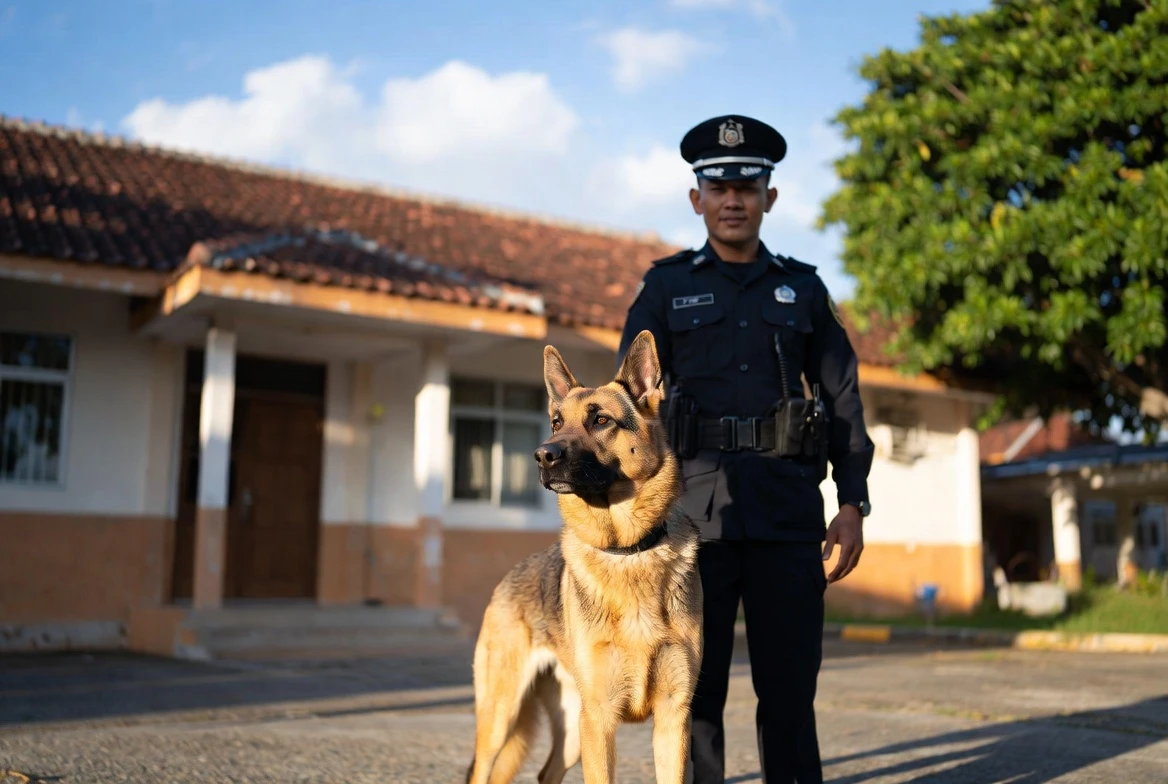
The Ad-Hoc Pipeline the Bill Replaces
Lazatin’s framing of the bill is unsparing about the current state. “These police dogs are reliable partners of law enforcement agencies, however, upon retirement, some of them are put up for adoption without a uniform and dedicated framework that ensures standardized veterinary care, adopter screening, and post-adoption monitoring,” he said in the Manila Standard report. The pipeline today varies by which agency retires the dog, with profiles sometimes posted on agency Facebook pages or in newspapers when a working K9 is ready to leave the force.
There is no single standard for adopter vetting, no mandated medical handoff, and no central registry tracking what happens to a retired working K9 after placement. A retired police dog adopted under the current system can move through the process without a permanent record of where it went, how it was screened, or what veterinary care followed. The placing agency often loses contact with the dog once the adoption is signed. Lazatin filed the bill on June 25 with the explicit aim of closing those gaps systematically. The PNP and PDEA would be folded into the new structure rather than running parallel programs.
What the Turnover Process Would Require
The bill spells out four operational duties at the moment of handoff, each step meant to create an audit trail the current system does not produce.
The duties cover the chain of custody from agency kennel to adoptive home:
- The PNP and PDEA coordinate with the host shelter for the turnover of retired K9s.
- The agencies submit medical and vaccination records and other information needed for proper care and placement.
- The shelter maintains records of retired K9s and their adoptive owners.
- The records are used to monitor the animals’ welfare and ensure they are not abused or used for illegal activities.
A retired K9 entering a regional shelter would, on paper, carry its medical history with it and leave a documented trail with its adopter. The shelter’s records persist after the adoption is signed, and the bill explicitly empowers those records to flag abuse or use of a retired working dog for illegal activity. Local authorities would have a registry to act on rather than relying on reports from neighbors or former handlers.
Under the current system, the placing agency often loses contact with the dog after adoption. Under HB 9948, the shelter’s records persist, and the wider effect is a shift in who owns the K9’s next chapter. The PNP and PDEA would remain the source of supply, the shelter would be the custodian, and the adoptive owner would be screened, monitored, and held accountable through the registry. The local government unit foots the operational bill while the agencies supply the dogs and the documentation.
An Angeles City No-Kill Shelter as the Working Model
Lazatin’s argument does not rest on theory. During his tenure as mayor of Angeles City, the local government established the first BAI-accredited “no-kill” animal shelter in Pampanga province.
The 103-capacity Angeles City Animal Shelter received Bureau of Animal Industry accreditation in May 2023 and formally opened on July 18, 2023. Through the City Veterinary Office, the city ran free spay-and-neuter and anti-rabies vaccination programs at scale, with 5,973 pets spayed or neutered and 130,520 pets vaccinated. The shelter and the public-vet infrastructure around it are the operational proof Lazatin is leaning on as HB 9948 heads to committee.
This proposed measure seeks to honor retired police dogs by institutionalizing a mechanism that makes their adoption post-retirement more structured and more humane, and prevent abuse, neglect, and exploitation of these animals that have dedicated much of their short lives in service to the country.
Carmelo “Pogi” Lazatin Jr., Pampanga First District Representative, in the Manila Standard report on HB 9948, July 2, 2026.
The quote ties the working model in Angeles City to the national bill. Lazatin’s office ran a no-kill shelter with public-vet backing under the existing Animal Welfare Act framework. HB 9948 asks Congress to replicate that pattern at the regional level for retired K9s specifically, with the same BAI accreditation pipeline as the spine.
How HB 9948 Sits Inside the Existing Animal Welfare Law
The new bill borrows its legal scaffolding from Republic Act No. 8485, or the Animal Welfare Act of 1998, as amended by Republic Act No. 10631.
| Bill or Law | Sponsor / Status | Scope | Operative Mechanism |
|---|---|---|---|
| HB 9948 (2026) | Lazatin, filed June 25 | Regional K9 shelters for retired police dogs | One shelter per administrative region, run by LGU with PNP and PDEA coordination |
| HB 8710 (2026) | Lazatin, filed March 19 | City- and municipal-level “no-kill” shelters and public vet clinics | Local government units operate, registered with the Bureau of Animal Industry |
| RA 8485 as amended by RA 10631 | Existing law | National Animal Welfare Act | BAI accreditation framework; regulates shelters, cruelty, and transport |
The BAI is the through-line. The 1998 law, as amended, places the bureau in charge of supervising and regulating establishments that handle animals, and the BAI compendium of animal welfare laws and issuances remains the reference set against which any new shelter is judged. In practice, HB 8710 builds the nationwide general-animal shelter and public-vet layer. HB 9948 builds a specialized K9 track on top of that layer. The PNP and PDEA supply the dogs and the records, and the local government runs the facility.
A Crowded Animal Welfare Pipeline in the 20th Congress
Lazatin is not alone in pressing the Animal Welfare Act harder in the current Congress. HB 1746, authored by Congressman Brian Poe, proposes the creation of an Animal Welfare Bureau, a dedicated government body that would oversee implementation across the country. HB 5849, a separate measure, raises the penalties for convicted animal offenders to a prison term of not less than six years and one day to twelve years, or a fine. The breadth of the pipeline is the context for HB 9948’s regional K9 angle, with each bill addressing a different gap in the 1998 framework.
A broader amendment of the Animal Welfare Act, captured in HB 1746’s pending revision of the Animal Welfare Act, sits alongside measures targeting penalties, no-kill shelters, and the specialized K9 retirement track. Lazatin’s full list of filed House bills runs from elderly-care proposals to animal welfare, with two shelter bills already on the 2026 docket.
Each bill addresses a different gap. HB 1746 builds the bureau. HB 5849 raises the cost of cruelty. HB 8710 expands the public-vet layer. HB 9948 closes the retirement loophole for police dogs, and the bill is now on the record. The bet embedded in HB 9948 is that a regional network will outlast any individual dog’s retirement and outlast any single agency’s discretion. The PNP and PDEA place the dogs, the local governments run the shelters, and the registry keeps watch.


Pixel 11 Trails Galaxy Phones That Last as Long

Sony’s 10 Percent Disc Drop Leaves the 2028 Cutoff Intact

Chip Allocation Sidelines the Base iPhone 18 This Fall

Miami-Dade Fights the Vice City Brand It Already Wears

IFA 2026 Awards Put Tecno Ahead of Flagship Phones

USB-C Gadgets Made the Junk Drawer Rechargeable

Pixel 11 Pro Asks $1,099 for a Light Google Locked

The iPhone Ultra Sells Two Retired Minis as One Foldable

Google Opens Gmail to Voice and Gates Docs Live

Lenovo Prices the IdeaPad Vibe Against Apple’s $699 Neo

Oracle Cuts 21,000 Jobs in a Year, Cites AI in 10-K Filing

Fable 5 and Mythos 5 Return as US Lifts Anthropic Export Controls

SpaceX’s Google Deal Turns a Rocket Company Into a Cloud Landlord

CD Projekt Red Co-CEO: Redemption Arc Isn’t Done, Witcher 4 in 2027

XPL Rallies 30% Ahead of Plasma One Card Tier Launch

Google Search Profiles Build a Follow Graph Inside Discover

DGO App Brings Rs 549 Mobile Pass for FIFA World Cup 2026 in Nepal

Moonshot AI Targets $30 Billion in China’s Fastest AI Funding Sprint

Oppo’s ColorOS 17 Eligibility List Leaves A-Series Buyers Behind

Microsoft Xbox Layoffs Start in July as Sharma Slams 3% Margin
-
 AI3 months ago
Oracle Cuts 21,000 Jobs in a Year, Cites AI in 10-K Filing
-
 AI2 months ago
Fable 5 and Mythos 5 Return as US Lifts Anthropic Export Controls
-
 AI3 months ago
SpaceX’s Google Deal Turns a Rocket Company Into a Cloud Landlord
-
 GAMING3 months ago
CD Projekt Red Co-CEO: Redemption Arc Isn’t Done, Witcher 4 in 2027
-
 CRYPTO3 months ago
XPL Rallies 30% Ahead of Plasma One Card Tier Launch
-
 NEWS3 months ago
Google Search Profiles Build a Follow Graph Inside Discover
-
 APPS3 months ago
DGO App Brings Rs 549 Mobile Pass for FIFA World Cup 2026 in Nepal
-
 AI3 months ago
Moonshot AI Targets $30 Billion in China’s Fastest AI Funding Sprint