
GAMING
Three West Designers Among 51 BAFTA Young Game Designers Finalists
Three West of England teenagers are among 51 finalists in the 2026 BAFTA Young Game Designers competition. The winners stream on 18 June at 5pm BST.

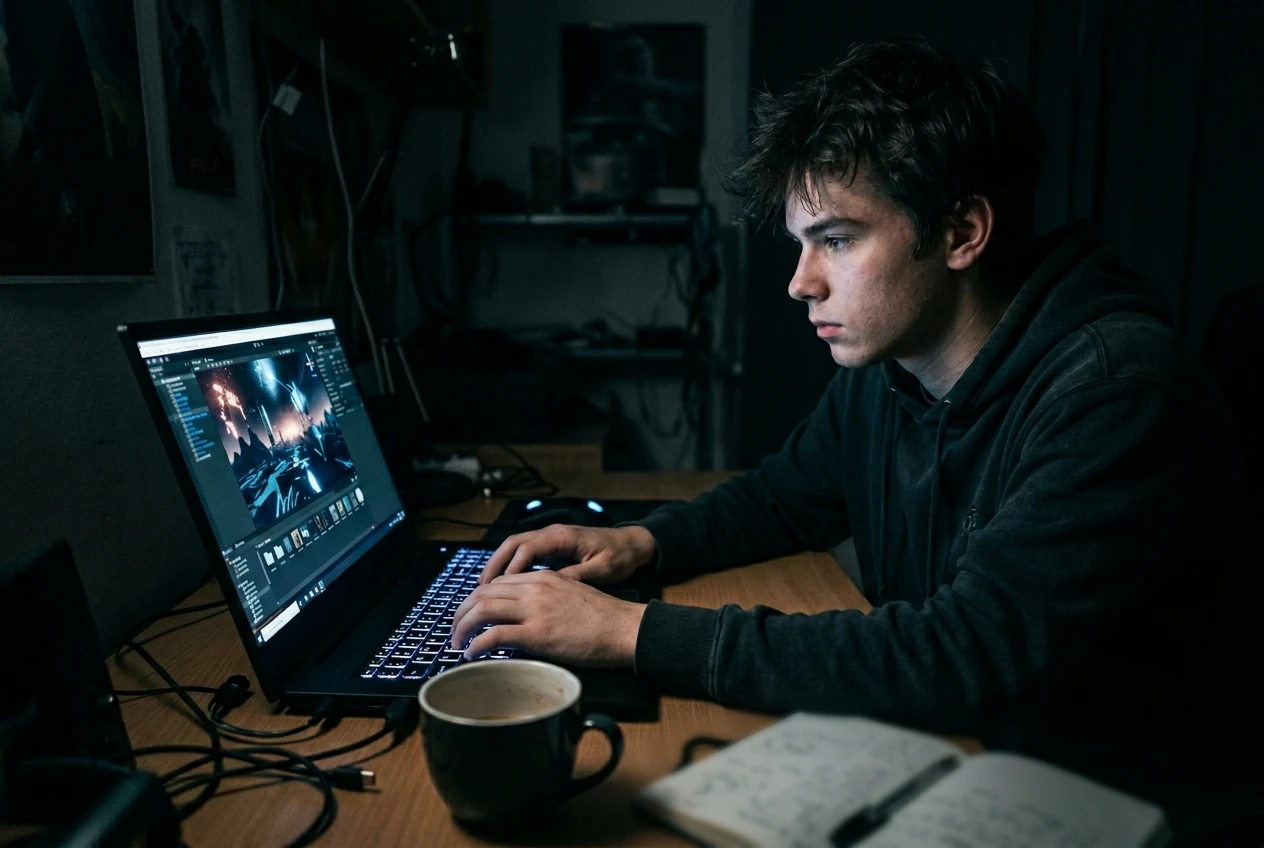
Three teenagers from the West of England sit among 51 finalists in the 16th year of the BAFTA Young Game Designers competition, the British Academy of Film and Television Arts confirmed this month. Matthew Scott, 15, from Portishead near Bristol, is a finalist with a sci-fi action platformer called Overclocked, and the BBC reports his work was inspired by months of late-night coding. Two more West of England teenagers, Rikka, 14, from Frome in Somerset, and Rowan Clarke, 17, from Stroud in Gloucestershire, made the shortlist in the game concept categories. The BBC reports the winners ceremony is set for Thursday 18 June.
The wider pool of 51 finalists was selected from hundreds of entries by panels drawn from studios including IO Interactive and TT Games, BAFTA said in its announcement. Matthew told the BBC his “hard work and late nights of coding had paid off.” He added: “I am incredibly proud to see my dedication to game development being recognised on such a massive stage.” The shortlist, BAFTA says, is the cross-section of a year when teen design talent and public money for UK games arrived at the same moment.
From the West of England to a National Shortlist
Portishead, Frome and Stroud sit within 60 miles of each other on the western edge of England, and each is home to a 2026 BAFTA Young Game Designers finalist. The BBC reports the three were named to the national shortlist alongside 48 other young people. Matthew, 15, from Portishead, made Overclocked, a sci-fi melee action platformer in the 15 to 18 Game Making category, and Rikka, 14, from Frome, designed a game concept called Beyond the Horizon, a story about an astronaut stranded on a planet awaiting rescue.
Rowan Clarke, 17, from Stroud in Gloucestershire, is a finalist in the older Game Concept band with Sprouts and Seedlings, a process-driven game built around themes of horticulture and gardening. Rikka, the BBC reports, started playing games with friends during the Covid-19 pandemic, an experience that inspired her to make her own, and she had been planning Beyond the Horizon for a few months before starting to design it. Matthew, the BBC reports, entered the competition to get his work in front of industry professionals and to meet other game developers. The trio’s games, by category, are:
- Overclocked (Game Making 15-18): an ultra fast-paced sci-fi melee action platformer focused on momentum, timing and speedrunning, by Matthew, 15, Portishead.
- Beyond the Horizon (Game Concept): a stranded astronaut awaits rescue by her teammates, by Rikka, 14, Frome, Somerset.
- Sprouts and Seedlings (Game Concept 15-18): a process-driven, gardening-themed design by Rowan Clarke, 17, Stroud, Gloucestershire.
What the 51 Finalists Are Building
The 2026 shortlist splits across two categories and four age-and-format bands. The Game Concept Award, BAFTA says, “rewards the most original and best thought-out game idea” and accepts original ideas submitted solo or by a team of up to three. The Game Making Award “goes to the most impressive use of coding skills on a freely available software to create a prototype game.” Each band is split into 10-14 and 15-18 age groups, and BAFTA notes that “over a third of this year’s finalists applied as part of a team.”
The 15 to 18 Game Making finalists include a three-person London team whose game uses boss fights as a metaphor for mental health. In Your Head, by 18-year-olds Rafe Lepherd, Alex Huynh Anh Le-Hoang and Josh Robinson, is described by BAFTA as a “Bullet-Hell style boss-fighter where you figuratively and literally battle depression with coping mechanisms, and strengthen your mental health through bonds in the real world.” Matthew Scott’s Overclocked is on the same 15-18 Game Making list, alongside titles like City Dash, Flow State, Maya, Pix ‘n’ Mix and Snak and Snap, per the full 2026 Game Making finalists list.
The 10 to 14 Game Making finalists include a Valkyrie adventure called Yggdrasil, a sci-fi platformer titled Starlight Zero, and a lighthouse survival game called The Last Lightkeeper. The 15-18 Game Making slate also includes Maya, a story-driven game about a sweatshop worker in India. BAFTA describes the game as “the story of a sweatshop worker in India, following the life which lead to her current situation of poverty,” with mechanics that “imitate real life working conditions, giving the players a glimpse of Maya’s reality.” The full shortlist is the slate for the year’s award:
| Category | What it rewards | Who can enter | What gets judged |
|---|---|---|---|
| Game Concept Award | An original game idea | Individuals or teams of up to 3 in the UK, 10 to 18 | Gameplay design, creativity, suitability for chosen platform |
| Game Making Award | A prototype game built on freely available software | Individuals or teams of up to 3 in the UK, 10 to 18 | Game build, gameplay experience, creativity, suitability for chosen platform; at least one playable level required |
A Record £28.5 Million for UK Games, Just Before the Shortlist Was Set
BAFTA used its 51-finalists announcement to flag a record UK government investment in games. “Following the government’s record £28.5 million investment into the British games industry last month, BAFTA remains committed to supporting the next generation of British game designers,” the academy said, per the press release naming 51 finalists. The number, £28.5 million, is the largest single UK government commitment to the games sector that the press release cites.
The cultural baseline around the shortlist is also large. BAFTA cited joint UKIE and OKRE 2026 research showing that 88% of children aged 3-15 play video games, and a 2025 BAFTA and YouGov survey in which “over a third of young adults” said games are an important form of social connection. With that level of demand, the £28.5 million investment is the policy backdrop for a competition in its 16th year, a year in which teen designers on the shortlist are building games about mental health, memory, and identity.
BAFTA framed the funding as the scaffolding for a talent pipeline that the 2026 shortlist is meant to feed. Tara Saunders, chair of the BAFTA Games Committee, said: “It’s always wonderful to support the next generation of creatives through BAFTA Young Game Designers. These extremely talented young people are going to continue to be the names to watch in the future. The year-round support that we’re able to offer with Young Game Designers, culminating in the competition, is a chance for them to connect with experts working at some of the biggest games companies in the country.” The shortlist is the cross-section between the £28.5 million and the 88% of children playing games, and it is the visible part of the pipeline.
Mental Health and Memory Run Through the 2026 Shortlist
The 2026 shortlist covers weighty ground, and the 15 to 18 Game Concept shortlist is the most concentrated place to see it. The press release highlights Dhyani Patel, 16, from Hertfordshire, whose concept The Last Thing the World Forgot is set in a “futuristic, data-overloaded world where memories are ranked and erased.” Players take the role of Echo, “a being who hears forgotten things” and has to choose what stays remembered. BAFTA compares the game to Blade Runner 2049, Memento and Outer Wilds.
Memory loss and identity run across the younger concept band, too. 14-year-old Nissi Mazvidza from Leeds, in the 10 to 14 Game Concept band, designed Olividado Estrella, a “scenic adventure game” in which the player “wake[s] up with no memories and no grasp of your surroundings,” identified only by “a small name tag attached to your shawl identifying you.” The three concepts share a through-line: a player who starts with no memory and has to rebuild an identity, in worlds built by teen designers.
Mental health carries through the Game Making shortlist, with In Your Head as the most explicit example. Saunders, in the press release, said the year-round support structure “allows veterans in the industry to get involved and pay it forward, passing on their knowledge to a new generation of talent who might become their future colleagues.” The 2026 host, broadcaster Jules Hardy, put the same point differently:
I’m amazed at the talent shown by this year’s competition finalists, and I’m very excited to support their journey when they go on to create more great games. If you have ever wanted to make a game, this competition is such a great way to learn all about it, plus make new friends, connections, and pursue a career in the industry.
From 51 Shortlisted Games to Four Winners
The funnel runs from hundreds of entries to 51 finalists to four award winners, one per age and category band. The competition’s programme page says shortlisting places a game “into the top ten games in your category,” and BAFTA’s announcement names judging panels drawn from studios including IO Interactive, the Danish studio behind 007 First Light, and TT Games, the LEGO Batman: Legacy of The Dark Knight developer.
Teams of up to three in the same age band are allowed, and all team members must be in the same age bracket. AI use is “discouraged” and any AI use must be declared, per the Young Game Designers programme rules and category definitions. Concept entries are judged on gameplay design, creativity and platform suitability, while Game Making entries must include at least one playable level and are judged on game build, gameplay experience, creativity and platform fit. Telephone eligibility checks are made to shortlisted entrants and their parents or guardians, and BAFTA reserves the right to offer a place to the next best entrant if a shortlisted entrant cannot be reached.
The prize surface for finalists and winners runs through June and into July. All 51 finalists have their games featured at the Young BAFTA Showcase at BAFTA 195 Piccadilly on 27 to 28 June, the academy said, and the 2026 winners will be featured in the Power Up games experience at the Science Museum in London and the National Science and Media Museum in Bradford from 19 June, and at the Science and Industry Museum in Manchester from 20 June. The scale of the 2026 shortlist, by the numbers:
- 51 finalists, aged 10 to 18
- 16th year of BAFTA Young Game Designers
- Over a third of finalists applied as a team
- £28.5 million record UK government investment into the British games industry, per BAFTA
- 88% of children aged 3 to 15 play video games, per UKIE and OKRE, 2026
How to Watch the 2026 BAFTA YGD Winners Ceremony
The 2026 winners ceremony streams on BAFTA’s YouTube channel on Thursday, 18 June at 5:00pm BST, hosted for the first time by broadcaster Jules Hardy. Hardy is the host of CBBC’s Game on Grandparents and the Gran Turismo World Series, BAFTA said in its press release, and was previously a gaming presenter on BBC Radio 1.
This is the 16th year of the competition, and the 2026 shortlist lands the same month as the £28.5 million government investment that BAFTA cited in announcing the finalists.
Frequently Asked Questions
When and where is the BAFTA Young Game Designers 2026 ceremony?
The 2026 winners ceremony streams on BAFTA’s YouTube channel on Thursday, 18 June at 5:00pm BST, the academy said in its press release announcing the 51 finalists.
Who is hosting the 2026 BAFTA YGD winners ceremony?
Broadcaster Jules Hardy hosts the ceremony for the first time in 2026. Hardy is the host of CBBC’s Game on Grandparents and the Gran Turismo World Series, BAFTA said.
What are the two award categories?
BAFTA splits the 2026 shortlist across the Game Concept Award, for original game ideas, and the Game Making Award, for prototypes built on freely available software. Each category is split into 10 to 14 and 15 to 18 age groups, giving four awards in total.
How old are this year’s finalists?
The 51 finalists are aged between 10 and 18, per BAFTA’s announcement. The programme is open to UK residents in that age band, with teams of up to three allowed if all members are in the same age bracket.
What happens to the winners after the ceremony?
Winners are featured in the Power Up games experience at the Science Museum in London and the National Science and Media Museum in Bradford from 19 June, and at the Science and Industry Museum in Manchester from 20 June, BAFTA said. All 51 finalists have their games featured at the Young BAFTA Showcase at BAFTA 195 Piccadilly on 27 to 28 June.


Google Opens Gmail to Voice and Gates Docs Live

Lenovo Prices the IdeaPad Vibe Against Apple’s $699 Neo

Xbox Caps Game Pass Cloud Gaming at 15 Hours

GTA 6 DualSense Controllers Follow Sony’s Usual $84.99 Script

South Korea Retail Investors Face Reckoning After KOSPI AI Rally Collapses

Surrey AI Maps Three Heart Attack Paths and Their Molecular Roots

Germany Locks Neutral Apple ATT Prompts Across Most of Europe

Apple’s 5% EU Fee Quietly Rewrites Alternative App Store Math

Apple’s EU Fee Truce Cuts Complexity but Leaves Rivals Fuming

Pixel 11 Pro Fold Trades Thinness for Durability and Seven-Year Stay

Oracle Cuts 21,000 Jobs in a Year, Cites AI in 10-K Filing

Fable 5 and Mythos 5 Return as US Lifts Anthropic Export Controls

SpaceX’s Google Deal Turns a Rocket Company Into a Cloud Landlord

CD Projekt Red Co-CEO: Redemption Arc Isn’t Done, Witcher 4 in 2027

XPL Rallies 30% Ahead of Plasma One Card Tier Launch

Google Search Profiles Build a Follow Graph Inside Discover

DGO App Brings Rs 549 Mobile Pass for FIFA World Cup 2026 in Nepal

Moonshot AI Targets $30 Billion in China’s Fastest AI Funding Sprint

Oppo’s ColorOS 17 Eligibility List Leaves A-Series Buyers Behind

Microsoft Xbox Layoffs Start in July as Sharma Slams 3% Margin
-
 AI2 months ago
Oracle Cuts 21,000 Jobs in a Year, Cites AI in 10-K Filing
-
 AI2 months ago
Fable 5 and Mythos 5 Return as US Lifts Anthropic Export Controls
-
 AI3 months ago
SpaceX’s Google Deal Turns a Rocket Company Into a Cloud Landlord
-
 GAMING2 months ago
CD Projekt Red Co-CEO: Redemption Arc Isn’t Done, Witcher 4 in 2027
-
 CRYPTO3 months ago
XPL Rallies 30% Ahead of Plasma One Card Tier Launch
-
 NEWS3 months ago
Google Search Profiles Build a Follow Graph Inside Discover
-
 APPS3 months ago
DGO App Brings Rs 549 Mobile Pass for FIFA World Cup 2026 in Nepal
-
 AI3 months ago
Moonshot AI Targets $30 Billion in China’s Fastest AI Funding Sprint