
AI
NVIDIA Ties Its $4.88B Sharon AI Compute Deal to Cloud Revenue Share
NVIDIA’s $4.88B Sharon AI compute deal in Australia layers cloud revenue share on top of GPU sales, with vendor credit underwriting the deployment.

NVIDIA and Sharon AI Holdings signed a six-year strategic compute collaboration valued at up to $4.88 billion, announced on June 12, 2026. The deal uses a revenue-sharing and credit-support model that layers a second revenue stream on top of the GPU hardware sale and commits the chipmaker to the operator’s cloud earnings as those clusters come online.
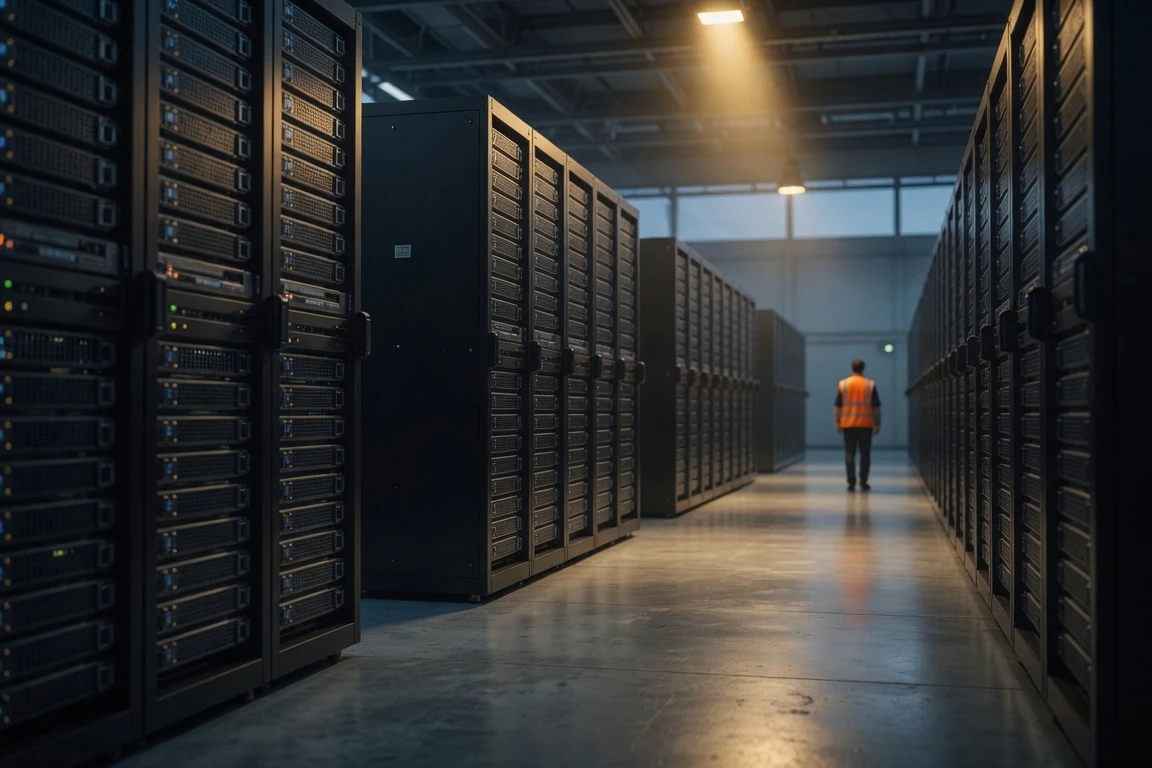
Under the agreement, Sharon AI will operate 72 megawatts of new Australian data center capacity running up to 40,000 Grace Blackwell GB300 GPUs, built on NVIDIA’s DSX AI factory reference design. Sharon AI will sell cloud services on that capacity to startups, enterprise customers, and university researchers, while NVIDIA collects both its standard product revenue on the hardware and a share of the cloud revenue generated on the supported capacity. The credit support underneath the deal reduces the upfront capital Sharon AI has to fund itself, and it pulls the deployment into a relationship where both sides only earn when the GPUs are actually running. The arrangement also gives NVIDIA a recurring, usage-linked earnings stream on top of one hardware sale.
The Numbers in the Sharon AI Agreement
The agreement sits under a Master Cloud Services Agreement and Order Form 1 dated June 8, 2026, with the public disclosure filed via Sharon AI’s Form 8-K on June 12. The structure of the deal, the size of the commitment, and the underlying risk factors are laid out in Sharon AI’s Form 8-K with the deal terms, which is the only document that prints the $4.88 billion ceiling.
Sharon AI already operates a sovereign GPU cluster inside NEXTDC’s M3 facility in Melbourne, a 50MW lease that sits at roughly 22% of Australia’s largest Tier IV data center. Adding the 72MW from this deal brings the operator’s total AI factory capacity to 132MW, of which 102MW is already contracted to end customers. The company has guided that more than 55,000 total NVIDIA GPUs will be deployed across its fleet by mid-2027, with the new build targeting AI startups, enterprise customers, and university researchers inside Australia. NVIDIA’s DSX reference design covers the simulation, modular build, and lifecycle management layers that the announcement said would let Sharon AI bring capacity online faster.
- $4.88 billion maximum contract value over six years
- 72MW of new Australian data center capacity enabled
- 40,000 Grace Blackwell GB300 GPUs planned for the new build
- 132MW total Sharon AI AI factory capacity after the deal, with 102MW already contracted
- 55,000+ total NVIDIA GPUs Sharon AI expects deployed by mid-2027
How the Revenue-Sharing and Credit-Support Model Works
The deal is structured around three money flows that sit underneath a single hardware sale. First, NVIDIA bills Sharon AI for the GB300 systems at its standard product rate, just like any other GPU customer. Second, NVIDIA extends credit support behind part of the deployment, so the operator does not have to fund the full capital cost out of its own balance sheet. Third, once those GPUs are sold to end customers as cloud services, NVIDIA collects a recurring share of that cloud revenue on top of the original sale.
The press release frames the structure plainly: Sharon AI gets a capital-efficient path to scale, NVIDIA gets a recurring, usage-linked earnings stream, and customers who historically could not afford capital-intensive AI infrastructure get access to GB300-class compute. Inside the 8-K, the company added a warning that “certain capacity reserved for NVIDIA may be sold to third parties,” and that revenue share, reporting, and audit mechanics attached to those reservations can “make revenues and cash flows less predictable.” Sharon AI also disclosed it will still need to secure additional financing in the form of debt and/or equity, including secured or asset-backed options, to deliver the deployment.
The risk framing inside the 8-K is unusually direct. The agreement “may be terminated by either party upon a material breach, which includes, among other things, frequent instances of GPU cluster unavailability,” and includes “events of insolvency or material adverse changes in financial condition” as triggers. The disclosure also lists export controls, permitting, cybersecurity, and data protection as ongoing operational risks. For an operator this small, that translation of “credit support” into “we can call” matters: NVIDIA is underwriting the deployment, but only against sustained operating performance.
This is the same template NVIDIA’s wider push has been running on: vendor financing that converts a hardware sale into two stacked revenue streams. As the $110 billion vendor financing breakdown of NVIDIA tallies it, the chipmaker now has direct investments totaling $110 billion against $165 billion in trailing twelve-month revenue, with another $15 billion-plus of GPU-backed debt outstanding across the broader neocloud market. The Sharon AI deal is a small slice of that footprint in dollars, but it is the cleanest visible example of the recurring-revenue leg of the playbook.
- Hardware purchase: NVIDIA bills Sharon AI for the GB300 systems at its standard product rate.
- Credit support: NVIDIA underwrites part of the deployment, reducing the balance-sheet burden Sharon AI must fund itself with debt or equity.
- Revenue share: once the cluster sells cloud services, NVIDIA collects a share of that recurring revenue on top of the original sale.
Sharon AI’s Path Into the Deal
The Sharon AI sitting inside this 8-K is not the same company that rang the bell at Nasdaq in February. The neocloud is incorporated in Delaware, listed as NASDAQ: SHAZ, runs operations across Australia, and runs its principal offices out of New York. Its existing footprint inside NEXTDC’s M3 facility gives it a run-rate of customers, but the deal lifts it into a different tier of capacity entirely. Its stock had been one of the year’s biggest winners on the Nasdaq before the announcement, and the news added another leg to a rally that has put shares up roughly 4,000% year-to-date.
This strategic compute collaboration with NVIDIA marks a pivotal moment in Sharon AI’s mission to deliver sovereign, large-scale AI compute infrastructure. Securing access to 72MW of data center capacity enables us to deploy up to an additional 40,000 Grace Blackwell GB300 GPUs, providing access to accelerated compute to enterprise, startup and AI native customers who otherwise may not have been able to access it.
James Manning, co-founder and chief executive of Sharon AI, said the agreement gives the operator “access to accelerated compute to enterprise, startup and AI native customers who otherwise may not have been able to access it.” On the next trading session, the 25% share jump on the announcement showed the market priced the deal as a step-change in scale rather than a marginal capacity add. It also put Sharon AI on a collision course with the other Australian AI cloud names competing for the same customers, including the local rival NVIDIA’s recent AI memory co-design pact with SK Hynix sits inside a similar multi-year supply-side frame, but the parallels end at the operator: SK Hynix is supplying components, while Sharon AI is buying them and selling them back as cloud services.
Where This Deal Sits Inside NVIDIA’s AI Cloud Strategy
Read against NVIDIA’s own ecosystem page, Sharon AI is one node on a partner map the chipmaker has been steadily widening. The list posted on NVIDIA’s blog names CoreWeave, Firmus, IREN, Nebius, and Nscale among partners scaling frontier-model infrastructure, alongside Lambda, Yotta, YTL, Naver Cloud, and others on the broader ecosystem roster. Sharon AI appears alongside those names as a partner “supporting emerging AI companies, national AI initiatives, financial services, telecommunications, manufacturing, education, healthcare and developer ecosystems.” Across that partner map, NVIDIA has been steadily moving from selling chips to underwriting the operators that resell those chips as cloud services.
The list of partners is wide; the share of vendor-financing dollars behind them is narrow. NVIDIA’s AI Cloud ecosystem expansion groups CoreWeave, Firmus, IREN, Nebius, and Nscale on the frontier side, with Sharon AI among the second tier the company points to as its regional and sovereign-AI backbone. Firmus, the Oliver Curtis-led Australian rival to Sharon AI, is one of the names NVIDIA singled out as building liquid-cooled HyperCube AI factories through Project Southgate across Tasmania, Melbourne, South Australia, and New South Wales, plus a deployment in Singapore with ST Telemedia Global Data Centres.
| Deal / partner | Mechanism | Scale |
|---|---|---|
| OpenAI (Sept 2025) | Vendor financing commitment in 10 milestone-tied $10B tranches | Up to $100 billion |
| CoreWeave | $3B equity stake plus $2B Class A common-stock purchase at $87.20 per share | About $5 billion direct |
| Sharon AI (this deal) | Revenue share plus credit support, six-year Master Cloud Services Agreement | Up to $4.88 billion |
| Firmus (ecosystem) | Multi-region AI factory build, liquid-cooled HyperCube, NVIDIA DSX reference | Energy-efficient build at undisclosed scale |
| Lambda, Nebius, Nscale, Yotta, YTL | NVIDIA AI Cloud partners named in NVIDIA ecosystem | Various |
Firmus’s Rosenfield, co-CEO, framed his side of the partnership in liquid-cooling and cost-per-token terms in NVIDIA’s own write-up. “AI agents are creating a new class of industrial-scale demand for tokens, and Asia-Pacific needs AI factories that can be built faster, liquid-cooled more efficiently and operated at gigawatt scale,” he said. That puts a second Australian neocloud, with an existing NVIDIA-backed footprint, directly across the table from Sharon AI’s new build.
Every company and every country needs AI factory infrastructure to turn data into intelligence.
Jensen Huang, founder and chief executive of NVIDIA, said in the same ecosystem write-up. The Sharon AI deal is a small line on that map in dollar terms, but it is the most explicit line the chipmaker has drawn between a hardware sale and a recurring cloud-revenue stream on the same deployment.
The pattern is the same one NVIDIA has been running with other partners, the same one applied to a smaller, sovereign-AI-focused operator in Australia. Its memory strategy has been running a parallel version with NVIDIA’s AI factory deal with LG Group across six subsidiaries, but here the operator resells the chips as cloud rather than training data.
The Vendor-Financing Question the Deal Reopens
The Sharon AI deal does not introduce a new risk into NVIDIA’s numbers, but it makes the existing risk easier to see. NVIDIA’s vendor financing totals $110 billion in direct investments and $15 billion-plus of GPU-backed debt against $165 billion in trailing twelve-month revenue, per the Tunguz tally that aggregates disclosures across the chipmaker’s customer base. The OpenAI commitment of up to $100 billion in 10 deployment-tied $10 billion tranches is the largest single line, and CoreWeave alone carries $10.45 billion of GPU-backed debt.
Customer concentration is the second-order concern sitting next to that footprint. NVIDIA’s top two customers make up 39% of revenue, the top four make up 46%, and 88% of revenue comes from data centers. Those numbers come with the cash flow to back them: NVIDIA runs $50 billion-plus of annual operating cash flow, sits on $46.2 billion of net cash, and was upgraded to Aa3 by Moody’s in March 2024. S&P Global has now upgraded NVIDIA to AA and is projecting $394 billion in revenue for fiscal 2027 and $544 billion for fiscal 2028 on what it describes as “insatiable demand for AI systems.”
The credit story inside that footprint is what made the Sharon AI deal financeable in the first place. An operator at Sharon AI’s scale could not put $4.88 billion of GB300 capacity on its own balance sheet, and the 8-K is candid that the company “has limited experience in delivering, implementing and managing such contracts at scale.” The credit support underneath the deal functions as a balance-sheet bridge, but it also brings new audit overhead, new revenue-share reporting, and new termination triggers that include frequent GPU cluster unavailability.
The Australian market gives the structure a concrete test. AFR reporting framing frames the agreement as Sharon AI “battles for dominance” against Oliver Curtis’ Firmus Technologies across Australian data center capacity, with the new 72MW run-rate and 40,000 GPUs positioned to serve the same startup, enterprise and university customers that Firmus is already courting through Project Southgate. The competition will be measured in capacity delivered, not capacity signed, and the credit-support arm of the structure only pays out while the clusters stay online. NVIDIA’s $110 billion vendor financing wager, $1 trillion of forecast AI infrastructure demand from CEO Jensen Huang at GTC 2026, and S&P’s $544 billion fiscal 2028 revenue projection all rest on operators like Sharon AI turning that signed capacity into running, billed, recurrent cloud revenue.
Frequently Asked Questions
What is the NVIDIA-Sharon AI deal announced in June 2026?
The deal is a six-year strategic compute collaboration between NVIDIA and Sharon AI Holdings, announced on June 12, 2026, with a maximum contract value of $4.88 billion. It sits under a Master Cloud Services Agreement and Order Form 1 dated June 8, 2026 and was disclosed via Sharon AI’s Form 8-K. The agreement enables 72MW of new Australian data center capacity deployed on NVIDIA’s DSX AI factory reference design.
How does the revenue-sharing and credit-support model work in practice?
Sharon AI buys GB300 systems from NVIDIA at standard product rates, NVIDIA extends credit support so the operator does not have to fund the full capital cost itself, and on top of the hardware sale NVIDIA also takes a share of the cloud revenue Sharon AI generates on the supported capacity once the GPUs are running.
How much AI compute is the deal bringing online, and where?
The agreement covers 72MW of new Australian data center capacity with up to 40,000 Grace Blackwell GB300 GPUs, lifting Sharon AI’s total AI factory capacity to 132MW (of which 102MW is already contracted) and putting the operator on a path to more than 55,000 total NVIDIA GPUs deployed by mid-2027. The 8-K does not name specific sites for the 72MW build.
Why did Sharon AI’s stock jump on the announcement?
The market priced the deal as a step-change in scale rather than a marginal capacity add: Sharon AI Holdings shares surged roughly 25% the trading day after the announcement, on top of a year-to-date gain of about 4,000%, as investors priced in the revenue-share leg, the credit support, and the move from a small Australian neocloud into an NVIDIA-anchored sovereign compute provider.
What are the biggest execution and financing risks for each side?
For Sharon AI, the 8-K lists delivery and acceptance of the 72MW build, frequent GPU cluster unavailability as a material-breach trigger, and the company’s own limited experience at this scale. For NVIDIA, the risks are concentration (39% of revenue from the top two customers), the cumulative weight of $110 billion in direct vendor-financing commitments plus $15 billion-plus in GPU-backed debt, and the dependence on operators like Sharon AI turning signed capacity into billed, recurring cloud revenue.


Workers Still Trust Judgment Over the AI Tools They Use

DigitalOcean’s $894 Million Backlog Rewrites the Old Cloud

Companies Froze Job Design and Called AI a People Problem

AI Capex Looks Unique Because the Chips Wear Out

Samsung Medison’s HERA Z10 Aims at the Sonographer Shortage

GPT-6 Astra Ships as OpenAI’s First Critical Cyber Model

Palms Sells Clean Air Without Ending Casino Smoking

OnlyFans Promo Bots on X Now Pass the Humanity Tests

Datamaran Drops the ESG Label After Winning the Argument

Xiaomi’s Own Chip Lands While Apple Argues Over Color

Oracle Cuts 21,000 Jobs in a Year, Cites AI in 10-K Filing

Fable 5 and Mythos 5 Return as US Lifts Anthropic Export Controls

SpaceX’s Google Deal Turns a Rocket Company Into a Cloud Landlord

CD Projekt Red Co-CEO: Redemption Arc Isn’t Done, Witcher 4 in 2027

XPL Rallies 30% Ahead of Plasma One Card Tier Launch

Google Search Profiles Build a Follow Graph Inside Discover

DGO App Brings Rs 549 Mobile Pass for FIFA World Cup 2026 in Nepal

Moonshot AI Targets $30 Billion in China’s Fastest AI Funding Sprint

Oppo’s ColorOS 17 Eligibility List Leaves A-Series Buyers Behind

Microsoft Xbox Layoffs Start in July as Sharma Slams 3% Margin
-
 AI3 months ago
Oracle Cuts 21,000 Jobs in a Year, Cites AI in 10-K Filing
-
 AI2 months ago
Fable 5 and Mythos 5 Return as US Lifts Anthropic Export Controls
-
 AI3 months ago
SpaceX’s Google Deal Turns a Rocket Company Into a Cloud Landlord
-
 GAMING3 months ago
CD Projekt Red Co-CEO: Redemption Arc Isn’t Done, Witcher 4 in 2027
-
 CRYPTO3 months ago
XPL Rallies 30% Ahead of Plasma One Card Tier Launch
-
 NEWS3 months ago
Google Search Profiles Build a Follow Graph Inside Discover
-
 APPS3 months ago
DGO App Brings Rs 549 Mobile Pass for FIFA World Cup 2026 in Nepal
-
 AI3 months ago
Moonshot AI Targets $30 Billion in China’s Fastest AI Funding Sprint