
NEWS
Pixel 11 vs iPhone 18 Pro: What 2026’s Flagship Battle Looks Like
Pixel 11 vs iPhone 18 Pro: Google’s August 12 event and Apple’s September keynote both land on TSMC 2nm, with new cameras and a $100 price hike at each end.

The Pixel 11 and the iPhone 18 Pro are now locked into the same two-month launch window for the first time. Google’s Made by Google event lands August 12, 2026 in New York, where the Pixel 11, Pixel 11 Pro, Pixel 11 Pro XL and Pixel 11 Pro Fold are expected to be unveiled. Apple’s iPhone 18 Pro and iPhone 18 Pro Max are widely expected to follow in September 2026 alongside Apple’s first foldable, the so-called iPhone Ultra.
Both phones arrive on chips built on TSMC’s new 2nm process, both push on-device generative AI as the marquee feature, and both are quietly becoming more expensive to buy. The question for buyers is not which one is better in the abstract. It is which one of the two fits the buyer who is already in their camp, on a budget that just got tighter.
The Launch Dates Google and Apple Have Already Set
Google sent invitations to a Made by Google event for August 12, 2026 in New York City. TechRadar’s coverage of the invite confirmed the date, the city and a 3pm PT / 6pm ET start. The leaks compiled by PhoneArena line up with that invite and point to retail availability around August 20, 2026, based on a separate Dealabs leak on pre-order timing.
The iPhone 18 Pro keynote has not been announced, but Bloomberg’s Mark Gurman projects Tuesday, September 8, 2026, with Forbes columnist David Phelan pushing back in favor of Wednesday, September 9, 2026. Phelan notes that September 7 is Labor Day in the United States this year, which would make a Tuesday the 8th unusually early for Apple to fly in press. Either date puts the iPhone 18 Pro on store shelves by mid-September, in line with the cadence Apple has held since 2018.
One timing note matters for both phones: Apple’s fall 2026 launch now covers only the iPhone 18 Pro, iPhone 18 Pro Max and the iPhone Ultra foldable. Per MacRumors, the standard iPhone 18, the iPhone 18e and a second-generation iPhone Air have been pushed to spring 2027 to manage component costs. That split means Pixel 11 buyers who might normally wait for the non-Pro iPhone are instead choosing between a base Pixel and a Pro-class Apple phone this fall.
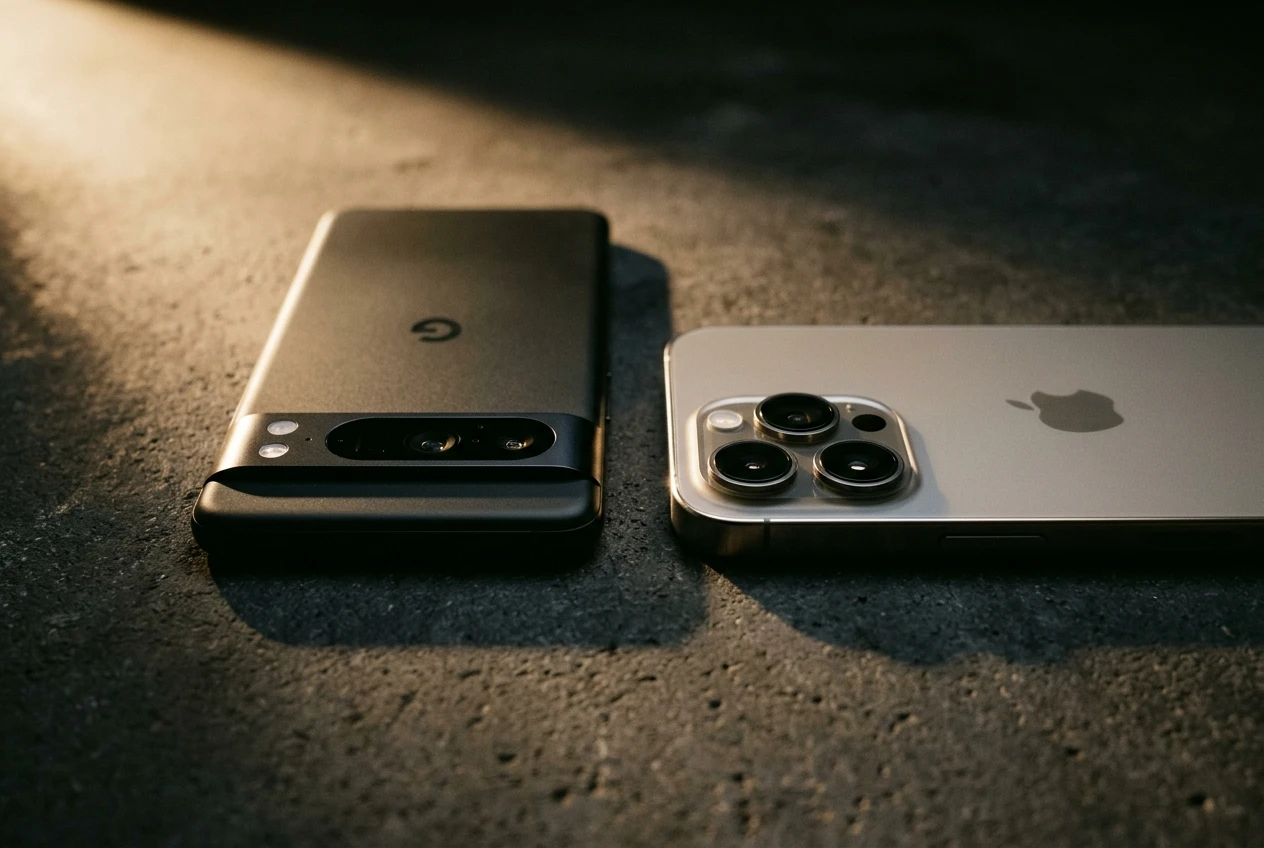
Tensor G6 vs A20 Pro: The 2nm Showdown
The single most important spec both phones share is also the one nobody will see on the box. The Tensor G6 in the Pixel 11 and the A20 Pro in the iPhone 18 Pro are both fabricated on TSMC’s N2, the chip industry’s first high-volume 2nm node. Google last pulled this trick with the Tensor G5, the first Pixel chip made by TSMC, and the G6 is the second leap. Apple is making the same generational jump on its first outing.
Apple is also expected to use a new packaging technique called Wafer-Level Multi-Chip Module (WMCM) on the A20 Pro, which moves the memory closer to the CPU, GPU and Neural Engine for higher bandwidth and cooler operation. AppleInsider, citing GF Securities analyst Jeff Pu, estimates the move makes the A20 roughly 15 percent faster and about 30 percent more power-efficient than the A19 in single-core workloads. Apple is keeping roughly the same six-core CPU layout (two performance, four efficiency), but Macworld projects the A20 Pro will land single-core scores around 4,200 and multi-core above 10,000 in Geekbench, numbers that would still clear any Android phone chip on the market.
Google, in contrast, has ordered a chip with one ARM C1-Ultra core at 4.11GHz, four ARM C1-Pro cores at 3.38GHz, and two more C1-Pro cores at 2.65GHz, per leaks summarized by Gizmodo from Telegram’s Mystic Leaks. That is a seven-core layout, one fewer than the Tensor G5, and it points to Google prioritizing AI and efficiency over peak clock speed. Macworld expects the Pixel 11 Pro to ship with at least 12GB of RAM at the Pro tier, with 16GB as an option, and the Pixel 11 Pro Fold rumored to step down from last year’s 16GB base in response to the same memory market pressure Apple is bracing for.
| Component | Pixel 11 Pro (Tensor G6) | iPhone 18 Pro (A20 Pro) |
|---|---|---|
| Process node | TSMC 2nm | TSMC 2nm (N2) |
| CPU layout | 1 + 4 + 2 (ARM C1 cores) | 2 + 4 (six-core) |
| Packaging | Standard | WMCM (stacked memory) |
| Memory | 12GB base, 16GB option | 12GB likely, 16GB possible |
| Modem | MediaTek M90 (rumored) | Apple C2 with mmWave 5G |
| Connectivity | Wi-Fi 7 (assumed) | Apple N1 Wi-Fi 7, BT 6 |
Both chips should sip less power than their predecessors. The Pixel 11 Pro and iPhone 18 Pro are also expected to run cooler under sustained load, which is the more meaningful real-world gain than any synthetic benchmark.
Cameras Take Opposite Bets
The Pixel 11’s biggest camera story is on the base model. Per a May 4, 2026 leak covered by 9to5Google, the standard Pixel 11 is getting a new main sensor codenamed chemosh, thought to be a 50MP unit that finally upgrades the entry-level Pixel’s primary camera. The Pixel 11 Pro and Pixel 11 Pro XL get two new sensors, codenamed bastet and barghest, according to the same chain of leaks covered by PhoneArena, with PhoneArena also reporting the Pro models carry a 48MP Sony IMX858 ultrawide and a matching IMX858 telephoto with 5x optical zoom, plus a 42MP selfie camera.
Google is not chasing a bigger zoom. Google is leaning harder on computational photography, the AI relighting, AI summaries and AI object-removal that have defined Pixel imaging since the Pixel 6. Gizmodo observes that Pixel chips have lagged Android flagships on GPU benchmarks for years, and that Google has gotten comfortable trading raw frame rate for AI image quality that ships in the camera app.
Apple is taking the opposite route. MacRumors reports that the iPhone 18 Pro will gain a variable-aperture lens for the main camera, allowing the phone to physically stop down light intake the way a mirrorless camera does. The same roundup mentions a slimmed-down Dynamic Island for both the iPhone 18 Pro and iPhone 18 Pro Max. Forbes’ coverage, citing Bloomberg’s Mark Gurman, sketches the September 9, 2026 keynote window where Apple is likely to confirm the new aperture and the smaller cutout in one launch.
The two cameras are aimed at two kinds of shooter. The Pixel 11 leans on AI to recover a shadow, lift a face, or strip a tourist from the background. The iPhone 18 Pro leans on hardware to give a photographer the same depth-of-field control they would get on a Fuji or a Sony. Neither company is pretending to be the other.
The Price Hike Neither Brand Can Dodge
The Pixel 11 is getting more expensive before a single one ships. Forbes’ Jay McGregor, citing Dealabs, reports that all four Pixel 11 models will start around €100 more than the Pixel 10 lineup in Europe, with the Pixel 11 Pro Fold crossing €2,000 for the first time. TechRadar notes that for the base Pixel 11 and Pixel 11 Pro, that €100 increase is partly masked because Google is dropping the 128GB entry tier and starting the line at 256GB. The Pixel 11 Pro XL and Pixel 11 Pro Fold get the same €100 increase with no storage bump in return.
On US pricing, TechRadar projects the Pixel 11 will start at $899 and the Pixel 11 Pro at around $999, but US dollar pricing has not leaked yet and Forbes explicitly says there is no information on US pricing yet. Both prices would put the Pixel 11 base exactly $100 above the Pixel 10 base.
Apple has been quieter, but it has been talking with its wallet. MacRumors notes that Apple raised the price of its Macs and iPads in June 2026, and that the iPhone 18 is expected to be more expensive than the iPhone 17, with the exact amount to be revealed at launch. The same roundup adds that Apple is also cutting costs inside the iPhone 18 line, downgrading the standard model’s display and using a 4-core GPU variant of the A-series chip to keep the price within reach of last year’s iPhone 17. Apple’s preferred tool in 2026 is shrinkflation, not the headline price.
Apple is allegedly ‘downgrading’ the iPhone 18 in order to cut costs amid increasing RAM prices because it doesn’t want to increase the price of the iPhone. Apple is implementing cost control measures in manufacturing processes, chips, memory, and more.
The shared cause is what Forbes’ McGregor called the RAM crisis, the memory shortage that began tightening in late 2024 and has not let up. Both the Pixel 11 and the iPhone 18 Pro rely on memory that is now much costlier than it was a year ago, and both companies are passing at least some of that cost through. Buyers who watched phone prices flat from 2022 through 2024 should expect 2026 to be the reset year.
Where Each Phone Has the Cleaner Answer
Both phones have moved into territory where the older arguments no longer hold. Google is no longer the laggard on raw power, with Tensor G6 on the same node as Apple’s A20 Pro. Apple is no longer the obvious choice for a buyer who just wants the sharpest screen, with Samsung Display’s M16 OLED tipped to debut on the Pixel 11 series before the iPhone 18 Pro picks it up in September. The two phones are closer than they have ever been on component-level ambition.
The differences that matter now are about what each phone does with those components.
- Software updates: PhoneArena reports the Pixel 11 Pro will ship with Android 17 and the same 7-year update commitment Google has run since the Pixel 8. Apple has generally promised around 6 years of iOS support.
- AI framing: Google’s pitch leans on Gemini Intelligence and on-device features like Camera Coach, Magic Cue, and the new Pixel Glow ambient notification strip on the back. Apple’s pitch leans on Apple Intelligence in iOS 27, where the on-device dictation and a more emotive Siri voice already require the extra RAM Apple is putting into the Pro models.
- Modem story: The Pixel 11 Pro is rumored to switch to a MediaTek M90 modem, an unusual move for a premium phone. The iPhone 18 Pro is expected to drop Qualcomm entirely for Apple’s own C2 modem with mmWave 5G, a transition that Apple has been working toward since the iPhone 16e.
None of those differences are deal-breakers in either direction. They are the kind of choices that read as deal-breakers only if a buyer has already decided which side they want to be on.
Which One You Should Actually Wait For
The Pixel 11 is the cleaner pick for buyers who live on Android, want a sub-$1,000 starting price, and care about Google’s seven years of software support. The Pixel Glow notification strip and the long-rumored camera upgrade to the base model make the standard Pixel 11 less of a consolation prize than it has been in recent generations. The Pixel 11 Pro, with its all-black camera bar and slimmer bezels per leaked renders, is the better fit for a buyer who wants the larger telephoto and a 6.8-inch screen without paying foldable money.
The iPhone 18 Pro is the cleaner pick for buyers already inside Apple’s ecosystem, who want variable-aperture photography and who value Apple’s longer-term resale. The $899 Pixel 11 / projected iPhone 18 Pro gap is roughly the cost of a mid-range phone, which means this is not the year to switch sides on price. It is, however, a year to wait for either launch, since August and September 2026 are when both phones get reviewed at full size and with final pricing from each company.
Forbes’ McGregor summed up the Pixel side best when he wrote that a buyer with the patience to wait six weeks past launch will almost certainly find a discount on a Pixel 11, because Google’s hardware business is not the company. Apple’s iPhone 18 Pro rarely discounts in the first year. The choice between the two is also a choice between a phone whose price falls and one whose price holds.
Frequently Asked Questions
When does the Pixel 11 launch?
Google’s Made by Google event is set for August 12, 2026 in New York City, with retail availability around August 20, 2026, based on a Dealabs leak cited by PhoneArena. Google has confirmed the date but not the full pricing.
When does the iPhone 18 Pro launch?
The iPhone 18 Pro is widely expected to launch in September 2026 alongside the iPhone 18 Pro Max and the foldable iPhone Ultra. Bloomberg’s Mark Gurman has pointed to September 8, while Forbes columnist David Phelan argues for September 9, 2026.
How much will the Pixel 11 cost?
TechRadar projects a starting price of $899 / £899 for the Pixel 11 at 256GB in the United States. Forbes’ coverage of Dealabs leaks cites a €999 starting price in Europe, up from €899 on the Pixel 10. US dollar pricing had not been confirmed at the time of Forbes’ July 8, 2026 update.
How much will the iPhone 18 Pro cost?
Apple has not confirmed pricing. MacRumors notes that iPhone prices are expected to climb with the iPhone 18 generation, and that the iPhone 17 Pro started at $1,099 in the United States. Buyers should wait for the September 2026 keynote for a confirmed US dollar figure.
Which chip is faster, the Tensor G6 or the A20 Pro?
Apple’s A20 Pro is widely expected to lead on single-core CPU performance and GPU benchmarks, with Macworld projecting a single-core Geekbench score of about 4,200. The Tensor G6 from Google is built on the same 2nm node but prioritizes on-device AI and efficiency over raw frame rate, per leaks summarized by Gizmodo.
Related reading on this site: the Pixel 11 leak that confirmed a €100 price hike across every model, the full August 12 Made by Google lineup and price rundown, why Apple’s foldable iPhone lands at $2,000 the same September, and the spring 2027 iPhone Air 2 with a second camera on the same A20 chip. Primary sources cited: TechRadar’s August 12 Made by Google event preview, MacRumors’ iPhone 18 rumor roundup, Gizmodo’s Tensor G6 architecture breakdown, and Macworld’s A20 Pro performance projections.


AMD’s Data Center Revenue Jumps 57% as Its Stock Bets on Execution

Microsoft Loses an Xbox Lawsuit Just as Sony Kills Physical Discs

Bethesda Union Says HR Tore Down Its Memorial for Laid-Off Staff

Google Pixel 11 Pro Fold Price Leaks Point Toward a $2,000 Foldable

Smart Scales Promise Lab-Grade Body Fat Numbers, and the Science Pushes Back

Amap’s Ride-Hailing Hits 1,000 Cities Amid Security Warnings

Ulys’s Automatic Toll Billing Draws Scammers to 7 Million Drivers

Google’s Veo AI Video Tools Threaten VFX Jobs Far Beyond Hollywood

Music Industry Unveils AI Labels, but Streaming Giants Haven’t Signed On

Apple Sues OpenAI and Two Ex-Employees Over Stolen Trade Secrets

Microsoft Xbox Layoffs Start in July as Sharma Slams 3% Margin

Google Search Profiles Build a Follow Graph Inside Discover

Google DeepMind and A24 Sign $75 Million AI Partnership Deal

Oracle Cuts 21,000 Jobs in a Year, Cites AI in 10-K Filing

OCC Issues AML Consent Order Against Wise and Crypto.com Sponsor Bank

DGO App Brings Rs 549 Mobile Pass for FIFA World Cup 2026 in Nepal

Oppo’s ColorOS 17 Eligibility List Leaves A-Series Buyers Behind

Anthropic Tells Senators Alibaba Ran the Largest Claude Distillation Attack

Apple Strikes Preliminary Deal For Intel To Make iPhone And Mac Chips

Google Home Spring Update Adds Gemini 3.1 And Old Nest Cam AI
-
 GAMING1 month ago
Microsoft Xbox Layoffs Start in July as Sharma Slams 3% Margin
-
 NEWS1 month ago
Google Search Profiles Build a Follow Graph Inside Discover
-
 AI3 weeks ago
Google DeepMind and A24 Sign $75 Million AI Partnership Deal
-
 AI2 weeks ago
Oracle Cuts 21,000 Jobs in a Year, Cites AI in 10-K Filing
-
 CRYPTO2 months ago
OCC Issues AML Consent Order Against Wise and Crypto.com Sponsor Bank
-
 APPS1 month ago
DGO App Brings Rs 549 Mobile Pass for FIFA World Cup 2026 in Nepal
-
 NEWS1 month ago
Oppo’s ColorOS 17 Eligibility List Leaves A-Series Buyers Behind
-
 AI2 weeks ago
Anthropic Tells Senators Alibaba Ran the Largest Claude Distillation Attack