
NEWS
Alibaba Sells Lingxi Games for Over $1.5 Billion in AI Pivot
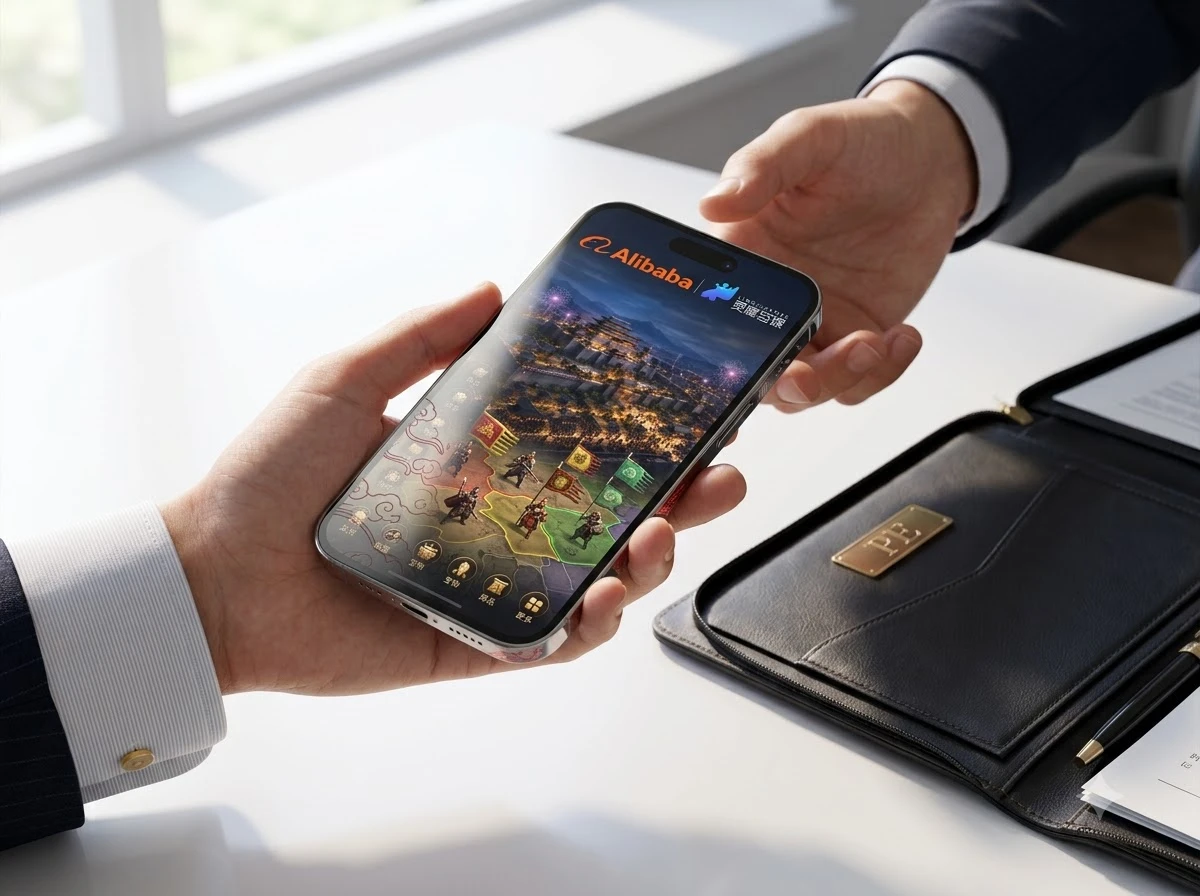
Alibaba confirms Lingxi Games sale to Trustar Capital above $1.5 billion, freeing capital for its $100 billion AI target while PE absorbs a stable SLG cash cow.

Alibaba Group Holding is selling its gaming arm Lingxi Games to Asian private equity firm Trustar Capital in a transaction valued at more than $1.5 billion, according to an internal memo distributed Monday and reviewed by Bloomberg News. Lingxi chief executive Zhou Bingshu told staff the move lets Alibaba “better focus on its strategic priorities.”
The deal lands as CEO Eddie Wu strips non-core assets to chase a $100 billion combined cloud and AI external revenue target within five years. Trustar, an affiliate of CITIC Capital, outbid other suitors including game makers for the studio behind the long-running hit Three Kingdoms: Strategy Edition.
Alibaba Hands Lingxi to Trustar Above $1.5 Billion
Negotiations accelerated after June reports put the asking range at 7 billion to 9 billion yuan ($1.03 billion to $1.33 billion). By mid-August Trustar had emerged as preferred bidder at a higher valuation. The memo confirmed agreement on August 17 without listing a final price or close date.
Alibaba and Trustar did not immediately comment. Industry chatter on X put lifetime gross for the flagship title above RMB 50 billion, with recent monthly estimates near RMB 300 million in some tallies, though third-party app-store trackers show sharper declines.
- Valuation: more than $1.5 billion
- Buyer: Trustar Capital (CITIC Capital affiliate)
- Flagship: Three Kingdoms: Strategy Edition (Koei Tecmo partnership)
- Status: management team retained, independent entity
The sale frees balance-sheet and management bandwidth. It also transfers a mature cash-flow asset out of a tech conglomerate that never fully integrated gaming into its core identity.
The gap between the June asking band and the final valuation above $1.5 billion shows how quickly competitive tension lifted the price once pure-play game bidders and financial sponsors were in the same process. Trustar’s willingness to clear that higher mark left publishers who price assets against their own development pipelines on the sidelines.
| Stage | Value signal |
|---|---|
| June 2026 asking range | 7-9 billion yuan ($1.03-1.33 billion) |
| Mid-August preferred bid | Higher than asking range |
| Memo confirmation (August 17) | More than $1.5 billion |
| Comparable prior disposal (Sun Art) | Roughly $1.6 billion |
Eddie Wu’s Non-Core Exit Wave
Wu took the CEO role and immediately pushed a 1+6+N structure that elevated cloud and AI while pruning retail and entertainment holdings. One earlier step was the disposal of its Sun Art Retail stake for roughly $1.6 billion. Lingxi followed the same logic.
In August 2025 the studio’s reporting line shifted from Big Entertainment chairman Fan Luyuan to group CFO Xu Hong, a signal that the unit had become a financial rather than strategic asset. Fan had earlier described the gaming business as lacking “the blood of Alibaba,” reflecting its 2017 origins as the Guangzhou Jianyue acquisition of a NetEase-bred team for about 1 billion yuan.
- 2017: Alibaba buys Guangzhou Jianyue, later rebranded Lingxi
- 2019: Three Kingdoms: Strategy Edition launches and becomes a top-grossing SLG
- 2024-2025: internal culture friction and reporting-line change to CFO
- June 2026: sale process begins at $1.0-1.3 billion range
- August 2026: Trustar preferred at higher valuation; memo confirms deal
The pattern matches other Chinese platforms that expanded into every user-time vertical a decade ago and are now retreating to AI and infrastructure.
Moving Lingxi under the CFO ahead of a sale also clarified internal accountability. A unit measured on cash contribution rather than ecosystem synergy is easier to price, market, and detach. The Sun Art proceeds and the Lingxi valuation sit in a similar band, underscoring that Wu’s exit wave is harvesting sizable, mature holdings rather than small experiments.
What the Buyer Acquires
Trustar Capital is a buyout specialist with offices in China, Japan and the United States. The firm has completed more than 100 investments since 2002 and is currently managing USD10.5 billion of committed capital across 21 funds, more than 70 of them control buyouts.
It gains five R&D studios (Pingpingwuqi, Pumpkin, Star, Yuan, Innovation) plus two operation lines, the Koei Tecmo co-developed flagship, and secondary titles such as Fantasy Land of Three Kingdoms variants and published games including Tree of Savior: New World. The existing management stays. Lingxi will operate as an independent entity under PE ownership.
- Control buyout platform focused on Chinese-economy growth and productivity
- Track record of operational improvements and market expansion for portfolio companies
- Ability to outbid pure-play game publishers who may have offered lower multiples
- Capital structure suited to harvesting steady free cash flow rather than funding speculative new IP
For Trustar the attraction is predictability. A seven-year-old SLG that still generates meaningful monthly revenue is a classic PE cash-flow asset, even if growth has flattened.
Independence under PE ownership also means Lingxi no longer competes for capital inside a conglomerate that has ranked cloud and model training above live-ops entertainment. Trustar’s control-buyout model fits a studio whose main job is to keep an established title healthy rather than to seed unproven IP across Alibaba’s wider consumer surface.
Three Kingdoms Still Prints Cash After Seven Years
Launched in 2019, Three Kingdoms: Strategy Edition has passed 100 million registered users. Third-party data cited by Chinese gaming media put its 2025 monthly revenue in a band of 180 million to 250 million yuan for long stretches. Season card packs and new generals keep the loop alive.
| Metric | Detail |
|---|---|
| Launch | 2019 |
| Registered users | Over 100 million |
| 2025 monthly revenue band | 180-250 million RMB (third-party) |
| Peak app-store month (Sensor Tower, cited on X) | $50.9 million (May 2020) |
| June 2026 app-store (Sensor Tower, cited on X) | $8.1 million |
| Partner | Koei Tecmo Holdings |
App-store figures capture only part of the picture; China PC and multi-channel sales often sit outside those trackers. Still, the gap between peak and recent store data shows the title has matured. Secondary products have not yet delivered a second hit of equal scale, which is why valuation logic shifted from growth story to cash-flow story.
That maturity is exactly what a PE buyer can underwrite. It is less attractive inside a tech group racing to prove AI scale.
Industry chatter that places lifetime gross above RMB 50 billion helps explain why a financial sponsor paid up even after store-tracked months cooled. The live-ops loop of card packs and new generals does not require the same capital intensity as training large models, yet it still throws off monthly cash in the hundreds of millions of yuan when the seasons land. That profile matches a hold-and-harvest mandate more cleanly than a conglomerate AI sprint.
The $100 Billion AI Clock
In March 2026, after a quarter that saw earnings plunge 67 percent, Wu told analysts the group aims to surpass $100 billion in combined cloud and AI external revenue within five years. Cloud Intelligence Group had already cleared RMB 100 billion from external customers in an 11-month stretch through February of FY2026.
Two weeks before the Lingxi memo, Alibaba released Qwen3.8-Max, its largest model to date. The release claims 2.4 trillion parameters and open weights planned for the following week, with benchmark scores the company said matched or beat Anthropic’s Fable 5 on several multimodal and coding tests. Independent checks later noted the model still trailed on some public leaderboards, yet the release underscored the priority.
Over the next five years, our goal is to surpass $100 billion in combined cloud and AI external revenue.
Wu made the statement on the March earnings call. Capital and management attention that once flowed toward entertainment now flow toward training clusters, model-as-a-service and agentic products. The Lingxi proceeds, whatever the final figure, add dry powder at a moment when Chinese tech groups are treating AI capacity as existential.
Similar corporate AI overhauls that rattle legacy units have appeared across industries; Alibaba’s version simply cuts deeper into its own portfolio.
The five-year clock also reframes every non-core disposal as fuel. Cloud had already shown it could clear RMB 100 billion from external customers in under a year. Stacking AI services on that base is the path Wu described to analysts after the 67 percent earnings drop. Selling Lingxi removes a management thread that pulled against that timeline.
Private Equity Moves Into China’s Mid-Tier Studios
Lingxi is not an isolated case. ByteDance’s Moonton Technology, maker of Mobile Legends: Bang Bang, was resold in 2026 to Saudi Arabia’s Savvy Games Group at a $7 billion valuation after an earlier $4 billion deal. Platform owners are discovering that hit-driven gaming demands sustained creative investment they prefer to redeploy elsewhere.
Financial sponsors step into the gap. They can keep the live-ops machine running, extract dividends, and eventually flip the asset to another PE house or a strategic buyer that still wants gaming scale. For players the day-to-day experience may change little. For the broader industry the ownership shift concentrates more mid-tier IP under capital structures optimized for cash rather than ecosystem lock-in.
Tencent and NetEase remain the creative and commercial giants. Beneath them, the middle is being financialized. Trustar’s bid, higher than those of pure game companies, signals that PE now prices the residual cash flows more aggressively than operators who must also fund new titles.
How Trustar Prices a Mature Studio
Trustar’s edge in the Lingxi process came from how it underwrites assets like this. A firm that has closed more than 100 investments since 2002, with more than 70 control buyouts inside a USD10.5 billion committed pool across 21 funds, can model seven years of SLG seasons without needing the title to reset the charts.
Game publishers bidding in the same auction face a different spreadsheet. They must reserve budget for new IP, live marketing, and head-to-head launches. That obligation compresses the multiple they will pay for a cash-flowing but mature studio. Trustar does not carry the same obligation inside its hold period.
- More than 100 investments since 2002 across China, Japan, and the United States
- USD10.5 billion committed capital in 21 funds
- More than 70 control buyouts already completed
- Outbid pure-play game makers on Lingxi’s higher valuation
The Moonton path, from an earlier $4 billion deal to a $7 billion resale in 2026, shows how gaming assets can still reprice when a well-run live-ops machine meets a buyer hunting scale. Trustar’s Lingxi thesis is smaller in absolute dollars yet similar in logic: buy control, keep the operators, harvest the seasons, and leave a later exit open.
Retention of Zhou Bingshu’s team and the five R&D studios lowers transition risk on day one. PE ownership fails most often when creative leadership walks. The memo’s continuity message was therefore part of the asset Trustar bought, not a side note.
What the Exit Frees on Alibaba’s Side
For Alibaba the sale is subtractive strategy. Gaming never carried “the blood of Alibaba,” in Fan Luyuan’s earlier phrase, and the 2025 shift of Lingxi’s reporting line to CFO Xu Hong made that judgment structural. Once a studio reports through finance, a disposal is the natural next memo.
Proceeds above $1.5 billion land beside the roughly $1.6 billion Sun Art Retail stake sale. Together the two exits illustrate the bandwidth Wu is reclaiming under the 1+6+N design: fewer retail and entertainment threads, more room for Cloud Intelligence Group and the Qwen model stack.
Qwen3.8-Max, with its claimed 2.4 trillion parameters and planned open weights, is the kind of release that consumes executive focus and cluster budget. A side-by-side reading of the March earnings goal and the August Lingxi memo shows one agenda. External cloud and AI revenue toward $100 billion inside five years leaves little patience for a studio acquired in 2017 for about 1 billion yuan that never became central to the group’s identity.
Zhou’s note to staff framed the outcome as sharper priorities, not retreat from consumers. Players still get their seasons. Alibaba still gets the cash and the calendar space. The conglomerate’s map simply draws a cleaner border around infrastructure and models.
Players Keep Their Seasons
Zhou Bingshu’s memo emphasized continuity. The team stays. The seasons continue. Three Kingdoms: Strategy Edition will keep rotating generals and map events under new owners who have every incentive to protect the revenue engine they just paid a premium for.
Alibaba walks away from a business it never fully owned culturally, pocketing more than $1.5 billion and one fewer distraction on the road to its AI target. Trustar inherits a proven SLG franchise and the operational challenge of keeping it healthy for the next seven years. The second-order result is already visible: China’s mature gaming cash cows are migrating from tech balance sheets to private-equity portfolios, one deal at a time.


Sony’s 10 Percent Disc Drop Leaves the 2028 Cutoff Intact

Chip Allocation Sidelines the Base iPhone 18 This Fall

Miami-Dade Fights the Vice City Brand It Already Wears

IFA 2026 Awards Put Tecno Ahead of Flagship Phones

USB-C Gadgets Made the Junk Drawer Rechargeable

Pixel 11 Pro Asks $1,099 for a Light Google Locked

The iPhone Ultra Sells Two Retired Minis as One Foldable

Google Opens Gmail to Voice and Gates Docs Live

Lenovo Prices the IdeaPad Vibe Against Apple’s $699 Neo

Xbox Caps Game Pass Cloud Gaming at 15 Hours

Oracle Cuts 21,000 Jobs in a Year, Cites AI in 10-K Filing

Fable 5 and Mythos 5 Return as US Lifts Anthropic Export Controls

SpaceX’s Google Deal Turns a Rocket Company Into a Cloud Landlord

CD Projekt Red Co-CEO: Redemption Arc Isn’t Done, Witcher 4 in 2027

XPL Rallies 30% Ahead of Plasma One Card Tier Launch

Google Search Profiles Build a Follow Graph Inside Discover

DGO App Brings Rs 549 Mobile Pass for FIFA World Cup 2026 in Nepal

Moonshot AI Targets $30 Billion in China’s Fastest AI Funding Sprint

Oppo’s ColorOS 17 Eligibility List Leaves A-Series Buyers Behind

Microsoft Xbox Layoffs Start in July as Sharma Slams 3% Margin
-
 AI3 months ago
Oracle Cuts 21,000 Jobs in a Year, Cites AI in 10-K Filing
-
 AI2 months ago
Fable 5 and Mythos 5 Return as US Lifts Anthropic Export Controls
-
 AI3 months ago
SpaceX’s Google Deal Turns a Rocket Company Into a Cloud Landlord
-
 GAMING3 months ago
CD Projekt Red Co-CEO: Redemption Arc Isn’t Done, Witcher 4 in 2027
-
 CRYPTO3 months ago
XPL Rallies 30% Ahead of Plasma One Card Tier Launch
-
 NEWS3 months ago
Google Search Profiles Build a Follow Graph Inside Discover
-
 APPS3 months ago
DGO App Brings Rs 549 Mobile Pass for FIFA World Cup 2026 in Nepal
-
 AI3 months ago
Moonshot AI Targets $30 Billion in China’s Fastest AI Funding Sprint