
AI
Gold Has Led Australian Exploration for Seven Years. AI Needs Different Metals.
Tin, tantalum and indium prices are surging on AI server demand, and the ASX miners chasing them show where capital is rotating from seven years of gold-first exploration spend.

Australian Bureau of Statistics mineral exploration data shows gold led spending for seven consecutive years through the March 2026 quarter, with gold investment at $450.9 million even as that figure fell 5.8% quarter-on-quarter. The AI economy runs on a different metal diet. Mining.com.au’s Callum Newman framed the imbalance bluntly: the gold rally of 2024-25 has done nothing to address the supply of tin, tantalum, and indium that data centres now cannot build without.
Tin, tantalum, and indium prices have moved sharply higher on AI-linked demand, and the price action is drawing Australian capital toward a cluster of junior miners that most gold-weighted portfolios still ignore. The shift is visible on the ASX in share prices, in a $29.5 million placement, and in a Queensland-government-backed drilling campaign that began reporting high-grade intercepts on 11 June 2026.
Seven Years of Gold-First Exploration
The pattern is structural, not recent. Per the Australian Bureau of Statistics, gold has been the single largest category of mineral exploration spending across the complete seven-year span of the latest data series. Gold’s status as the easiest metal to mine, combined with a deep and trusted market and strong retail investor affinity, kept the flow of exploration dollars pointed at the yellow metal year after year.
The March 2026 quarter release shows gold exploration spend at $450.9 million, down 5.8% ($27.9m) from the prior quarter and the largest single-commodity fall in the dataset. Iron ore rose 5.0% to $186.0m. Total mineral exploration across all commodities fell 10.0% to $949.3m. Gold output itself hit a record in 2025, so the production side is not the problem. The problem is that the dollars going into finding the next ounce of gold are not going into finding the next tonne of tin, the next kilogram of tantalum, or the next gram of indium. See the Mineral and Petroleum Exploration release for the March 2026 quarter for the full breakdown.
Critical Mineral Price Moves Driving the Pivot
| Metal | Price move and demand driver |
|---|---|
| Tin | RMB 300,000/ton (Nov 2025) → ~RMB 400,000/ton (June 2026); 40% over six months. LME 3-month contract US$52,935/t on 7 June 2026 vs 2025 average ~US$34,140, a year-on-year gain of more than 55%. Nominal all-time high US$56,800/t on 29 January 2026. |
| Tantalum ingot | Up as much as 158% since the end of 2025. Roughly 70% of global supply is allocated to capacitors, high-temperature alloys, and semiconductor sputtering targets. |
| Indium | Up roughly 60% from the start of 2026 through mid-June. Classified as a critical mineral by both the EU and US. Mostly recovered as a by-product of zinc and tin mining. |
What Every AI Server Needs
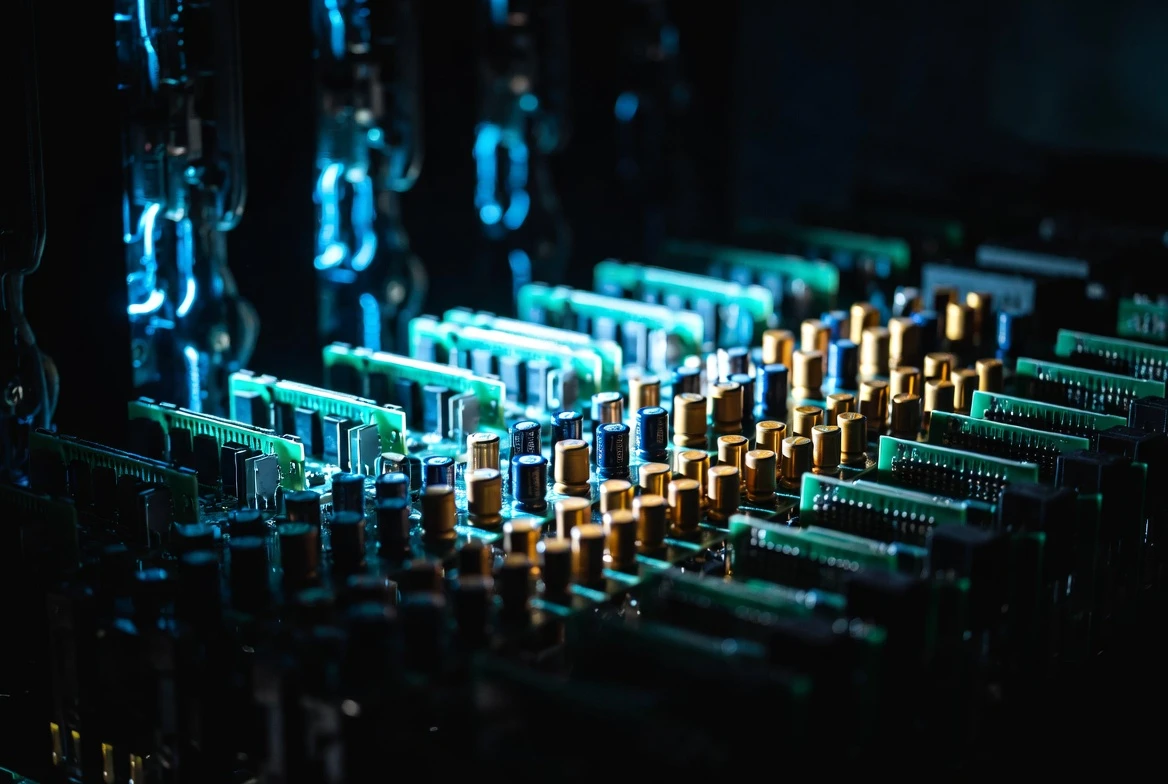
AI workloads move metal in ways most resource investors haven’t modelled. Tech Wire Asia reports that a single AI server uses more than three times as much tin as a conventional server, primarily because solder accounts for roughly half of all global tin demand and every layer of an AI data centre, from servers to storage to networking to power modules, requires soldered connections. The shortfall is structural: CITIC Securities Futures analyst Yu Luyan estimates global AI data servers will generate around 2,500 tonnes of new tin consumption in 2026 alone. Read the tin demand and AI server supply crunch analysis for the full supply-side breakdown.
Beyond tin, two more metals anchor the AI build. Per MooMoo’s report on computing power metals, tantalum and indium round out the trio that GPU-heavy data centres cannot substitute around. Each appears in small quantities per device, but the cumulative volume across hyperscale buildouts is large enough to redraw the metals supply map.
All three are now on China’s strategic list. The Regulations for the Implementation of the Mineral Resources Law took effect on 15 June 2026 and enshrined small-metal commodities as strategic resources at the legal level. Beijing’s move formalises a supply-side squeeze that the market was already pricing, and it raises the cost for anyone trying to source these metals outside Chinese supply chains.
- Tin: used in solder joints across AI servers, optical modules, and advanced semiconductor packaging. AI server uses 3x tin of a conventional server; solder accounts for roughly half of global tin demand.
- Tantalum: used in capacitors on AI chips and circuit boards to regulate power and filter electrical noise. Roughly 70% of global supply is allocated to tantalum capacitors, high-temperature alloys, and semiconductor sputtering targets.
- Indium: used in optical-module lasers, indium phosphide wafers, and high-speed interconnect hardware. Each indium phosphide wafer consumes only about 14 micrograms of indium on average, but the cumulative pull from data-centre buildouts is concentrated.
Tin’s Price Has Already Started Moving
Per the MooMoo report on computing power metals, tin prices rose from RMB 300,000 per ton in November 2025 to around RMB 400,000 per ton by June 2026, a 40% climb in six months. The LME 3-month tin contract closed at US$52,935 per tonne on 7 June 2026, against a 2025 average near US$34,140, more than a 55% year-on-year gain. See the price moves in tin, tantalum and indium through June for the full STAR Market Daily figures.
Tin hit a nominal all-time high of US$56,800 per tonne on 29 January 2026 before pulling back. The pull-back didn’t undo the move; visible LME inventories have more than doubled in three months, yet the structural gap between long-term supply capacity and accelerating AI demand remains the market’s central tension. Most industry forecasters expect tin prices to stay elevated through at least 2027.
Supply remains hostage to a handful of politically volatile jurisdictions. Indonesia, the world’s largest tin exporter, seized 500 tonnes of tin and moved to close 1,000 illegal mines in Sumatra early in 2026. Myanmar’s Man Maw mine, a significant tin-concentrate source, has run slow since a 2023 resource audit, with the country’s civil conflict making a reliable restart timeline hard to pin down. China is the world’s largest producer and consumer of refined tin but relies on imports for about two-thirds of the ore used in its smelters, so the squeeze travels through to Beijing as well.
Every conversation about what AI needs eventually lands on the same shortlist: GPUs, power, cooling, and land. Tin rarely makes the cut. Yet without it, the servers that run AI workloads cannot be built. It is the metal that holds everything together, literally, and its supply picture is getting complicated fast.
Tech Wire Asia, June 2026.
Two ASX Names Are Catching the Wave
The capital is starting to follow the metal. Australia’s only listed pure tin producer, Metals X (ASX:MLX), went from around $0.45 per share in July 2024 to as high as $1.77 per share in May 2026, per Mining.com.au’s numbers.
Tin developer Elementos (ASX:ELT) is up 265% over the last year on the same source’s figures, and the company isn’t even producing yet. Elementos announced a $29.5 million strategic placement to L1 Capital, with L1 set to hold approximately 19.99% of issued shares on completion. The raise is funding the Oropesa tin project in Spain towards a final investment decision, and the capital came in from a fund manager publicly described as high-conviction.
The Metals X share-price gain is the headline number that has caught the broader market’s attention. Investors are also looking at who else might benefit: the chip and power-equipment supply chain that AI is pulling forward has its own set of listed names, including the broader AI hardware order book shaped by events like how the H200 chip deal reshaped AI supply chains.
- Metals X (ASX:MLX): Australia’s only listed pure tin producer; owns 50% of the Renison Tin Operation in Tasmania; share price up ~293% from July 2024 to May 2026 peak per Mining.com.au.
- Elementos (ASX:ELT): Oropesa tin project in Spain; $29.5M L1 Capital placement at ~19.99% stake; share price up 265% over the prior year per Mining.com.au.
- PMET Resources (ASX:PMT): Shaakichiuwaanaan project in James Bay, Quebec, targeting lithium, caesium, and tantalum in an LCT pegmatite; pre-revenue, exploration stage.
The Indium By-Product Trap
Indium is the AI metal with the strangest supply economics. Per Mining.com.au, indium is usually produced as a by-product to another metal, zinc being the most common host, and that structure means the host metal must have enough commercial value to justify the mining operation. If it doesn’t, indium supply withers away even when the world wants more of it. The EU and US both classify indium as a critical mineral. Australia’s listed indium play is Iltani Resources (ASX:ILT), which holds the Orient Silver-Indium Project in North Queensland, where mining for different metals goes back as far as 1880.
Iltani received an $8 million investment from the Queensland Investment Corporation’s Critical Minerals and Battery Technology Fund, with QIC managing A$131.6bn in assets. In an ASX release dated 11 June 2026, Managing Director Donald Garner said the company had intersected peak results of 1m @ 207 g/t silver and 626 g/t indium in hole ORR142 at Orient West, with about two more months of drilling to complete. The full drill results, including 1m @ 279 g/t Ag and 523 g/t In in hole ORR147, are in the Iltani Orient West drilling results from 11 June 2026.
By the Numbers: Iltani’s Orient West Push
- Indium prices: up roughly 60% from start of 2026 through mid-June
- Iltani Orient West drill hole ORR142: 1m @ 207 g/t Ag, 626 g/t In, 1.6% Pb, 11.1% Zn
- QIC fund committed to Iltani: $8 million
- QIC assets under management: A$131.6 billion
- Iltani 2026 program: 110-hole RC drill program at Orient, 37 holes (6,853m) completed by 11 June 2026
Why Tantalum Has the Tightest Window
Tantalum is the most concentrated supply chain of the three. Per Mining.com.au, 65% of global tantalum supply comes from the Democratic Republic of the Congo and Rwanda. Per MooMoo’s report, production in the Kola-Tantalite mining area of Rubaya, eastern DRC, declined in early 2026 due to a collapse and other factors.
Demand is moving the other way. Per Mining.com.au, the conflict around the Strait of Hormuz is pushing a global switch toward renewable energy and non-fossil fuel alternatives for security and environmental reasons, which is good for lithium and tantalum production. In Australia, tantalum is most often recovered as a by-product of lithium mining.
PMET Resources (ASX:PMT) holds one of North America’s largest lithium deposits in Eastern Canada, at the Shaakichiuwaanaan project in Quebec’s James Bay region. Per Mining.com.au, PMET expects tantalum demand to double in the next 10 years. The company describes the deposit as an extremely rare type of Lithium-Caesium-Tantalum (LCT) pegmatite that has concentrated all three LCT components at scale and grade for critical minerals in high demand. PMET remains pre-revenue. The downstream signal is already moving: see the Delta Electronics price target upgrade on AI power for one indicator of how analysts are repricing the hardware supply chain, and the Shaakichiuwaanaan project in Quebec for the full deposit detail.
The mismatch is timing. Mining.com.au notes PMET won’t be in production for years; the world needs tantalum now. Iltani’s Donald Garner captured the urgency on 11 June 2026 in his own statement on the Orient program.
With this high level of activity and about two more months of drilling to complete, we expect to have results flowing through the coming months as we work to fill the gap between Orient East and West, extend mineralisation along strike and improve grades and confidence.
Donald Garner, Managing Director, Iltani Resources, ASX release dated 11 June 2026.
For investors still tilted toward gold, the data is in: AI server demand is pulling tin, tantalum, and indium into a supply crunch that the seven-year gold-heavy exploration budget did nothing to address. The price action and the ASX share-price response are doing the reallocation now, one drill result and one placement at a time.
Frequently Asked Questions
Why is tin important for AI servers?
Tin is the primary material in solder joints that connect every component on an AI server motherboard. Tech Wire Asia reports a single AI server uses more than three times as much tin as a conventional server, and solder accounts for roughly half of all global tin demand. CITIC Securities Futures analyst Yu Luyan estimates global AI data servers will generate around 2,500 tonnes of new tin consumption in 2026 alone.
Which countries control tin supply?
Indonesia is the world’s largest tin exporter, and its government seized 500 tonnes of tin and moved to close 1,000 illegal mines in Sumatra early in 2026. Myanmar’s Man Maw mine, a significant tin-concentrate source, has run slow since a 2023 resource audit. China is the largest refiner but relies on imports for about two-thirds of the ore it smelts, so it sits in the same supply squeeze as everyone else.
Why is indium hard to scale?
Indium is mostly recovered as a by-product of zinc and tin mining, so its supply depends on the economics of the host metal. If the host metal is uneconomic, the indium never gets produced. The EU and US both classify indium as a critical mineral. Per MooMoo’s analysis, each indium phosphide wafer consumes only about 14 micrograms of indium on average, but downstream optical-chip manufacturers have been locking in supply and building inventory ahead of expected demand, which has amplified the price move.
What is the LCT pegmatite PMET Resources is developing?
PMET Resources (ASX:PMT) is developing the Shaakichiuwaanaan project in Quebec’s James Bay region, a hard-rock Lithium-Caesium-Tantalum (LCT) pegmatite that the company describes as having concentrated all three LCT components at scale and grade. Per Mining.com.au, PMET expects tantalum demand to double in the next 10 years. The company remains pre-revenue.
How are Australian governments backing critical mineral exploration?
The Queensland Investment Corporation’s Critical Minerals and Battery Technology Fund invested $8 million into Iltani Resources to support the Orient Silver-Indium Project. QIC is a Queensland government-owned corporation managing A$131.6bn in assets, and the fund explicitly targets projects that advance critical mineral supply chains.


Lunit Turns Routine H&E Slides Into a Lung Pre-Screen

Meta’s Muse Agent Wants Your Inbox and Your Card

Police Chase Mules as AI Chatbots Run Romance Scams

Ticketmaster’s Personalized App Is Built to Move Empty Seats

Software Deals Now Hinge on Filing Accuracy, Not Beats

Iowa Counties Warn Workers That ChatGPT Keeps Their Files

Shaalan Beg’s Oncology AI Hits an Enrollment Wall

Exowatt Warns Gas-Fired AI Campuses May Not Last a Decade

Philips Splits Innovation and Hands AI to Partovi

Chrome 153 Puts the Whole Web on a Two-Week Clock

Oracle Cuts 21,000 Jobs in a Year, Cites AI in 10-K Filing

Fable 5 and Mythos 5 Return as US Lifts Anthropic Export Controls

SpaceX’s Google Deal Turns a Rocket Company Into a Cloud Landlord

CD Projekt Red Co-CEO: Redemption Arc Isn’t Done, Witcher 4 in 2027

XPL Rallies 30% Ahead of Plasma One Card Tier Launch

Google Search Profiles Build a Follow Graph Inside Discover

DGO App Brings Rs 549 Mobile Pass for FIFA World Cup 2026 in Nepal

Moonshot AI Targets $30 Billion in China’s Fastest AI Funding Sprint

Oppo’s ColorOS 17 Eligibility List Leaves A-Series Buyers Behind

Microsoft Xbox Layoffs Start in July as Sharma Slams 3% Margin
-
 AI3 months ago
Oracle Cuts 21,000 Jobs in a Year, Cites AI in 10-K Filing
-
 AI2 months ago
Fable 5 and Mythos 5 Return as US Lifts Anthropic Export Controls
-
 AI3 months ago
SpaceX’s Google Deal Turns a Rocket Company Into a Cloud Landlord
-
 GAMING3 months ago
CD Projekt Red Co-CEO: Redemption Arc Isn’t Done, Witcher 4 in 2027
-
 CRYPTO3 months ago
XPL Rallies 30% Ahead of Plasma One Card Tier Launch
-
 NEWS3 months ago
Google Search Profiles Build a Follow Graph Inside Discover
-
 APPS3 months ago
DGO App Brings Rs 549 Mobile Pass for FIFA World Cup 2026 in Nepal
-
 AI3 months ago
Moonshot AI Targets $30 Billion in China’s Fastest AI Funding Sprint