
AI
Anthropic Launches Claude Science AI Workbench, Expands To Drug Discovery
Anthropic has launched Claude Science, an AI workbench featuring 60+ scientific databases, and announced plans to develop pre-clinical drugs for neglected diseases.

Anthropic has introduced Claude Science, a new artificial intelligence-powered platform designed to function as a dedicated workbench for scientific researchers. The launch formalizes the company’s latest expansion into the life sciences and healthcare sectors, pairing the new software with an announcement that Anthropic will pursue its own pre-clinical drug development programs.
According to the company, Claude Science consolidates scientific databases, coding tools, computing resources, and research workflows into a single interface. The platform is engineered to reduce the time researchers spend switching between multiple software environments while improving the efficiency of core research tasks. This move builds upon Anthropic’s broader life sciences and healthcare initiative, which the company began developing in late 2025 as it sought to expand the practical applications of generative AI beyond general enterprise productivity.
An Integrated Workbench
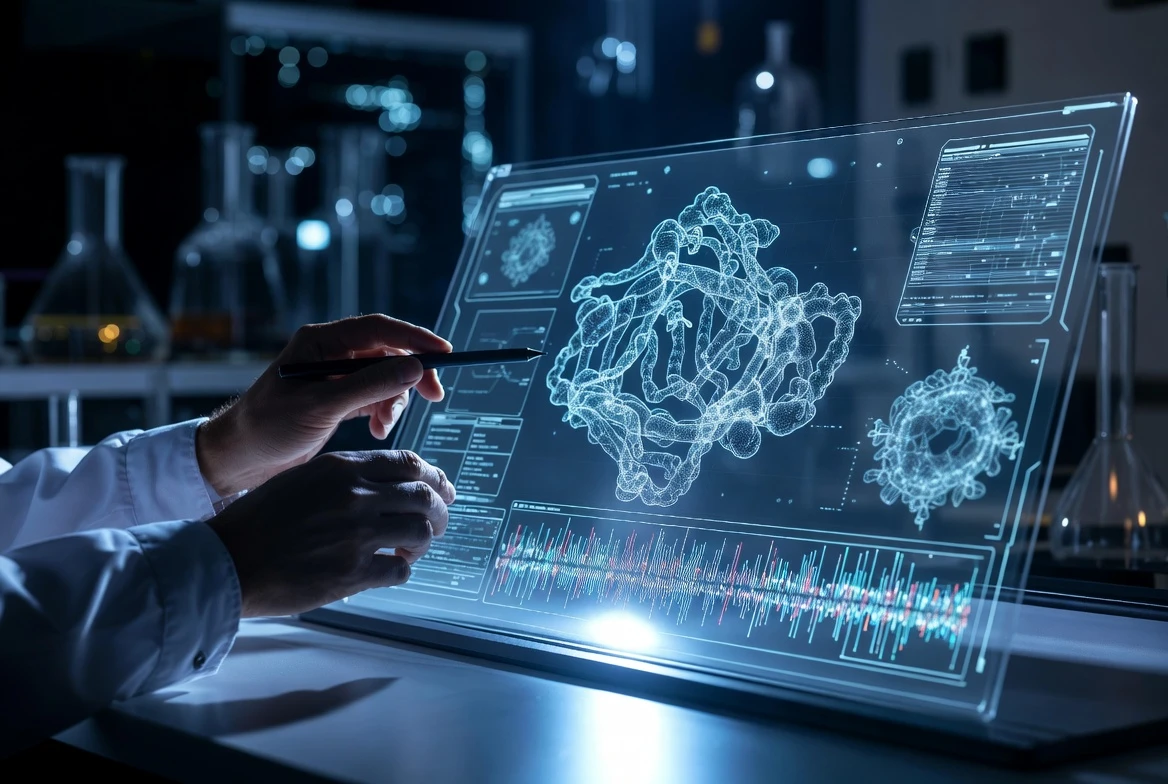
The platform comes preloaded with access to more than 60 scientific databases. It supports specialized scientific visualizations, including 3D protein structures, genome browser tracks, and chemistry diagrams. Anthropic stated that Claude Science is powered by its existing family of Claude AI models, all of which have undergone standard safety and biosecurity evaluations prior to deployment.
By bringing these tools together, the workbench allows researchers to review scientific literature, perform complex data analyses, and generate figures and manuscripts within one environment. A key feature of the system is its emphasis on traceability, explicitly linking analytical results back to the underlying source code and computing environment used to produce them. This design addresses a persistent challenge in computational research, where reproducing published figures often requires painstaking manual reconstruction of the original code pipeline.
The Drug Discovery Wager
Alongside the software launch, Anthropic announced plans to establish internal pre-clinical drug development programs focused entirely on neglected diseases. Speaking during a press briefing, Eric Kauderer-Abrams, the company’s head of life sciences, articulated the rationale for this move by a foundation model developer.
Eric Kauderer-Abrams said the initiative would target conditions that often receive limited commercial attention despite imposing a significant global health burden.
By choosing to operate in therapeutic areas that traditional pharmaceutical companies typically overlook, Anthropic avoids competing directly with its prospective pharmaceutical customers. The company stated that early users participating in the platform’s beta program, which included research organizations and commercial partners, have reported notable improvements in overall research efficiency. However, Anthropic did not disclose specific performance metrics detailing the magnitude of those gains.
Context and Next Steps
Anthropic first ventured into the life sciences domain in late 2025, seeking to apply generative AI tools to specialized scientific domains beyond standard enterprise productivity. Claude Science represents the unification of those underlying initiatives into a single graphical interface.
While the company has laid out its broad ambitions, several specifics remain undefined. Anthropic has not published a timeline for when its pre-clinical drug programs might yield viable therapeutic candidates, nor has it clarified the exact diseases selected for the initial focus. Furthermore, without concrete benchmark data from the beta program, outside researchers will have to wait for independent validation to verify whether Claude Science offers a measurable advantage over existing laboratory software stacks.


Lunit Turns Routine H&E Slides Into a Lung Pre-Screen

Meta’s Muse Agent Wants Your Inbox and Your Card

Police Chase Mules as AI Chatbots Run Romance Scams

Ticketmaster’s Personalized App Is Built to Move Empty Seats

Software Deals Now Hinge on Filing Accuracy, Not Beats

Iowa Counties Warn Workers That ChatGPT Keeps Their Files

Shaalan Beg’s Oncology AI Hits an Enrollment Wall

Exowatt Warns Gas-Fired AI Campuses May Not Last a Decade

Philips Splits Innovation and Hands AI to Partovi

Chrome 153 Puts the Whole Web on a Two-Week Clock

Oracle Cuts 21,000 Jobs in a Year, Cites AI in 10-K Filing

Fable 5 and Mythos 5 Return as US Lifts Anthropic Export Controls

SpaceX’s Google Deal Turns a Rocket Company Into a Cloud Landlord

XPL Rallies 30% Ahead of Plasma One Card Tier Launch

DGO App Brings Rs 549 Mobile Pass for FIFA World Cup 2026 in Nepal

Moonshot AI Targets $30 Billion in China’s Fastest AI Funding Sprint

Oppo’s ColorOS 17 Eligibility List Leaves A-Series Buyers Behind

Microsoft Xbox Layoffs Start in July as Sharma Slams 3% Margin

Budget RTX 4050 Laptops Under Rs 70,000 in India: The 2026 Reality

Steam Machine vs Xbox Series X: The 2026 Living Room Gaming Showdown
-
 AI3 months ago
Oracle Cuts 21,000 Jobs in a Year, Cites AI in 10-K Filing
-
 AI2 months ago
Fable 5 and Mythos 5 Return as US Lifts Anthropic Export Controls
-
 AI3 months ago
SpaceX’s Google Deal Turns a Rocket Company Into a Cloud Landlord
-
 CRYPTO3 months ago
XPL Rallies 30% Ahead of Plasma One Card Tier Launch
-
 APPS3 months ago
DGO App Brings Rs 549 Mobile Pass for FIFA World Cup 2026 in Nepal
-
 AI3 months ago
Moonshot AI Targets $30 Billion in China’s Fastest AI Funding Sprint
-
 NEWS3 months ago
Oppo’s ColorOS 17 Eligibility List Leaves A-Series Buyers Behind
-
 GAMING3 months ago
Microsoft Xbox Layoffs Start in July as Sharma Slams 3% Margin