
AI
Netflix Recreates Gene Wilder’s Voice With AI for Wonka Reality Show
Netflix and ElevenLabs rebuilt Gene Wilder’s voice with AI for Wonka’s The Golden Ticket, a reality show premiering September 23 with estate approval.

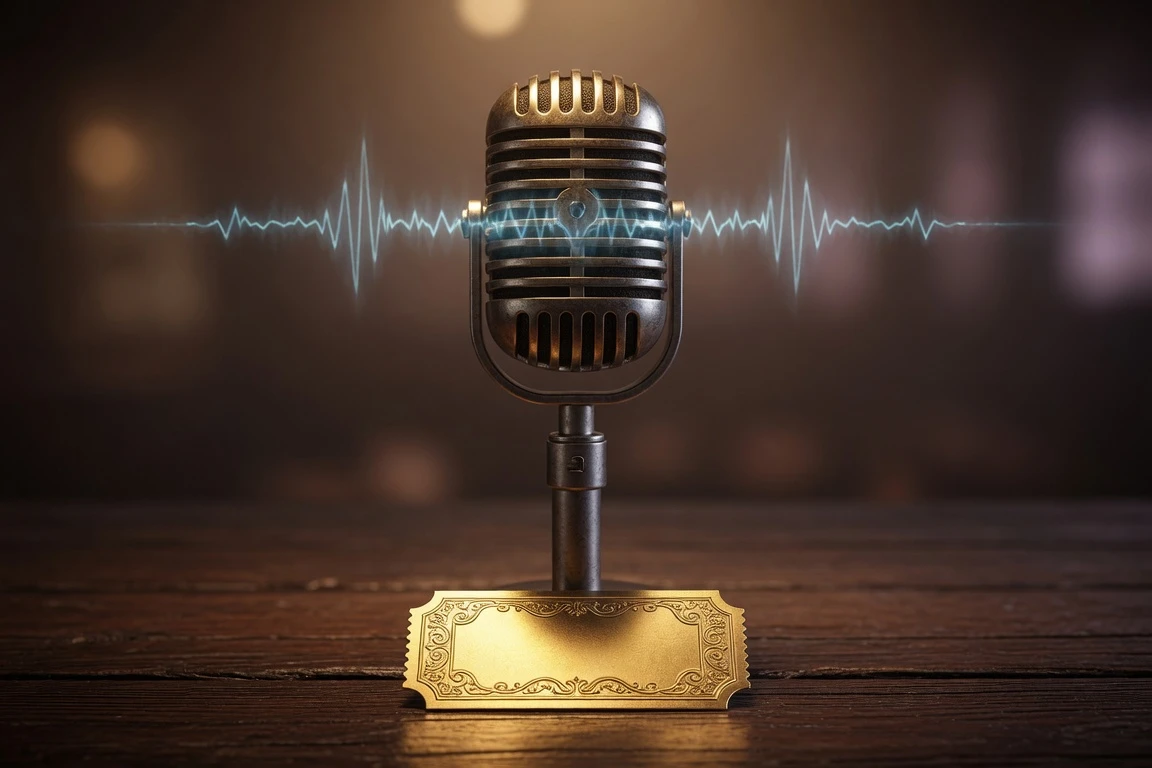
Netflix has resurrected Gene Wilder’s voice with AI to host a new Willy Wonka reality competition series. Premiering September 23, Wonka’s The Golden Ticket will use an ElevenLabs-cloned version of Wilder’s voice, generated with the consent of the Gene Wilder Estate, as the show’s narrator and on-screen host figure. The launch lands on the 55th anniversary of the 1971 Willy Wonka and the Chocolate Factory film, and it is one of the most visible deployments yet of a synthetic voice from a deceased Hollywood star as a central element of a major show. The voice is a synthesized recreation built by AI audio firm ElevenLabs, working with Netflix and the Gene Wilder Estate, and it carries a meaningful share of the storytelling in both the trailer and the series itself.
Netflix Hands Wonka to an AI Gene Wilder
Netflix unveiled the first trailer for Wonka’s The Golden Ticket on Tuesday, and the voice introducing the show is the centerpiece. It is a synthesized recreation of Gene Wilder, the actor who played Willy Wonka in 1971 and who died in 2016 at the age of 83, built by AI audio firm ElevenLabs. The recreation was made with the blessing of the Gene Wilder Estate and Karen B. Wilder, the actor’s wife.
The teaser leans on the voice hard. Wilder’s AI voice opens the trailer by telling viewers that “a whole new generation of real-life Golden Ticket holders will compete for a life-changing prize or say a most unfortunate goodbye,” then invites them to “marvel at the magic you remember and delight in my newest wonders beyond imagination.” The announcement follows a separate announcement earlier this year that a New Mexico production company had recreated Val Kilmer, who died of pneumonia in 2025, for an upcoming film using AI.
How the Voice Was Built and Who Signed Off
Behind the voice is ElevenLabs, a London-based AI audio company founded in 2022. Actor Matthew McConaughey is among the company’s investors. According to Deadline, Netflix worked closely with the firm on Wilder’s voice, treating the recreation as a high-profile showcase of its celebrity-voice licensing pipeline. ElevenLabs has built a marketplace of licensable AI voices that already includes figures such as Michael Caine, Stan Lee, Judy Garland, and David Hasselhoff, alongside historical figures including Thomas Edison and J. Robert Oppenheimer.
Estate consent is the central business and ethical hinge. Karen B. Wilder said in a statement released by the show’s launch announcement and estate quote that her husband “had a remarkable ability to bring humor, wonder and heart into people’s lives,” and that the estate is delighted with the project more than five decades after Gene first brought Willy Wonka to life on screen.
Netflix and the estate framed the project as tribute, not stunt. The voice lines were recorded and approved under a formal licensing arrangement with ElevenLabs’ Iconic Marketplace, the platform the company uses to license AI voices and likenesses for media campaigns and creative projects.
More than five decades after Gene brought Willy Wonka to life, people of all ages and backgrounds around the world continue to find joy, laughter and inspiration in his performance. We are delighted that Wonka’s The Golden Ticket celebrates the warmth and imagination that he brought to the role, introducing that magic to a new generation while honoring the fans who have cherished it for decades.
Karen B. Wilder is the wife of Gene Wilder and spoke on behalf of the Gene Wilder Estate.
What the Reality Show Looks Like
The series itself is an unscripted competition produced by Eureka Productions, the company behind Fox’s The Floor. It was shot on Australia’s Gold Coast with local government support, and Netflix ordered it last year after a multi-studio bake-off that included Fremantle, Wall to Wall, Nobody’s Hero, and The Garden, with Eureka winning the production slot. Chris Culvenor, Paul Franklin, Rikkie Proost, David Tibballs, Alison Holloway, and Emer Harkin serve as executive producers. The sets are physical builds, with the AI component living almost entirely in the audio.
12 golden-ticket winners, each paired with a partner of their choosing, enter a physical recreation of Wonka’s Chocolate Factory and work through “a series of games, tests, and temptations designed to challenge them physically, mentally, and morally,” per Netflix. Only one contestant walks away with what Netflix describes as “Wonka’s life-changing prize.” Rusty Goffe, one of the original Oompa Loompas from the 1971 film, returns to reprise his role during the challenges.
The series runs for nine episodes, with a two-part finale on September 30. The AI voice of Wilder narrates and steers the action through the show, functioning as the soul of the world. Netflix’s own pages describe it as “a high-stakes social experiment inspired by one of the most iconic worlds in cinematic history,” positioning the show as a full reality-TV production.
The release also extends Netflix’s broader Roald Dahl push. Netflix acquired the Roald Dahl Story Company in 2021, and Wonka’s The Golden Ticket is the latest in a string of adaptations that includes Matilda the Musical, The Wonderful Story of Henry Sugar, and The Twits. An animated feature, Charlie vs. the Chocolate Factory, with the voices of Kit Connor and Taika Waititi, is in development for a 2027 release.
- Premiere date: September 23
- Finale date: September 30 (two-part)
- Episodes: nine
- Contestants: 12 golden-ticket winners (each with a partner)
- Anniversary: 55 years since the 1971 Willy Wonka film
ElevenLabs’ Quiet Hollywood Play
ElevenLabs is not new to legacy voice work. Just a week before the Wilder announcement, the company released a 13-hour audiobook of Homer’s Odyssey narrated by an AI clone of Michael Caine’s voice, licensed through his estate, and last year it released a version of The Wonderful Wizard of Oz read by an AI Judy Garland ahead of Wicked: For Good.
The Wilder project extends a pattern, but it is also the most visible deployment yet. The voice is the central narrative device, not a marketing tag, and it sits in a globally distributed Netflix series as the spine of the show. For ElevenLabs, the bet is that a successful run here opens the door for more estate-controlled deployments of celebrity voices on bigger stages. McConaughey’s investment in the company, plus the Caine and Stan Lee deals, points to a broader celebrity-facing strategy that does not require performers to be alive to license their sound.
The Wilder deal is also a stress test of consent norms. The estate is on board, and that matters, but the broader Hollywood machinery, including SAG-AFTRA, state legislatures, and the guilds that represent voice actors, is still writing the rules for posthumous synthetic performance. ElevenLabs is shipping while those rules are being drafted.
The Posthumous AI Lineage That Led to Wilder
Wilder is the latest name on a lengthening list of deceased performers whose voices or faces have been digitally recreated for new work. The practice goes back to Carrie Fisher’s appearance as Princess Leia in later Star Wars films and Paul Walker’s likeness in Furious 7, both completed after the actors had died. Harold Ramis was digitally recreated for a brief cameo in a later sequel.
The roster of posthumous AI recreations has grown quickly. James Dean, who died in a 1955 car crash, has been cast as the lead in an upcoming AI-generated film called Back to Eden, the second attempt after a 2019 project called Finding Jack was cancelled. Below the headline names is a longer list of less-publicized experiments in digital resurrection, including AI-driven audiobook releases of Judy Garland and Michael Caine’s voices.
- Carrie Fisher (later Star Wars films)
- Paul Walker (Furious 7, 2015)
- Harold Ramis (Ghostbusters sequel cameo)
- Elis Regina (commercial duet with daughter)
- Val Kilmer (As Deep as the Grave, in production)
- James Dean (Back to Eden, announced)
The list is also a map of who is getting cloned and who is not. Estates with active heirs and clear commercial value have driven most of the projects to date. The legal framework around posthumous AI remains uneven: dead celebrities have some vague protections in certain jurisdictions around commercial exploitation of their image and likeness, but most ordinary people have far less control over their digital legacy after they die.
California has passed legislation requiring consent for AI recreations of dead performers, but enforcement and scope vary by state. New York offers the most comprehensive definition of “right of publicity” for deceased individuals, though even there the protection covers the estate, not the deceased themselves.
The Wilder project lands squarely in the estate-controlled lane. That framing is doing real work for Netflix and ElevenLabs, both commercially and in the press cycle. It also sets up the next contested case: what happens when an estate signs off on a project the deceased performer publicly disliked, or when an estate authorizes a use the public reads as a step too far.
The Pushback and the Estate Question
The Wilder announcement drew swift criticism from film writers and fans online. Film reviewer Stefan Ellison wrote on X that Netflix should “just hire someone to play Willy Wonka. Even the Wonka Experience in Glasgow did that.” His reference was to a viral 2024 event in Glasgow where AI-generated posters and AI-written scripts led to disappointed families calling the police. The comparison cut both ways: the Glasgow experience failed because the AI was bad, and Netflix’s polished trailer is doing the same thing at a higher production value.
TechRadar columnist Lance Ulanoff wrote that the trailer’s voice was lifeless, and asked whether a synthetic Wilder should exist at all. Other fans pointed to Wilder’s own past statements about Hollywood remakes. Wilder told The Guardian in 2005 that the Johnny Depp-led Charlie and the Chocolate Factory was “all about money,” saying “it’s just some people sitting around thinking: how can we make some more money?”
The AI Wilder voice in this trailer is devoid of passion, pathos, or really any recognizable human emotion. It’s a soulless Gene Wilder. There’s no doubt the power of AI is transforming life and culture. It’s a co-worker, a companion, a sleuth, a coder, and a creator, but we are now at the point where we must ask ourselves: just because AI can, should it?
Lance Ulanoff is a columnist at TechRadar.
Some actors and guilds have taken a harder line. The launch last year of Tilly Norwood, described as the first fully AI-generated actor, drew a SAG-AFTRA statement calling the project a devaluing of human artistry. Voice actors in particular have organized around the prospect of being undercut by synthetic versions of their deceased colleagues.
Wilder himself left no recorded blessing of synthetic voice cloning, but he left clear antipathy toward certain kinds of legacy monetization. The Wilder Estate reads his wishes differently. That gap is the fault line the next few years of posthumous AI will run along, and Netflix has now put a globally distributed show on top of it.
Estate Consent as the Industry’s Next Fault Line
For Netflix, Wonka’s The Golden Ticket is a tentpole series and a referendum on whether estate-controlled posthumous AI can carry a major production. The bet is that the Wilder name, the Wonka IP, and the formal estate blessing together provide enough protection against the inevitable backlash. The Wilder Estate’s framing of introducing the work to a new generation aims to cast the project as inheritance. The estate’s consent is the central element of the entire arrangement.
ElevenLabs’ pipeline is unlikely to slow down. The company has deals with the estates of Michael Caine, Stan Lee, Judy Garland, Burt Reynolds, and David Hasselhoff, plus a marketplace that already licenses historical and fictional voices. SAG-AFTRA, voice-actor guilds, and state legislatures will set the guardrails, but those guardrails are still being written. The Wilder show is one of the first major series to ship inside that gap, and the response over the next two months will shape what kind of posthumous AI Hollywood is willing to greenlight next.
Frequently Asked Questions
What is Wonka’s The Golden Ticket?
It is a nine-episode Netflix reality competition series in which 12 golden-ticket winners, each paired with a partner, enter a physical recreation of Wonka’s Chocolate Factory. The contestants compete through games, tests, and temptations for one grand prize.
Who made the AI Gene Wilder voice?
ElevenLabs built the voice for Netflix under license from the Gene Wilder Estate. The company was founded in 2022 in London and counts actor Matthew McConaughey among its investors.
Did the Gene Wilder Estate approve the AI voice?
Yes, Karen B. Wilder, Gene Wilder’s wife, issued a statement on behalf of the estate calling the show a celebration of her husband’s work and a way to introduce it to a new generation.
When does the show premiere?
Wonka’s The Golden Ticket premieres on Netflix on September 23. A two-part finale follows on September 30.
Which other deceased actors have been recreated using AI?
Deceased performers whose voices or faces have been recreated include Carrie Fisher (later Star Wars films), Paul Walker (Furious 7), Harold Ramis (a sequel cameo), and Brazilian singer Elis Regina (a commercial duet with her daughter). Upcoming projects include Val Kilmer in As Deep as the Grave and James Dean in Back to Eden.


Lunit Turns Routine H&E Slides Into a Lung Pre-Screen

Meta’s Muse Agent Wants Your Inbox and Your Card

Police Chase Mules as AI Chatbots Run Romance Scams

Ticketmaster’s Personalized App Is Built to Move Empty Seats

Software Deals Now Hinge on Filing Accuracy, Not Beats

Iowa Counties Warn Workers That ChatGPT Keeps Their Files

Shaalan Beg’s Oncology AI Hits an Enrollment Wall

Exowatt Warns Gas-Fired AI Campuses May Not Last a Decade

Philips Splits Innovation and Hands AI to Partovi

Chrome 153 Puts the Whole Web on a Two-Week Clock

Oracle Cuts 21,000 Jobs in a Year, Cites AI in 10-K Filing

Fable 5 and Mythos 5 Return as US Lifts Anthropic Export Controls

SpaceX’s Google Deal Turns a Rocket Company Into a Cloud Landlord

CD Projekt Red Co-CEO: Redemption Arc Isn’t Done, Witcher 4 in 2027

XPL Rallies 30% Ahead of Plasma One Card Tier Launch

Google Search Profiles Build a Follow Graph Inside Discover

DGO App Brings Rs 549 Mobile Pass for FIFA World Cup 2026 in Nepal

Moonshot AI Targets $30 Billion in China’s Fastest AI Funding Sprint

Oppo’s ColorOS 17 Eligibility List Leaves A-Series Buyers Behind

Microsoft Xbox Layoffs Start in July as Sharma Slams 3% Margin
-
 AI3 months ago
Oracle Cuts 21,000 Jobs in a Year, Cites AI in 10-K Filing
-
 AI2 months ago
Fable 5 and Mythos 5 Return as US Lifts Anthropic Export Controls
-
 AI3 months ago
SpaceX’s Google Deal Turns a Rocket Company Into a Cloud Landlord
-
 GAMING3 months ago
CD Projekt Red Co-CEO: Redemption Arc Isn’t Done, Witcher 4 in 2027
-
 CRYPTO3 months ago
XPL Rallies 30% Ahead of Plasma One Card Tier Launch
-
 NEWS3 months ago
Google Search Profiles Build a Follow Graph Inside Discover
-
 APPS3 months ago
DGO App Brings Rs 549 Mobile Pass for FIFA World Cup 2026 in Nepal
-
 AI3 months ago
Moonshot AI Targets $30 Billion in China’s Fastest AI Funding Sprint