
AI
India’s AI Statistics Push Gets Three Preconditions From the PMO
P.K. Mishra set three conditions for India’s AI-driven statistics push, warning models could lend false confidence to data blind spots they aim to fix.

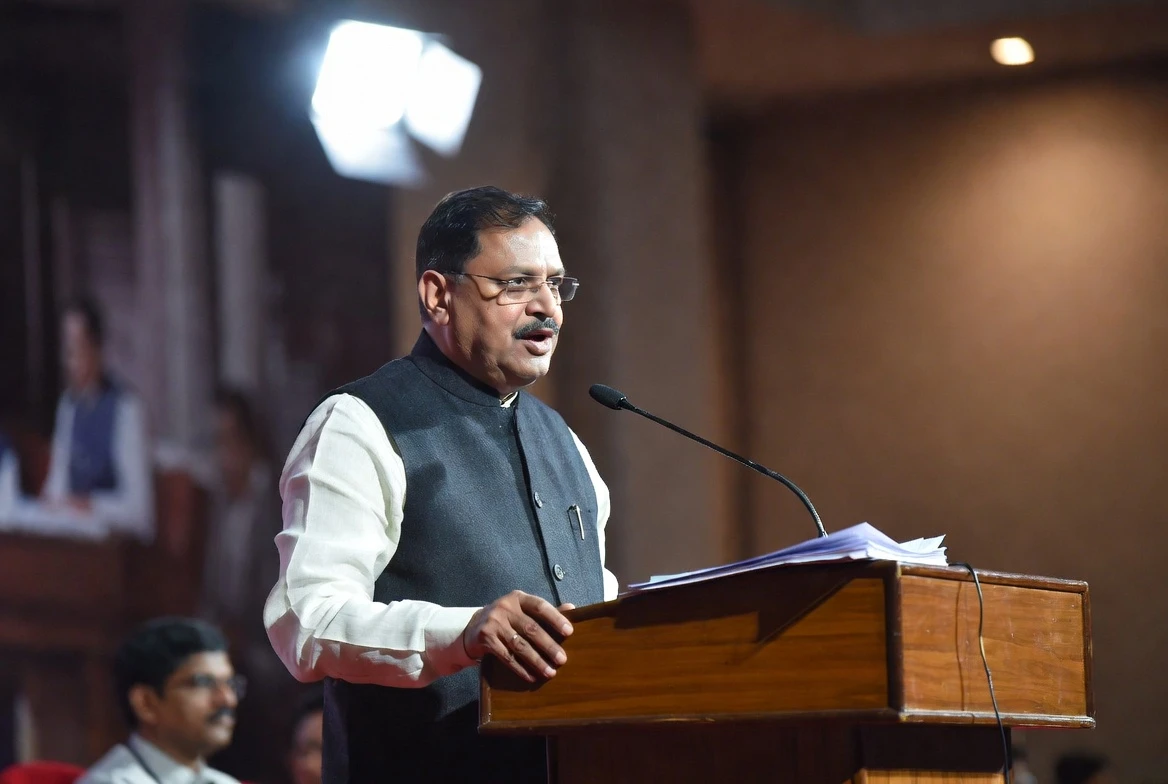
India’s principal secretary to the Prime Minister told the country’s statistics community on Monday that AI in official statistics will get no free pass. P.K. Mishra, speaking at the 20th Statistics Day celebration in New Delhi, said models built to fill data gaps could “lend false confidence” to the very blind spots they are meant to remove. He framed AI as an “inflexion point” for India’s statistical system, but said the technology cannot outrun the governance it sits inside.
The speech, on 29 June, was a high-level caution delivered on the same day the Ministry of Statistics and Programme Implementation (MoSPI) was already publishing its roadmap for AI-driven statistics and rolling out new data products. Mishra named three preconditions, data privacy and public trust, institutional independence, and rigorous AI governance, that have to hold before any model is allowed to stand next to a traditional survey. MoSPI Secretary Saurabh Garg used the same event to spell out a five-pillar data harmonisation framework and an MCP server aimed at making MoSPI’s data AI-ready.
Three Questions Mishra Put on the Table
Mishra opened by treating AI as one of three “frontiers” the analytical institutions must pursue, alongside trust and institutional independence. He told the audience at Dr. Ambedkar International Centre that the government’s commitment to AI-driven datasets warranted “a closer examination of the hard questions” the technology raises. The framing was not “if” but “how”, and the how came with conditions.
The first and most concrete of those conditions was auditability. “If a figure is imputed or nowcast by a model, can the statistical system audit it, explain it, and own it as it owns a survey result?” Mishra asked. He argued that a model “learns only from the data it is given, and it will faithfully reproduce whatever biases and gaps that it contains.” His concern was not hypothetical: a nowcast that produces a national number with no paper trail looks identical to one grounded in a survey, and Mishra is asking which one the public can trust.
Mishra was careful not to ask for an AI pause. He said these were “not reasons for hesitation” but reasons for a more rigorous approach to data. The government’s official recap of his address lists three institutional goals: prioritising data privacy and public trust, preserving institutional independence as the centre of gravity shifts from field surveys to administrative records, and adopting artificial intelligence with governance frameworks built around auditability, explainability, and data provenance. The speech was a wager laid out with its own tripwires.
If a figure is imputed or nowcast by a model, can the statistical system audit it, explain it, and own it as it owns a survey result?
The Administrative Data Push Already Underway
MoSPI did not need the speech to start work. The ministry had already been pushing India’s statistical system away from surveys-on-paper and toward administrative data, the records that other ministries generate as a by-product of running welfare schemes, tax administration, and labour regulation. The 2026 Statistics Day theme, “Unlocking the Potential of Administrative Data,” formalised that turn. The PIB pre-release of the event framed the theme as a response to “the growing importance of leveraging data generated through administrative processes for evidence-based policymaking and governance.”
Secretary Garg’s address made the implementation concrete. Aligning with the mandates of the 5th National Conference of Chief Secretaries held in December 2025, MoSPI has advanced a data harmonisation framework across States and Union Territories built on five fundamental pillars. He also pointed to the MCP Server of MoSPI as another step to make MoSPI’s data interoperable through AI and machine learning.
Mishra’s caution and Garg’s rollout sat on the same stage, hour apart. Mishra welcomed the shift, then said administrative data must evolve “from being a by-product of departmental processes to becoming a strategic national asset.” The way forward, he said, requires “dynamic data catalogues, seamless interoperability across government systems, and a fully integrated data ecosystem where information is generated at source, shared securely, and utilised efficiently.” Trusted and interoperable datasets, he added, would also form the foundation for the responsible and effective adoption of AI in governance. The preconditions he named for AI apply to the administrative data push that Garg was already rolling out.
About 500 participants from Central Ministries, State and Union Territory Governments, and international organisations attended the 29 June event. Rao Inderjit Singh, Union Minister of State (Independent Charge) of MoSPI, called Mishra’s presence a “rare and exhilarating milestone” for Statistics Day. The PIB noted that Mishra recalled the PM’s emphasis on data-driven decision making and that the goals of Viksit Bharat “need to be measured on a continuous basis.” Read the government’s official recap of the 20th Statistics Day for the full program and publication list.
| Precondition | What Mishra Asked For |
|---|---|
| Data privacy and public trust | Treat consent and privacy as architecture, not a footnote |
| Institutional independence | Preserve MoSPI’s control of methodology as data flows in from other ministries |
| AI with rigorous governance | Make every imputed or nowcast figure auditable, explainable, and ownable |
Why Independence Is the Hardest of the Three
The independence question is where Mishra’s speech went hardest on MoSPI itself. For 75 years, he argued, “the credibility of our statistics has rested in part on our control of the instrument. The ministry designed the survey, it drew the sample, and it owned the estimate.” That ownership is what gives an inflation number or a poverty rate its weight in policy debate. As India shifts to administrative data, MoSPI will be reporting numbers it did not collect, on populations it did not sample, using instruments built by other ministries.
Mishra’s worry was that the centre of gravity moves toward “records that other ministries generate and own.” He said MoSPI must “consider carefully how that independence is preserved” when the underlying data does not sit inside MoSPI’s walls. The Data Innovation Lab and the five-pillar harmonisation framework are MoSPI’s attempt to put a layer of its own over those records. The test Mishra left on the table is whether that layer counts as independence, or as a coordination role dressed up in independence language.
- Metadata compilation across datasets
- Data quality assessments
- Uniform classifications across ministries
- Unique identifiers spanning welfare, tax, and labour records
- Resolution of definitional divergences between schemes
Building the Architecture Around the Models
Mishra was explicit that the conditions are not optional. He said the principles of privacy by design and alignment with existing legal and policy frameworks must guide all efforts towards greater interoperability. He also pushed back on the idea that technical investment alone would solve the credibility problem. “Building human capacity, data literacy, and analytical competencies across institutions will be equally critical for success,” he said. The shift, in his telling, is as much about training statisticians to interrogate models as about building the models themselves.
A practical example sat inside the data already on stage. The labour ministry’s Social Security Data Pooling Exercise and Agri Stack from the agriculture ministry were presented as use cases for harmonising administrative data at the technical session after Mishra’s address. The Uttar Pradesh government’s Family ID platform and Maharashtra’s MahaVISTAAR, an AI tool for climate-resilient agriculture, were shown as examples of administrative data being routed into policy decisions.
The government’s recap captured Mishra’s view that India’s digital landscape “offers a transformative opportunity to unlock routine administrative data as a real-time national asset.” That is the upside. The risk, in his framing, is that routine administrative data inherits the biases baked into the systems that generated it: a welfare database undercounts the people it never enrolled, and an AI built on top of it will faithfully reproduce that undercount at scale. Mishra’s three questions are not a brake on the AI push; they are a brake on the AI push quietly producing a more confident-looking version of yesterday’s blind spots. See MoSPI’s pre-event release on this year’s Statistics Day theme for the original framing.
Where the Reform Calendar Stands
MoSPI’s published roadmap shows the AI agenda is already moving. According to a recent Economic Times interview with Secretary Garg, the ministry has constituted a separate sub-committee to examine implementation of the United Nations System of National Accounts (SNA) 2025, with the technical focus on “treating data as an asset.” MoSPI has also initiated a Data Innovation Lab and collaborations with multiple stakeholders to develop practical use cases for AI, machine learning, and big data in official statistics.
The next milestone on the public calendar is concrete. Garg told the Economic Times that the ministry is working on an Index of Service Production, expected to be released by July. On the Statistics Day stage, the ministry released MoSPI’s Vision Document 2026-2031, a Practitioner’s Handbook on Harmonisation of Datasets, the Sustainable Development Goals – National Indicator Framework Progress Report 2026, and several labour-market and urban-enterprise publications. The Sukhatme National Award in Statistics for 2026 was conferred on Professor Arup Bose of the Indian Statistical Institute, Kolkata, for work spanning statistical theory, random matrix theory, and high-dimensional data analysis.
Mishra’s three questions and MoSPI’s calendar are now on the same timeline. Whether the conditions he named travel from the lectern into the sub-committee’s technical recommendations, the Data Innovation Lab’s outputs, and the Index of Service Production’s methodology is the test that runs through the rest of 2026 and into the Vision Document’s 2031 horizon. Mishra’s own benchmark is plain: statistics the system can audit, explain, and own.
- 20 editions of Statistics Day, observed annually since 2007
- 75 years of survey-led credibility at the centre of the reform debate
- 5 pillars in MoSPI’s data harmonisation framework, anchored in the December 2025 Chief Secretaries conference
- ~500 participants at the 20th Statistics Day event
- 133rd birth anniversary of P.C. Mahalanobis commemorated at the event
Frequently Asked Questions
What is India’s Statistics Day?
Statistics Day is observed every year on 29 June, the birth anniversary of Professor Prasanta Chandra Mahalanobis, the architect of India’s modern statistical system. It has been marked annually since 2007, with a theme of national relevance. The 20th edition was held on 29 June 2026 at Dr. Ambedkar International Centre, New Delhi.
What did P.K. Mishra say about AI in official statistics?
Mishra, the Principal Secretary to the Prime Minister, said models trained on official data risk reproducing the biases and gaps in that data and could “lend false confidence” to blind spots. He asked whether the statistical system could audit, explain, and own an AI-imputed figure as it owns a survey result, and named privacy, independence, and AI governance as three institutional goals.
Why is India shifting to administrative data?
The 2026 Statistics Day theme, “Unlocking the Potential of Administrative Data,” frames administrative records, the data generated as a by-product of welfare, tax, and regulatory systems, as a faster, more granular, and more frequently updated source than traditional surveys. Mishra argued that such data must move from being a departmental by-product to a strategic national asset.
What is MoSPI’s AI plan?
MoSPI Secretary Saurabh Garg has said the ministry has constituted a sub-committee to examine implementation of the United Nations System of National Accounts (SNA) 2025, with a focus on “treating data as an asset.” The ministry has also initiated a Data Innovation Lab, released a Practitioner’s Handbook on Harmonisation of Datasets, and is preparing an Index of Service Production for release in July.
What is SNA 2025 and why does it matter?
The United Nations System of National Accounts 2025 is the updated international standard for measuring economic activity, including a framework that treats data as an asset. MoSPI’s sub-committee on SNA 2025 is examining how the standard can be adapted and implemented in the Indian context, a step Garg has linked to data-as-asset thinking in the AI era.


Sony’s 10 Percent Disc Drop Leaves the 2028 Cutoff Intact

Chip Allocation Sidelines the Base iPhone 18 This Fall

Miami-Dade Fights the Vice City Brand It Already Wears

IFA 2026 Awards Put Tecno Ahead of Flagship Phones

USB-C Gadgets Made the Junk Drawer Rechargeable

Pixel 11 Pro Asks $1,099 for a Light Google Locked

The iPhone Ultra Sells Two Retired Minis as One Foldable

Google Opens Gmail to Voice and Gates Docs Live

Lenovo Prices the IdeaPad Vibe Against Apple’s $699 Neo

Xbox Caps Game Pass Cloud Gaming at 15 Hours

Oracle Cuts 21,000 Jobs in a Year, Cites AI in 10-K Filing

Fable 5 and Mythos 5 Return as US Lifts Anthropic Export Controls

SpaceX’s Google Deal Turns a Rocket Company Into a Cloud Landlord

CD Projekt Red Co-CEO: Redemption Arc Isn’t Done, Witcher 4 in 2027

XPL Rallies 30% Ahead of Plasma One Card Tier Launch

Google Search Profiles Build a Follow Graph Inside Discover

DGO App Brings Rs 549 Mobile Pass for FIFA World Cup 2026 in Nepal

Moonshot AI Targets $30 Billion in China’s Fastest AI Funding Sprint

Oppo’s ColorOS 17 Eligibility List Leaves A-Series Buyers Behind

Microsoft Xbox Layoffs Start in July as Sharma Slams 3% Margin
-
 AI3 months ago
Oracle Cuts 21,000 Jobs in a Year, Cites AI in 10-K Filing
-
 AI2 months ago
Fable 5 and Mythos 5 Return as US Lifts Anthropic Export Controls
-
 AI3 months ago
SpaceX’s Google Deal Turns a Rocket Company Into a Cloud Landlord
-
 GAMING3 months ago
CD Projekt Red Co-CEO: Redemption Arc Isn’t Done, Witcher 4 in 2027
-
 CRYPTO3 months ago
XPL Rallies 30% Ahead of Plasma One Card Tier Launch
-
 NEWS3 months ago
Google Search Profiles Build a Follow Graph Inside Discover
-
 APPS3 months ago
DGO App Brings Rs 549 Mobile Pass for FIFA World Cup 2026 in Nepal
-
 AI3 months ago
Moonshot AI Targets $30 Billion in China’s Fastest AI Funding Sprint