
CRYPTO
Thailand’s $122.5 Million Wallet Dwarfs Interpol’s Seizure Total
A single Thai wallet moved sums close to half of Interpol’s $293 million crackdown haul, showing how far crypto enforcement trails scam networks.

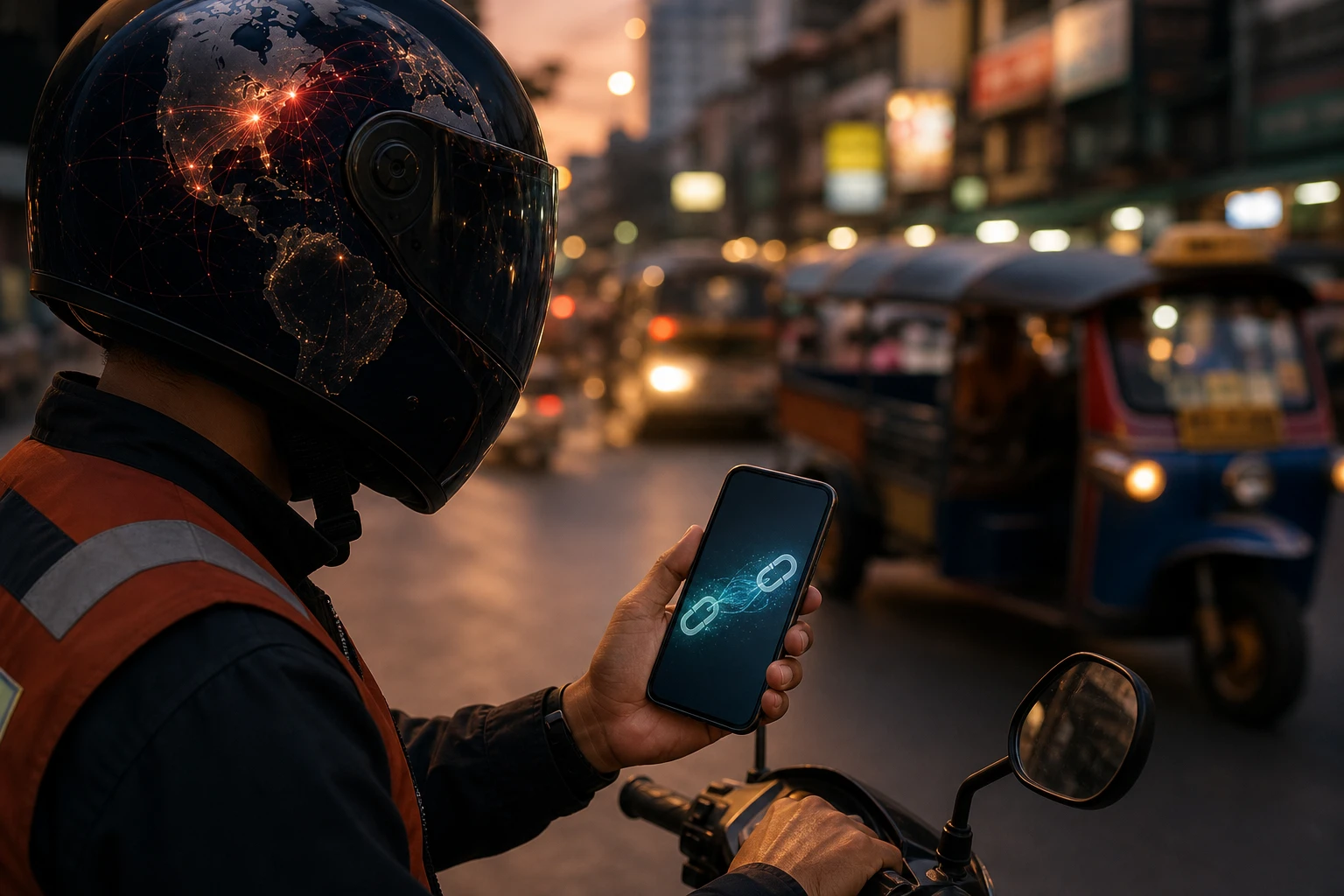
Interpol says a crypto wallet controlled by a 20-year-old suspect in Thailand processed more than $122.5 million in romance-scam proceeds over 10 months, using cross-chain token swaps to blur the trail before the money reached an off-ramp. Thai police arrested two people in the case.
The wallet is the marquee example inside a much bigger release: Operation First Light 2026, a four-month sweep across 97 countries and territories that produced 5,811 arrests and the interception of $293 million in illicit assets, with more than 142,000 victims identified. Run the numbers side by side and the case meant to showcase the operation’s reach instead shows how much further the money travels than the arrests do.
The Number Interpol Chose to Highlight
A single Thai wallet moved a sum equal to roughly 42% of everything the entire 97-country operation intercepted, though the two figures measure different things. The $122.5 million is throughput, money that passed through the wallet across 10 months, not a balance that sat there at once. The $293 million is assets frozen or seized. Interpol’s own account makes that distinction explicit.
What the release does not do is name the wallet, the chains, or the exchanges involved. It does not say what share of the $122.5 million came from theft rather than other sources, and it does not disclose how much, if anything, Thai authorities recovered. Two people are in custody. The money’s path before it reached them is not.
- What Interpol confirmed – a 20-year-old suspect controlled the wallet, cross-chain swaps were used, two arrests followed, and the case sits inside Operation First Light 2026, which ran January 15 through April 30.
- What remains undisclosed – the wallet’s identity, the specific blockchains or swap services used, the theft-versus-other-funds breakdown, and any recovery figure for Thailand.
That gap between confirmed and undisclosed is where the case stops being a clean enforcement win and starts looking like a snapshot of a much larger, mostly invisible flow.
What 97 Countries Actually Caught
Operation First Light 2026 targeted the money-laundering side of social-engineering fraud: business email compromise, romance scams, investment fraud, sextortion, and impersonation schemes. Investigators combined intelligence sharing with raids, account and wallet freezes, Interpol notices, and requests routed through I-GRIP, a mechanism built to block illicit flows across both fiat and virtual assets.
Some of the operation’s other results had nothing to do with crypto. In Eswatini, police arrested 82 people and dismantled a fake police station used to intimidate scam victims into paying. That case, alongside Thailand’s, illustrates the operation’s actual spread: some busts are physical and crude, others are digital and nearly untraceable.
Cross-Chain Swaps Are Built to Break the Trail
A token swap pushes funds from one asset or blockchain into another. Chain each swap together and investigators have to reconcile records across separate ledgers, wallets, and services before money reaches an off-ramp tied to a real identity. Every hop adds a new technical and legal handoff, especially when the route runs through peer-to-peer wallets with no consistent recordkeeping.
The Financial Action Task Force (FATF, the global standard-setter for anti-money-laundering rules) flagged exactly this problem in a March 2026 report on stablecoins and unhosted wallets. It found that stablecoins now account for 84% of illicit virtual-asset transaction volume, much of it moving through peer-to-peer transfers that never touch a regulated exchange. More than 250 stablecoins were in circulation by mid-2025, with a combined market cap above $300 billion.
Some of that plumbing is being marketed as a feature rather than a risk. A DeFi bridge pitch built around self-custody makes the same case swap services do: keep control with the user, route around centralized custodians. That is precisely the design investigators say slows them down.
Regulators Say the Gap Is Structural
FATF’s most recent virtual-asset compliance review, published this month, put numbers on how far behind the rulebook sits. Just 18% of 142 surveyed jurisdictions, 26 countries, have completed a DeFi industry risk assessment. Ninety-three percent cannot even identify a domestic DeFi project that meets their own definition of a virtual asset service provider.
Of the jurisdictions with some DeFi risk framework, only four have mandatory licensing rules, and just two have actually finished registering and licensing a DeFi project. That is not a temporary backlog. It is most of the world’s regulators admitting they have not yet built the tools to see inside the systems criminals are already using.
The Compounds That Keep Producing New Wallets
A 20-year-old with a single wallet is not an aberration in this space. Chainalysis’s 2026 Crypto Crime Report ties the bulk of romance-scam proceeds to forced-labor compounds operating across Cambodia, Myanmar, and other parts of Southeast Asia, where workers, some trafficked, run the chats and manage the wallets on behalf of organizers who stay several layers removed from any arrest.
The scale of the enforcement response against that network in 2025 and 2026 dwarfs anything tied to Thailand’s single case:
| Case | Timing | Scale | Detail |
|---|---|---|---|
| Thailand crypto wallet | 10 months, reported July 2026 | $122.5M processed, 2 arrests | Cross-chain swaps used to obscure the trail |
| Eswatini fake police station | First Light 2026 (Jan-Apr) | 82 arrests | Non-crypto intimidation scheme dismantled |
| Prince Group forfeiture | October 2025 | $15 billion seized | CEO sanctioned over pig-butchering network |
| UK bitcoin recovery | 2025 | 61,000 BTC recovered | Cited in Chainalysis’s 2026 report as a record haul |
| Dubai compound raids | By April 29, 2026 | 275 suspects, 9 compounds | Forced-labor scam centers raided directly |
| US pig-butchering task force | Roughly Dec 2025-Feb 2026 | $580 million seized | Includes $402 million recovered by January 2026 |
Line those cases up and Thailand’s wallet looks less like an outlier and more like one node in a network that keeps regenerating new wallets and new 20-year-olds as fast as any single country can arrest them.
Victim Losses Keep Climbing Even as Arrests Pile Up
The financial pressure behind that network is getting worse, not better, according to Chainalysis’s tracking of illicit crypto flows.
- $154 billion – total illicit crypto received by identified addresses in 2025, up 162% year over year.
- 84% – share of that illicit volume that moved through stablecoins rather than volatile assets.
- 253% – jump in the average pig-butchering scam payment, from $782 to $2,764.
- 694% – surge in crypto activity tied to sanctioned entities, the biggest driver of 2025’s increase.
Set against that $154 billion figure, the $293 million Interpol says it intercepted this spring is not even two-tenths of one percent, though the two numbers cover different windows: a full prior year of flows against four months of enforcement. US officials separately estimate pig-butchering losses to Americans alone at close to $10 billion a year. The 142,000 victims First Light 2026 identified worldwide are the visible edge of a much larger pool still being counted.
The Trail Still Goes Cold Before the Off-Ramp
This does not mean the arrests do not matter. Two people are in custody in Thailand, 82 more in Eswatini, hundreds more across the other 95 countries and territories in the sweep. But the wallet at the center of Interpol’s own headline number shows exactly where the system still fails: by the time a swap has crossed two or three chains, the identity behind it is already gone.
FATF’s own recommendation is the tell. Its March report called for law-enforcement and supervisory bodies to build real expertise in cross-chain mechanics, smart contracts, and blockchain analytics, and to tighten monitoring of peer-to-peer risk specifically. That is a request for capability the system does not yet have, filed against a case where the money moved for 10 months before anyone was arrested for it.
Frequently Asked Questions
What is a cross-chain token swap?
It is a transaction that converts crypto held on one blockchain into an asset on a different blockchain, often through a decentralized bridge rather than a centralized exchange. Each conversion creates a new ledger for investigators to reconcile, which is why regulators single it out as a laundering risk rather than an ordinary trading tool.
What does Interpol’s I-GRIP mechanism actually do?
I-GRIP is the channel Interpol used during Operation First Light 2026 to request freezes on illicit flows across both traditional currency and virtual assets, working alongside raids, wallet freezes, and international notices rather than replacing them.
How do pig-butchering scams typically operate?
Fraudsters build trust with targets over weeks or months through social media or messaging apps, then steer them toward counterfeit trading platforms showing fabricated gains. The victim’s real cryptocurrency is drained once they attempt to withdraw or invest further, often through apps designed to mimic legitimate exchanges.
Why did Eswatini’s case involve a fake police station?
Investigators there dismantled a scheme using a fabricated police station to pressure and intimidate scam victims into paying, one of 5,811 arrests across the wider operation and a reminder that not every case in the sweep involved crypto at all.
How much of the $293 million tied to crypto specifically?
Interpol’s release did not break the $293 million down by asset type, so the crypto share tied to cases like Thailand’s is not separately disclosed alongside the fiat and other-asset recoveries from the other 96 countries and territories.


Sony’s 10 Percent Disc Drop Leaves the 2028 Cutoff Intact

Chip Allocation Sidelines the Base iPhone 18 This Fall

Miami-Dade Fights the Vice City Brand It Already Wears

IFA 2026 Awards Put Tecno Ahead of Flagship Phones

USB-C Gadgets Made the Junk Drawer Rechargeable

Pixel 11 Pro Asks $1,099 for a Light Google Locked

The iPhone Ultra Sells Two Retired Minis as One Foldable

Google Opens Gmail to Voice and Gates Docs Live

Lenovo Prices the IdeaPad Vibe Against Apple’s $699 Neo

Xbox Caps Game Pass Cloud Gaming at 15 Hours

Oracle Cuts 21,000 Jobs in a Year, Cites AI in 10-K Filing

Fable 5 and Mythos 5 Return as US Lifts Anthropic Export Controls

SpaceX’s Google Deal Turns a Rocket Company Into a Cloud Landlord

CD Projekt Red Co-CEO: Redemption Arc Isn’t Done, Witcher 4 in 2027

XPL Rallies 30% Ahead of Plasma One Card Tier Launch

Google Search Profiles Build a Follow Graph Inside Discover

DGO App Brings Rs 549 Mobile Pass for FIFA World Cup 2026 in Nepal

Moonshot AI Targets $30 Billion in China’s Fastest AI Funding Sprint

Oppo’s ColorOS 17 Eligibility List Leaves A-Series Buyers Behind

Microsoft Xbox Layoffs Start in July as Sharma Slams 3% Margin
-
 AI2 months ago
Oracle Cuts 21,000 Jobs in a Year, Cites AI in 10-K Filing
-
 AI2 months ago
Fable 5 and Mythos 5 Return as US Lifts Anthropic Export Controls
-
 AI3 months ago
SpaceX’s Google Deal Turns a Rocket Company Into a Cloud Landlord
-
 GAMING3 months ago
CD Projekt Red Co-CEO: Redemption Arc Isn’t Done, Witcher 4 in 2027
-
 CRYPTO3 months ago
XPL Rallies 30% Ahead of Plasma One Card Tier Launch
-
 NEWS3 months ago
Google Search Profiles Build a Follow Graph Inside Discover
-
 APPS3 months ago
DGO App Brings Rs 549 Mobile Pass for FIFA World Cup 2026 in Nepal
-
 AI3 months ago
Moonshot AI Targets $30 Billion in China’s Fastest AI Funding Sprint