
CRYPTO
Ripple’s Garlinghouse Pitches XRP Into $16 Trillion Payment Flows
Ripple CEO Brad Garlinghouse said on CNBC that Ripple processed $16 trillion in annual payments, with digital-asset transactions at close to zero percent.

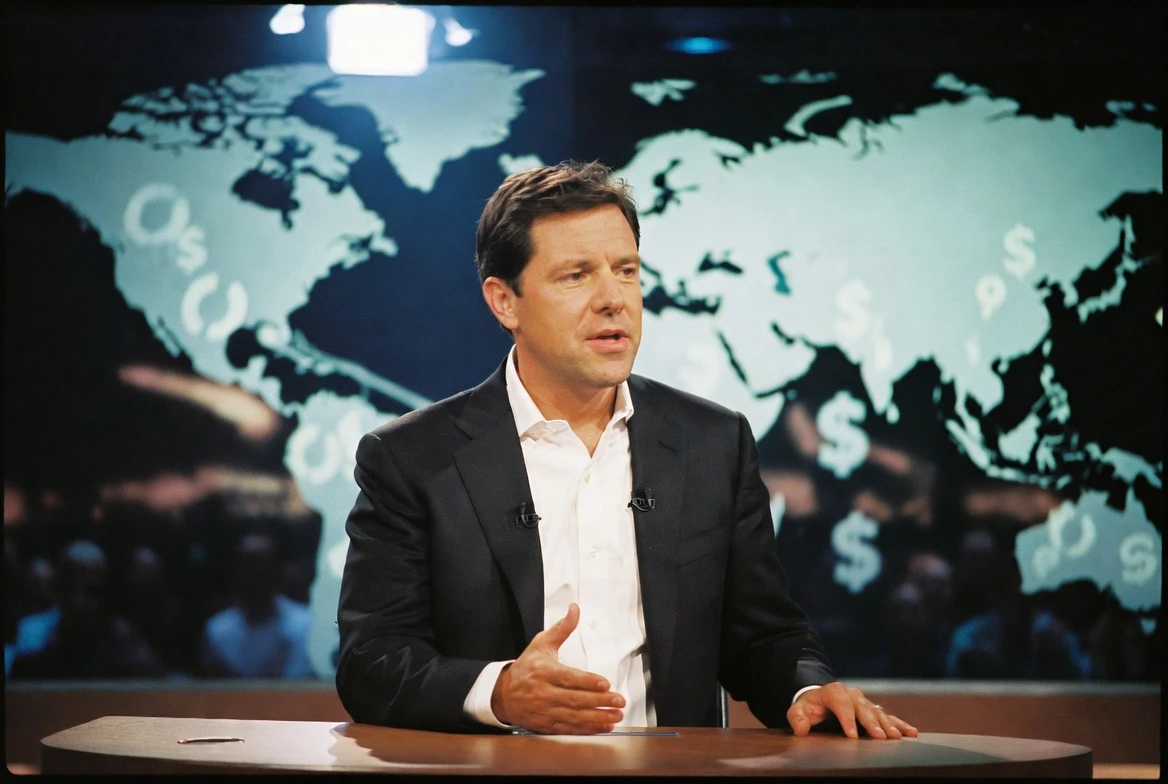
Ripple CEO Brad Garlinghouse used a CNBC interview on June 26 to argue that XRP and the wider Ripple stack have a $16 trillion opening in institutional payments. He said Ripple processed about $16 trillion in annual payments and clearing through businesses added by acquisitions, while transactions involving digital assets accounted for what he called ‘close to zero percent’ of that volume. He framed the gap itself as the opening.
Ripple’s broader story is to make XRP a settlement layer inside legacy flows the company’s acquisitions already touch. The infrastructure spans custody, brokerage, prime, and enterprise treasury, plus stablecoins like RLUSD. CTO Emeritus David Schwartz publicly outlined use cases including tokenization, interoperability, DeFi, and AI ahead of Ripple’s annual Swell conference. That figure gave Garlinghouse a number to anchor his pitch to financial institutions on air.
The $16 Trillion Roundup and the Zero Inside It
The two numbers came out together in the interview. Garlinghouse said Ripple cleared roughly $16 trillion in annual payments and clearing activity across companies added through acquisitions, and that digital-asset transactions represented close to zero percent of that volume. He told viewers that Ripple had seen tremendous demand for moving legacy finance flows onto blockchain rails.
Acquisitions are how Ripple now sits inside that $16 trillion rather than next to it. The company built custody, brokerage, and enterprise finance operations through acquisitions completed under Brad Garlinghouse’s CEO tenure. His pitch on air was that those assets now sit underneath a flow the digital-asset business barely touches. The opportunity he was naming is the flow itself, running through infrastructure Ripple controls, with XRP and stablecoins attached.
Why Garlinghouse Frames a Gap as an Opening
Acquisitions are the spine of the argument, not the cryptocurrency alone. Garlinghouse said Ripple had spent years building toward the moment when traditional payments could ride digital-asset infrastructure. He framed the acquired businesses as the conduit for that move. With that volume now sitting inside Ripple’s reach, the gap inside that footprint is where XRP, RLUSD, and the rest of the stack come in.
How do we bring traditional finance into the modern architecture of blockchain. Now through some acquisitions, we have a tremendous opportunity to bring that in.
Brad Garlinghouse, chief executive of Ripple, in his Garlinghouse’s June 26 Squawk on the Street appearance. The framing matches the pattern of Ripple’s H1 2026 institutional stack of partnerships the company built through banking, custody, and stablecoin deals across the first half of 2026.
Ripple’s claim is that financial institutions need a bridge between bank-grade operations and blockchain settlement. The acquisitions give Ripple the bank-side reach, the crypto assets give it the settlement side, and the gap gives it a target for what is still missing. XRP and RLUSD are the on-chain pair meant to anchor that bridge inside Ripple Treasury, where organizations can move crypto and traditional assets in one workflow. The CNBC interview was the moment Garlinghouse put the volume on air alongside crypto’s share of it.
Stablecoin Settlement Lands in the U.S.-Mexico Corridor
Ripple and Bitso put the strategy on the ground with a stablecoin pairing on the XRP Ledger. On June 9, the two companies said MXNB and RLUSD would be deployed on the XRPL to handle regulated dollar-peso liquidity across the U.S.-Mexico cross-border corridor, per the Ripple-Bitso U.S.-Mexico corridor release. MXNB is a peso-backed stablecoin issued by Juno, a Bitso subsidiary. RLUSD is Ripple’s enterprise-grade USD-pegged stablecoin. The joint announcement described the deal as the next phase of a Latin America partnership the two companies have run for years.
The deployment runs through the XRPL’s Permissioned DEX, an on-chain venue reserved for verified counterparties. Silvio Pegado, Ripple’s managing director for LATAM, said the combination builds ‘regulated, onchain liquidity infrastructure purpose-built for enterprise cross-border payments.’ Ben Reid, head of stablecoins at Bitso Business, said MXNB was built for institutional settlement and would give counterparties access to peso-denominated liquidity onchain.
Bitso’s side of the partnership brings scale. The company says it serves more than 10 million users and over 2,000 institutional clients through its regulated financial services group. The corridor Ripple is moving into is one of the world’s largest cross-border payment markets. Pairing a regulated peso stablecoin against a regulated dollar stablecoin is the structure Garlinghouse pointed to as the legacy flow XRP could move.
MXNB-RLUSD settlement on the XRPL Permissioned DEX turns that pairing from a press-release claim into functioning infrastructure. Ripple’s plan, per the announcement, is to extend the same regulated stablecoin settlement into other LATAM corridors and remittance markets that currently run on correspondent bank rails.
How Acquisitions Built One Institutional Stack
Market access inside the stack now extends to derivatives clearing. Ripple Prime participated in CME Group’s launch of 24/7 cryptocurrency futures and options on June 1 as a day-one clearing and financing partner, per CME Group’s 24/7 crypto derivatives launch announcement. CME’s launch release called Ripple Prime out specifically for its institutional role. Ripple Prime‘s participation put a Ripple-owned entity inside the clearing flow for institutional XRP futures from day one.
CME’s XRP futures had already crossed $1 billion in open interest in just over three months from launch. The 24/7 launch added round-the-clock access on top of that growth. Ripple Prime sits at the seam between those futures and the institutional clients who need to clear them.
Acquisitions built the rest of the stack around that clearing bridge. Ripple expanded through deals that brought custody, brokerage, prime brokerage, and enterprise finance under one parent. Each layer targets the same audience Garlinghouse named on CNBC: financial institutions already running legacy payments at scale. XRP and RLUSD are the on-chain assets attached to the footprint, and Ripple Treasury is the operational layer letting those institutions move XRP, RLUSD, and traditional assets in one workflow. The institutional stack now includes the following pieces, drawn from Ripple’s enterprise updates and partner announcements.
- Custody and brokerage services added through acquisitions
- Ripple Prime for CME cryptocurrency futures and options clearing
- RLUSD and MXNB as regulated stablecoin pairs on the XRP Ledger
- Ripple Treasury for managing XRP, RLUSD, and traditional assets in one workflow
- Permissioned DEX infrastructure on the XRPL for verified counterparties
- XRP Ledger Foundation coordination across developers, validators, and infrastructure participants
Swell 2026 Unifies the Stack in One Room
Ripple’s annual conference is doubling up as the venue for the stack’s largest public airing. Swell 2026 runs October 27 through October 29 at The Shed in Hudson Yards, New York City. The company is merging the conference with its XRPL Apex developer summit for the first time, putting the institutional and developer audiences in the same room. The combined event is expected to draw more than 1,500 attendees, with over 75 speakers and more than 50 sessions across three stages. Topics span tokenization, stablecoins, payments, regulation, DeFi, interoperability, and what Ripple’s program describes as agentic finance and AI use cases.
CTO Emeritus David Schwartz, one of the original architects of the XRP Ledger, told followers ahead of the event that it would be the largest Swell yet. Garlinghouse framed the moment as 10 years of Swell converging with real institutional adoption and the first Swell + Apex merger this fall. The keynote lineup so far includes Garlinghouse, President Monica Long, and Schwartz for Ripple, alongside Bullish CEO Tom Farley, Tradeweb CEO Billy Hult, and Water.org co-founder Matt Damon. Schwartz’s pre-event list of XRP use cases, payments, tokenization, DeFi, interoperability, and AI, maps the same agenda pillars Swell will run on October 27 through 29.
By the numbers:
- Annual payments and clearing that Ripple says it processed across its acquired businesses, with digital-asset transactions at close to zero percent of that volume
- 1,500+ expected attendees at Swell 2026, October 27 through 29 in New York City
- 75+ speakers and 50+ sessions planned across the combined Swell and XRPL Apex event
- $1 billion in XRP futures open interest at CME, reached within three months of launch
- 10 million+ users and 2,000+ institutional clients served by Bitso, the partner bringing MXNB to the XRPL


Menlo’s keyboard-kill bet hits $2 billion with Wispr

OnePlus and Oppo hikes hand AI memory costs to Indian buyers

Bit Reactor bets studio future on Star Wars Zero Company

AI Price Cuts Tighten Power Demand and Rewrite Capacity Deals

Honor Robot Phone sale starts with a gimbal that cuts both ways

Ethereum’s price lag hides its growing role as finance infrastructure

Designkit turns product photos into e-commerce videos at scale

Germany Forces Neutral Apple ATT Prompts Across Most of Europe

Korea AI Job Shift Erases Youth Roles While Seniors Gain

Meta Faces States Over Child Safety Claims in Oakland Trial

Fable 5 and Mythos 5 Return as US Lifts Anthropic Export Controls

Oracle Cuts 21,000 Jobs in a Year, Cites AI in 10-K Filing

SpaceX’s Google Deal Turns a Rocket Company Into a Cloud Landlord

CD Projekt Red Co-CEO: Redemption Arc Isn’t Done, Witcher 4 in 2027

XPL Rallies 30% Ahead of Plasma One Card Tier Launch

Google Search Profiles Build a Follow Graph Inside Discover

DGO App Brings Rs 549 Mobile Pass for FIFA World Cup 2026 in Nepal

Moonshot AI Targets $30 Billion in China’s Fastest AI Funding Sprint

Oppo’s ColorOS 17 Eligibility List Leaves A-Series Buyers Behind

Microsoft Xbox Layoffs Start in July as Sharma Slams 3% Margin
-
 AI2 months ago
Fable 5 and Mythos 5 Return as US Lifts Anthropic Export Controls
-
 AI2 months ago
Oracle Cuts 21,000 Jobs in a Year, Cites AI in 10-K Filing
-
 AI2 months ago
SpaceX’s Google Deal Turns a Rocket Company Into a Cloud Landlord
-
 GAMING2 months ago
CD Projekt Red Co-CEO: Redemption Arc Isn’t Done, Witcher 4 in 2027
-
 CRYPTO2 months ago
XPL Rallies 30% Ahead of Plasma One Card Tier Launch
-
 NEWS2 months ago
Google Search Profiles Build a Follow Graph Inside Discover
-
 APPS2 months ago
DGO App Brings Rs 549 Mobile Pass for FIFA World Cup 2026 in Nepal
-
 AI2 months ago
Moonshot AI Targets $30 Billion in China’s Fastest AI Funding Sprint