
NEWS
Samsung’s Solve for Tomorrow Outgrows Its Own India Blueprint
Samsung’s design thinking contest blew past its own targets this year, reaching 135 cities and doubling grants as it battles Vivo for India’s smartphone lead.

Samsung planned to run design thinking workshops in 100 Indian cities this year. It ran 184 workshops across 135 cities instead.
The overshoot marks the fifth year of Samsung Solve for Tomorrow, the company’s youth innovation contest that pairs design thinking with incubation support from IIT Delhi. This year’s top four teams will split incubation grants worth INR 2 crore (roughly $230,000), double what last year’s winners received.
The expansion lands as Samsung marks three decades in India and fights Vivo in a near dead heat for the country’s smartphone lead. A classroom exercise is starting to look like a long-term recruitment and loyalty play too.
From 100 Cities to 135, and Counting
Samsung announced the fifth edition of Solve for Tomorrow in May 2026, promising design thinking workshops in 100 cities and 240,000-plus training hours for students aged 14 to 22. By the time the workshops wrapped this month, Samsung had run 184 sessions across 135 cities, from Jammu and Kashmir down to Tamil Nadu and from Gujarat across to Tripura.
That works out to 84% more workshops and 35% more cities than the company’s own original target, all inside a single design thinking phase reaching schools, colleges and universities. The sessions ran under four themes: AI Living for India, Health and Education, Environmental Sustainability, and Sport and Tech.
Observation Comes Before the Prototype
The workshops teach a five-step sequence: observe a real problem, empathize with the people living it, define the challenge, generate ideas, then build a rough prototype. Samsung frames it as a mindset the company wants students to carry past the contest itself.
Every breakthrough starts by listening, observing and asking the right questions. Through Samsung Solve for Tomorrow, we are helping young people across India develop that mindset by combining design thinking with technology to solve challenges that matter in their own communities.
SP Chun, corporate vice president at Samsung Southwest Asia, said the fifth year shows innovative ideas emerging from every corner of the country, and that Samsung believes the next generation of entrepreneurs and technology leaders can come from anywhere.
What Did Students Actually Build?
Across 135 cities, students pitched fixes for problems close to home: contaminated rivers, spoiling food, inaccessible sports coaching, and slow-moving local government. Two entries stood out for how personal the observation behind them was, one from a Hyderabad engineering student and one from a ninth grader in Ahmedabad.
- Civic governance: AI-powered platforms meant to make local government services easier to track and use.
- Food safety: intelligent scanners built to flag contaminated or spoiled food before it reaches a plate.
- Accessibility: assistive technology designed for people with disabilities.
- Rural cold storage: portable, solar-powered refrigeration for villages without reliable power.
- Water safety: real-time sensors for monitoring river water quality.
- Sports access: digital platforms meant to make coaching and equipment more affordable.
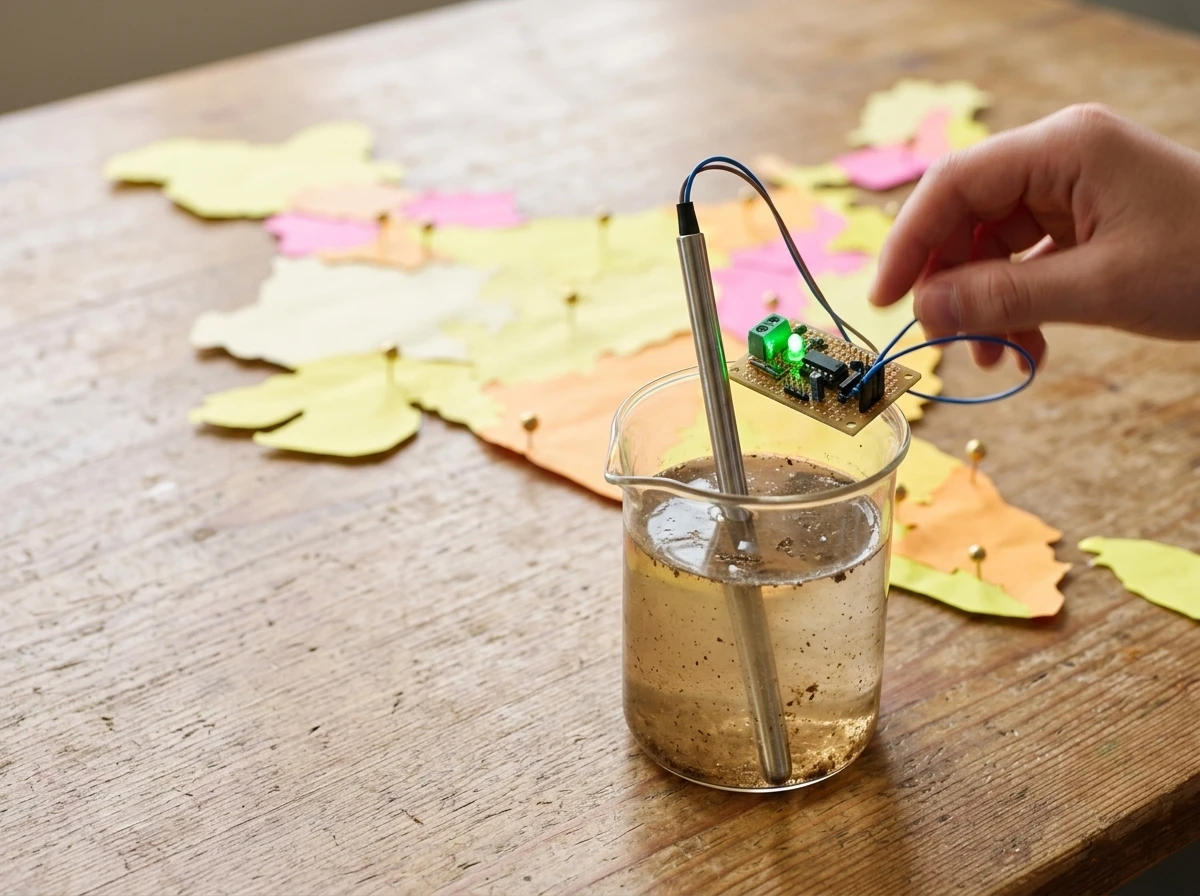
In Hyderabad, engineering student A. Sharanya Rao built her prototype after watching a kind of pollution nobody could see. “The real danger in our rivers isn’t the plastic we can see; it’s the microscopic pollutants that stay hidden until the damage is already done,” Rao said.
In Ahmedabad, Class IX student Saanvi Nair designed a portable solar-powered refrigerator for rural households. “Workers and farmers in villages often struggle to store grains, water and food,” Nair said.
In Gurugram, a separate Sport and Tech workshop pushed students toward cheaper ways to reach coaching and equipment, the access gap that keeps many rural athletes out of organized sport.
The Prize Money Keeps Climbing
The rewards have grown almost every year Samsung has run this contest in India, and so has the definition of who counts as a winner.
| Edition | Top Winners | Grant Pool | Program Scale |
|---|---|---|---|
| Season 2 (2023) | Top 3 teams, ages 16 to 22 | INR 1.5 crore combined | Partnered with IIT Delhi and MeitY Startup Hub; top 30 teams trained at an IIT Delhi bootcamp |
| Season 4 (2025) | Top 4 teams: Percevia, NextPlay.AI, Paraspeak, Prithvi Rakshak | INR 1 crore combined | Top 20 finalists won INR 1 lakh each plus Galaxy Z Flip phones |
| Season 5, announced (May 2026) | Top 4 teams, ages 14 to 22 | INR 2 crore combined | Plan: 100 cities, 100 workshops, 240,000-plus training hours |
| Season 5, delivered (July 2026) | Top 100 selection underway | INR 2 crore combined | Actual: 135 cities, 184 workshops |
The jump from three winning teams to four, and from INR 1.5 crore split three ways to INR 2 crore split four ways, tracks a wider pattern. Samsung widened the entry point at the bottom, dropping the age floor from 16 to 14, which is why a Class IX student like Nair could compete this year at all.
The program’s own rules confirm the current four-tier grant ladder: the next 20 teams split INR 20 lakh, about 1 lakh each, and the following 40 split INR 8 lakh, alongside Samsung devices and mentorship.
Where FITT and IIT Delhi Come In
The Foundation for Innovation and Technology Transfer (FITT), the technology transfer arm of IIT Delhi, runs the incubation side of the program. Its chief operating officer, Tarun Chaturvedi, appeared alongside IIT Delhi director Prof. Rangan Banerjee at the fifth edition’s May launch, alongside Dr. Sapna Poti of the Office of the Principal Scientific Adviser to the Government of India and JB Park, president and CEO of Samsung Southwest Asia.
Shortlisted teams tour Samsung’s R&D centers in Bengaluru, Noida and Delhi as part of the mentorship track, a look inside the company’s own product pipeline rather than a generic business bootcamp.
The four teams that won last year, Percevia, NextPlay.AI, Paraspeak and Prithvi Rakshak, are still inside their incubation window. Samsung has not published what any of them have shipped, raised or built since their October win.
That incubation route counts for more given the wider hiring picture right now. Indian tech firms have been cutting fresher hiring as the 2026 B.Tech batch lands in a tighter job market, even as Indian startups raised $243 million across 25 deals in a single week this month.
Samsung’s Anniversary Meets a Market Share Fight
Samsung entered India in 1995. Three decades later, its Noida plant, once billed as the world’s largest mobile factory when Prime Minister Narendra Modi and then South Korean President Moon Jae-in inaugurated an expansion there in 2018, still anchors the company’s local manufacturing.
That anniversary lands during Samsung’s tightest fight yet for India’s smartphone market. Full-year 2025 shipment data from Omdia showed Samsung’s India shipments falling 11% to a 15% share, well behind Vivo’s 21%. By the second quarter of 2026, Samsung had clawed back to a 17.6% share on Counterpoint Research data, closing to within 0.2 percentage points of Vivo’s lead.
Samsung had been India’s top smartphone vendor since 2013 before Chinese brands overtook it. Globally the company fared better: Samsung reclaimed the worldwide top spot in the first quarter of 2026, IDC’s own tracker showed, helped by demand for the Galaxy S26 Ultra.
Samsung’s press materials about Solve for Tomorrow do not mention market share or manufacturing anniversaries. But a program that puts Samsung engineers, R&D centers and devices in front of hundreds of thousands of Indian teenagers each year builds exactly the kind of brand familiarity a company needs when a fraction of a percentage point separates first place from second.
Top 100 Teams Face the Next Cut
With the workshop phase finished, Samsung and FITT will narrow the submitted ideas down to 100 teams in the coming weeks. Those 100 then move into mentorship and evaluation rounds before the top 40, top 20 and top four are named later this year.
Only the top four will share the INR 2 crore prize. The next 60 will still walk away with cash, mentorship or a Samsung device, depending on where they land in the ranking.


Sony’s 10 Percent Disc Drop Leaves the 2028 Cutoff Intact

Chip Allocation Sidelines the Base iPhone 18 This Fall

Miami-Dade Fights the Vice City Brand It Already Wears

IFA 2026 Awards Put Tecno Ahead of Flagship Phones

USB-C Gadgets Made the Junk Drawer Rechargeable

Pixel 11 Pro Asks $1,099 for a Light Google Locked

The iPhone Ultra Sells Two Retired Minis as One Foldable

Google Opens Gmail to Voice and Gates Docs Live

Lenovo Prices the IdeaPad Vibe Against Apple’s $699 Neo

Xbox Caps Game Pass Cloud Gaming at 15 Hours

Oracle Cuts 21,000 Jobs in a Year, Cites AI in 10-K Filing

Fable 5 and Mythos 5 Return as US Lifts Anthropic Export Controls

SpaceX’s Google Deal Turns a Rocket Company Into a Cloud Landlord

CD Projekt Red Co-CEO: Redemption Arc Isn’t Done, Witcher 4 in 2027

XPL Rallies 30% Ahead of Plasma One Card Tier Launch

Google Search Profiles Build a Follow Graph Inside Discover

DGO App Brings Rs 549 Mobile Pass for FIFA World Cup 2026 in Nepal

Moonshot AI Targets $30 Billion in China’s Fastest AI Funding Sprint

Oppo’s ColorOS 17 Eligibility List Leaves A-Series Buyers Behind

Microsoft Xbox Layoffs Start in July as Sharma Slams 3% Margin
-
 AI3 months ago
Oracle Cuts 21,000 Jobs in a Year, Cites AI in 10-K Filing
-
 AI2 months ago
Fable 5 and Mythos 5 Return as US Lifts Anthropic Export Controls
-
 AI3 months ago
SpaceX’s Google Deal Turns a Rocket Company Into a Cloud Landlord
-
 GAMING3 months ago
CD Projekt Red Co-CEO: Redemption Arc Isn’t Done, Witcher 4 in 2027
-
 CRYPTO3 months ago
XPL Rallies 30% Ahead of Plasma One Card Tier Launch
-
 NEWS3 months ago
Google Search Profiles Build a Follow Graph Inside Discover
-
 APPS3 months ago
DGO App Brings Rs 549 Mobile Pass for FIFA World Cup 2026 in Nepal
-
 AI3 months ago
Moonshot AI Targets $30 Billion in China’s Fastest AI Funding Sprint