
AI
SLB Bets on a Certified Store for Energy AI
The SLB Digital Marketplace bets energy firms will buy certified Tela agents, while digital sales still come from data licenses and field software.

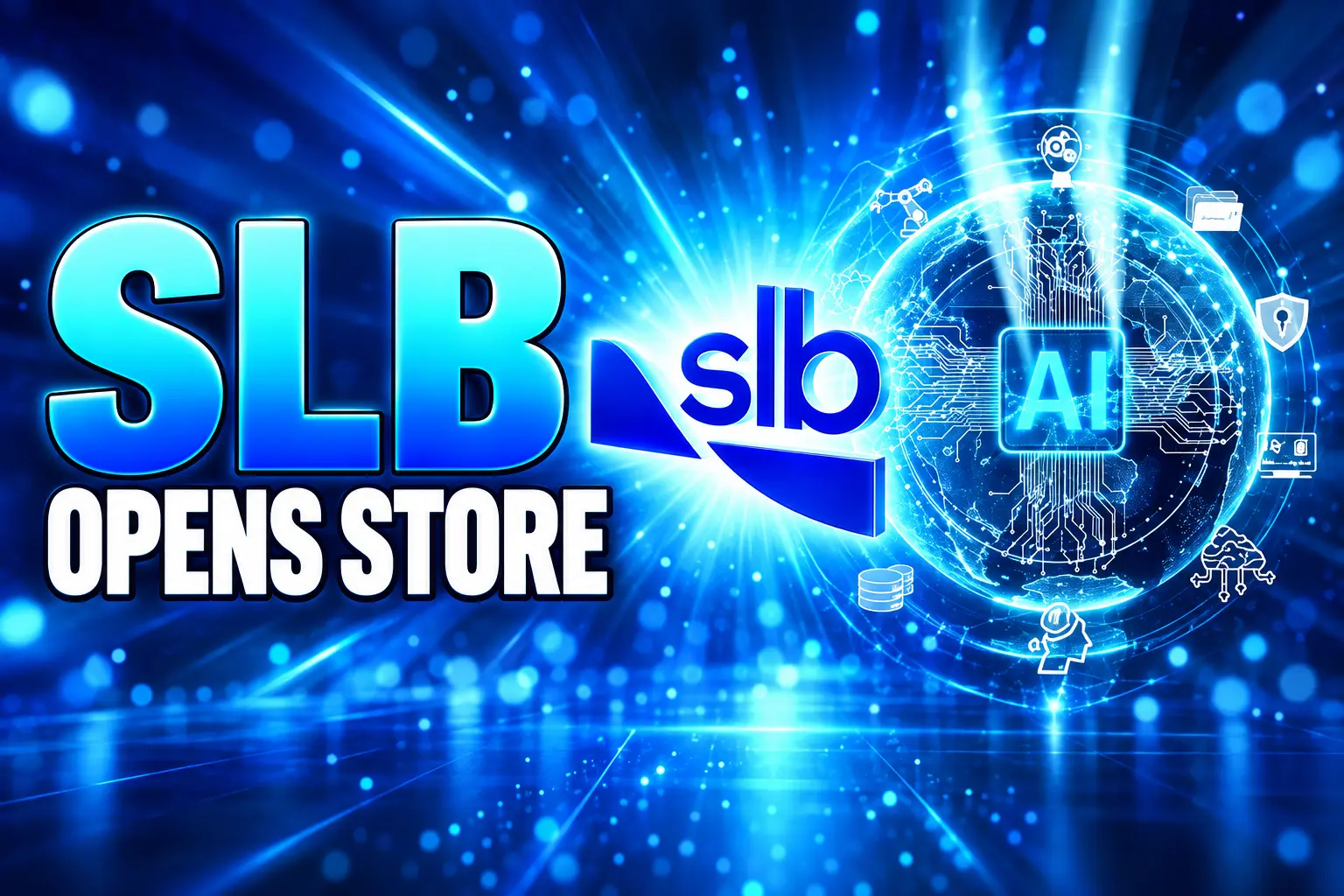
SLB opened the SLB Digital Marketplace on June 15, 2026, listing about 200 certified AI agents and apps on its Delfi, Lumi and Tela stack. The Houston-based energy technology company said every listing is checked for security, interoperability and compatibility before it goes up.
Two days later in New York, SLB told investors it wants digital annual recurring revenue of about $2 billion by 2030. The store is the distribution bet behind that target. The books, so far, still tell a different growth story.
A Curated Store on Top of Tela
The catalog is built for energy teams who already work in SLB software, not for a greenfield IT shop. Listings are meant to drop into Delfi and Lumi workflows, and to extend Tela, the agentic assistant SLB launched on November 3, 2025. Tela talks to users in plain language and can run on cloud or on a customer’s own machines.
Olivier Le Peuch is chief executive of SLB. He tied the store to a shift he said is already underway.
AI in energy is shifting from promise to performance. The SLB Digital Marketplace is designed to accelerate that shift by creating an open ecosystem where innovation can scale, solutions can interoperate and customers can move faster from insight to action.
Olivier Le Peuch, Chief Executive Officer, SLB, June 15, 2026
Rakesh Jaggi, president of SLB’s digital business, put the limit in one line: no single company can build every agent, model or application the energy industry will need. The store is how SLB wants other people’s software to reach its installed base without giving up the gate.
THE LAUNCH AT A GLANCE
- The catalog: About 200 digital products at launch, including existing Ocean store solutions plus new ones from SLB and over 30 partners.
- The gate: SLB certifies each listing for security, interoperability and compatibility before it appears.
- The runtime: Products span Delfi and Lumi SaaS apps, plug-ins, workflow extensions, data connectors, and Tela skills, agents and foundation models.
- The door for builders: Developers and independent software vendors apply at marketplace.digital.slb.com and use extra tools at developer.slb.com.
That mix is closer to an enterprise app store than to a model zoo. A production engineer is supposed to browse, pick a certified agent or connector, and keep working in the same Delfi or Lumi session.
WHAT THE CATALOG CARRIES
- SaaS apps: Delfi and Lumi applications sold as hosted software.
- Extensions: Plug-ins and workflow add-ons that sit on those apps.
- Data plumbing: Connectors that pull outside data into SLB environments.
- Tela pieces: Skills, agents and foundation models the assistant can call.
- Holdovers: Titles that already lived in the Ocean store and were folded into the new shelf.
SLB did not publish prices. Enterprise licenses and usage fees are the likely path, and the company did not name the over 30 partners on the launch list.
SLB Has Been Building This Stack for Years
The marketplace is a new storefront on an old argument. SLB has spent years telling operators that the winning digital vendor is the one that owns the workflow, the data layer and the developer door, then rents that door to everyone else.
THE PATH FROM OCEAN TO THE STORE
- April 9, 2024: SLB’s Delfi developer portal page describes a community of over 1,500 active developers, over 120 independent software vendors, 50 oil companies and over 60 academic institutions, which together had created over 3,000 E&P applications and plug-ins.
- September 17, 2024: SLB launches the Lumi data and AI platform in Monaco, built to run on major clouds and on premises, with Open Group OSDU data standards, Cognite Data Fusion for production data, and NIST cybersecurity rules. Delfi is set to draw on Lumi for modeling, seismic, wellbore work and drilling.
- November 3, 2025: SLB unveils Tela in Abu Dhabi as an agentic assistant embedded across its apps, using large language models and domain foundation models, with a loop of observe, plan, generate, act and learn.
- June 15, 2026: SLB opens the Digital Marketplace and folds Ocean store titles into a certified catalog for Tela, Delfi and Lumi.
- June 17, 2026: SLB holds its Digital Investor Day in New York and sets a target to take digital annual recurring revenue to about $2 billion by 2030.
Lumi was the data and model layer. Tela was the agent that sits on it. The marketplace is the shelf of skills that Tela and the older Delfi apps are supposed to call. Jaggi said at the Tela launch that the industry is trying to do harder technical work with a leaner workforce, and that Tela can understand goals, make decisions and take action. The store is how a partner skill gets into that loop without a custom integration project for every operator.
On the Delfi side, SLB had already invited oil companies, vendors and universities to build against its APIs. The portal page says software that once took weeks can be built in days or hours, and that a sandbox is free. New apps can live in the customer’s cloud or in Delfi. The 2026 store does not replace that portal. It decides which of those builds become a listed product an energy company can buy with SLB’s stamp on it.
200 Listings Sit on a 3,000-Plugin Base
About 200 certified products is a small number next to the over 3,000 applications and plug-ins SLB already credited to its Delfi developer community on that April 2024 page. Those figures are not a head-to-head from the same date, and they count different things. One is a governed store. The other is a tally of what developers had built against SLB tools, including work that never became a catalog item.
The gap is still the bet. SLB is not putting every plugin on a public shelf. It is selling trust: a shorter list that has passed its own tests and will run inside Delfi, Lumi and Tela. That is closer to Apple’s gated store than to an open package index. Operators who cannot put an unvetted agent on a drilling network are the buyers this design assumes.
It also concentrates power. A skill that is not certified does not get the easy path into Tela. A vendor that wants SLB’s customers has to meet SLB’s bar, on SLB’s timetable, in SLB’s environments. Jaggi called that openness with governance. For a specialist software firm, it is a trade: reach in exchange for a listing process the host company controls.
Ocean already taught this lesson in slower form. Independent tools such as seismic plug-ins have been sold through SLB’s store and Delfi for years. The 2026 move takes that channel and aims it at agents, skills and foundation models, which is where the company thinks the next wave of software spend will sit.
What Do Partners Have to Clear?
Builders who want a listing apply through the partner program and can pull extra documentation from developer.slb.com. SLB’s Delfi portal already counted over 1,500 active developers across vendors, operators and universities, so the raw community is not new. The new step is a single governed channel that also lets customers publish, not only SLB and ISVs.
Certification is the filter. SLB says a product has to clear security, interoperability and compatibility checks before it is listed. It has not published the test list, the average time to approval, or the take-rate it will charge. Until those rules are public, a partner is signing up for a review whose depth is known only inside SLB.
That is a feature for a national oil company that wants one security bar. It is friction for a five-person shop that already ships a Petrel plugin and now has to wrap the same idea as a Tela skill. The store’s promise to developers is scale across SLB’s footprint in more than 100 countries. The price of that scale is living inside someone else’s platform.
Energy software buyers have seen this movie with other stacks. A host vendor opens APIs, courts ISVs, then slowly becomes the default place work gets done because the agents, the data and the user login all sit together. SLB is playing that hand in public, and it is playing it on purpose.
Baker Hughes Put Lucy on the Wells
The other large oilfield technology group made a different wager. On January 29, 2026, Baker Hughes said Expand Energy, which it called North America’s largest natural gas producer, would deploy Leucipa across thousands of wells in the Marcellus, Utica and Haynesville. Expand Energy also agreed to pilot Lucy, a Leucipa AI production assistant that reads live production data and answers field engineers in conversation. The software runs as SaaS on Amazon Web Services.
That deal sells an agent into a fleet. It does not sell a third-party store. Baker Hughes and Expand Energy also said they would co-develop new workflows on top of tools Expand Energy already uses. The customer is the design partner. The vendor is not asking a long tail of ISVs to fill a catalog first.
SLB’s public follow-through after June looked more like that field model than like an app-store rush. In August 2026, ADNOC put an SLB-powered real-time operations center across more than 120 drilling rigs, using DrillOps. ADNOC said the setup can cut engineering effort by 30 to 40 percent, let engineers cover two to three times more rigs, shorten incident response by 4 to 12 hours, and avoid one to two days of rig downtime. Musabbeh Al Kaabi is CEO of ADNOC Upstream. He said the center puts AI into drilling work so teams can decide faster at scale. Jaggi said DrillOps sits in ADNOC’s sovereign cloud and is a base for more autonomous operations.
None of that August rollout was described as a marketplace checkout. It was a fleet deployment of SLB drilling software, which is the kind of job Delfi already existed to win. The store still has to prove it can turn partner agents into that same kind of scale. Three months of public conversation after the launch did not fill in listing counts, marquee ISV names, or a fight over fees. The live energy-AI stories were agents on wells and rigs.
Digital Revenue Grew on Operations and Data
The financial line that should feel the store first is Platforms & Applications, which SLB defines as Delfi, Lumi and domain apps such as Petrel and Techlog, sold as SaaS or perpetual licenses. In the first half of 2026 that line did not grow.
DIGITAL REVENUE IN THE FIRST HALF
| Line | H1 2026 | H1 2025 | Change |
|---|---|---|---|
| Platforms & Applications | $499 million | $502 million | -1% |
| Digital Operations | $291 million | $171 million | 70% |
| Digital Exploration | $227 million | $173 million | 32% |
| Professional Services | $320 million | $331 million | -4% |
| Total Digital | $1,337 million | $1,177 million | 14% |
Digital Operations and Digital Exploration did the lifting. In the second quarter, Digital revenue was $697 million, up 9% from $640 million in the first quarter and up 18% from $591 million a year earlier. SLB said the year-on-year rise came first from exploration data licenses and transfer fees in Brazil and Indonesia, with Digital Operations adding on. Platforms & Applications saw fewer perpetual licenses, partly offset by more SaaS. Pretax operating income for Digital was $194 million, and pretax margin was 27.8%.
Annualized recurring revenue for Digital was $1.04 billion as of June 30, 2026, up 15% from $904 million a year earlier and up 1% from $1.02 billion on March 31. SLB defines ARR as the annual value of recurring subscription and maintenance from Platforms & Applications plus the recurring slice of Digital Operations, using trailing twelve-month revenue and leaving out one-time licenses and variable usage fees. Full-year 2025 Digital revenue was $2.66 billion, up 9% from $2.439 billion.
At the June 17 investor day, with year-end 2025 ARR already at $1.00 billion against $876 million a year before, SLB said it aims to double that recurring base to about $2 billion by 2030. A certified store of partner agents is one way to add subscription software on top of Delfi and Lumi. It is not what moved the second-quarter number. Exploration data and connected operations did.
That does not make the store a sideshow. Recurring software is the product SLB is trying to grow because it is more repeatable than a license sale at year-end. The bet is that Tela skills and certified connectors become part of that ARR, rather than remaining a press-release layer on top of data-room deals.
Frequently Asked Questions
What Is the SLB Digital Marketplace?
It is a governed catalog in which energy companies, SLB, partners and independent vendors can publish, and customers can also bring their own tools, so a listing is not limited to software SLB wrote in-house. Offerings are meant to run inside a customer’s current digital setup rather than force a rip-and-replace of the rest of the IT stack.
How Do Tela, Delfi and Lumi Fit Together?
Lumi is the data and AI layer SLB launched on September 17, 2024, and it can run on all major public clouds as well as on premises, using OSDU data standards and Cognite Data Fusion for production data. Delfi is the older cloud environment for subsurface and operations apps, now drawing on Lumi. Tela sits on Lumi as the conversational agent and, SLB said, lets customers build and manage their own agents and pull in partner-built ones.
How Can a Developer List Software on the SLB Store?
A developer or ISV applies through the SLB partner program, then uses developer.slb.com for extra resources. On the Delfi portal, a sandbox with tools, APIs and test data is offered at no charge so a team can build before it seeks a listing, and finished apps can be hosted in the customer’s cloud or in Delfi.
What Can Tela Do in an Upstream Workflow?
Tela follows a five-step loop, observe, plan, generate, act and learn, and SLB said agents can interpret well logs, predict drilling issues and tune equipment, either with a person in the loop or on their own. Users work through a conversational interface, and the same assistant is meant to be available across SLB’s apps, not as a one-off chatbot beside them.
SLB is a century-old company trying to collect subscription software the way a cloud vendor does, while its digital division still prints a large share of growth from seismic data rooms and connected field tools. The store is how it wants partner agents to feed Tela. The next proof is not another launch event. It is whether those about 200 listings show up in ARR the way DrillOps showed up on more than 120 ADNOC rigs.

Instagram Plus Tests a Read-Only Mode That Cuts Stories

Altman Asks the Public to Accept Some AI Harm

Google Freezes OSS VRP Product Reports After AI Flood

AI Agents Make Payment Rails the Scarce Prize

Turkey’s Crypto Boom Now Runs Through Three Banks

Fable 5 Came Back Under a Commerce On-Off Switch

Google’s SpaceX GPU Lease Has a Sept. 30 Deadline

Plasma One’s XPL Locks Face a 1.81 Billion Cliff

DGO’s Rs 549 World Cup Pass Cost Fans Sleep and Data

Moonshot AI’s $30 Billion Ask Became a $35 Billion Close
-
 AI4 months ago
Fable 5 Came Back Under a Commerce On-Off Switch
-
 AI4 months ago
Google’s SpaceX GPU Lease Has a Sept. 30 Deadline
-
 CRYPTO4 months ago
Plasma One’s XPL Locks Face a 1.81 Billion Cliff
-
 APPS4 months ago
DGO’s Rs 549 World Cup Pass Cost Fans Sleep and Data
-
 AI4 months ago
Moonshot AI’s $30 Billion Ask Became a $35 Billion Close
-

 NEWS4 months ago
ColorOS 17 Device List Spans Oppo, OnePlus and Realme
-

 GAMING4 months ago
Xbox Cuts 3,200 Jobs After Five Years of Thin Returns
-
 GAMING4 months ago
The RTX 4050 Under Rs 70,000 Hides a Wattage Gap