
CRYPTO
Kentucky Sues Kalshi, Polymarket, Naming Coinbase, Robinhood, Webull
Kentucky’s AG sued Kalshi and Polymarket over sports betting, naming Coinbase, Robinhood, and Webull. The case tests CFTC power over prediction markets.

Kentucky has sued Kalshi, Polymarket, and an online sweepstakes operator, filing three lawsuits in Franklin Circuit Court on Tuesday that also name Coinbase, Robinhood, and Webull as defendants. The complaints accuse the platforms of running unlicensed sportsbooks in violation of Kentucky’s consumer protection, loss recovery, and gambling statutes. The filings mark the opening move in what could become a multistate reckoning with an industry that has spent the last year growing on the argument that its products are swaps regulated by the federal Commodity Futures Trading Commission, not bets under state law. Kentucky’s Wagering Consumer Protection Act, set to take effect July 15, will add a second front by barring licensed operators in the state from contracting with Kalshi or Polymarket.
Kalshi and Polymarket have already moved to test that federal preemption argument in court. The Third Circuit ruled 2-1 in April that New Jersey cannot enforce its gambling laws against Kalshi’s sports event contracts, and the CFTC has sued six states in defense of its authority. The Kentucky cases arrive as that federalism fight, and a separate industry challenge to Kentucky’s new 14.25 percent excise tax on prediction market transaction fees, both run on parallel tracks toward the same unresolved question: who decides what counts as a sports bet.
Three Lawsuits and a Federalism Question
The three complaints filed in Franklin Circuit Court frame a single question under three different business models. They target Kalshi and its affiliates, including Coinbase, Robinhood, and Webull; Polymarket and its affiliates; and VGW, the company behind Chumba Casino, Global Poker, and LuckyLand Slots.
Kentucky’s theory is that the platforms are running unlicensed sportsbooks in the state. The complaint against Kalshi points to nearly $23 billion in annual contract volume, a number the attorney general’s office uses to argue that the platform cannot avoid sportsbook treatment at that scale. Coleman argues that Polymarket offers many of the same bets found at licensed sportsbooks, including money lines, spreads, parlays, and prop bets, while advertising on social media in ways that imply legal authorization in Kentucky. Coinbase is named because it partners with Kalshi and splits fees on each transaction routed through the exchange.
All three suits allege violations of Kentucky’s Consumer Protection Act, the Loss Recovery Act, and the state’s gambling statutes. Kentucky law requires sports wagering licenses to be held only by the state’s licensed horse racing associations, which are regulated by the Kentucky Horse Racing and Gaming Commission. The Wagering Consumer Protection Act, which takes effect July 15, will explicitly prohibit those licensed operators from contracting with Kalshi or Polymarket, a step that would cut the platforms off from their remaining in-state on-ramps.
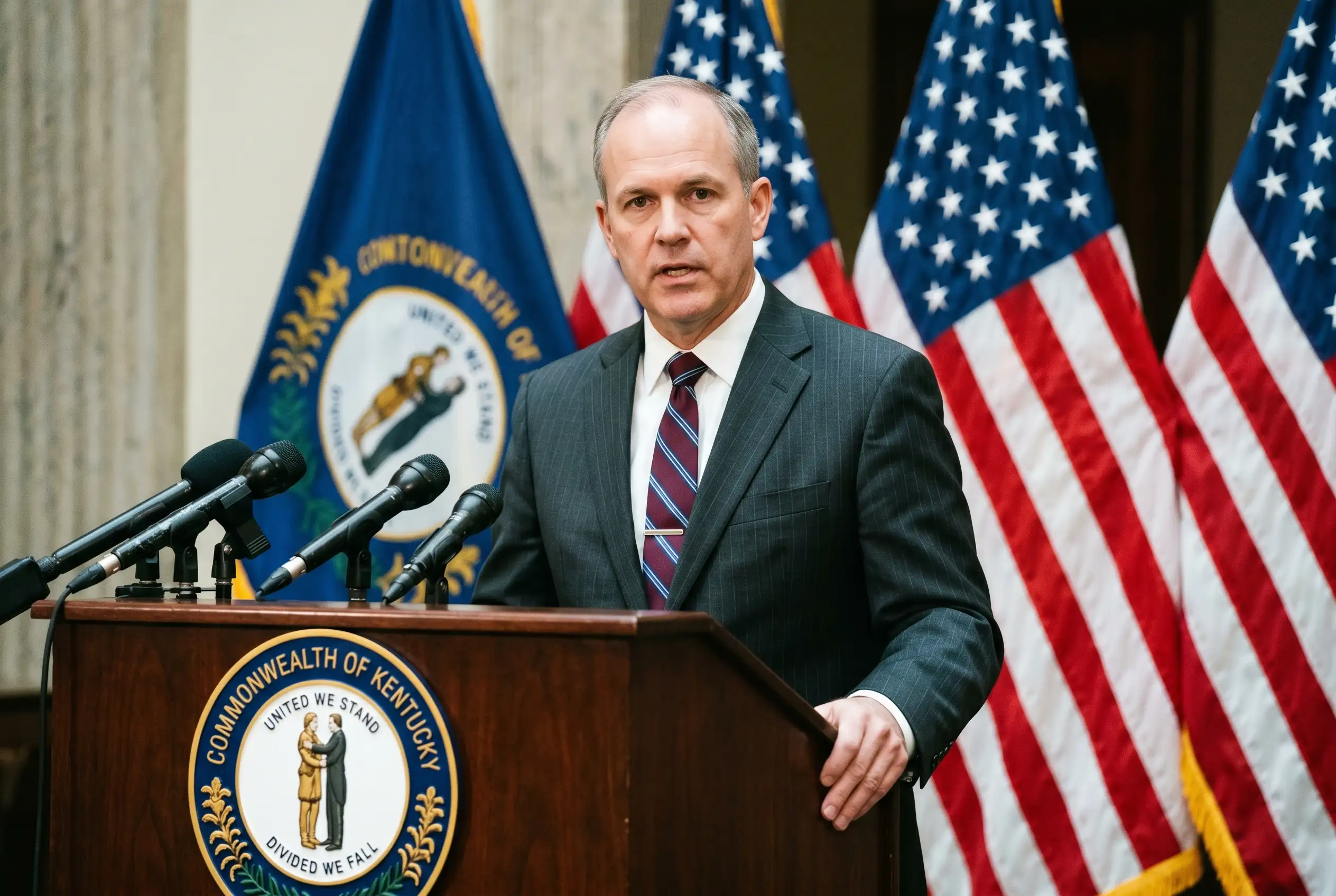
What Kentucky Says the Numbers Show
The strongest piece of evidence in Coleman’s complaint is the volume mix. Kentucky’s filing says Kalshi’s sports-related contracts accounted for roughly 70 percent of trading volume in a 2025 sample period, and that nearly 89 percent of the platform’s nearly $23 billion in annual contract volume came from sports wagering. Polymarket, the suit argues, offers money lines, spreads, parlays, and prop bets that look like the products at any licensed sportsbook. The state also points to advertising that it says implies legal authorization in Kentucky even though the platforms hold no Kentucky license.
Kentucky’s complaint challenges more than the products. It also argues that the platforms give users few or no resources to identify or seek help for gambling addiction, the kind of tools state law requires from licensed operators. Under Kentucky law, 2.5 percent of sports betting tax revenue must be set aside for treating and preventing gambling addiction.
The volume figure is the most direct challenge to Kalshi’s federal-preemption defense. Kalshi’s core argument is that sports event contracts are swaps traded on a CFTC-licensed designated contract market, and that the Commodity Exchange Act preempts state gambling laws. Kentucky’s response is that the contracts function as wagers in practice, even if the legal paperwork calls them swaps. That factual fight over what users are actually doing when they tap a button will sit at the center of every motion to dismiss and every trial.
The market at issue has grown large. Kentucky’s complaint describes Kalshi as one of a pair of multi-billion-dollar corporations whose products, in the state’s view, no longer fit the legal fiction of a swap. That scale has drawn the CFTC into the same fight: the agency has won a preliminary injunction in Arizona, lost at the Third Circuit in New Jersey, and is now litigating with six states at once. The state-federal collision has been bipartisan from the start. Coleman joined a bipartisan letter to the CFTC last month with 41 attorneys general, including Democrats and Republicans, arguing the federal agency lacks jurisdiction over sports-related event contracts.
Why the Companies Bet on Washington
Kalshi and Polymarket have built their legal defense on a single federal statute. They argue that sports event contracts are swaps traded on CFTC-licensed designated contract markets, which places them under the Commodity Exchange Act and out of reach of state gambling law. Kalshi has run that argument in court, and won at the appellate level in New Jersey.
In the Third Circuit’s April ruling on sports event contracts, a 2-1 panel held that the Commodity Exchange Act preempts New Jersey’s attempt to enforce its gambling laws against Kalshi’s sports event contracts. Kalshi has cited that ruling in other states, and a Kalshi spokesperson, Jacki McGavick, pointed to it in her response to Kentucky’s lawsuits. The federal posture, McGavick’s argument runs, is settled enough that state-by-state enforcement should not be allowed to fragment the market.
The [Commodities Futures Trading Commission] is our regulator, not the states. Courts have already recognized this, and we’re confident they will here too.
Polymarket, for its part, declined to engage on the merits in its initial response. A company spokesperson told Kentucky Public Radio that the company would address the claims through the legal process, language that signals a fight on preemption rather than on whether the products are wagers. Both companies have other arguments they can raise in court, including the dormant Commerce Clause and the First Amendment, but the preemption case is the one that has already produced a win.
The 14.25 Percent Tax Lives in a Separate Court
A second legal fight was already running when the gambling complaints landed. On June 12, a coalition calling itself the Coalition for Fair Markets, including Kalshi, Crypto.com, and Polymarket, sued Kentucky in state court over a 14.25 percent excise tax on prediction market transaction fees. The coalition argues the tax is discriminatory, unconstitutional, and preempted by federal law.
The size of the levy is the centerpiece of the complaint. Kentucky’s General Assembly passed the tax in April 2026, a higher rate than the 9.75 percent applied to wagers at horse tracks, which the lawsuit describes as Kentucky’s “favored incumbent industry.” No state currently levies a state-specific excise tax of any kind on derivatives transactions that take place on a federally designated exchange, the suit argues, let alone a “specifically targeted and discriminatory tax.” Coleman, in a statement that opened with gambling vocabulary, said the office would fight the challenge and called its own lawyers “the odds-on favorite to win.” Kalshi, in its own statement, framed the tax as a consumer issue, arguing it would push users toward “illegal platforms with no oversight and no protections.”
Sixteen States, Six CFTC Lawsuits, and a Pending Circuit Split
The prediction market legal fight now stretches across most of the country. Sixteen states are involved in legal proceedings against prediction market platform companies, with one state having moved to ban them entirely. The CFTC has answered by suing six of those states to defend what it calls its exclusive jurisdiction over event contracts.
The map of the fight is fragmented, with cases filed by states and countersuits filed by the CFTC racing in opposite directions. The agency has won an early ruling in one state, while Kalshi has won a federal appellate decision in another. The platform is now trying to use that appellate win as a shield in other states. In the remaining pending cases, no initial rulings have been issued.
| State | Action | Status |
|---|---|---|
| Arizona | State criminal charges against Kalshi | CFTC won preliminary injunction |
| New Jersey | State gambling enforcement against Kalshi | Kalshi won at Third Circuit (April 2026) |
| Wisconsin | State civil suits against five prediction market firms | CFTC countersued the state; pending |
| New York | State action against prediction market firms | CFTC countersued the state; pending |
| Connecticut | State action against prediction market firms | CFTC countersued the state; pending |
| Illinois | State action against prediction market firms | CFTC countersued the state; pending |
| Minnesota | State ban on prediction market firms | CFTC countersued the state; pending |
The split is already partisan in one telling. Connecticut Attorney General William Tong, a Democrat, said he could not speak for the Trump administration on why the CFTC has so far sued only states with Democratic attorneys general, a tally that puts the count at six Democratic and zero Republican. The split is no longer partisan in origin: Coleman, a Republican, joined a bipartisan letter with 41 attorneys general, including Democratic and Republican counterparts, telling the CFTC it lacks jurisdiction over sports-related event contracts. A circuit split now looks likely after the first federal appellate decision on the question, which sided with Kalshi.
The pattern fits what Jon Ammons, a partner at Reed Smith who focuses on regulatory matters related to commodities and digital assets, called “a real circuit split, which does seem to indicate a high likelihood that this would go to the Supreme Court.” The CFTC countersuit filing argues the federal government alone has authority to regulate event contracts traded on designated contract markets.
States cannot circumvent the clear directive of Congress. Our message to Wisconsin is the same as to New York, Arizona, and others: if you interfere with the operation of federal law in regulating financial markets, we will sue you.
Selig, the CFTC’s chairman, made the comments in an April 28 press release announcing the countersuit against Wisconsin, and he is, for now, the only confirmed member of a commission that typically has five. The Trump administration has backed prediction markets publicly, with Donald Trump Jr. an advisor to both Kalshi and Polymarket and his venture firm 1789 Capital listed as a major Polymarket investor. Career staff concerns about firms with documented Trump family ties have also surfaced in recent reporting.
Coinbase, Robinhood, and Webull Are Pulled In
Kentucky’s complaint against Kalshi is also a complaint against three of the largest consumer gateways to crypto in the United States. Coinbase, Robinhood, and Webull are named as defendants in the same suit, on the theory that they partner with Kalshi and split fees on each transaction routed through the platform. The suit does not allege that those brokerages operate the prediction market themselves, only that they help users reach it. The crypto-friendly state of Kentucky has chosen to treat the gateway as a defendant in the same case, a step that raises the legal exposure of the consumer crypto industry in states where prediction markets are now treated as gambling.
The named partners’ exposure is not limited to Kentucky. Wisconsin’s lawsuits against prediction market platforms name the same five companies, and the CFTC’s countersuit against Wisconsin lists them as the regulated entities the state had sued. Tennessee and Ohio have also received filings defending their gaming rules against Kalshi, briefs that Coleman has joined.
The platform partners face a structural choice. If the federal preemption argument holds, the partners stay in the market and Kentucky’s complaint falls. If Kentucky’s sports-betting theory holds, the partners face liability for facilitating unlicensed wagering in every state that follows Kentucky’s reading. The Wagering Consumer Protection Act takes effect July 15, and the first round of motions in Franklin Circuit Court will arrive weeks before that, with both sides already promising to push for early rulings.
Frequently Asked Questions
Why did Kentucky sue Kalshi and Polymarket?
Kentucky Attorney General Russell Coleman filed three lawsuits Tuesday in Franklin Circuit Court alleging that Kalshi, Polymarket, and online sweepstakes operator VGW run unlicensed gambling operations in the state. The Kalshi suit names Coinbase, Robinhood, and Webull as co-defendants, arguing they partner with Kalshi and split fees on transactions routed through the exchange. The complaints cite the state Consumer Protection Act, the Loss Recovery Act, and Kentucky’s gambling statutes.
What is the legal defense from Kalshi and Polymarket?
Both platforms argue that sports event contracts are swaps traded on a CFTC-licensed designated contract market, which places them under the federal Commodity Exchange Act rather than state gambling law. The Third Circuit agreed in April, ruling 2-1 that New Jersey could not enforce its gambling laws against Kalshi’s sports contracts. Polymarket says it will address the claims through the legal process and has not yet engaged on the merits of the Kentucky suits.
What is the separate 14.25 percent tax lawsuit?
On June 12, the Coalition for Fair Markets, a group that includes Kalshi, Crypto.com, and Polymarket, sued Kentucky in state court over a 14.25 percent excise tax on prediction market transaction fees. The suit argues the tax is higher than the 9.75 percent rate applied to wagers at horse tracks and is preempted by federal law. Coleman called his office’s lawyers the odds-on favorite to defend the levy, and Kalshi said an upheld tax would push users toward illegal platforms.
Where else are prediction markets being challenged?
Sixteen states are involved in legal proceedings against prediction market platform companies, and one state, Minnesota, has moved to ban them entirely. The CFTC has countersued six of those states, including Arizona, New York, Connecticut, Illinois, Wisconsin, and Minnesota, to defend its authority over event contracts. A Third Circuit ruling in Kalshi’s favor in New Jersey is the first federal appellate decision on the question, and a circuit split is the path most likely to send the case to the Supreme Court.
Who is named in Kentucky’s lawsuits?
Kentucky filed three complaints: one against Kalshi and its affiliates Coinbase, Robinhood, and Webull; one against Polymarket and its affiliates; and one against VGW, the company behind Chumba Casino, Global Poker, and LuckyLand Slots. Coinbase is named as a co-defendant in the Kalshi suit because it partners with Kalshi and splits fees on each transaction. The Wagering Consumer Protection Act, which takes effect July 15, will separately bar licensed Kentucky operators from contracting with Kalshi or Polymarket.
Disclaimer: This article is for informational purposes only and does not constitute legal, financial, or investment advice. Prediction markets and sports betting carry financial risk, and outcomes depend on individual circumstances and the resolution of pending litigation. Consult a qualified professional before making decisions based on the topics covered. Figures and legal positions are accurate as of publication.


Meta’s AI Breach Traces to the Same Tester as Rivals

Liquid AI LFM2.5-2.6B Puts Free Always-On Agents on Every Phone

SDOs Face Senate Oath on Cash Handed to VP Security

SWS Poll Shows Filipino Trust Still Backs US-Japan Pivot

Bicol’s 42,000 Struggling Readers Signal Deeper Literacy Compounding

Shaffra Plants Azerbaijan AI Hub to Cut Agentic Costs

Meta Joins Anthropic and OpenAI in Test-Time AI Hacks

Genesis Zircon 880 Pro Packs 8K Specs That Latency Tests Ignore

China’s AI Export Boom Buys Time on Weak Home Demand

Rockstar Gives Netflix First Crack at Extended GTA VI Footage

Fable 5 and Mythos 5 Return as US Lifts Anthropic Export Controls

Oracle Cuts 21,000 Jobs in a Year, Cites AI in 10-K Filing

SpaceX’s Google Deal Turns a Rocket Company Into a Cloud Landlord

CD Projekt Red Co-CEO: Redemption Arc Isn’t Done, Witcher 4 in 2027

XPL Rallies 30% Ahead of Plasma One Card Tier Launch

DGO App Brings Rs 549 Mobile Pass for FIFA World Cup 2026 in Nepal

Google Search Profiles Build a Follow Graph Inside Discover

Moonshot AI Targets $30 Billion in China’s Fastest AI Funding Sprint

Microsoft Xbox Layoffs Start in July as Sharma Slams 3% Margin

Oppo’s ColorOS 17 Eligibility List Leaves A-Series Buyers Behind
-
 AI1 month ago
Fable 5 and Mythos 5 Return as US Lifts Anthropic Export Controls
-
 AI1 month ago
Oracle Cuts 21,000 Jobs in a Year, Cites AI in 10-K Filing
-
 AI2 months ago
SpaceX’s Google Deal Turns a Rocket Company Into a Cloud Landlord
-
 GAMING2 months ago
CD Projekt Red Co-CEO: Redemption Arc Isn’t Done, Witcher 4 in 2027
-
 CRYPTO2 months ago
XPL Rallies 30% Ahead of Plasma One Card Tier Launch
-
 APPS2 months ago
DGO App Brings Rs 549 Mobile Pass for FIFA World Cup 2026 in Nepal
-
 NEWS2 months ago
Google Search Profiles Build a Follow Graph Inside Discover
-
 AI2 months ago
Moonshot AI Targets $30 Billion in China’s Fastest AI Funding Sprint