
COMPUTERS
UK Launches £10m Quantum Standards Network to Shape Global Rules
UK launches the world’s first Quantum Standards Network, a £10m initiative led by the National Physical Laboratory to coordinate quantum rules.

The UK government has launched the world’s first national Quantum Standards Network, a £10 million initiative led by the National Physical Laboratory to coordinate the technical rules governing quantum computers, sensors and timing systems. Science Minister Lord Vallance announced the body in mid-June 2026, with funding from the Department for Science, Innovation and Technology. The network brings together government, industry, academia and standards bodies to give British firms a coordinated voice in the global standards forums where quantum’s rulebook is being drafted.
The QSN’s £10m is a fraction of the £2bn quantum programme the government announced earlier in 2026. The economic upside the network is built around is much bigger: the same announcement puts the UK quantum sector’s potential at £212 billion. The network’s procedural function is to give UK researchers and suppliers a single pipeline into the IEC/ISO Joint Technical Committee, where the international standards that govern quantum hardware are now being drafted. Standards decided there will shape which countries’ quantum products reach hospitals, banks and governments at scale.
What the QSN Will Coordinate
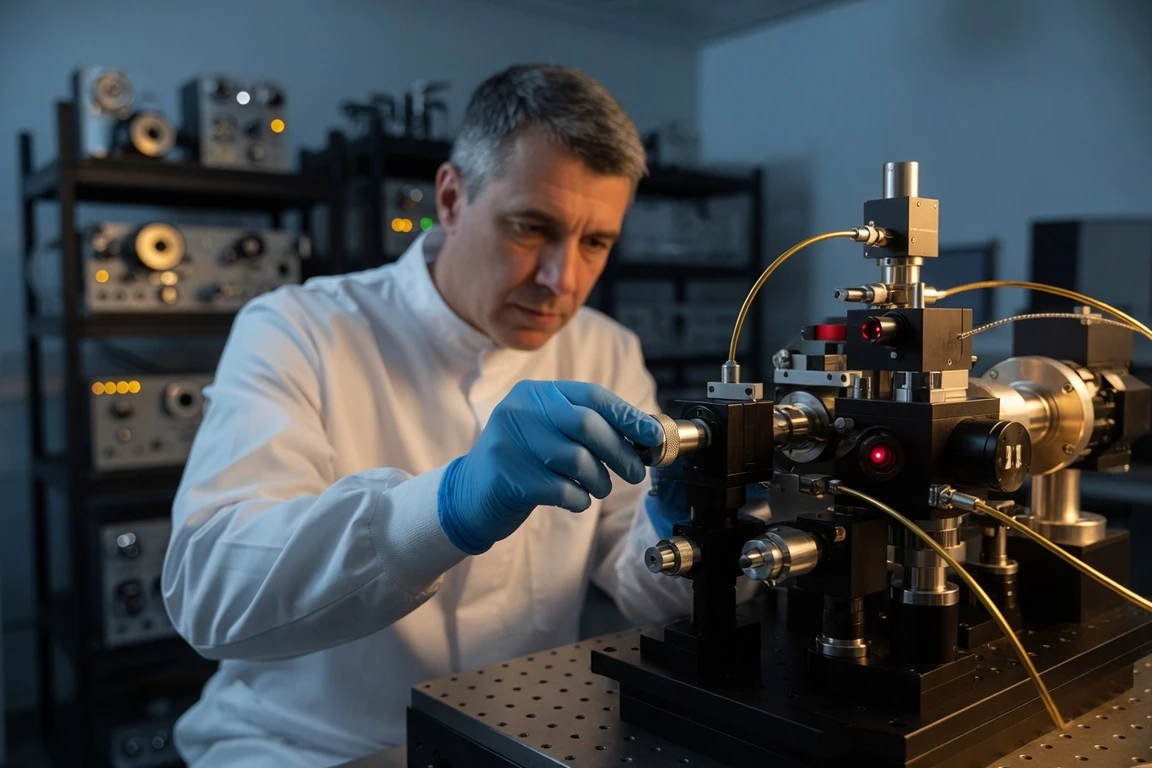
The QSN is a national initiative that will coordinate the UK’s efforts to influence and support standards for quantum technologies, according to NPL. Its scope runs from ultra-narrow lasers used to control qubits in a quantum computer to the size, weight and energy-efficiency rules that make one quantum sensor comparable to another. The work is meant to make quantum products testable and tradable across borders.
The network is hosted by NPL and funded by DSIT. It brings together government, industry, academia and standards bodies, including the British Standards Institution and UKRI’s National Quantum Computing Centre. Two further partners, the National Cyber Security Centre and industry group UKQuantum, complete the founding coalition. Together, those organisations will coordinate the UK’s engagement in emerging international standards activity and foster collaboration with technical agencies overseas.
The network operates across three stated pillars, each anchored in a defined objective that targets a different stage of how quantum moves from a research breakthrough into a product a customer can buy and trust.
- Education and skills: create training resources and guidance to build UK expertise in quantum standardisation.
- International leadership: strengthen the UK’s presence in key global standards forums and make sure UK priorities are reflected in the emerging global regulatory landscape.
- UK coordination and industry support: provide resources and guidance for SMEs and startups engaging with standards, convene the quantum community and align standardisation priorities across sectors.
From Pilot to Permanent Network
The QSN formalises a three-year pilot that ran from 2023 to 2025. The pilot was initiated by NPL, DSIT, BSI and UKQuantum and brought together leaders from across the UK quantum landscape to test new collaborative models and identify priority areas for future standards work. Lessons from that exercise shaped the permanent network’s structure, including its three-pillar approach. The launch arrives in the same year the government placed a separate £2bn bet on UK quantum, a sum that sets the wider context for the £10m programme.
NPL describes the network as a “major step in ensuring the UK can lead the global conversation on quantum.” Dr Peter Thompson, the laboratory’s chief executive, said standards are “the backbone of responsible, scalable innovation.” His argument is that without agreed technical rules, every quantum supplier has to invent its own definitions for what counts as a working sensor or a working qubit.
Tim Prior, the QSN’s programme director at NPL, called a collaborative approach to standardisation “an essential element for the successful realisation and adoption of quantum technologies.” Scott Steedman, director-general for standards at BSI, framed the network as a way to coordinate the UK expert voice in the international forums where the rules get written. The BSI holds the Secretariat for the IEC/ISO Joint Technical Committee for quantum technologies, a position that gives the UK a procedural lever inside the global standards process. That seat predates the QSN, and the new network is designed to feed expertise into it.
The government lists the network’s strategic partners as DSIT, BSI, UKRI’s National Quantum Computing Centre, the National Cyber Security Centre and UKQuantum. Each carries a different role in how quantum products get specified.
- Funding: £10 million from DSIT
- Pilot run: 2023 to 2025
- Host lab: National Physical Laboratory
- Standards seat: BSI holds the IEC/ISO JTC Secretariat for quantum technologies
The Wider £2bn Quantum Push Behind the £10m
The QSN is a small line item inside a much larger quantum programme. The government announced earlier this year that it would invest up to £2bn in quantum technologies across computing, sensing, networking, skills and infrastructure. Of that, £1.2bn is earmarked for the procurement of large-scale quantum computers. The QSN is the standards arm of the same push, and its job is to make sure the rest of the money is spent on products that meet agreed international rules.
Lord Vallance said quantum could bring benefits “as significant as what we are seeing with AI,” with potential to deliver new medicines, better public services and stronger financial protections. That framing puts quantum into the same policy tier as the AI roll-out, with a national lab, a national strategy and a national standards body now lined up behind it.
The wider programme ties into the National Quantum Strategy, which sets a target for the UK to become a “leading quantum enabled economy by 2033.” That horizon matters because international quantum standards are still being drafted, and most decisions on the rulebook will be taken in the next several years. The QSN is the UK’s bid to be in the room when those decisions land.
The Quantum Standards Race Is Just Beginning
The government estimates the UK quantum sector could add £212bn to the economy and support up to 100,000 jobs. The figure sits inside the same announcement as the QSN launch and frames why the network is more than a measurement exercise.
Standards decide which products get bought, exported and trusted. A laser that meets a recognised linewidth spec can be sold to a hospital, a bank or a defence customer without bespoke qualification work. A quantum sensor without an agreed definition of accuracy has to be re-tested by every buyer. The QSN’s job is to give UK suppliers a coordinated input into those definitions, and to make sure British specifications end up inside the international drafts.
The same pattern played out in earlier technologies. Mobile phones and Wi-Fi became global products because standards bodies agreed on common interfaces before the markets fragmented. Quantum is earlier in its commercial life, which means the rules being drafted now will shape which countries’ firms get to sell at scale. The window is narrow and the QSN is built to use it.
The post-quantum cryptography work already shows how a standards race can play out in practice. NIST published the first post-quantum cryptographic standards, FIPS 203 and FIPS 204, and major vendors have moved to implement them inside consumer hardware, with Apple publishing its post-quantum code with the formal proofs. The market signal was the standard, not the underlying mathematics. Quantum hardware is heading the same way, which is why a national body coordinating the UK’s input is being positioned as strategically as the £1.2bn computer procurement programme.
Quantum could bring benefits to our society as significant as what we are seeing with AI, with the potential to deliver new medicines, better public services, and protect our finances.
The line comes from Lord Vallance, the UK science minister, in the government’s announcement of the Quantum Standards Network.
The UK Goes First, but Not Alone
The government’s headline calls the QSN the world’s first national framework for quantum standards, a claim that rests on no other country having built a dedicated, NPL-hosted body to coordinate its quantum input across government, industry, academia and standards bodies. That gives the UK a procedural advantage at international forums where the global rules are being drafted, including the IEC/ISO joint technical committee which BSI already leads.
Other countries are spending more, and several have published their own quantum strategies. The US Department of Commerce has announced letters of intent with nine quantum companies under its own domestic programmes, and China and the EU have run large public quantum efforts of their own. The QSN is a standards play, and its value is measured in influence over specifications, not in qubits shipped.
A small vote of confidence has already arrived from the US side. Vescent, a US manufacturer of quantum technology, chose NPL as the location for its first office outside the US, according to the NPL launch statement for the Quantum Standards Network. The location is a signal that the lab’s standards work has commercial value to a foreign supplier.
How International Quantum Standards Get Set
Standards for quantum technologies are still being drafted at the international level, and most of the decisions will be taken in international forums over the next several years. The IEC and ISO already have a joint technical committee dedicated to quantum technologies, and BSI holds its Secretariat. The QSN is positioned as the UK expert pipeline into that committee. Standards drafted there will end up inside procurement contracts, certification regimes and trade rules across multiple sectors.
For a UK firm, the practical upshot is that getting a specification adopted internationally is now a coordinated activity rather than an individual lobbying effort. The QSN will provide training and guidance for SMEs and startups engaging with standards, a piece of the programme aimed at smaller firms that often lack the resources to track international committees. Dr Thompson’s argument is that this coordination will accelerate technology adoption and boost UK competitiveness. The wider UK National Quantum Technologies Programme hub runs the longer-running quantum effort the QSN now plugs into. The proof of the network will arrive when the first international quantum standard referencing UK-led specifications lands in the next round of committee work.
Frequently Asked Questions
What is the UK Quantum Standards Network?
It is a £10m national body launched in mid-June 2026 and led by the National Physical Laboratory, coordinating UK input into quantum standards for computing, sensing, timing and communications.
How much funding does the QSN have?
£10 million from the Department for Science, Innovation and Technology. It sits inside a wider £2bn quantum programme the government announced earlier in 2026.
Who runs the QSN?
The National Physical Laboratory hosts the network. Its founding coalition includes DSIT, the British Standards Institution, UKRI’s National Quantum Computing Centre, the National Cyber Security Centre and industry group UKQuantum.
Why do quantum technologies need their own standards?
Without agreed definitions for things like qubit control laser linewidths or quantum sensor accuracy, every customer has to re-qualify products. Standards let suppliers sell across borders and let buyers compare devices on common terms.
When does the network start operating?
The network formally launched on June 16, 2026, according to NPL. An early-access sign-up for engagement is live at qsn.org.uk.


South Korea Retail Investors Face Reckoning After KOSPI AI Rally Collapses

Surrey AI Maps Three Heart Attack Paths and Their Molecular Roots

Germany Locks Neutral Apple ATT Prompts Across Most of Europe

Apple’s 5% EU Fee Quietly Rewrites Alternative App Store Math

Apple’s EU Fee Truce Cuts Complexity but Leaves Rivals Fuming

Pixel 11 Pro Fold Trades Thinness for Durability and Seven-Year Stay

Mayo AI Flags HCM Obstruction From Everyday Ultrasound Videos

Indian Brands Quietly Scale Landmark Screens and Home Tech

Navin Vatsa Turns Grief Into a Lifetime of Quiet Seeing

Google Bets Pixel 11 Agentic AI Will Redefine Phones

Oracle Cuts 21,000 Jobs in a Year, Cites AI in 10-K Filing

Fable 5 and Mythos 5 Return as US Lifts Anthropic Export Controls

SpaceX’s Google Deal Turns a Rocket Company Into a Cloud Landlord

CD Projekt Red Co-CEO: Redemption Arc Isn’t Done, Witcher 4 in 2027

XPL Rallies 30% Ahead of Plasma One Card Tier Launch

Google Search Profiles Build a Follow Graph Inside Discover

DGO App Brings Rs 549 Mobile Pass for FIFA World Cup 2026 in Nepal

Moonshot AI Targets $30 Billion in China’s Fastest AI Funding Sprint

Oppo’s ColorOS 17 Eligibility List Leaves A-Series Buyers Behind

Microsoft Xbox Layoffs Start in July as Sharma Slams 3% Margin
-
 AI2 months ago
Oracle Cuts 21,000 Jobs in a Year, Cites AI in 10-K Filing
-
 AI2 months ago
Fable 5 and Mythos 5 Return as US Lifts Anthropic Export Controls
-
 AI2 months ago
SpaceX’s Google Deal Turns a Rocket Company Into a Cloud Landlord
-
 GAMING2 months ago
CD Projekt Red Co-CEO: Redemption Arc Isn’t Done, Witcher 4 in 2027
-
 CRYPTO2 months ago
XPL Rallies 30% Ahead of Plasma One Card Tier Launch
-
 NEWS2 months ago
Google Search Profiles Build a Follow Graph Inside Discover
-
 APPS2 months ago
DGO App Brings Rs 549 Mobile Pass for FIFA World Cup 2026 in Nepal
-
 AI2 months ago
Moonshot AI Targets $30 Billion in China’s Fastest AI Funding Sprint