
GAMING
Sony’s PlayStation Store Monopoly Faces Its Reckoning in Court
Sony fights a $2.7 billion UK lawsuit and a Dutch mass claim over PlayStation Store prices, while confirming physical game discs end in January 2028.

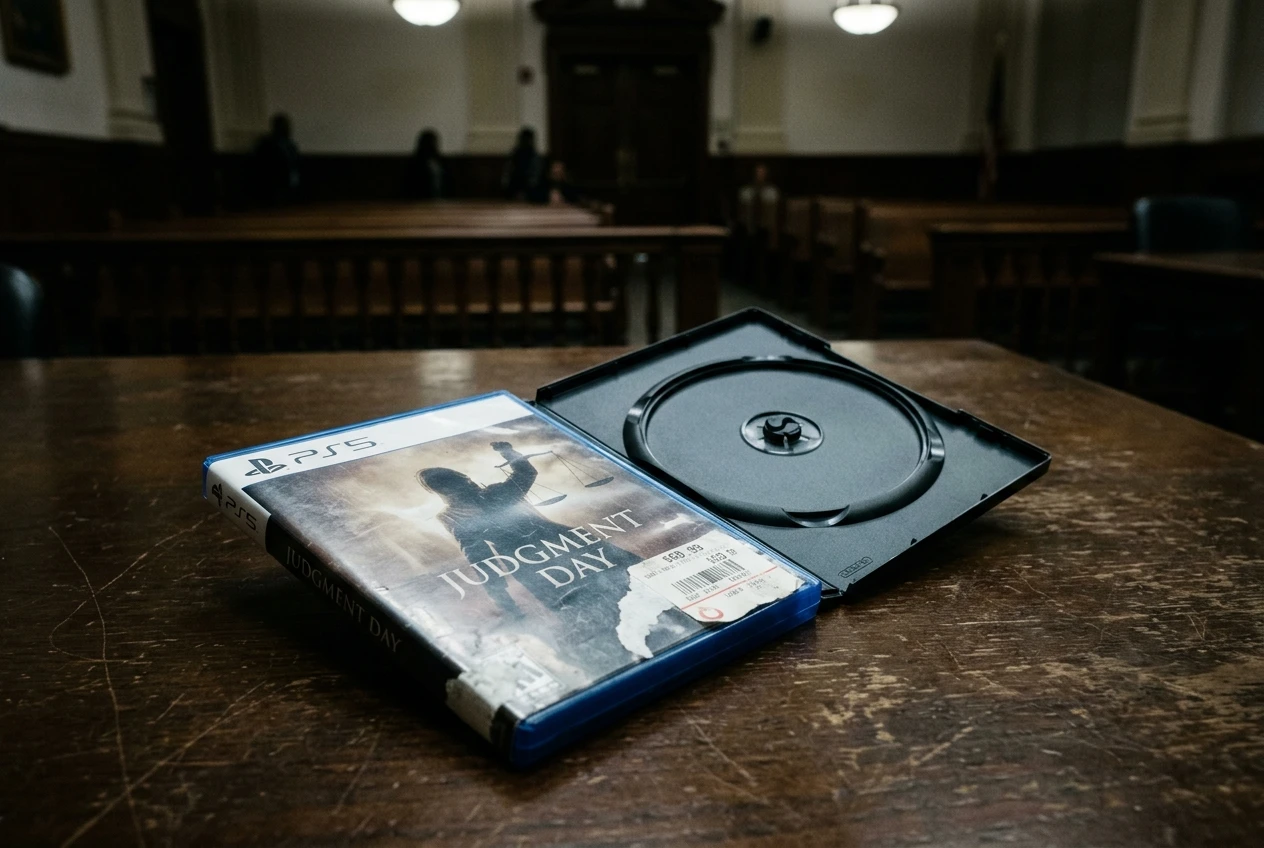
Sony is fighting a London lawsuit worth almost 2 billion pounds, roughly $2.7 billion, that accuses the PlayStation maker of abusing its grip on the PlayStation Store to overcharge UK gamers for digital games. The case, brought at London’s Competition Appeal Tribunal by consumer advocate Alex Neill on behalf of roughly 12 million UK PlayStation users, is one of two parallel courtroom fights now landing on Sony’s gaming business at the same moment the company prepares to end physical game discs for good.
The reckoning has arrived from two directions at once. While Neill’s UK collective action grinds through a 10-week trial that began on 2 March 2026, a Dutch consumer foundation has filed its own mass claim against Sony. On 1 July 2026, Sony confirmed on its blog that physical disc production for new PlayStation games will end in January 2028.
The UK Case Lands at the Competition Appeal Tribunal
The UK claim targets the PlayStation Store’s role as the only digital marketplace for PlayStation games. The claimants’ FAQ page states that Sony uses this dominance to enforce strict terms and conditions on game developers and publishers, and charges a 30% commission on every purchase of digital games and in-game content from the PlayStation Store. Alex Neill is seeking compensation for anyone who purchased digital games or add-on content via the PlayStation Store between 19 August 2016 and 12 February 2026. The claimants’ own page pegs the proposed UK class at 10.9 million customers, while Reuters frames the figure slightly higher, at roughly 12 million consumers.
The Competition Appeal Tribunal certified the claim to proceed to a full trial on 19 January 2024, after Sony’s attempt to block the case failed in November 2023. The Tribunal later dismissed Sony’s appeal on all grounds. Trial proceedings commenced on 2 March 2026 with a time estimate of 10 weeks, and the deadline for UK PlayStation users to opt out closed at 5PM GMT on 9 March 2026.
gamers have paid too much and they should get some money back
Alex Neill, the consumer advocate leading the UK case, made that remark in a statement released through Reuters and reported by PYMNTS. PYMNTS, citing Reuters, also reports that the suit was previously estimated at up to 5 billion pounds before being revised down to about 1.97 billion pounds. The case is being heard at the same tribunal that earlier ruled against Apple in a separate App Store dispute, and the defendants are Sony Interactive Entertainment Europe Limited and Sony Interactive Entertainment Network Europe Limited. The claimants’ FAQ page on the PlayStation You Owe Us case is published online.
Sony’s Defence and the Free-Rider Argument
Sony’s lawyers argue that the company has spent years and billions building an integrated gaming platform, and that rivals Nintendo and Microsoft run their own centralised digital storefronts in much the same way. Sony’s legal team told the tribunal that the suit would, in effect, let third parties “free-ride” on the infrastructure Sony built for its gaming platform. Sony also disputes that its margins on digital games and add-on content are excessive, and says the case ignores both the costs of running the platform and the value of the PlayStation brand.
Sony can and does set the retail prices … without facing any retail competition for digital content. It allows it to obtain monopoly profits from digital distribution.
Robert Palmer, a lawyer representing the claimants, made the comment during early arguments before the tribunal. Sony has countered that the complaint, at its core, asks the court to let competitors set up rival stores on Sony’s own hardware while continuing to benefit from the platform’s reach.
The PlayStation Store is pre-installed on every PlayStation 4 and later console and is the only way to buy digital games or add-ons for those machines. The claimants’ FAQ calls out this structural setup as the source of the “near monopoly” at the centre of the case. Sony’s defence argues that any ruling forcing it to open up the platform would reward companies that have not invested in building it. Both sides have now put their framings on the record.
A Second Front Opens in the Netherlands
Sony is now fighting the same fight in a second European courtroom. The Dutch consumer group Stichting Massaschade & Consument filed a collective lawsuit on 24 June, claiming that at least 1.7 million PlayStation owners in the Netherlands are paying too much for digital games on Sony’s console. The foundation began its “Fair PlayStation” campaign in February and has since received more than 2,000 messages and emails from Dutch PlayStation owners, according to gamesindustry.biz.
Research the foundation quotes found that, on average, Dutch consumers pay 47% more for digital games than for physical ones, a gap the foundation’s chair, Lucia Melcherts, blames on Sony pushing players toward “digital-only” consoles since the latest PS5 generation. Melcherts says the foundation’s case argues Sony is excluding competition and exploiting both consumers and game developers. The first hearing is expected later this year.
The UK and Dutch actions now run on parallel tracks, with the UK claim sitting at trial and the Dutch case heading to its first hearing later this year. Both suits argue that the PlayStation Store’s exclusivity over digital sales creates room for inflated prices, and both target the same 30% commission that the FAQ page says Sony charges on every digital purchase.
The two suits rest on different national procedures. The UK claim is an opt-out collective action at the CAT, while the Dutch case was filed as a mass claim by a single consumer foundation.
Sony Pulls the Plug on Physical Discs
On 1 July 2026, Sony confirmed the end of physical game discs on PlayStation in a post on PlayStation.Blog by Sid Shuman, Senior Director of Content Communications at Sony Interactive Entertainment. The post states plainly that physical game disc production for all new games releasing on PlayStation consoles will be discontinued starting January 2028. After that date, new games will be available on PlayStation Store and at retailers in digital formats only, with the change having no impact on games already released, or releasing before January 2028 in disc format.
Sony framed the move as inevitable. “This is a natural direction for Sony Interactive Entertainment to adapt to consumer trends as the general preference for digital media significantly outpaces physical discs,” the post reads. “This transition will enable us to align more closely with how most of our community prefers to access and play games today.” The same day, Sony also announced updates to the PlayStation Store for PS3 and PS Vita, narrowing access to legacy hardware.
The disc decision coincides with the UK trial’s early weeks and the Dutch lawsuit’s first filings. The blog post itself names consumer preference as the driver. The lawsuits name market structure. Both framings now sit on the public record at the same time.
A Wider Crack in the 30% Storefront Model
The PlayStation Store cases sit inside a much larger fight over the 30% cut that console and mobile platforms have long taken on digital sales. Gamesindustry.biz lists Valve as facing a UK collective action over Steam, launched in June 2024, seeking £656 million in compensation over restricted price competition. Apple was hit with a $568.6 million (€500 million) EU fine in April for not permitting apps to link or make reference to third-party payment systems. That decision is currently under appeal.
Where Sony sits in this lineup is at the top of the list, both in claim size and in the volume of gamers covered.
| Platform | Jurisdiction | Status | Figure |
|---|---|---|---|
| Sony PlayStation Store | UK (Competition Appeal Tribunal) | Trial began 2 March 2026 | Almost £2 billion (~$2.7 billion) |
| Sony PlayStation Store | Netherlands | Filed 24 June | At least 1.7 million users named |
| Valve Steam | UK | Filed June 2024 | £656 million sought |
| Apple App Store | EU | EU fine in April | $568.6 million (€500 million) |
How the UK Trial Will Play Out
The UK case is the longest-running of the three. Its history runs through a certification hearing at the Competition Appeal Tribunal on 7 to 9 June 2023, the Tribunal’s certification of the collective proceedings on 19 January 2024, the failed Sony appeal that followed, the trial commencement on 2 March 2026, and a 10-week sitting with no opt-outs permitted after 5PM GMT on 9 March 2026. The Dutch foundation filed its own action on 24 June, days before Sony’s disc announcement on 1 July.
For now, the courtroom fights run ahead of any verdict, and the disc decision runs ahead of any ruling. The Dutch foundation’s first hearing is expected later this year. The disc announcement opens a 19-month run-up to January 2028, when new PlayStation games will ship without physical media. Sony’s PlayStation 6 hardware plans leaning on AI frame generation now sit alongside these legal and distribution shifts.
Any settlement in the UK case would still require Competition Appeal Tribunal approval, and any damages awarded would be distributed to UK class members as the tribunal directs. The trial was estimated to run for 10 weeks when it began in March, leaving a verdict window that runs through the rest of 2026.
- 7 to 9 June 2023: Collective Proceedings Order hearing at the Competition Appeal Tribunal
- November 2023: Sony’s attempt to block the UK claim is dismissed
- 19 January 2024: Tribunal certifies the collective proceedings to proceed to full trial
- 2 March 2026: UK trial commences with a 10-week time estimate
- 9 March 2026: Opt-out deadline closes at 5PM GMT
- 24 June 2026: Dutch consumer foundation files its own mass claim
- 1 July 2026: Sony announces end of physical disc production for new games from January 2028
Frequently Asked Questions
What is the UK PlayStation Store lawsuit about?
The UK claim, brought by consumer advocate Alex Neill at London’s Competition Appeal Tribunal, alleges that Sony has abused its near-monopoly on the sale of digital PlayStation games by requiring digital titles and add-on content to be bought only through the PlayStation Store, which charges a 30% commission on every purchase. The claimants argue this has driven up prices for UK gamers.
How much could the lawsuit cost Sony?
The claim was previously estimated at up to 5 billion pounds but has since been revised down to about 1.97 billion pounds, roughly $2.7 billion, according to Reuters as reported by PYMNTS.
When did the UK trial start?
The trial opened on 2 March 2026. The Competition Appeal Tribunal estimated it would run for roughly 10 weeks. UK PlayStation users who did not want to be included had until 5PM GMT on 9 March 2026 to opt out.
Why is Sony stopping physical game discs?
Sony frames consumer demand as the reason. The 1 July 2026 PlayStation.Blog post by Sid Shuman, Senior Director of Content Communications at Sony Interactive Entertainment, describes the move as “a natural direction” for the company to match how most of the PlayStation community now chooses to access games.
Are there other lawsuits against Sony’s PlayStation Store?
Yes. The Dutch consumer foundation Stichting Massaschade & Consument filed a separate collective claim on 24 June, naming at least 1.7 million Dutch PlayStation owners. Similar actions have been brought against Valve’s Steam store in the UK and Apple’s App Store in the EU.


Bit Reactor bets studio future on Star Wars Zero Company

AI Price Cuts Tighten Power Demand and Rewrite Capacity Deals

Honor Robot Phone sale starts with a gimbal that cuts both ways

Ethereum’s price lag hides its growing role as finance infrastructure

Designkit turns product photos into e-commerce videos at scale

Germany Forces Neutral Apple ATT Prompts Across Most of Europe

Korea AI Job Shift Erases Youth Roles While Seniors Gain

Meta Faces States Over Child Safety Claims in Oakland Trial

Nuke tests leave asteroid fragments fate still open

Apple must strip ATT warning prompts after German ruling

Fable 5 and Mythos 5 Return as US Lifts Anthropic Export Controls

Oracle Cuts 21,000 Jobs in a Year, Cites AI in 10-K Filing

SpaceX’s Google Deal Turns a Rocket Company Into a Cloud Landlord

CD Projekt Red Co-CEO: Redemption Arc Isn’t Done, Witcher 4 in 2027

XPL Rallies 30% Ahead of Plasma One Card Tier Launch

Google Search Profiles Build a Follow Graph Inside Discover

DGO App Brings Rs 549 Mobile Pass for FIFA World Cup 2026 in Nepal

Moonshot AI Targets $30 Billion in China’s Fastest AI Funding Sprint

Oppo’s ColorOS 17 Eligibility List Leaves A-Series Buyers Behind

Microsoft Xbox Layoffs Start in July as Sharma Slams 3% Margin
-
 AI2 months ago
Fable 5 and Mythos 5 Return as US Lifts Anthropic Export Controls
-
 AI2 months ago
Oracle Cuts 21,000 Jobs in a Year, Cites AI in 10-K Filing
-
 AI2 months ago
SpaceX’s Google Deal Turns a Rocket Company Into a Cloud Landlord
-
 GAMING2 months ago
CD Projekt Red Co-CEO: Redemption Arc Isn’t Done, Witcher 4 in 2027
-
 CRYPTO2 months ago
XPL Rallies 30% Ahead of Plasma One Card Tier Launch
-
 NEWS2 months ago
Google Search Profiles Build a Follow Graph Inside Discover
-
 APPS2 months ago
DGO App Brings Rs 549 Mobile Pass for FIFA World Cup 2026 in Nepal
-
 AI2 months ago
Moonshot AI Targets $30 Billion in China’s Fastest AI Funding Sprint