
NEWS
South Korea Retail Investors Face Reckoning After KOSPI AI Rally Collapses
Leveraged ETFs and margin debt turned South Korea’s AI chip boom into tens of billions in retail losses and a political hit for President Lee as the KOSPI.

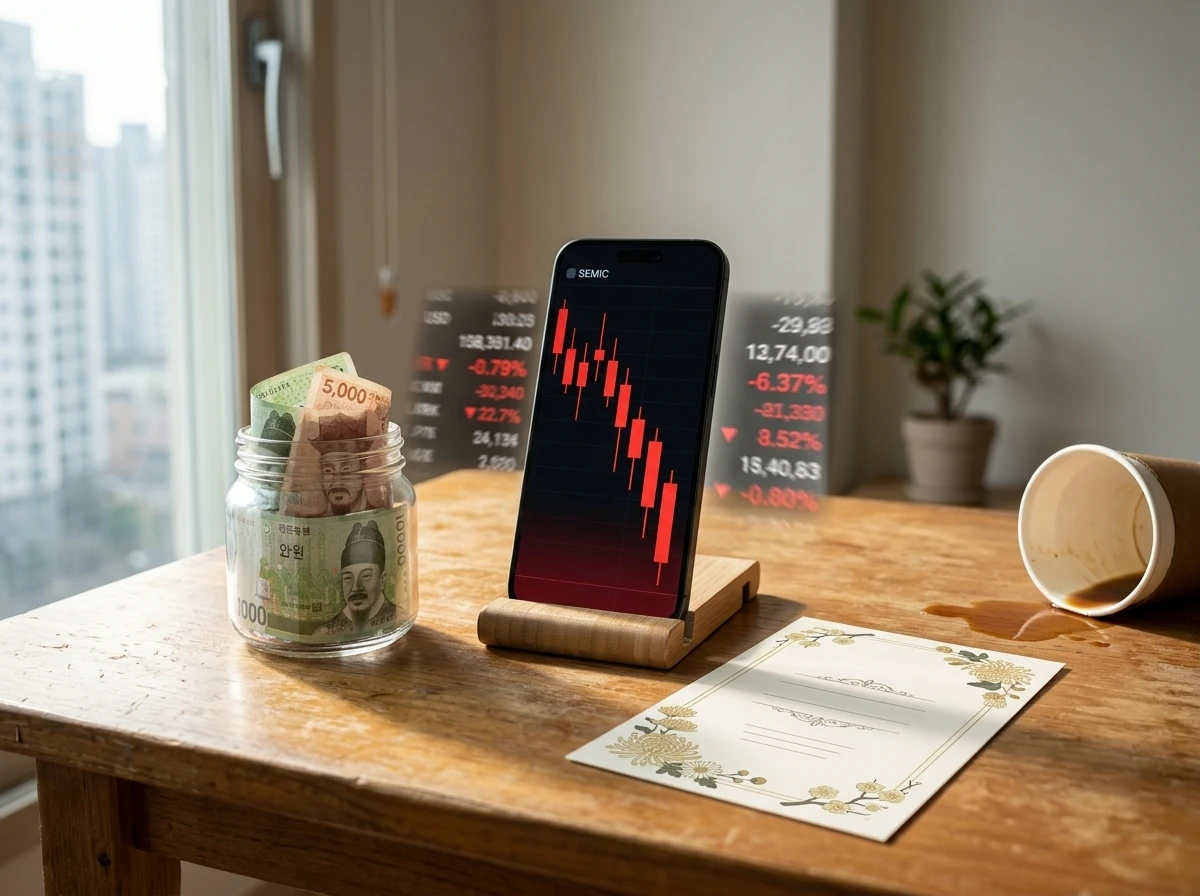
South Korea’s KOSPI index is up about 50 percent this year yet sits roughly 30 percent below its June peak after a near-40 percent plunge from the high, leaving millions of retail investors with heavy losses on AI chip bets and wedding plans in doubt.
Civil servant Eun-bi, in her thirties, put most of her savings into SK Hynix and a U.S. semiconductor tracker early in the rally. She told Al Jazeera the drop cost her tens of thousands of dollars and left her weighing a smaller ceremony or skipped honeymoon next April.
The Rally That Nearly Doubled Then Collapsed
The KOSPI rose 101.14 percent in the first half of 2026, clearing 5,000 in January and 8,000 in May before an intraday peak of 9,385.59 on June 19. By July 30 it had fallen back below 5,595. Samsung Electronics and SK Hynix, the two memory-chip giants at the center of the global AI buildout, drove almost all of it.
On August 19 the index closed at 6,471.17, down 5.8 percent that day after another sharp session. It remains highly volatile even after partial rebounds that briefly returned it to technical bull-market territory in mid-August.
- June 19 peak: 9,385.59 intraday
- July 30 trough area: below 5,595
- Year-to-date gain still: around 50 percent
- Drawdown from high: roughly 30-40 percent depending on the close
Foreign buying and improving AI infrastructure spending have supported later bounces, but the speed of both the ascent and the reverse has few modern parallels in Seoul.
How Leveraged Products Turned Daily Swings Into Wipeouts
Regulators approved 18 exchange-traded funds that track twice the daily move of Samsung Electronics or SK Hynix shares. They listed on May 27, three weeks before the market turned. Retail money poured in because the underlying names already sat in nearly every Korean portfolio.
Leveraged single-stock ETFs amplify the effect of price movements of one company and offer no diversification. Held more than a day, daily rebalancing and effects of compounding can make returns diverge sharply from the stock itself. Schwab notes these products pose unique risks and aren’t for everyone.
| Product example | Peak-to-trough move (approx.) | Notes |
|---|---|---|
| Kodex SK Hynix Single Stock Leveraged ETF | Down 82% from June 22 peak; 66% from listing | Largest by assets; closed one session down 20% |
| Samsung equivalent leveraged ETF | Down nearly 75% from early-June peak | Similar retail concentration |
| Overall leveraged ETF market cap | From $52.5bn peak June 22 to $19bn in a month | Citi calculation |
Citi’s Mohamed Apabhai estimated Korean retail investors lost about $38.7 billion (58 trillion won) on leveraged ETFs during the downturn once inflows were included. SK Hynix products alone saw $17 billion of market-cap decline. Even as values collapsed, another $6.2 billion of fresh money arrived.
Retail Borrowing Hits a Record Then Unwinds Hard
Margin loans used to fund stock purchases peaked at 38.6 trillion won ($27.6 billion) in late June according to the Korea Financial Investment Association data. By end-July the balance had fallen to 28.9 trillion won ($20.7 billion) as brokerages liquidated accounts that could not meet margin calls. Later figures showed further swings as buyers returned on rebounds.
Crowd tallies circulating on X put the number of adults who received a margin call near one in 30. JP Morgan estimates suggested three-quarters of leveraged positions had been cleaned out by late July, with later notes putting the forced-selling wave around 90 percent complete. The cascade of liquidations amplified every down day in the two heavyweight stocks.
- Late June: margin loans hit 38.6 trillion won record
- May 27: 18 single-stock leveraged ETFs begin trading
- July 28-30: multi-day circuit-breaker sessions, KOSPI down as much as 12.6% intraday
- July 31: minimum cash balance for leveraged single-stock ETFs tripled to 30 million won ($21,450)
Funeral wreaths calling the products a “massacre of retail investors” appeared outside the National Assembly. Trading volume in some leveraged vehicles collapsed more than 90 percent after the tighter deposit and education rules took effect.
The Political Price Arrives for President Lee
President Lee Jae Myung’s campaign included a pledge to lift the long-lagging KOSPI to 5,000. His administration eased access and cleared the leveraged products as part of making the market work for citizens. The reverse has landed squarely on his numbers.
A Realmeter survey August 10-14 put his approval at 43 percent, the lowest of his presidency and the fifth straight weekly decline. The pollster listed the stock-market fall and the leveraged-ETF controversy among the drivers alongside other issues.
The government’s introduction of single-stock leveraged ETFs is a clear policy failure. Young people who invested trusting the government’s intent were caught in a leverage trap the government itself laid, and are left with debt and trauma they may never shake off. The stock market must not become a casino.
Cho Kuk, former justice minister and Rebuilding Korea Party founder, Facebook post August 5
Finance Minister Koo Yun-cheol apologized in parliament for introducing the products without careful consideration. Financial Services Commission Chairman Lee Eog-weon said authorities had fallen short of public expectations on regulation. Benjamin Engel, assistant professor of Korean politics at Dankook University, told Al Jazeera that over-leveraging was always going to produce trouble once the inevitable decline arrived, and that KOSPI attention will now be a lasting political factor.
Two Chipmakers Still Carry More Than Half the Index
Samsung Electronics and SK Hynix together account for more than half the KOSPI’s market value at times and drove the bulk of both the 2026 gains and the losses. Their fortunes track global AI memory demand. When U.S. tech spending sentiment or earnings expectations shift, Seoul moves in multiples.
Bora Kim, head of Asia at Leverage Shares, told Al Jazeera that Korean investors in their 30s and 50s already ran concentrated U.S. tech bets and were experienced with leverage. The new domestic products on the two familiar names simply clouded risk judgment. Eun-bi herself never bought the domestic leveraged ETFs, only because she had already committed her cash.
She still declines to blame the government. “There are plenty of leveraged products overseas too,” she said. Her next plan is broader diversification and a full conversion to cash before the wedding.
Tighter Rules Arrive After the Damage
On July 31 authorities moved up stricter rules, tripling the cash balance required to trade the leveraged single-stock ETFs to 30 million won and adding education requirements. Brokerages were advised against new launches and promotions. Additional measures remain possible if volatility stays elevated.
The market has clawed back ground since the July lows on renewed AI spending optimism and foreign inflows, yet every fresh drop in the chip names still ripples through residual leverage and concentrated portfolios. Margin debt has begun rising again on the rebounds, a reminder that the appetite has not vanished.
For the millions who entered during the biggest rally in the country’s history, the second half of 2026 and early 2027 will decide how much of the paper gains ever return to cash. Eun-bi is watching and waiting before she needs the money for April.


South Korea Retail Investors Face Reckoning After KOSPI AI Rally Collapses

Surrey AI Maps Three Heart Attack Paths and Their Molecular Roots

Germany Locks Neutral Apple ATT Prompts Across Most of Europe

Apple’s 5% EU Fee Quietly Rewrites Alternative App Store Math

Apple’s EU Fee Truce Cuts Complexity but Leaves Rivals Fuming

Pixel 11 Pro Fold Trades Thinness for Durability and Seven-Year Stay

Mayo AI Flags HCM Obstruction From Everyday Ultrasound Videos

Indian Brands Quietly Scale Landmark Screens and Home Tech

Navin Vatsa Turns Grief Into a Lifetime of Quiet Seeing

Google Bets Pixel 11 Agentic AI Will Redefine Phones

Oracle Cuts 21,000 Jobs in a Year, Cites AI in 10-K Filing

Fable 5 and Mythos 5 Return as US Lifts Anthropic Export Controls

SpaceX’s Google Deal Turns a Rocket Company Into a Cloud Landlord

CD Projekt Red Co-CEO: Redemption Arc Isn’t Done, Witcher 4 in 2027

XPL Rallies 30% Ahead of Plasma One Card Tier Launch

Google Search Profiles Build a Follow Graph Inside Discover

DGO App Brings Rs 549 Mobile Pass for FIFA World Cup 2026 in Nepal

Moonshot AI Targets $30 Billion in China’s Fastest AI Funding Sprint

Oppo’s ColorOS 17 Eligibility List Leaves A-Series Buyers Behind

Microsoft Xbox Layoffs Start in July as Sharma Slams 3% Margin
-
 AI2 months ago
Oracle Cuts 21,000 Jobs in a Year, Cites AI in 10-K Filing
-
 AI2 months ago
Fable 5 and Mythos 5 Return as US Lifts Anthropic Export Controls
-
 AI2 months ago
SpaceX’s Google Deal Turns a Rocket Company Into a Cloud Landlord
-
 GAMING2 months ago
CD Projekt Red Co-CEO: Redemption Arc Isn’t Done, Witcher 4 in 2027
-
 CRYPTO2 months ago
XPL Rallies 30% Ahead of Plasma One Card Tier Launch
-
 NEWS2 months ago
Google Search Profiles Build a Follow Graph Inside Discover
-
 APPS2 months ago
DGO App Brings Rs 549 Mobile Pass for FIFA World Cup 2026 in Nepal
-
 AI2 months ago
Moonshot AI Targets $30 Billion in China’s Fastest AI Funding Sprint