
CRYPTO
Bitcoin Stays Under $67,000 as Traders Refuse to Buy a Third Truce
Bitcoin briefly touched $67,217 on the third Iran truce then faded to $65,845, with $5.4B in ETF outflows and two prior collapsed rallies keeping the bid out.

Bitcoin briefly crossed $67,000 on Monday night as the United States and Iran signed a memorandum of understanding, then slipped back to $65,845 by Tuesday, per CoinDesk data. Stocks and oil moved the other way: the S&P 500 added 1.7% on Monday, the Nasdaq 100 rose 3.1%, and Brent crude fell below $83 a barrel. Bitcoin touched a 24-hour high of $67,217 before fading, leaving it up 4.8% on the week and roughly flat over 24 hours.
Other tokens did better, but only on the margin. Ether rose 2.8% to $1,764 and gained 5.8% on the week, while Solana added 3.2% to $73, XRP climbed 3.2% to $1.22, and Hyperliquid’s HYPE led the majors with a 6.3% gain to $69, per CoinDesk data. Even with those moves, the relief rally looks like a short squeeze, with the bid on the short side. The reason: the same setup has failed twice in three months, and the people now hedging it have the receipts.
Stocks and Oil Bought the Deal. Bitcoin Did Not
President Donald Trump and Vice President JD Vance signed an electronic copy of a memorandum of understanding with Iran on Monday, per a live markets coverage of the truce rally, and Trump said the Strait of Hormuz, already partially open, will fully reopen on Friday. Brent crude slipped below $83 a barrel after its biggest drop in more than two weeks. The S&P 500 added 1.7% on Monday and the Nasdaq 100 rose 3.1%, both to session highs.
Bitcoin did not follow. The token changed hands at $65,845 on Tuesday, up 0.3% over 24 hours and 4.8% on the week, per CoinDesk data. It touched a 24-hour high of $67,217 late Monday before fading. Ether held up better on a relative basis, rising 2.8% to $1,764 and 5.8% on the week, while Solana added 3.2% to $73, XRP climbed 3.2% to $1.22, and Hyperliquid’s HYPE led the majors with a 6.3% gain to $69. The day left bitcoin up 4.8% on the week and almost flat over 24 hours, lagging the move in stocks by a wide margin.
The split is most visible when the majors are put side by side, with HYPE leading and BTC trailing. Ether, Solana, and XRP each gained more than bitcoin over 24 hours, and HYPE led the field with a 6.3% jump.
| Token | Price (June 16, 2026) | 24-hour move |
|---|---|---|
| BTC | $65,845 | +0.3% |
| ETH | $1,764 | +2.8% |
| SOL | $73 | +3.2% |
| XRP | $1.22 | +3.2% |
| HYPE | $69 | +6.3% |
Source: CoinDesk data, as of Tuesday, June 16, 2026.
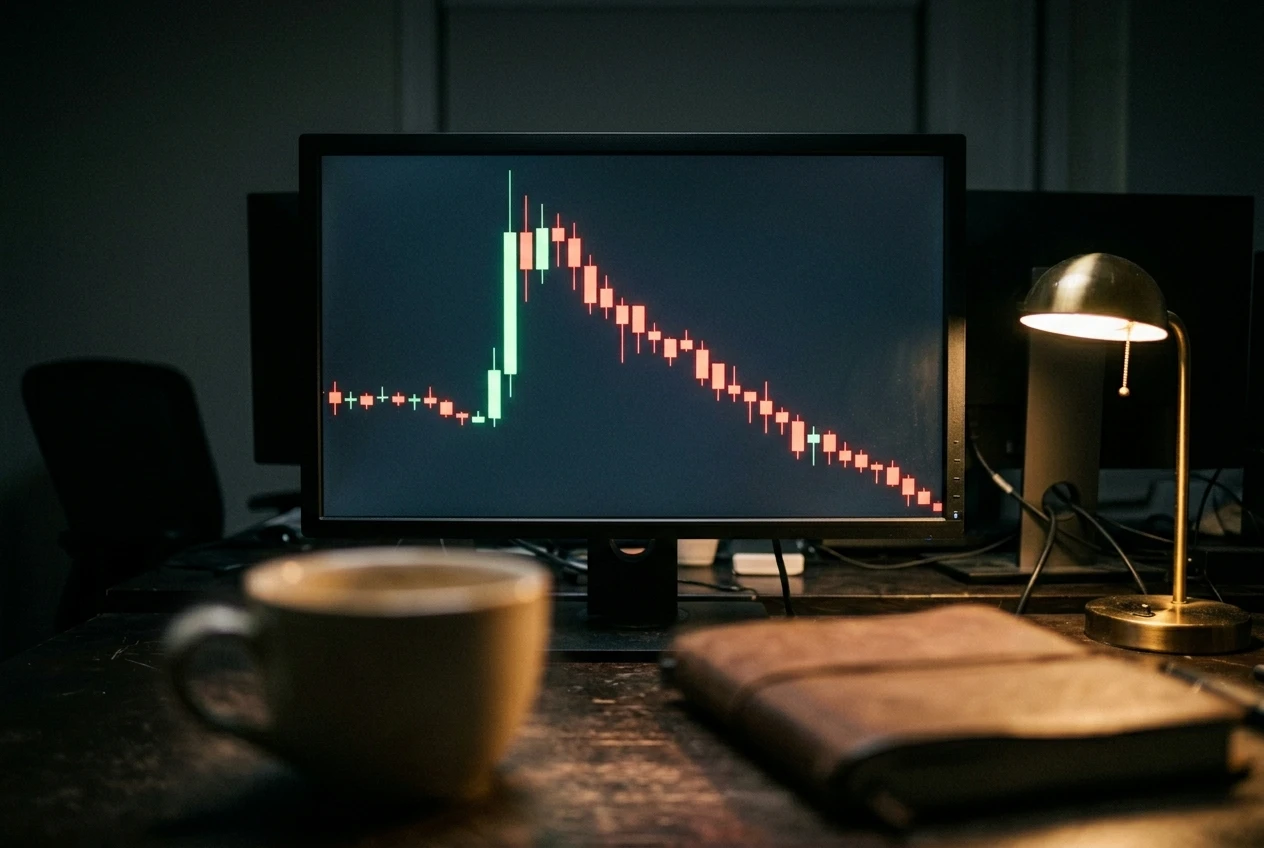
April Collapsed. June 9 Collapsed. This Is Number Three
This is the third truce attempt in three months, and bitcoin traders have lived through the first two collapsing. The April ceasefire round-tripped, and the US strikes on June 9 broke a second truce and erased that relief rally, per CoinDesk. Both times, BTC gave back the entire post-announcement move.
That history is why the bid is thin this time around. Trump himself said on Monday that the deal may be called off if Iran does not agree to shut down its nuclear program. Traders appear to be waiting on the deal’s June 19 signing in Switzerland before pricing anything as durable, Jimmy Xue, co-founder and COO of trading firm Axis, said. “Oil dropped more than 4% and Asian equities jumped more than 3% on the ceasefire, but BTC barely budged,” Xue wrote in an email. The market is not yet willing to bet that the third truce holds when the first two did not, and the pullbacks from the previous two attempts sit close in memory.
Not every reader of the tape is bearish. “It’s a constructive setup for risk assets, including crypto,” Chris Perkins, incoming head of Franklin Crypto at Franklin Templeton, said in an email. Perkins pointed to the SpaceX IPO, “an event that appears to have drained some retail liquidity out of the crypto market,” and said the improving macro could pull that money back. He added that passage of the CLARITY Act, whose primary goal is to define whether digital assets are securities or commodities, “would further accelerate institutional participation” in a market that has been bleeding that buyer for a month.
Prediction markets currently put CLARITY Act passage at a coin flip, per Perkins, and the institutional buyer has not committed. That split between a constructive setup and a flat price is the puzzle of the week. The market is waiting on a clue: a Fed decision, a Swiss signature, or a fresh spot bid.
Shorts Forced the Bounce Higher
The bounce is being driven by short sellers capitulating, not by fresh long buyers. Open interest across BTC futures, the total number of outstanding contracts, has risen more than 4% to 748,000 BTC when measured in coin-denominated terms, per CoinDesk. The funding rate, a periodic payment exchanged between longs and shorts in perpetual futures, remains negative at around -1%.
A relief move that the market hasn’t fully bought yet rather than clear risk-on redeployment into Bitcoin.
Jimmy Xue, co-founder and COO of trading firm Axis, in an email to CoinDesk on June 16, 2026.
The combination of rising open interest and a negative funding rate alongside a sharp price increase is the textbook signature of a short squeeze. Shorts are being forced to buy back to cover, accelerating the upward move, and the crowd that is supposed to come in on a real breakout has not shown up in size. Our prior coverage of the $65,500 close on the same deal tracks the same dynamic from a few days ago, when the bid failed the first test of this level. The rally is running on forced flows and thin weekend liquidity that bled into Tuesday, the Laevitas head of markets wrote on X. The conviction is on the short side, not the long side.
Glassnode, the on-chain analytics firm, says $65,000 is a structurally important zone. It is where open interest concentrates in both calls and puts. Dealer hedging flows become more supportive of stability around that level, which can keep the market from sliding sharply after a volatile period. “As price moves into these zones, dealer hedging flows can become more supportive, helping stabilize the market after a period of elevated volatility,” Glassnode said on X.
Four Weeks of ETF Outflows, $5.4 Billion Gone
US spot bitcoin ETFs just came off four straight weeks of outflows totaling about $5.4 billion, per CoinDesk. One of those weeks was a record near $3.4 billion. The streak of redemptions only just paused. The fund-flow data is the clearest evidence that the institutional bid has not returned to the post-election trade.
The marginal institutional buyer has not clearly returned. Our piece on the $4.2 billion ETF outflow streak walks through how the three-week bleed started with capital rotating into AI equities before broadening. The one constructive signal is steady movement of coins off exchanges into cold storage, which tightens available supply if demand does come back. Traders have put more than $78 million into bitcoin price prediction markets on Polymarket and Kalshi for 2026, per CoinDesk, and the crowd is not pricing a breakout. Polymarket’s June market puts the most likely recovery point at $67,500 with 70% odds, while Kalshi’s June market gives bitcoin a 14% probability of crossing $75,000 before June 30.
- 4 weeks: consecutive US spot bitcoin ETF outflows, per CoinDesk
- $5.4 billion: total withdrawn from US spot bitcoin ETFs over those four weeks
- $3.4 billion: record weekly outflow during the streak
- 70%: Polymarket odds on bitcoin’s most likely June recovery at $67,500
- 14%: Kalshi odds on bitcoin crossing $75,000 before June 30, 2026
The Calendar That Decides the Range
The Bank of Japan raised its benchmark rate to 1% from 0.75% on Tuesday, the highest since 1995, per the BoJ rate-hike preview for the June 2026 meeting. The decision was widely expected after months of inflation pressure and a weak yen. But it tightens global financial conditions at exactly the moment bitcoin is testing a recovery.
The Federal Reserve delivers its verdict on Wednesday in Kevin Warsh’s first policy meeting as chairman, per the Wall Street Journal. Markets are not expecting any rate change this week, but they do have one or more rate hikes baked in before year-end. A WSJ report on Monday suggested Warsh is not a fan of the Fed’s open communication policy. For bitcoin, trading like a high-beta risk asset, the path of US rates matters more than the BoJ’s.
Traders are also waiting on the June 19 signing in Switzerland, Xue said. The Reserve Bank of Australia is expected to hold its policy rate on Tuesday, per CoinDesk. The setup: three truce attempts, two collapsed, one signed on paper, one signing still ahead, and a Fed decision in between. Bitcoin’s bounce has reclaimed territory only going back to June 2, per CoinDesk. The range is the range until one of these events breaks it.
The Skeptics Calling the Floor
The bear case is being made explicitly. “The reduction in geopolitical risk has driven an overnight rally in bitcoin, but it does little to change the broader outlook,” Paul Howard, senior director at trading firm Wincent, said, and in his view the bear market remains intact and could stretch into the third quarter.
For bitcoin to break out of its current range and reclaim its 200-day moving average, currently near $77,000, three things need to happen at once, Howard said. A friendlier macro with lower rates, regulatory progress on the CLARITY Act and rules around onchain rewards for stablecoins, and continued adoption of crypto infrastructure through tokenized real-world assets, tokenized stocks and stablecoins. Until all three land, rallies are difficult to sustain.
Coinbase CEO Brian Armstrong has called the bottom. He wrote on X that bitcoin “has most likely bottomed at $60,000,” based on his reading of the four-year cycle. With bitcoin reaching a record high near $126,000 in October, historical cycle analysis would put a potential bottom around September or October 2026. Armstrong’s framing is that the same crowd that bought the top is now selling the bottom.
The CLARITY Act, formally the full text of the CLARITY Act, H.R. 3633, is the closest Congress has come to a real market framework for crypto assets. The bill, which passed the US House in July 2025, defines whether digital assets are securities or commodities, a question the industry has lived without an answer to for a decade. The Senate has stalled twice on the bill, per FinTech Weekly. Prediction markets currently rate passage a coin flip, Perkins said, and if the bill lands, the argument goes, institutional participation would accelerate. The truce is signed. The bill is not.
Frequently Asked Questions
Why is bitcoin not rallying on the Iran ceasefire?
Bitcoin traders have watched the previous two ceasefires collapse. The April truce round-tripped and the June 9 strikes erased the second relief rally, per CoinDesk. With this third attempt not yet signed in Switzerland (the signing is set for June 19), the bid is thin and the rally is being driven by a short squeeze, not a real spot bid.
What is the CLARITY Act?
The Digital Asset Market Clarity Act, H.R. 3633, passed the US House in July 2025 and is now in the Senate, per FinTech Weekly. Its primary goal is to define whether digital assets are securities or commodities. Prediction markets currently rate passage a coin flip, per Franklin Templeton’s Chris Perkins.
When is the next Fed decision?
The Federal Reserve delivers its verdict on Wednesday, June 17, 2026, in Kevin Warsh’s first policy meeting as chairman, per the Wall Street Journal via CoinDesk. Markets are not expecting a rate change, but one or more rate hikes are baked in before year-end.
How much have spot bitcoin ETFs lost in outflows?
US spot bitcoin ETFs just came off four straight weeks of outflows totaling about $5.4 billion, per CoinDesk, including a record week near $3.4 billion. The streak of redemptions only just paused, and the marginal institutional buyer has not returned.
What is bitcoin’s 24-hour high on June 16, 2026?
Bitcoin touched a 24-hour high of $67,217 late Monday before fading to $65,845 on Tuesday, up 0.3% over 24 hours and 4.8% on the week, per CoinDesk data.


Google Opens Gmail to Voice and Gates Docs Live

Lenovo Prices the IdeaPad Vibe Against Apple’s $699 Neo

Xbox Caps Game Pass Cloud Gaming at 15 Hours

GTA 6 DualSense Controllers Follow Sony’s Usual $84.99 Script

South Korea Retail Investors Face Reckoning After KOSPI AI Rally Collapses

Surrey AI Maps Three Heart Attack Paths and Their Molecular Roots

Germany Locks Neutral Apple ATT Prompts Across Most of Europe

Apple’s 5% EU Fee Quietly Rewrites Alternative App Store Math

Apple’s EU Fee Truce Cuts Complexity but Leaves Rivals Fuming

Pixel 11 Pro Fold Trades Thinness for Durability and Seven-Year Stay

Oracle Cuts 21,000 Jobs in a Year, Cites AI in 10-K Filing

Fable 5 and Mythos 5 Return as US Lifts Anthropic Export Controls

SpaceX’s Google Deal Turns a Rocket Company Into a Cloud Landlord

CD Projekt Red Co-CEO: Redemption Arc Isn’t Done, Witcher 4 in 2027

XPL Rallies 30% Ahead of Plasma One Card Tier Launch

Google Search Profiles Build a Follow Graph Inside Discover

DGO App Brings Rs 549 Mobile Pass for FIFA World Cup 2026 in Nepal

Moonshot AI Targets $30 Billion in China’s Fastest AI Funding Sprint

Oppo’s ColorOS 17 Eligibility List Leaves A-Series Buyers Behind

Microsoft Xbox Layoffs Start in July as Sharma Slams 3% Margin
-
 AI2 months ago
Oracle Cuts 21,000 Jobs in a Year, Cites AI in 10-K Filing
-
 AI2 months ago
Fable 5 and Mythos 5 Return as US Lifts Anthropic Export Controls
-
 AI3 months ago
SpaceX’s Google Deal Turns a Rocket Company Into a Cloud Landlord
-
 GAMING2 months ago
CD Projekt Red Co-CEO: Redemption Arc Isn’t Done, Witcher 4 in 2027
-
 CRYPTO3 months ago
XPL Rallies 30% Ahead of Plasma One Card Tier Launch
-
 NEWS3 months ago
Google Search Profiles Build a Follow Graph Inside Discover
-
 APPS3 months ago
DGO App Brings Rs 549 Mobile Pass for FIFA World Cup 2026 in Nepal
-
 AI3 months ago
Moonshot AI Targets $30 Billion in China’s Fastest AI Funding Sprint