
APPS
Hinge’s ‘All We Need Is Us’ Pitches Handcraft Against AI Default
Hinge’s ‘All We Need Is Us’ is the latest European chapter of Designed to be Deleted, built on handbuilt Hingie mascots, real couples, and the small moments after the swipe.

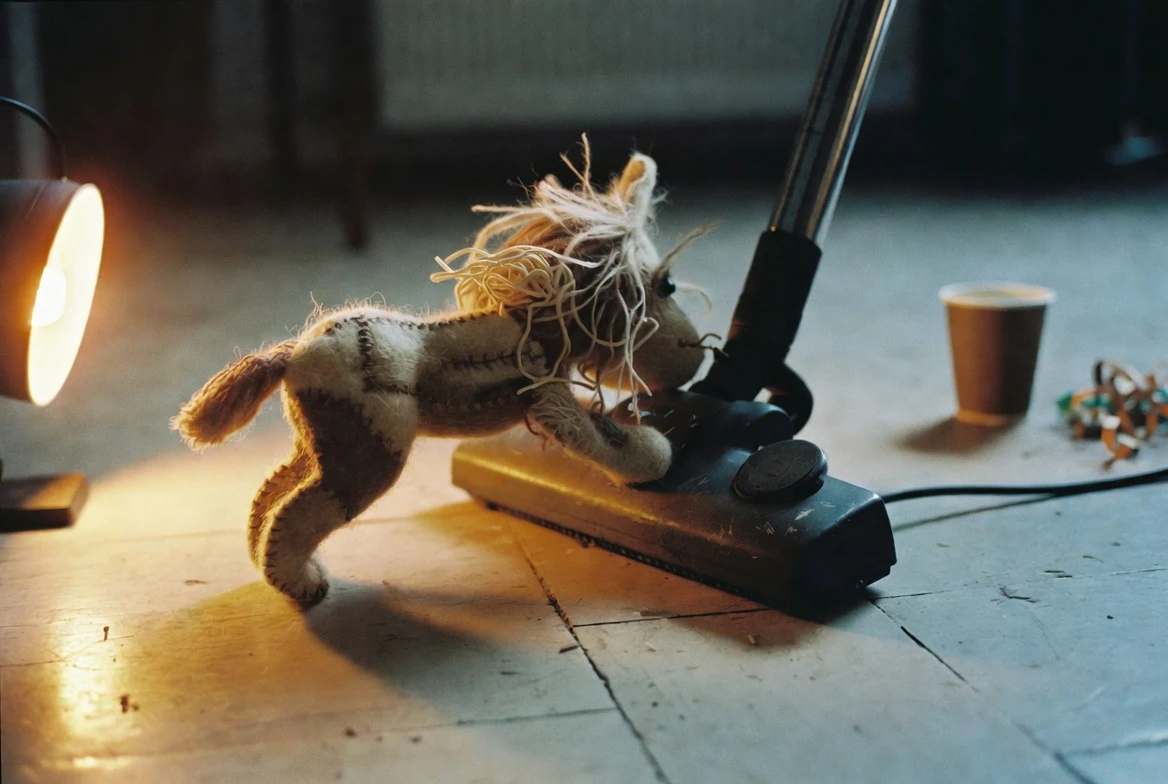
Dating app Hinge has launched All We Need Is Us, the latest European chapter of its long-running Designed to be Deleted platform. The campaign drops grand gestures and arrives instead at the smallest places love tends to live: cleaning up after a party, weeding a garden, or doing nothing in particular with the right person. It also ships with a cast of Hinge’s campaign announcement for ‘All We Need Is Us’ details: handcrafted Hingie mascots that meet their demise in those same domestic moments, including being hoovered away mid-cleanup.
How a Dating App Found the Mundane
The work opens on the thesis written into its title. “small moments that make people feel close” replace the cinematic gestures of typical dating ads, and Hinge wants the swap to feel deliberate. The campaign frames the everyday, not the extraordinary, as where Gen Z daters say they actually find each other.
“All We Need Is Us” is the latest European chapter of Hinge’s broader Designed to be Deleted platform, the brand’s long-running creative argument that a dating app should set its users up and then get out of the way. The new films keep that premise and stretch it. Real couples who met on Hinge star in every spot, and their on-screen ordinariness is the point.
Hinge positions the work as a study in the small things. Among the brand’s listed examples: cleaning up after a party, weeding a garden, or doing nothing in particular while still feeling like you’re in the right place with the right person. The campaign’s promise is that those in-between hours are where the platform’s tag line quietly gets proven.
The Argument for Doing It by Hand
The campaign’s anti-AI posture is built into the credits, not the copy. So is its craftsmanship.
Birthday, the New York creative collective founded by Corinna Falusi, developed the work. On its own site, Birthday frames the campaign as “a real-life approach for the anti-AI generation, who every day find meaning in the quiet, in-between moments of love.” That posture shows up across the assets: handbuilt props, live puppetry, real couples, and a companion behind-the-scenes series. The agency’s own overview of the campaign work describes the production as a counterweight to a category defaulting to synthetic output.
To depict real human connection, it was important to cast real couples who met on Hinge. But humanity and authenticity weren’t just reflected in the casting; they were embedded in the craft itself. There’s a growing longing for things that feel unmistakably human. For a brand that lives in the world of connection and love, this felt like the obvious choice.
Corinna Falusi, Founder and Chief Creative Officer at Birthday, in Hinge’s campaign announcement. Her framing positions the hands-on aesthetic as a structural choice rather than a stylistic flourish, intended to mirror the relationships the brand claims to enable.
A companion “Making of Hingie” series documents the puppetry and behind-the-scenes process, expanding the campaign from the films themselves to a craft record of how each piece came together. The format is a tell: Hinge is selling the making as much as the made.
What a Hingie Is Made Of
The Hingie mascot is the campaign’s most specific creative choice, and the most literal expression of the by-hand argument. Each figure is hand-built from tactile materials and filmed as a live puppet on the couples’ sets.
On camera, the Hingies don’t survive the ordinary. They are vacuumed up mid-cleanup, swept aside, and absorbed into the same daily motion that absorbs the couples around them. The death-by-domesticity beats run through every spot and end with the point.
- Materials: yarn, feathers, and noodles.
- Builder: puppet-maker Niklas Hermansson at Fixas (per the campaign’s press details).
- Puppeteer: Tim Cherry Jones, who guided each figure live on set.
- Fate on screen: hoovered away during the afterparty cleanup in the lead spot.
A snapshot of the campaign’s scope:
- 3 Gen Z contributor markets: Germany, France, and Sweden.
- 3 mascot materials: yarn, feathers, noodles.
- 1 companion “Making of Hingie” behind-the-scenes series.
- 1 recurring puppet, hoovered away on camera each time.
Real Couples, Not Casting-Call Couples
Casting is where the campaign’s anti-AI posture comes through most directly. real couples who met on the app, not actors briefed on a brief, run every frame.
The casting choice runs alongside a separate but linked credit: Hinge worked with Gen Z contributors from Germany, France, and Sweden throughout the creative process. The brand says those contributors shaped how connection is defined and developed in the work, extending the human-first approach beyond the screen.
Hinge’s framing leans on a specific Gen Z mood. “Gen Z is facing increased insecurity, pressures, and societal shifts, and this is changing how they define emotional safety and connection,” the campaign announcement reads, an argument the work then stages through quiet domestic scenes rather than big romantic gestures.
We often think of relationships as being defined by big moments, but they’re usually built in much smaller ones. Making dinner together, running errands, or spending time doing absolutely nothing. With All We Need Is Us, we wanted to celebrate the quiet moments that make people feel close and reflect the way many Gen Z daters are finding connection in the everyday rather than the extraordinary. As the dating app designed to be deleted, we’re always interested in what happens after two people meet. And what this campaign reminds us is that the ‘nothing’ is actually everything. It’s often the ordinary moments that end up meaning the most.
Tamika Young, Chief Marketing & Communications Officer at Hinge, in the brand’s campaign announcement.
For Hinge, then, a handbuilt puppet and a real couple showing each other around their kitchen are both versions of the same brief: stage what is actually happening, and let the small things carry the weight. The casting logic doubles as the marketing thesis.
An NDS Alum Behind the Camera
“All We Need Is Us” was directed by visual artist Justyna Obasi in partnership with Stockholm-based production company PINE. The pairing is a continuation of a collaboration that has run through the last two European Hingie campaigns.
Obasi’s path to the campaign runs through Obasi’s SHOOT New Directors Showcase profile, which lists her among the 2020 New Directors Showcase alumni. Her own profile describes a visual artist by training whose first professionally directed work was a skincare commercial in 2017, a background that helps explain why the campaign’s craft choices sit comfortably with her reel. PINE, the Stockholm production house, has worked the last two Hingie campaigns in Europe, which is why its name carries the production credit on every version of this work.
The headline behind-the-camera names attached to the campaign:
- Agency: Birthday (New York), founded by Corinna Falusi.
- Director: Justyna Obasi.
- Production company: PINE (Stockholm).
- Executive Creative Director: Ola Sobiecki.
- Creative Directors: Line Johnsen and Roberto Danino.
- Director of Photography: Norm Li.
- VFX: Tint Post.
Where the Spots Will Run
The rollout mirrors the casting logic: focused, three-market, and platform-specific. The campaign comes to life through Germany, France, and Sweden.
The spot package covers streaming, cinema, and social media:
- Streaming.
- Cinema.
- Social media.
Three countries, three mediums, and a handbuilt puppet that meets its demise in each. The campaign’s final form is the same as its argument, scaled down, human in scale, and finished by hand.


Sony’s 10 Percent Disc Drop Leaves the 2028 Cutoff Intact

Chip Allocation Sidelines the Base iPhone 18 This Fall

Miami-Dade Fights the Vice City Brand It Already Wears

IFA 2026 Awards Put Tecno Ahead of Flagship Phones

USB-C Gadgets Made the Junk Drawer Rechargeable

Pixel 11 Pro Asks $1,099 for a Light Google Locked

The iPhone Ultra Sells Two Retired Minis as One Foldable

Google Opens Gmail to Voice and Gates Docs Live

Lenovo Prices the IdeaPad Vibe Against Apple’s $699 Neo

Xbox Caps Game Pass Cloud Gaming at 15 Hours

Oracle Cuts 21,000 Jobs in a Year, Cites AI in 10-K Filing

Fable 5 and Mythos 5 Return as US Lifts Anthropic Export Controls

SpaceX’s Google Deal Turns a Rocket Company Into a Cloud Landlord

CD Projekt Red Co-CEO: Redemption Arc Isn’t Done, Witcher 4 in 2027

XPL Rallies 30% Ahead of Plasma One Card Tier Launch

Google Search Profiles Build a Follow Graph Inside Discover

DGO App Brings Rs 549 Mobile Pass for FIFA World Cup 2026 in Nepal

Moonshot AI Targets $30 Billion in China’s Fastest AI Funding Sprint

Oppo’s ColorOS 17 Eligibility List Leaves A-Series Buyers Behind

Microsoft Xbox Layoffs Start in July as Sharma Slams 3% Margin
-
 AI2 months ago
Oracle Cuts 21,000 Jobs in a Year, Cites AI in 10-K Filing
-
 AI2 months ago
Fable 5 and Mythos 5 Return as US Lifts Anthropic Export Controls
-
 AI3 months ago
SpaceX’s Google Deal Turns a Rocket Company Into a Cloud Landlord
-
 GAMING3 months ago
CD Projekt Red Co-CEO: Redemption Arc Isn’t Done, Witcher 4 in 2027
-
 CRYPTO3 months ago
XPL Rallies 30% Ahead of Plasma One Card Tier Launch
-
 NEWS3 months ago
Google Search Profiles Build a Follow Graph Inside Discover
-
 APPS3 months ago
DGO App Brings Rs 549 Mobile Pass for FIFA World Cup 2026 in Nepal
-
 AI3 months ago
Moonshot AI Targets $30 Billion in China’s Fastest AI Funding Sprint