
NEWS
Pixel Launcher Search Bar Toggle Signals Bigger Google Shift
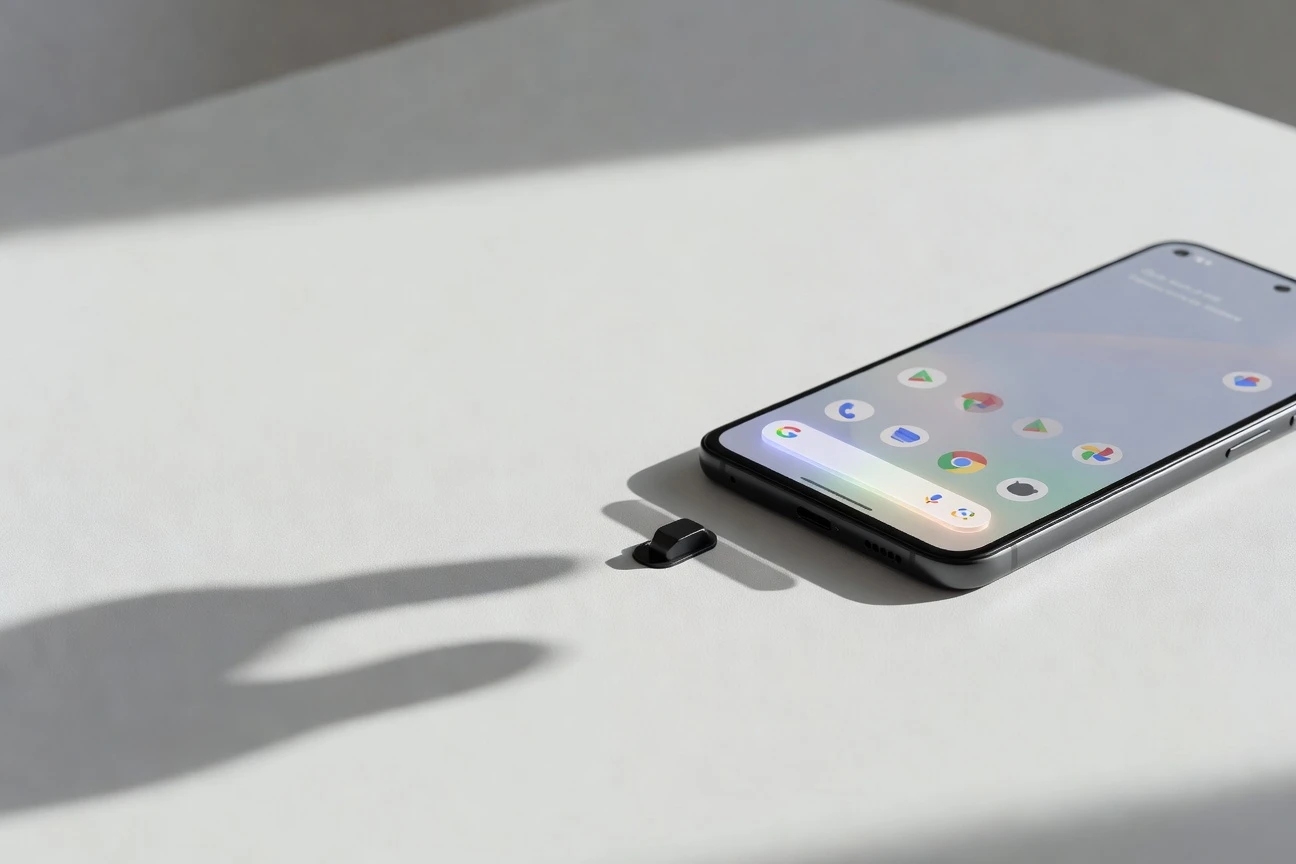
The Pixel Launcher search bar may finally become optional on Google Pixel phones, according to a leaked Android 17 QPR1 screen recording showing a new Show search bar switch under Pixel Launcher settings. If it ships, the fixed bottom pill can disappear and the dock shifts closer to the display edge.
That would be a small setting with a long shadow. Google, the company behind Pixel phones and Android, has spent years treating the launcher as a place where Search should always be one tap away. A hide switch suggests the company now sees home-screen choice as worth more than one guaranteed surface.
The Switch Hides a Fixed Google Surface
The screen recording attributed to leaker Mystic Leaks shows the control in Pixel Launcher settings, then Search bar settings, then Show search bar. Turning it off removes the search pill at the bottom of the home screen. The docked apps slide lower, so the change is visual and spatial, not only a disabled tap target.
Google has not announced the setting, and the latest official Android 17 QPR1 release notes do not list it. That matters because Pixel Launcher features often move behind flags, server-side switches, or regional gates before a public release. A leaked stable build is a strong clue, not a shipping promise.
The best reading is narrow for now: this is a Pixel Launcher change, not a general Android launcher rule. Samsung One UI, Nothing OS, Motorola My UX, and other Android skins already make different choices about search placement. Pixel owners are the audience because Pixel Launcher is where Google keeps its cleanest version of Android branding.
The reported toggle also comes after years of Pixel complaints about two immovable home-screen fixtures: At a Glance at the top and the search bar at the bottom. One gave Google a glanceable information slot. The other gave Google a search slot. Losing the second slot by choice would mark a sharper change than another color tweak.
Pixel Search Has Become a Phone Index
Google’s own help page says Pixel search can look across the web, apps, contacts, Settings, Google Play Store, screenshots, Google Assistant actions, and Pixel phone tips. In other words, the bottom pill is no longer just a shortcut to web results. It has become a local index for the phone plus a front door to Google Search.
That is why the toggle is more interesting than the usual launcher customization story. Hiding the pill does not remove search from the device. Pixel owners can still swipe up to open the app drawer search, use Circle to Search, ask Google Assistant or Gemini, place a Google widget manually, or use browser search. What changes is the default claim on the home screen.
- Web and phone results: Pixel search blends online results with app and device content, according to Google’s Pixel phone search guide.
- Swipe-up search: Google lets users manage whether swiping up from the home screen starts search.
- Home-screen animations: Google also documents search bar effects that can be turned off separately from the bar itself.
- Assistant actions: Search can surface actions from Google’s assistant layer, not only links.
For people who never tap the pill, the change is simple: more room and less visual noise. For Google, the risk is lower than it once was because search entry points now surround the phone. The pill is valuable, but it is no longer the only path.
QPR1 Beta 3 Changes the Timing
The timing has already moved past the original leak cycle. Google released Android 17 QPR1 Beta 3 on May 19, 2026, with build CP31.260508.005 and the May 5 security patch level. That means the public beta track is now newer than the Beta 2 window that first put this search-bar setting into wider conversation.
- May 19, 2026: latest official QPR1 Beta 3 release date listed by Android Developers.
- CP31.260508.005: the build number Google attaches to that beta.
- April 22, 2026: the first QPR1 beta date, showing a fast test cadence.
- 18 Pixel models: the Android 17 beta device list runs from Pixel 6 through Pixel 10 Pro Fold.
Quarterly Platform Release (QPR, Google’s post-launch feature and fix channel for Pixel and Android Open Source Project builds) updates matter because they often carry Pixel Feature Drop work. Google says QPR builds are delivered to AOSP and Pixel devices as Feature Drops, and that they are suitable for general use compared with earlier developer previews.
Supported Pixel owners can enroll through the Android Beta Program for Pixel, but that is still pre-release software. Google warns that beta builds may contain errors and defects, and opting out to return to stable software can require wiping local data. A launcher toggle is not worth a full phone reset for most people.
Home Screen Control Is Now a Product Signal
The Pixel home screen used to say something very clear: Google services live at both ends. At a Glance sat above the icons. The search bar sat below them. Android still allowed third-party launchers, but the stock Pixel experience kept Google’s preferred shape.
| Home Surface | Current User Control | Reported QPR1 Change | Reader Impact |
|---|---|---|---|
| Bottom search bar | Custom colors and effects, but fixed placement on stable Pixel Launcher | Show search bar switch hides the pill | More dock space and less Google branding on the first screen |
| At a Glance | Google documents an off switch for cards, while the date can remain | No new change tied to this leak | Less forced information, but not a blank top row for everyone |
| Swipe-up app search | Can be managed in Home settings | Expected to remain as a search path | Search stays available without a permanent widget |
| Third-party launcher | Available through Android settings | No direct change | Power users still have the deeper customization route |
Google’s At a Glance help page is useful here because it shows how the company already thinks about partial control. Users can turn off cards and personalization categories, but the surface itself has not always vanished in the way critics wanted. The search-bar toggle, if shipped as shown, looks cleaner: on or off.
That simplicity is the win. Pixel does not need to become Nova Launcher to feel less rigid. One switch gives casual users a benefit power users have been asking for, without forcing them to replace the launcher or learn a new gesture system.
Search Choice Pressure Reaches the Dock
Regulation is not the only reason for the change, but the wider direction is hard to ignore. Google already runs Android search and browser choice screens in the European Economic Area. The company says its Android choice screen changes under the Digital Markets Act began in March 2024 after Alphabet, Google’s parent company, was designated a gatekeeper by the European Commission, the European Union’s executive arm.
A Pixel Launcher hide switch would not be the same as a mandated search-choice screen. It does not pick DuckDuckGo, Ecosia, Bing, Brave Search, or another provider. It simply removes a fixed Google entry point. Still, the product signal points in the same direction: the default is becoming negotiable.
The other pressure comes from Google’s own artificial intelligence push. Mindy Brooks, Google’s vice president of product management, wrote that Gemini Intelligence on Android will roll out in waves starting with the latest Samsung Galaxy and Google Pixel phones this summer. That effort puts task automation, autofill, voice cleanup, and custom widgets closer to the center of Android.
If Gemini becomes the proactive layer Google wants, a static search pill matters less. The phone can answer from the power button, the browser, the keyboard, the screen, a widget, or a notification. Oton Technology has already tracked the same drift in Android contextual suggestions on Pixel 10 and in Google Keep’s lock screen notes experiments: the useful surface keeps moving to wherever the user is.
Beta Users Get the Risk First
Pixel owners should split this news into two buckets. The first is the feature itself, which looks practical, overdue, and easy to understand. The second is the path to getting it early, which is riskier than the setting deserves.
Anyone on a daily phone should wait for the stable QPR1 release unless they already live on beta builds. The latest QPR notes include fixes for Wi-Fi disconnects, distorted audio, off-screen UI elements, disappearing home screen widgets, and gesture problems. Those fixes are welcome, but their presence is a reminder that beta software still breaks ordinary phone behavior.
- Wait if your Pixel is your work phone, travel phone, or banking device.
- Try the beta only if you have a recent backup and can tolerate app or battery problems.
- Check the setting after any QPR1 update under Home settings, then Search bar settings, rather than assuming it appears on every model or region.
- Use a manual Google Search widget if you hide the built-in pill and later miss one-tap web search.
The likely winner is the average Pixel owner who wants Google’s clean launcher without Google’s fixed search slot. If the toggle survives to the public build, Android 17 QPR1 will make Pixel feel less like a Google showcase and more like a phone the owner can finish arranging.
NEWS
Moto G37 Power vs Oppo K14x vs Galaxy M17 5G: Which to Buy
Three 5G smartphones compete in Indian retail at prices from Rs. 14,499 to Rs. 18,999 as of May 2026: the Moto G37 Power with a 7,000mAh battery and Android 16 on board, the Oppo K14x 5G with 45W SuperVOOC fast charging, and the Samsung Galaxy M17 5G with a FHD+ Super AMOLED display and a six-year software support guarantee. Each phone wins a specific category. The question is which category matters most to the buyer making this decision.
Motorola’s G37 Power starts at Rs. 15,999 for 4GB+128GB, Rs. 1,000 above the Oppo K14x’s base and Rs. 1,500 above Samsung’s current ask for the same RAM-and-storage tier. At margins that thin, the hardware and software differences do the actual work of separating the three phones.
How the Prices Stack Up in India
None of the three phones occupies a standalone price tier. Oppo and Samsung overlap below Rs. 17,000, and the Moto G37 Power and Samsung share the Rs. 18,000-plus range. A buyer comparing 6GB configurations finds the Oppo K14x at Rs. 16,999 and the Galaxy M17 5G at Rs. 16,499, a Rs. 500 gap that makes the spec differences worth examining carefully.
| Model | 4GB Variant | 6GB Variant | 8GB Variant | On Sale Since |
|---|---|---|---|---|
| Moto G37 Power | Rs. 15,999 | N/A | Rs. 18,999 | May 25, 2026 |
| Oppo K14x 5G | Rs. 14,999 | Rs. 16,999 | N/A | Feb 16, 2026 |
| Samsung Galaxy M17 5G | Rs. 14,499 | Rs. 16,499 | Rs. 18,499 | Oct 13, 2025 |
Samsung’s three-tier RAM ladder gives it the widest addressable range, from Rs. 14,499 to Rs. 18,499. Motorola skips the 6GB middle entirely, offering 4GB or 8GB only. For buyers comparing the 8GB tier, the G37 Power sits Rs. 500 above the Samsung at Rs. 18,999 against Rs. 18,499. Storage across all three variants starts at 128GB UFS 2.2 with microSD expansion up to 1TB, so capacity is not a differentiator here.
Display Technology: AMOLED Against LCD
Samsung’s Galaxy M17 5G is the only phone in this group with an AMOLED panel, and the advantage shows from the first use. Its 6.7-inch Super AMOLED screen resolves at FHD+ (1,080×2,340 pixels), producing true blacks through per-pixel shutoff and delivering contrast ratios that LCD cannot approach at any price. Brightness peaks at 1,100 nits in high brightness mode, protected by Corning Gorilla Glass Victus, a glass grade found on phones selling considerably above this price range. The trade-off is refresh rate: 90Hz, compared to 120Hz on both rivals. For social scrolling and daily navigation, 90Hz is smooth enough, but a side-by-side comparison shows a small perceptible difference in fluidity against a 120Hz panel.
Both the Moto G37 Power and the Oppo K14x 5G official specifications page confirm HD+ LCD panels at 120Hz, resolving at 720 pixels wide rather than 1,080. The G37 Power measures 6.67 inches with a 1,050-nit peak and Gorilla Glass 7i. Oppo’s display stretches to 6.75 inches at up to 1,125 nits, the brightest claimed figure in this group on paper. The resolution gap between HD+ and FHD+ is most apparent on fine text, small icons, and detailed photographs viewed up close. AMOLED’s per-pixel contrast, producing deep blacks that LCD cannot replicate, remains Samsung’s dominant visual advantage whenever the screen shows dark content or media.
The Galaxy M17 5G also carries Widevine L1 certification, allowing Netflix, Amazon Prime Video, and other streaming platforms to deliver HD-quality video to the device. Most budget LCD phones in this bracket receive only Widevine L3, which caps streaming resolution below HD regardless of the display’s native capability. For subscribers who stream video daily, this certification adds a practical layer of value beyond the panel type alone.
- FHD+ Super AMOLED, 1,080×2,340, 90Hz, 1,100 nits HBM, Gorilla Glass Victus: Samsung Galaxy M17 5G
- HD+ LCD, 720×1604, 120Hz, 1,050 nits HBM, Gorilla Glass 7i: Moto G37 Power
- HD+ LCD, 720×1570, 120Hz, 1,125 nits peak brightness: Oppo K14x 5G
Battery Capacity and Charging Speed
The Moto G37 Power carries a 7,000mAh cell, the largest in this group by 500mAh over the Oppo K14x and 2,000mAh over the Samsung. On a 6nm MediaTek chipset running an HD+ display at 120Hz, that capacity comfortably covers two days of moderate use or a full heavy day with power to spare. Motorola includes 6W reverse wired charging, letting the G37 Power top up earbuds or a smartwatch via USB-C. The Oppo K14x also supports 5W reverse charging. Samsung’s Galaxy M17 5G includes neither function.
Oppo’s 45W SuperVOOC charger ships inside the retail box and fills the 6,500mAh cell in approximately 90 minutes from empty. For buyers who charge in short daily windows rather than overnight, this refill speed is a genuine advantage over the Moto G37 Power’s 30W included adapter and a bigger one over the Samsung’s 25W ceiling.
Samsung does not include a charger in the Galaxy M17 5G’s retail box. A compatible 25W USB-C PD adapter costs roughly Rs. 700 to Rs. 1,200 at retail, adding to the effective out-of-pocket cost for buyers who do not already own one. Despite the smaller 5,000mAh cell and slower charging rate, published real-world reviews consistently show the M17 5G delivering more than a full day of mixed use, partly because the Exynos 1330 draws less sustained power than the Dimensity chips under light-to-moderate workloads and the AMOLED panel’s pixel-off state conserves energy during dark-content playback.
Build weight splits along battery lines. The Moto G37 Power weighs 215 grams, noticeably heavier than the Galaxy M17 5G at 192 grams and the Oppo K14x at 212 grams. The larger cell accounts for most of that mass difference. Buyers sensitive to single-handed weight may find Samsung’s slimmer 7.5mm frame and lighter body a comfort factor worth considering alongside the raw battery figures.
| Phone | Battery | Charging Speed | Charger in Box | Reverse Charging |
|---|---|---|---|---|
| Moto G37 Power | 7,000mAh | 30W wired | Yes | 6W wired |
| Oppo K14x 5G | 6,500mAh | 45W SuperVOOC | Yes | 5W wired |
| Samsung Galaxy M17 5G | 5,000mAh | 25W wired | No | No |
Chipset, RAM, and Day-to-Day Performance
The MediaTek Dimensity 6400 (6nm) in the Moto G37 Power sits a step above the MediaTek Dimensity 6300 (6nm) powering the K14x 5G, offering slightly higher clock speeds and improved multi-core throughput. For everyday tasks, social feeds, streaming, messaging, and navigation, the gap is difficult to feel in use. Motorola offers 4GB or 8GB of LPDDR4x RAM with a virtual expansion ceiling of 12GB. Oppo provides 4GB or 6GB physical RAM, expandable virtually to 8GB. Both phones include 128GB UFS 2.2 storage with the same 1TB microSD cap, and both support RAM Boost-style virtual memory features to extend multitasking headroom.
Samsung’s Exynos 1330 (6nm) handles the Galaxy M17 5G with benchmark scores around 444,000 on AnTuTu v10, below both MediaTek chips on raw numbers, and real-world testing confirms occasional stuttering under heavy multitasking or sustained graphics load. For the everyday workload most buyers in this segment actually run, the Exynos 1330 is sufficient. Where the processor trails, One UI 7 compensates: Samsung bundles Circle to Search, Gemini Live voice assistance, and Voice Focus for call clarity, features absent from Motorola’s lighter Hello UI. Oppo’s ColorOS 15 adds AI Eraser for removing objects from photos and Dual-View Video, which fires the front and rear cameras simultaneously into a single shared frame.
Camera Systems Compared
Samsung builds the most versatile rear camera setup in this group. The M17 5G’s triple rear system leads with a 50MP OIS-equipped main sensor, supplemented by a 5MP ultrawide and a 2MP macro lens. OIS (Optical Image Stabilization) is uncommon at this price point: it absorbs hand tremor during handheld shots and video recording, producing sharper low-light stills and steadier footage compared to software stabilization alone. The 13MP selfie camera surpasses both rivals for portrait and video call detail.
Both the G37 Power and the Oppo K14x 5G use dual rear setups: a 50MP primary sensor paired with a secondary unit of limited practical value. Motorola’s second sensor combines ambient light sensing and flicker detection, offering no additional photography depth. Oppo’s 2MP monochrome sensor assists portrait processing in theory but adds little in typical shooting. The G37 Power’s 8MP front camera holds an edge over Oppo’s 5MP selfie shooter. All three phones shoot at least 1080p video from the rear; Motorola extends the ceiling to 2K at 30fps.
- Samsung Galaxy M17 5G: 50MP OIS + 5MP ultrawide + 2MP macro (rear); 13MP (front). Triple camera, optical stabilization, the strongest low-light and video performer here.
- Moto G37 Power: 50MP f/1.8 PDAF + 2-in-1 light sensor (rear); 8MP (front). Capable main shooter, no genuine ultrawide, solid selfie camera for the price.
- Oppo K14x 5G: 50MP f/1.8 + 2MP monochrome (rear); 5MP (front). AI-assisted editing via ColorOS 15, weakest front camera of the three.
In daylight, all three 50MP main sensors perform comparably for casual photography. The gap widens after dark. Without OIS, the G37 Power and K14x rely on software processing and higher ISO to compensate for movement, raising the likelihood of blurred subjects in dim conditions. Samsung’s OIS absorbs the micro-tremors that software cannot correct, making it the safer choice for travel captures, indoor events, and anyone who regularly photographs in artificial light.
Software Support and Long-Term Value
Samsung’s update commitment is the Galaxy M17 5G’s defining competitive advantage. From its October 2025 launch date, Samsung confirms six OS upgrades (through Android 21) and six years of security patches, with support running until September 2031. That timeline typically belongs to flagship Galaxy S devices. Extending it to a sub-Rs. 19,000 M-series phone is a notable policy decision, and no rival here comes close to matching it at this price tier. For a buyer who holds a phone four or five years, the M17 5G’s effective cost per year of supported use is substantially lower than an equivalent-priced device that gets replaced after two.
Motorola’s G37 Power ships on Android 16, one version ahead of both rivals at their respective launch points, confirming an upgrade path to Android 17 and three years of security updates from May 2026. Starting on a newer Android release provides a meaningful head start in app compatibility and feature access during the first year, but the shorter patch runway means the G37 Power reaches end of active support while the Galaxy M17 5G remains in Samsung’s update cycle.
Oppo has not published a specific multi-year update schedule for the K14x 5G. The phone’s “48 months of fluency protection” is a performance-optimization guarantee, not an Android version delivery promise. Based on Oppo’s budget-tier history in India, the K14x will likely receive one to two Android version upgrades and three years of security patches, broadly in line with the MediaTek-based competition in this bracket. Buyers who use banking apps, VPN clients, or enterprise tools that enforce minimum Android version requirements will encounter that boundary within three years.
For buyers who upgrade every 18 to 24 months, update policy differences fade quickly inside that window. For everyone else, the Galaxy M17 5G at Rs. 14,499 pairs an AMOLED display, OIS camera, NFC, and a six-year software runway in a 192-gram body that neither rival in this comparison can match on combined long-term value.
Frequently Asked Questions
Which Phone Has the Best Display Among These Three?
The Samsung Galaxy M17 5G has the superior display. Its 6.7-inch FHD+ Super AMOLED panel produces true blacks, deeper contrast, and sharper text than the HD+ LCD screens on the Moto G37 Power and Oppo K14x 5G. The only trade-off is refresh rate: 90Hz on the Samsung against 120Hz on both LCD rivals. For most everyday use, including streaming, browsing, and social media, the picture-quality advantage of AMOLED outweighs the lower refresh rate.
How Long Will Each Phone Receive Software Updates?
Samsung’s Galaxy M17 5G is confirmed for six Android OS upgrades and six years of security patches from its October 2025 launch, meaning support runs through 2031. The Moto G37 Power is confirmed for one OS upgrade (Android 17) and three years of security updates from May 2026. Oppo has not published a formal update schedule for the K14x 5G; based on Oppo’s budget-tier history, the phone will likely receive approximately two OS upgrades over three years.
When Does the Moto G37 Power Go on Sale in India?
The Moto G37 Power goes on sale in India starting May 25, 2026, through Flipkart and Motorola’s India website. Both the 4GB+128GB variant at Rs. 15,999 and the 8GB+128GB variant at Rs. 18,999 will be available at launch.
Which Phone Has the Best Camera in This Comparison?
The Samsung Galaxy M17 5G carries the most capable camera setup. It is the only phone in this group with a triple rear camera system, a 50MP OIS main sensor, a 5MP ultrawide, and a 2MP macro, plus a 13MP selfie camera. The OIS-equipped main sensor reduces motion blur in low light and during video recording, an advantage the Moto G37 Power and Oppo K14x 5G cannot match at this price point.
Which Phone Charges the Fastest?
The Oppo K14x 5G charges the fastest at 45W SuperVOOC, with the charger included in the retail box. The Moto G37 Power supports 30W wired charging, also with the charger included. Samsung’s Galaxy M17 5G charges at 25W and does not include a charger in the box.
Do All Three Phones Support NFC?
The Moto G37 Power and Samsung Galaxy M17 5G both include NFC for contactless payments through Google Pay, PhonePe, and similar platforms. The Oppo K14x 5G does not include NFC, which is a meaningful gap for users who rely on tap-to-pay or transit card payments.
Which Phone Has the Most Durable Build?
The Moto G37 Power is the most ruggedized of the three, combining an IP64 dust-and-splash resistance rating with MIL-STD-810H military-grade drop certification. The Oppo K14x 5G also holds an IP64 rating without the MIL-STD certification. The Samsung Galaxy M17 5G has a lower IP54 rating but uses Corning Gorilla Glass Victus on the front, the strongest screen glass in this group.
GAMING
Deadlock May 22 Patch Overhauls Soul Urn and Nerfs Victor
Valve’s May 22 Deadlock patch replaced the Soul Urn’s two-second pickup channel with a single melee strike and moved every deposit to the center bridge, where opponents now have a live window to steal the objective before souls confirm. The update reached more than 30 heroes, brought a new Tier 1 Vitality item called Grit into the shop, and restructured the upgrade paths for Sharpshooter and Ballistic Enhancement.
The numbers behind the urn changes are not subtle. Carry time before damage kicks in fell from 45 seconds to 35, and the penalty climbed from 0.15% max HP per second to a flat 5% max HP per second, which is lethal at any HP total. Valve wants the urn moving and teams contesting the drop-off, not stringing along a solo courier for the entire back half of a match.
The Soul Urn Overhaul
How Pickup Changed
The old channel demanded two seconds of standing still. An enemy melee or stun reset the timer completely, turning contested spawn points into a war of interrupts on both sides. Under the new system, one light or heavy melee swing collects the urn with no channel and no interrupt risk at the moment of pickup.
A harder cutoff now applies once the urn gets fumbled. If it sits on the ground for 13 seconds without anyone within 25 meters, pickup locks permanently for that spawn and the urn sprints back to its original position automatically. Teams could previously hover near a fumbled urn to set up extended recovery plays; that option is gone.
The Depositing Phase Window
Before this patch, delivery happened deep on the opposite side of the map, in territory the carrying team had to cross while revealed on the minimap. The drop-off now sits at the center bridge, the same location for both teams. Once the courier steps onto the drop-off, the urn enters a “Depositing” phase rather than converting immediately.
The depositing timer scales with game state: three seconds when the delivering team is Favored, five seconds in neutral games, and ten seconds when the Unfavored team delivers in comeback mode. Any enemy player can heavy melee the urn during this window to flip ownership to their team, adding 1.25 seconds to their own deposit counter. The last person to contest before the deposit finalizes earns the +3 Golden Idol buffs; if nobody challenges, the original carrier takes them instead. Souls pay out in full the moment deposit completes.
Carry Conditions Revised
Two carrier-specific protections were stripped. The urn no longer silences the courier, though the disarm and movement silence remain. The passive +30% Bullet and Spirit Resist that made tanky heroes dominant in the courier role is gone entirely. In its place, the team with the stronger position (Favored or Unfavored in comeback mode) now receives +50% Bullet and Spirit Resist in a 60-meter radius around the urn while it is being carried, dropped, or sitting in the depositing phase.
The protection now spreads to any teammate within range rather than locking to the courier alone. Escort compositions benefit directly. Solo fast-runner strategies do not. Bringing your team to the center bridge is no longer optional.
| Mechanic | Before This Patch | After This Patch |
|---|---|---|
| Pickup method | 2-second standing channel | Single light or heavy melee |
| Delivery location | Opposite side of map | Center bridge, same for all teams |
| Carrier silence | Full silence while carrying | Disarm and movement silence only |
| Carrier resist bonus | +30% Bullet/Spirit Resist on courier | Removed; team area bonus applies instead |
| Damage timer onset | 45 seconds aggregate carry time | 35 seconds aggregate carry time |
| Damage rate | 0.15% max HP per second | 5% max HP per second (lethal) |
| Deposit contest window | None at drop-off | 3s/5s/10s phase; heavy melee flips ownership |
Map Pressure and Pacing Shifts
Base HP fell by 10 for every hero, and HP per boon dropped by 3. These are not dramatic numbers in isolation, but combined with the urn’s faster damage onset they narrow the margin on dive trades and nudge sustain itemization earlier. Several objective timers moved alongside those stat cuts, compressing the early game at multiple points simultaneously. The official Deadlock May 22 gameplay update on Steam contains the complete changelist.
- Midboss now spawns at the game’s start, present from minute one rather than entering mid-match.
- Medium neutrals appear one minute earlier, at the five-minute mark instead of six.
- Breakables push back one minute, spawning at three minutes instead of two.
- Shrines are invulnerable until a pair of Base Guardians falls, closing the backdoor until a lane collapses completely.
- Guardian scaling resistance shifted from +75% to -50% over 12 minutes to +50% to -50%, meaning guardians absorb more punishment in the first several minutes.
- Backdoor removal linger cut from 20 seconds to 14, shortening how long protection persists after an ally leaves the area.
Two outward-pointing jump pads near the map’s center were removed, tightening rotation paths between lanes. Sliding no longer resets sprint speed, and wall jumps now impose a 25% stamina regen reduction for five seconds, adding a small but real cost to the aggressive chase-and-disengage loop that dominates mid-game skirmishes.
The pacing shifts in numbers:
- 10 HP removed from every hero’s starting health pool
- 35 seconds of aggregate urn carry time before lethal damage begins (down from 45)
- 5 minutes first medium neutral spawn, one minute earlier than before
- 14 seconds backdoor removal linger, trimmed from 20
Bullet Velocity now stacks additively instead of diminishingly. Heroes building multiple velocity items gain more from each additional source, a quiet mechanical change that strengthens ranged-carry builds relative to short-range fighters who never invest in velocity at all.
Grit and the Item Ladder
The new Tier 1 Vitality item, Grit, enters the shop as an early survivability option. Its active drops a 200 Barrier for four seconds on a 60-second cooldown, and the innate provides one Out of Combat Regen. Grit builds into Weapon Shielding, Spirit Shielding, Reactive Barrier, and Guardian Ward. None of those upgrades inherit the manual active cast from the component, but all gain Out of Combat Regen from it.
Weapon Shielding and Spirit Shielding each picked up an 18% resistance proc for their respective damage type on activation, trading away the old move speed bonus. Both items now function as direct defensive purchases rather than speed-utility hybrids, and Weapon Shielding in particular becomes a sharper answer to bullet-heavy team compositions.
Sharpshooter gained a second upgrade path from High-Velocity Rounds in addition to Long Range, picking up +60% Bullet Velocity and an innate 10% Weapon Damage from components. Ballistic Enhancement now upgrades from Mystic Expansion, rerouting a previously freestanding purchase into a cleaner build flow. Both path changes reshape how weapon-focused heroes plan mid-tier item progression.
Other notable item adjustments from the patch:
- Indomitable received +2 Out of Combat Regen, with both Bullet and Spirit Resist growing from 8% to 10%.
- Golden Goose Egg permanent buff now triggers every 80 souls instead of every 100, making the scaling stat meaningful earlier in a game.
- Magic Carpet innately grants -15% Gravity and +25% Air Control, giving mobile heroes a stronger default utility floor.
- Shadow Weave extended its duration from 10 seconds to 13 and raised all three ambush bonuses (Fire Rate, Spirit Power, Melee Damage) from 20% to 25%.
- Glass Cannon’s max health penalty reduced from -15% to -13%, a modest concession for aggressive compositions running it.
The Weapon, Vitality, and Spirit Investment Bonus schedules each added a new 6,400-soul tier, inserting a breakpoint between the existing 4.8k and 7.2k steps and reducing the gap to the first meaningful power bump in the mid-game.
Heroes Gaining Ground
Graves and Grey Talon received the most extensive mechanical reworks, though Rem’s Tag Along overhaul and a collection of damage-dealer upgrades also shift the tier picture in meaningful ways.
- Graves: Sprint speed raised from 1.6 to 2.2. Grasping Hands now spawns a ghoul in the base ability rather than requiring Tier 3. Seven bug fixes and improved Deadheads movement rounded out the overhaul; bullet damage and growth were cut by 10% to offset the mobility gains.
- Grey Talon: Rain of Arrows cooldown dropped from 30 seconds to 22, cast delay fell from 0.5 to 0.2 seconds, and stamina distance flipped from -9% to +25%. Duration was trimmed from seven seconds to four, but the T1 and T2 tier placements swapped to deliver weapon damage and slow earlier in the upgrade path.
- Rem: Tag Along received eight separate improvements, including 50% faster travel to allies, secondary ally burst healing, veil casting support, friendly aura passthrough, and post-eject lockout reduced from 1 second to 0.3 seconds. Naptime base damage reduction increased to 30%.
- Abrams: Infernal Resilience T2 changed from +200 max health to +18% Melee Lifesteal, a direct upgrade for dive-and-sustain builds.
- Holliday: Base bullet damage raised from 18.8 to 19.7, and health regen doubled from 1 to 2.
- Viscous: Puddle Punch T2 traded +30 damage for +40% Lifesteal, strengthening sustained brawls over burst exchanges.
- Paradox: Time Wall T3 now grants +2 charges instead of +1, with charge delay halved from 4 to 2 seconds. Paradoxical Swap base damage rose from 125 to 150.
Billy, Venator, and Paige also picked up positive adjustments. Paige’s Rallying Charge now runs at half cooldown when it connects with neither allies nor enemies, improving its reliability as a rotation tool in situations where the full team is not present.
Heroes Facing Damage Nerfs
Victor took the sharpest adjustment. Base bullet damage dropped from 13+0.3135 to 12+0.26, reducing both his starting floor and his scaling ceiling. Aura of Suffering now deals 50% of its value against objectives, removing him from the top tier of reliable structure-clearers. His Jumpstart T3 spirit scaling improved from 0.6 to 0.9, but that is a late-game adjustment that does not offset the carry damage reduction in most matches.
Several other high-performing heroes absorbed reductions to their primary scaling:
| Hero | Key Nerf |
|---|---|
| Bebop | Bullet damage per boon 0.139 to 0.115; Exploding Uppercut T2 weapon damage +40% to +30% |
| Seven | Bullet damage growth 0.374 to 0.337; crit reduction raised from 35% to 55% |
| Warden | Bullet damage per boon 0.38 to 0.34; Binding Word T2 loses +12m cast range |
| Shiv | Killing Blow cooldown extended from 105s to 125s; full rage damage bonus reduced from 14% to 12% |
| Kelvin | Arctic Beam DPS spirit scaling 0.5 to 0.38; Frost Grenade spirit scaling 0.7 to 0.6 |
| Dynamo | Kinetic Pulse spirit scaling 1.65 to 1.55; Quantum Entanglement T3 reduces debuffs 50% rather than dispelling them |
Apollo’s Riposte lost its automatic dash on parry. It now grants a sub-ability that lets the player manually target a hero within 25 meters, with a brief window to choose before the ability expires. Players can buffer the target before the parry lands, which raises the mechanical ceiling while keeping the ability competitive for those who adapt.
The center-bridge depositing window is where this patch will be stress-tested. In organized play, five seconds to contest a neutral urn is enough time for a coordinated five-man response. In solo queue, that window will tend to reward the team that happens to be closer and punish whoever sent their roster somewhere else at the wrong moment. If contest rates stay low and deposits go uncontested routinely, Valve has already demonstrated with the carry damage timer that it is willing to apply sharper pressure; the 3s/5s/10s window, the 1.25-second contest bonus, and the lethal carry damage are three independent variables it can tune before the next patch lands.
NEWS
Gaggan Anand Bets on Scarcity Over Instagram With Raga Delhi
Gaggan Anand, founding chef of the Bangkok restaurant that holds the Asia’s 50 Best Restaurants top position for the fifth time, is targeting a July opening for Raga in New Delhi: 40 seats, a tasting-menu-only format, and a fully open kitchen on Janpath, five minutes from the Prime Minister’s residence. Twenty years after leaving India, his return carries a philosophy shaped across the Gulf of Thailand: phones are not tools at a tasting counter, they are thieves of experience, and the best way to fill a table is to tell people they cannot photograph what happens at it.
That philosophy now meets the one dining ecosystem least likely to absorb it without friction. India’s independent fine dining scene grew on Instagram. Its most celebrated new chefs built national audiences through plating videos and award ceremony posts. Whether Raga earns its place in that hierarchy through social visibility, or survives by importing the anti-social-media stance built in Bangkok, is the opening-night question nobody at Friday’s Mumbai panel answered directly.
The Phone Ban as Anti-Marketing
At a session in Mumbai last Friday, part of the Khatta Meetha culinary series he launched with Masque and Culinary Culture, the chef traced the no-phone policy back to Bangkok in 2007, before food reels existed and a reservation wasn’t drivable by a stranger’s photograph. Discovery was slow, honest, and contingent on actually going. Then social media changed the incentive structure for both diners and restaurants, and something broke in return.
The specific break was the influencer crowd. They came to his Bangkok restaurant to document, not to eat. His restaurant is a theatre, he said, and in the middle of a theatrical performance, diners were repositioning plates for angles, touching garnishes that were falling apart, pointing phones at ice cream while the dish deteriorated on the plate. The experience became secondary to the content it could generate.
Do you know how many people will come when you ask them not to use their phone? This is anti-marketing. When they can’t, they will feel deprived. So they will come for that, and that’s when I will give them an experience.
Anand, speaking on a panel at Bar Paradox moderated by Raaj Sanghvi, compared the logic to a live concert. You paid to see the artist. Now you spend the show filming it for someone else to watch on YouTube. He wanted one restaurant in the world, at his level of recognition, run by an Indian chef, that says no to phones.
That restaurant is Gaggan in Bangkok, rebuilt in 2026 as a 14-seat, four-days-a-week venue where meals run 180 minutes and phones are physically unavailable for most of the experience. The new menu moves through the seven chakras: seven colours, seven lights, seven acts. Filmmaker Aditya Chopra, who attended the chef’s residency at Masque Lab in Mumbai the previous evening, appreciated the no-documentation atmosphere, Anand noted at the session. Chopra is not on social media.
Rydo Anton, the Chef Raga Is Built Around
The name stitches two surnames together: RA from Rydo Anton and GA from Gaggan, producing the Hindi word for a classical melodic framework built for improvisation within structure. Chef Rydo Anton, an Indonesian-born cook who has worked in Gaggan’s kitchens for 14 years, traveled to India roughly 200 times in preparation for this project. He ran the Bangkok kitchen with the same operational responsibility as the founding chef through multiple award cycles, holding a top-10 global ranking alongside him for years.
The restaurant exists partly because of a retention problem that Anand solved in the most direct way available. When Anton took over full operational control and proved himself at scale, the possibility of losing him to another project became real. “When I made him the head chef, he proved everything I thought about him,” the chef said at the Mumbai session. “Then there was a point when I thought he might leave me.” The two scouted Indonesia as a possible base and traveled there without finding the right fit. When partnership talks with Zorawar Kalra, founder and managing director of Massive Restaurants, the hospitality group behind Masala Library, Farzi Café, and Pa Pa Ya, moved forward, Anand offered Anton equal ownership of Raga.
He reached for Jiro Ono, the Tokyo sushi master whose restaurant bans photography and whose son will eventually surpass him technically, as the framing device. You still go to see Jiro. That pilgrimage is a legacy question, not a skills assessment. Anton will be the face of Raga’s kitchen every service. The founding chef brings the global name, the accumulated context, and the co-dependency that kept them working together long enough to design this restaurant.
The Raga Blueprint in Delhi
Raga occupies two levels on Janpath, one of New Delhi’s most diplomatically loaded addresses, with embassies in the immediate perimeter and the Prime Minister’s residence a short walk away. The ground floor holds a fully open kitchen; the upper level contains a private dining room. Dinner-only at launch, tasting menus as the sole format, no à la carte fallback in the initial configuration. Kalra described trips to Japan with the founding chef to commission custom crockery from artisans, with the equipment budget exceeding what most Indian restaurants spend on a complete refurbishment.
| Feature | Raga (New Delhi, targeting July 2026) | Gaggan (Bangkok) |
|---|---|---|
| Seat count | 40 | 14 |
| Menu format | Tasting menu only, dinner service | Multi-course dinner, chakra structure |
| Kitchen layout | Fully open, ground floor | Open kitchen, chef-centred |
| Private dining | Upper floor room | Not publicly confirmed |
| Phone policy | No stated ban | Banned during most of the meal |
| Indicated price | Rs 8,000++ (unconfirmed at launch) | Up to Rs 50,000 equivalent |
| Daily kitchen face | Rydo Anton (co-owner) | Gaggan Anand |
| Business partner | Zorawar Kalra (Massive Restaurants) | Independent operation |
Pricing remained publicly undefined at the Mumbai session. Masque, the tasting-menu restaurant Aditi Dugar founded and runs in Mumbai, widely regarded as India’s most expensive non-hotel dining room at Rs 8,000++ per head, is the natural reference point. Kalra described the brand as “invaluable” and deferred entirely to the founding chef on seat pricing. The Janpath real estate and artisan equipment spend suggest the number will land at or above Masque’s benchmark.
When Screen-Free Sells
The 14-seat Bangkok venue’s no-phone stance is no longer a solo position globally. Restaurants and bars across at least 11 U.S. states now operate some form of phone restriction, from Charlotte, North Carolina’s Antagonist cocktail bar, which places phones in locked pouches for two hours, to Delilah’s, an upscale supper-club chain with locations in Dallas, Las Vegas, Los Angeles, and Miami that operates a strict no-phones, no-posting policy. Washington D.C. has the highest concentration of such venues in the country, per reporting from April 2026.
- 63% of Gen Z adults said in a December 2025 Talker Research survey, commissioned by ThriftBooks, that they intentionally disconnect from devices.
- 57% of millennials report the same deliberate unplugging behaviour, ahead of Gen X at 42% and baby boomers at 29%.
- 144 times per day is the average number of phone checks among Americans, per Consumer Affairs data, the environment phone-free tasting menus are explicitly betting against.
- 4.5 hours of average daily screen time: the attention budget a 180-minute, phone-free dinner is asking diners to redirect toward the plate.
The commercial logic runs alongside the experiential argument. Unplugged diners are more likely to order additional courses and a second drink, according to Amanda Belarmino, a hospitality professor at the University of Nevada, Las Vegas, cited in recent industry commentary on the phone-free trend. At a tasting-menu restaurant the connection is structural: a phone distraction mid-course is not a brief interruption, it is a puncture in a narrative the kitchen spent hours building.
The trend concentrates at high-end tasting-menu venues and supper clubs, where a single narrative experience replaces a conventional menu of individually ordered dishes. The policy is becoming a differentiator rather than a deterrent. Younger diners, the generation that built the influencer economy, are also the generation most actively trying to escape it for a few hours, and the data is consistent enough that hospitality groups are treating it as a commercial signal, not a philosophical stance.
India Is a Different Test
The Instagram Economy That Built Indian Fine Dining
India’s current wave of independent fine dining did not arrive quietly or without documentation. Masque built years of audience through careful plating photography, international award coverage, and digital word-of-mouth that could place a Mumbai restaurant on the radar of someone who had never left Bengaluru. The four chefs Anand himself named at the Mumbai session as the best practitioners of Indian cuisine today, Pradeep Sharma, Manish Mehrotra, Prateek Sadhu, and Niyati Rao, became nationally recognised figures through a combination of critical writing and sustained social visibility. The platform that made them famous is the same one Anand is publicly questioning.
- Raga opens in a market where its target audience has no direct experience of Anand’s cooking on Indian soil, making initial social awareness critical during the first weeks of service.
- India’s restaurant awards circuit depends significantly on critic and influencer attendance to validate new openings as culturally significant rather than commercially calculated.
- The Rs 8,000++ price band requires a client base that was built, in Masque’s case, over years of deliberate digital presence and media coverage, not simply a famous name.
- No phone ban is planned at Raga, per the chef’s stated intent to apply that policy to one restaurant only, placing the Delhi opening squarely inside the same social ecosystem he criticises at every interview opportunity.
Why Scarcity Might Travel Anyway
The counter-case lives in his own logic. Scarcity and denial, the chef argued at Mumbai, outperform visibility as marketing tools. The inability to document a meal creates more desire than the ability to share it. At the Mumbai session, reflecting on his own early-career hunger, he said, “When I started Gaggan at 32, I was desperate. I wanted Vir to write about me. I wanted everyone to post about me.” That hunger built the global profile he carries into Raga. The question is whether the same engine can seed a brand that opens on reputation rather than building from scratch, and whether word-of-mouth will get time to work before the influencer economy tries to define the restaurant first.
The Asia’s 50 Best Restaurants ranking and the Masque Lab residency that drew Aditya Chopra and Rani Mukherjee the night before the Mumbai panel both point to the same audience, one that wants to eat without performing the act of eating. Chopra appreciated the no-documentation atmosphere, the chef noted. Mukherjee does not use WhatsApp. Both are figures for whom privacy at the table is a feature, not a friction. If Raga’s first weeks draw that quality of diner, the anti-social-media philosophy will have transferred to India without a formal rule to enforce it. If the opening generates an Instagram queue instead, the founding chef will face precisely the dynamic he built his Bangkok policy to avoid.
-
CRYPTO3 weeks agoAndreessen Horowitz Bets $2.2B on Crypto’s Quiet Cycle
-
CRYPTO2 weeks agoCathie Wood Calls SpaceX IPO Demand ‘Voracious’ Ahead Of $1.75T Debut
-
NEWS2 weeks agoGhana CSA Plants Office In Ho As Volta Cybercrime Climbs
-
APPS3 weeks agoGoogle’s Buried Page Reveals 500 Niche Websites Still Making Cash
-
NEWS3 weeks agoHormuud Bets $19 Down Will Finally Pull Somalia Online
-
NEWS2 weeks agoApple Strikes Preliminary Deal For Intel To Make iPhone And Mac Chips
-
NEWS3 weeks agoMetalenz Polar ID Hides Face Unlock Under OLED Smartphone Screens
-
AI2 weeks agoGoogle AI Overviews Adds Subscribed Label, Reddit Quotes Inline





