
NEWS
Xiaomi Indonesia Warns of Phone Hikes as Rupiah Hits Record Low
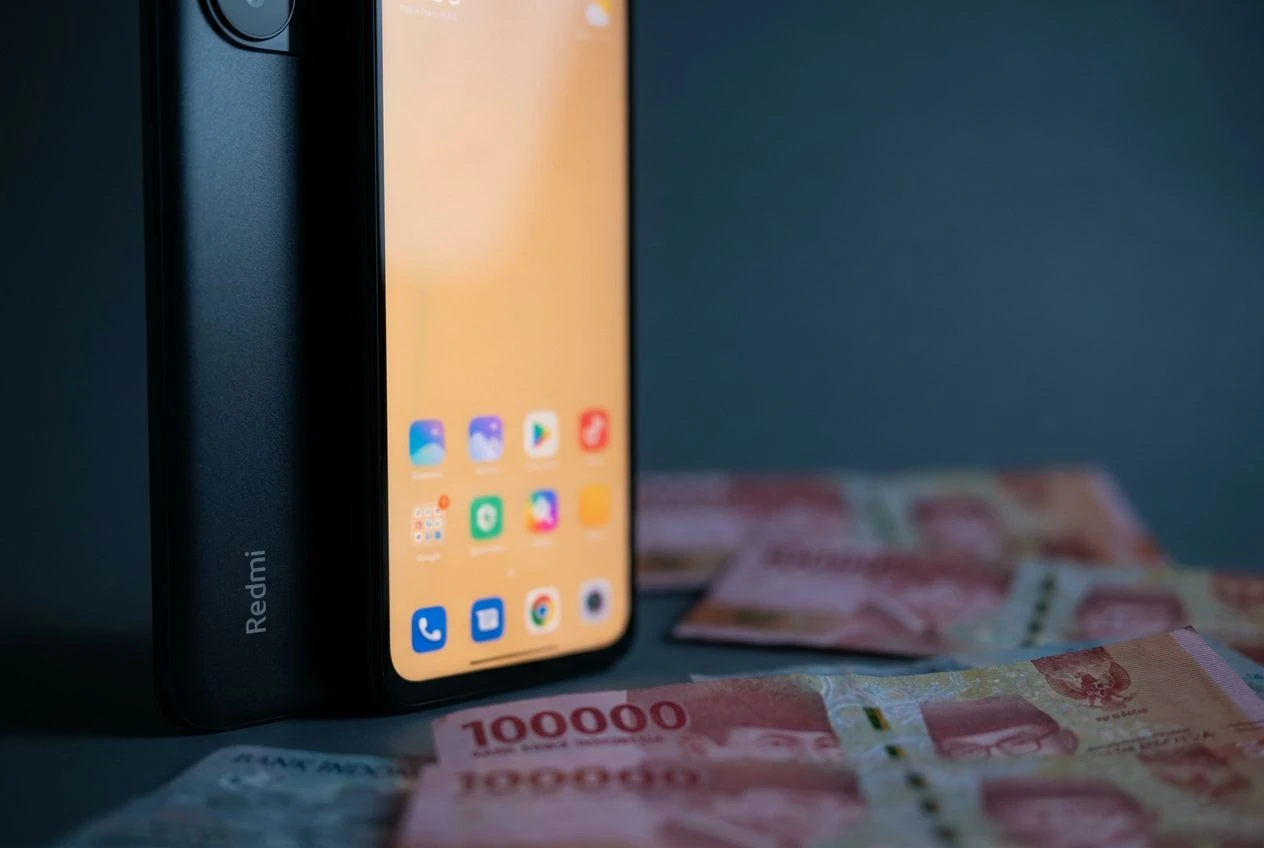
Xiaomi Indonesia warns of phone price hikes as the rupiah hits a record low and a global memory shortage compounds the pressure on budget buyers in 2026.

Xiaomi Indonesia’s marketing director, Andi Renreng, told journalists in Jakarta on June 2 that currency weakness and scarce memory chips would “definitely have an impact” on pricing, even as he declined to name a date for any adjustment. The statement arrived after Xiaomi had already moved prices twice in 2026, once in January across budget sub-brands and again in April, when some models climbed as much as Rp 1 million above their launch prices. A day later, the Indonesian rupiah hit IDR 18,028 per dollar, its lowest point on record.
Southeast Asia’s largest smartphone market is now absorbing two independent cost pressures at once. The rupiah is down more than 7% against the dollar year-to-date, the worst performance of any major Asian currency in 2026, while a structural shortage of consumer-grade DRAM (dynamic random-access memory) has pushed component prices to their highest level in over a decade. Redmi and Poco, Xiaomi’s high-volume budget sub-brands, sit directly where both forces are hitting hardest.
Twice Already This Year
Xiaomi’s 2026 price adjustments in Indonesia predate the June warning by months. In January, models including the Redmi 15C (6/128 GB) moved from Rp 1.6 million to Rp 1.75 million. The April round was more significant: the update to Xiaomi Indonesia’s official site and e-commerce listings on April 1 included increases across Redmi, Poco, and flagship lines, reflecting what the company describes as periodic reviews of market conditions.
- Rp 1 million increase on the Xiaomi 15T (12/256 GB) since its September 2025 launch, rising from Rp 6.5 million to Rp 7.5 million by April 2026
- Rp 400,000 cumulative increase on the Redmi 15 (8/128 GB) since launch, from Rp 2.1 million to Rp 2.5 million
- Approximately 1,500 yuan (about Rp 3.7 million) extra per 12 GB/512 GB memory and storage package compared to Q1 2025, per Xiaomi President Lu Weibing’s disclosure in early April
Lu Weibing’s cost disclosure placed Indonesia’s retail adjustments in their global context: Xiaomi was paying four times more per high-capacity memory package than it had a year earlier. IDC’s analysis of the ongoing shortage notes that DRAM and storage together represent 15 to 20% of the total production cost for mid-range devices, compared with 10 to 15% for flagship models, meaning budget sub-brands have proportionally less room to absorb cost shocks before passing them on.
Xiaomi said it is adjusting product strategy to stay competitive across Indonesia’s price segments, focusing on what it considers the most relevant devices for each market tier. The approach gives some flexibility, potentially trimming specifications on future models rather than raising retail prices outright. The June 2 message left no ambiguity about the direction of travel. “I am not saying no, and I am not saying yes. But will it have an impact? Yes, it will definitely have an impact. The dollar is up, memory is still scarce, of course those factors matter,” he told reporters.
The Rupiah at an All-Time Low
The rupiah breached IDR 18,000 per dollar for the first time on record on June 3, reaching IDR 18,028. Josua Pardede, chief economist at Permata Bank, described 18,000 as a “psychological threshold” for market investors, signaling weakening confidence in Indonesia’s fiscal position and external accounts. The currency sat near IDR 18,012 two days later, with TradingEconomics data showing the rupiah heading into a tenth consecutive weekly decline, down approximately 7.5% against the dollar year-to-date.
The pressures driving it are layered. Global oil prices spiked following the US-Israeli conflict over Iran, eroding Indonesia’s trade surplus: the April figure narrowed to its lowest since 2020 for a country that imports more oil than it exports. Foreign holdings of Indonesian government bonds fell to a near 20-year low as of June 2. Forex reserves dropped $2 billion in April to $146.2 billion, a near two-year low, as Bank Indonesia (Indonesia’s central bank) drew down reserves to defend the currency.
Bank Indonesia hiked its benchmark rate by 50 basis points to 5.25% in May, the first increase in two years, and progressively tightened rules on foreign currency purchases, requiring documentation for dollar transactions above $25,000 per month. Fitch and Moody’s both revised Indonesia’s sovereign credit outlook earlier this year, adding institutional investor caution on top of the domestic fundamentals. None of these responses have halted the slide.
Indonesia’s domestic pressures have compounded the external shock. Annual inflation accelerated to 3.08% in May from 2.42% in April, driven by food and transport costs. Budget smartphone buyers are thus facing higher device prices from global supply chains at the same moment purchasing power is under pressure from domestic inflation and a depreciating currency. For every brand importing dollar-denominated components and pricing products in rupiah, the year’s 7.5% depreciation translates into a direct cost increase on every unit built before any supply-chain dynamics are added.
AI’s Tax on Consumer Memory
Memory Capacity Flows to AI Data Centers
The DRAM shortage that Andi cited alongside the exchange rate has a specific structural cause. According to IDC’s 2026 memory market analysis, data centers consumed an estimated 70% of all memory chips produced globally this year, up from roughly 20 to 30% as recently as 2022. Samsung Electronics, SK Hynix, and Micron Technology, the three companies controlling over 95% of global DRAM production, have redirected cleanroom capacity toward high-bandwidth memory (HBM, the chip type used in AI accelerators) at the direct expense of the LPDDR consumer chips in smartphones. IDC describes this as “a zero-sum game” for consumer device makers: every wafer routed to a data center is one that does not reach a phone.
OpenAI’s Stargate Project alone was estimated to require approximately 900,000 wafers per month of DRAM output at full buildout, per reports published in late 2025. Hyperscalers have placed open-ended orders with memory suppliers, accepting whatever supply is available regardless of price. Consumer electronics manufacturers, operating on annual procurement cycles with smaller order volumes, lack the leverage to secure equivalent allocation priority.
DRAM Prices Hit a Decade High
TrendForce, a Taiwanese semiconductor research firm, forecast mainstream DRAM contract prices rising 58 to 63% quarter-on-quarter in Q2 2026, with NAND Flash prices jumping 70 to 75% in the same period, the largest quarterly increases in a decade. A Goldman Sachs research note from February 2026 described the developing cycle as “the most severe memory chip supply shortage in 15 years.” Supply growth offers no short-term relief: IDC projects DRAM expanding at just 16% year-on-year in 2026 and NAND at 17%, both well below the historical 20 to 30% range.
The cost has shown up directly in Xiaomi’s corporate results. The company’s 57% year-on-year profit decline in Q1 2026 reflected the memory burden at scale, with Lu Weibing describing the spike as a magnitude “beyond imagination.” IDC research manager Jitesh Ubrani estimated that consumer electronics, including smartphones, could see price increases of 10 to 20% by the end of 2026. Kearney’s PERLab analysis, published this year, placed the structural imbalance at least through 2030.
All Five Top Brands, the Same Squeeze
Xiaomi is not the only brand that has raised prices in Indonesia in 2026. Vivo confirmed retail increases effective from March 18, citing semiconductor and memory cost increases. OPPO moved prices on A-series and OnePlus models from March 16. Multiple Indonesian technology outlets reported in March that Oppo, Vivo, Xiaomi, Infinix, and ASUS had all raised prices, with adjustments concentrated in the mid-range and budget tiers that drive the highest volumes in Indonesia’s price-sensitive market.
| Brand | Q1 2026 SEA Shipments | Year-on-Year Change |
|---|---|---|
| Samsung | 4.6 million units | +4% |
| OPPO | 4.2 million units | −17% |
| Xiaomi | 3.7 million units | −12% |
| Transsion | 3.4 million units | −10% |
| Vivo | 2.1 million units | −27% |
According to Omdia’s Q1 2026 Southeast Asia smartphone market data, Indonesia was the region’s hardest-hit major market, recording 7.2 million unit shipments and a 17% year-on-year decline. A softer-than-expected Ramadan buying season and elevated channel inventory from Q4 2025 both contributed. Regional average selling prices across Southeast Asia hit a record $349 in the quarter, rising on repricing rather than stronger underlying demand.
The brands pulling back most aggressively from volume also show the steepest average selling price gains. Vivo’s 27% shipment decline in the period came alongside a 28% increase in its regional average selling price, reflecting a deliberate pullback from loss-making entry-level models. OPPO’s average selling price grew 26% on a 17% shipment decline. Xiaomi, whose 2025 Indonesia market share stood at around 19% and whose product mix skews toward Redmi and Poco, saw Q1 2026 SEA shipments fall 12% as higher prices dampened channel appetite, per Omdia.
A Narrowing Floor for Budget Buyers
The sooner you buy, the better. There is a possibility prices will rise again.
Andi Renreng, Marketing Director at Xiaomi Indonesia, said this on June 2 to consumers who had been holding off on a purchase. The warning lands most directly in Redmi and Poco territory. The Poco C85 (6/128 GB) launched at Rp 1.549 million and now lists at Rp 1.949 million. The Redmi 15 (8/128 GB) sits at Rp 2.5 million, Rp 400,000 above its launch price. These are devices Indonesian consumers compare directly against Infinix and Tecno models, whose parent company Transsion posted a 10% Q1 2026 volume decline from the same cost dynamics.
With every major brand in Indonesia having raised prices or signaled increases by mid-2026, the competitive ceiling that historically limited how far any one manufacturer could push retail prices has weakened. A buyer switching from Xiaomi to OPPO or Vivo to escape a Redmi price adjustment encounters the same cost dynamics. Devices under Rp 3 million, which drove Indonesia’s smartphone market expansion over the past decade, are now where the cost increases are landing most visibly.
Ubrani’s 10 to 20% consumer electronics price increase estimate from IDC covers the full year to December 2026 and assumes current memory supply conditions persist. The Kearney PERLab timeline through 2030 reflects the structural reason: the hyperscalers, including Microsoft, Google, Meta, and Amazon, have locked in long-term HBM supply agreements that guarantee their allocation priority over consumer device makers for years ahead. Supply-side relief, if it arrives, is years away regardless of how individual brands adjust their pricing or product mix.
The shortage is forecast to run through at least 2027, and the rupiah has not found a floor since January.


Sony’s 10 Percent Disc Drop Leaves the 2028 Cutoff Intact

Chip Allocation Sidelines the Base iPhone 18 This Fall

Miami-Dade Fights the Vice City Brand It Already Wears

IFA 2026 Awards Put Tecno Ahead of Flagship Phones

USB-C Gadgets Made the Junk Drawer Rechargeable

Pixel 11 Pro Asks $1,099 for a Light Google Locked

The iPhone Ultra Sells Two Retired Minis as One Foldable

Google Opens Gmail to Voice and Gates Docs Live

Lenovo Prices the IdeaPad Vibe Against Apple’s $699 Neo

Xbox Caps Game Pass Cloud Gaming at 15 Hours

Oracle Cuts 21,000 Jobs in a Year, Cites AI in 10-K Filing

Fable 5 and Mythos 5 Return as US Lifts Anthropic Export Controls

SpaceX’s Google Deal Turns a Rocket Company Into a Cloud Landlord

CD Projekt Red Co-CEO: Redemption Arc Isn’t Done, Witcher 4 in 2027

XPL Rallies 30% Ahead of Plasma One Card Tier Launch

Google Search Profiles Build a Follow Graph Inside Discover

DGO App Brings Rs 549 Mobile Pass for FIFA World Cup 2026 in Nepal

Moonshot AI Targets $30 Billion in China’s Fastest AI Funding Sprint

Oppo’s ColorOS 17 Eligibility List Leaves A-Series Buyers Behind

Microsoft Xbox Layoffs Start in July as Sharma Slams 3% Margin
-
 AI3 months ago
Oracle Cuts 21,000 Jobs in a Year, Cites AI in 10-K Filing
-
 AI2 months ago
Fable 5 and Mythos 5 Return as US Lifts Anthropic Export Controls
-
 AI3 months ago
SpaceX’s Google Deal Turns a Rocket Company Into a Cloud Landlord
-
 GAMING3 months ago
CD Projekt Red Co-CEO: Redemption Arc Isn’t Done, Witcher 4 in 2027
-
 CRYPTO3 months ago
XPL Rallies 30% Ahead of Plasma One Card Tier Launch
-
 NEWS3 months ago
Google Search Profiles Build a Follow Graph Inside Discover
-
 APPS3 months ago
DGO App Brings Rs 549 Mobile Pass for FIFA World Cup 2026 in Nepal
-
 AI3 months ago
Moonshot AI Targets $30 Billion in China’s Fastest AI Funding Sprint