
AI
An AI Digital Twin for Bilingual Aphasia Posts a Mixed Result
A Boston University team tested an AI digital twin in a bilingual aphasia trial. The group result was flat; the model’s individual signal was captured.

A Boston University team has tested a bilingual aphasia digital twin in a double-blind randomized controlled trial, putting an AI simulation of a stroke survivor’s two languages through a rigorous test of whether it can pick the most productive language for speech rehabilitation. The study, published in npj Digital Medicine in 2026, did not move the group average: patients who received therapy in the language the model recommended did not outperform those who followed a placebo. The deeper finding, the researchers said, is that the model accurately captured each patient’s individual language profile once the cohort was sorted by language history and by the severity of their aphasia.
Director of the Center for Brain Recovery Swathi Kiran led the work, drawing on a brain-inspired model called BiLex that the team has refined across years of bilingual aphasia research. The trial lands in the middle of National Aphasia Awareness Month, with the model’s full implementation already public on GitHub and the paper’s de-identified patient data open to outside researchers on request.
A Digital-Twin Trial Lands in Aphasia Rehabilitation
The paper, titled “Predicting bilingual aphasia treatment outcomes using digital twins: a double-blind randomized controlled trial,” is the work of Kiran and eight co-authors drawn from Boston University’s Center for Brain Recovery, the University of Texas at Austin’s Department of Computer Sciences, and the University of Barcelona. It was published in the published BiLex trial paper, a Nature Portfolio journal, and was funded primarily by the U.S. National Institutes of Health under grant U01 DC014922.
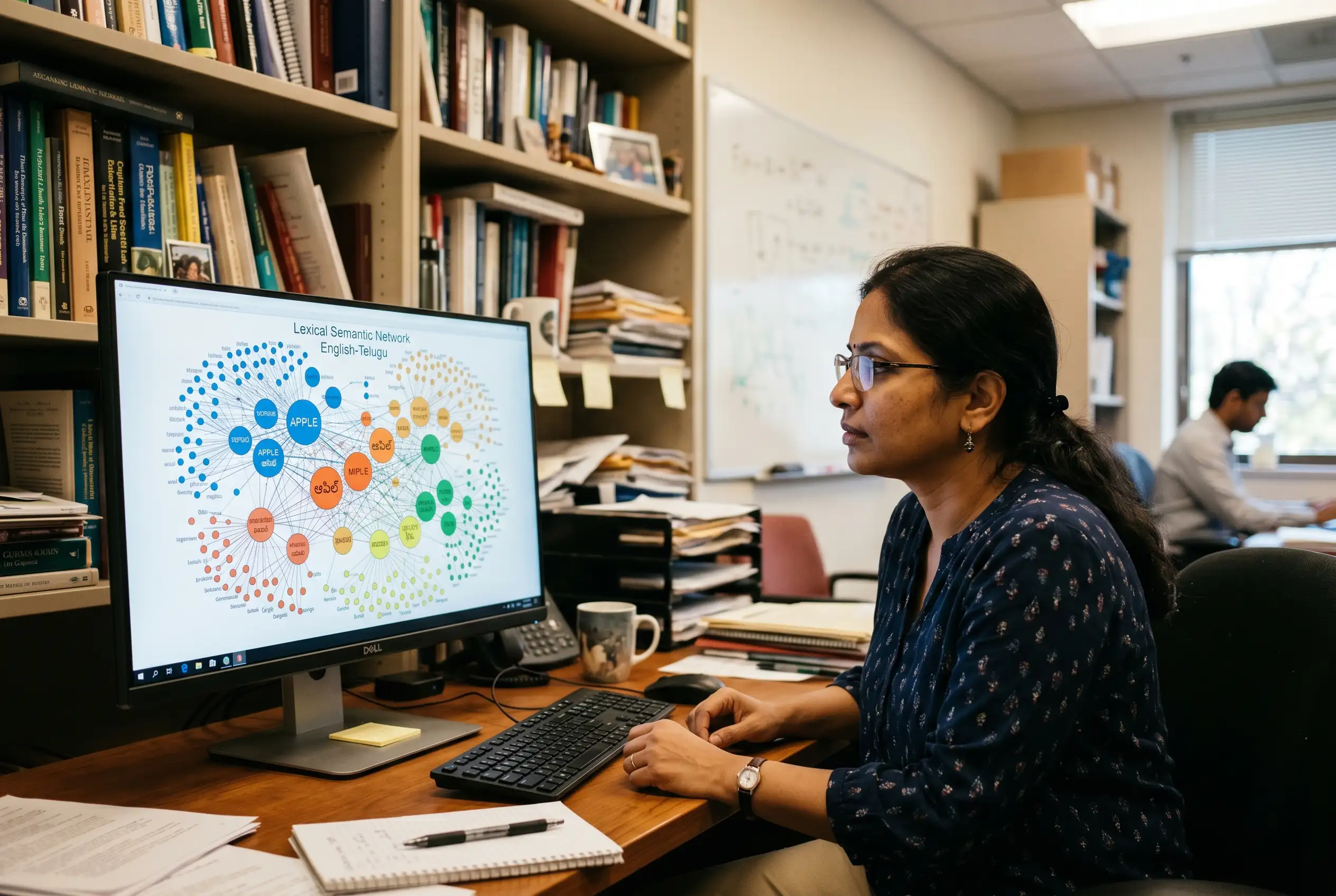
BiLex is what the team calls a neural digital twin: a computational copy of one patient’s bilingual language system that researchers can probe, lesion, and rehabilitate in software before touching a real brain. The model is brain-inspired, with separate systems for each of the patient’s languages and shared meaning representations in between, and it is trained on the individual’s lifetime language history and the specific profile of their post-stroke impairment. The code is publicly available in the public BiLex code repository, and a federal data-sharing agreement will release de-identified patient data to outside researchers on request. The approach gives the lab a way to test what-ifs cheaply and at scale, without putting new therapies in front of any patient first.
About 2 million people in the United States live with aphasia, according to the National Aphasia Association’s 2026 prevalence snapshot, and the condition’s profile frames the stakes of any new tool that promises to tailor rehabilitation to the individual. Aphasia is most often a stroke disorder, and the figures in the same snapshot show how widely it can reach. A handful of figures from that snapshot:
- 2,000,000+ people in the U.S. live with aphasia
- 38% of people who have a stroke get aphasia at the time of the stroke
- 25% of stroke survivors still have aphasia three months later
- $6,323.45 average yearly cost per person with post-stroke aphasia (medical bills, lost work, and caregiving)
- 67.8% of Americans have heard the word “aphasia”
What BiLex Does That a Therapist Cannot
BiLex is not the kind of AI most people have started using at home. BiLex does not write essays, generate pictures, or answer questions from a general training set; it is a model of how one specific patient organizes and uses words across two languages. Kiran’s lab publishes more than 30 papers a year refining the underlying ideas, and the version that went into the trial is the most recent in a line of models built for bilingual aphasia research.
Before the trial, the researchers trained BiLex on each patient’s language background and the specific pattern of impairment their stroke left behind, so the model became, in their words, a digital twin of that individual’s language system. From there, the team could run thousands of in-silico experiments: simulate a lesion in one language pathway, run a course of therapy in either language, and watch how the patient’s modeled recovery changed. The point was not to replace the speech-language pathologist but to give the clinician a quantitative basis for choosing a therapy language in a population that, until now, has had almost no empirical guidance. Kiran said the system is built so it can be “experimented on” safely, letting researchers simulate brain damage and try different therapies in software to see what works best for a specific patient. That is the difference between a digital twin and a chatbot: the model is meant to be probed, not prompted.
Two approaches to choosing a therapy language, side by side:
| Aspect | Standard clinical decision | BiLex digital twin |
|---|---|---|
| Who decides | The patient, or the clinician’s working language | A computational model trained on the patient’s lifetime language history and post-stroke profile |
| What guides the choice | A stated preference, or a default to English | Simulated outcomes across both languages, run before any real therapy begins |
| How patient-specific the plan is | Broadly applied across patients | A digital twin unique to that individual |
The Group Result Was Flat. The Individual Story Wasn’t.
The trial’s headline result is a flat one. When the researchers compared patients who received therapy in the language BiLex recommended against those who followed a placebo, there were no significant group-level differences in outcome. The patients who took the model’s advice did not, on average, do better than the comparison group.
Step inside the cohort, however, and the picture changes. When Kiran’s team sorted the patients by language history and by the severity of their aphasia, the digital twin simulations accurately captured the differences in how each individual was responding. The group-level flattening was hiding real variation between people.
The digital twin was able to capture differences in an individual’s language profiles accurately.
The trial also confirmed something the field had suspected for years: that bilingual aphasia recovery is genuinely complex, and that the same patient can respond differently depending on which language is being targeted, when, and in what order. Kiran said the work shows the potential of computational models to guide rehabilitation strategies. The paper’s conclusion makes the same point, framing the next step as a more refined model, a more granular subgroup analysis, and a tighter integration with the existing clinical workflow. Whether the digital twin’s individual-level signal can be sharpened enough to guide real therapy decisions is the open question the trial hands to the next phase of research.
Why Bilingual Aphasia Breaks the Standard Playbook
Aphasia usually results from a stroke, most often an ischemic one in which a clot obstructs a vessel that supplies blood to the brain. The most common site is the left middle cerebral artery, the region that supplies blood to parts of the brain involved in speech and language.
The resulting impairment almost always reaches every language a multilingual patient speaks, not just one, because the stroke disrupts the network that lets a bilingual or multilingual brain switch between them. That is the puzzle BiLex was built to address, and it is also why the trial’s clinical design matters as much as its computational design. The aphasia symptoms, causes, and treatment overview from the NIH’s NIDCD catalogs the consequences of that disruption, which can include trouble speaking, understanding speech, reading, writing, or gesturing, and the list of affected functions overlaps heavily across the languages a person knows.
Before the study, Kiran said, the choice of which language to focus on in therapy was almost always made in one of two ways. Clinicians asked the patient which language they wanted to work in, then provided therapy in that language, “whether or not that was an optimal language.”
Or, if the clinician did not speak either of the patient’s languages, they provided therapy in English, “whether or not that was an optimal language.” The first option put the patient’s preference above any evidence about which language was the better target. The second option handed the decision to the dominant language of the country’s healthcare system, a particularly heavy default for immigrant and refugee patients. The trial puts that decision to a quantitative test.
Massachusetts Governor Maura Healey proclaimed June 2026 National Aphasia Awareness Month in the state on June 3, a step Boston University’s Aphasia Resource Center helped secure alongside three local ambassadors. The state-level recognition arrived in the same month the digital-twin trial was published, and the timing reflects how slowly public awareness of the condition has caught up with its scale.
From Clinical Intuition to Model-Guided Therapy
The team’s framing of the trial’s result is restrained. Kiran said the work shows that “bilingual aphasia recovery is complex and demonstrates the potential of computational models to guide rehabilitation strategies,” and the paper’s conclusion makes the same point, with the next step framed as a more refined model, more subgroup analysis, and tighter integration with the existing clinical workflow.
Two practical steps follow from where the trial lands. The first is a deeper set of subgroup analyses, so the next iteration of the model can tell clinicians, in advance, which subpopulations of bilingual aphasia patients are most likely to benefit from being steered into a particular language. The second is a tighter integration with the existing clinical workflow, so a BiLex recommendation lands inside a therapy plan rather than alongside it. Software-based digital twin testing for wearable rehabilitation robots has begun to appear in adjacent medical work, a sign of how broadly the model-first approach is spreading. The field’s next task in aphasia is to find out whether an individual-level signal strong enough to guide therapy can be coaxed out of a model of this kind without needing thousands more patients to do it.
Frequently Asked Questions
What is aphasia?
Aphasia is a language disorder that affects the ability to speak, understand speech, read, write, or gesture. It is most often caused by a stroke, and the most common stroke site in aphasia is the left middle cerebral artery, which feeds the parts of the brain that handle speech and language. About 2 million people in the United States live with the condition, per the National Aphasia Association.
What is a “digital twin” in this context?
BiLex is an AI system designed to act as a computational copy of one patient’s bilingual language system. The model is trained on the patient’s lifetime language history and on the specific pattern of impairment their stroke left behind, and it is meant to be “experimented on” in software rather than prompted like a chatbot. Researchers can use the model to simulate brain damage and to test which therapy approach would work best for that individual.
Did the AI actually beat the placebo?
Not at the group level. When patients who received therapy in the language BiLex recommended were compared with those who followed a placebo, there were no significant differences in outcome. When the patients were sorted by language history and severity, however, the digital twin simulations accurately captured the differences in each individual’s response.
How is bilingual aphasia different from monolingual aphasia?
In multilingual patients, the impairment almost always reaches every language a person speaks, not just one, because the stroke disrupts the network that lets a bilingual or multilingual brain switch between them. The choice of which language to focus on in therapy has, until now, had almost no empirical basis. The most common underlying stroke is an ischemic one, in which a clot obstructs a vessel that feeds the language regions of the brain.
When might BiLex be available in clinics?
The researchers are framing the next step as a deeper round of subgroup analyses and tighter integration with the existing clinical workflow. They have not committed to a clinical deployment timeline, and they have made the full implementation of the model available on GitHub so other groups can test and extend it. Per Kiran, the team expects that, as computational modeling advances, these tools will become increasingly valuable for personalized therapy.
Disclaimer: This article summarizes a published clinical research study and is for informational purposes only. It does not constitute medical advice. Aphasia is a medical condition; readers affected by it should consult a qualified speech-language pathologist or physician. Figures are accurate as of publication.


South Korea Retail Investors Face Reckoning After KOSPI AI Rally Collapses

Surrey AI Maps Three Heart Attack Paths and Their Molecular Roots

Germany Locks Neutral Apple ATT Prompts Across Most of Europe

Apple’s 5% EU Fee Quietly Rewrites Alternative App Store Math

Apple’s EU Fee Truce Cuts Complexity but Leaves Rivals Fuming

Pixel 11 Pro Fold Trades Thinness for Durability and Seven-Year Stay

Mayo AI Flags HCM Obstruction From Everyday Ultrasound Videos

Indian Brands Quietly Scale Landmark Screens and Home Tech

Navin Vatsa Turns Grief Into a Lifetime of Quiet Seeing

Google Bets Pixel 11 Agentic AI Will Redefine Phones

Oracle Cuts 21,000 Jobs in a Year, Cites AI in 10-K Filing

Fable 5 and Mythos 5 Return as US Lifts Anthropic Export Controls

SpaceX’s Google Deal Turns a Rocket Company Into a Cloud Landlord

CD Projekt Red Co-CEO: Redemption Arc Isn’t Done, Witcher 4 in 2027

XPL Rallies 30% Ahead of Plasma One Card Tier Launch

Google Search Profiles Build a Follow Graph Inside Discover

DGO App Brings Rs 549 Mobile Pass for FIFA World Cup 2026 in Nepal

Moonshot AI Targets $30 Billion in China’s Fastest AI Funding Sprint

Oppo’s ColorOS 17 Eligibility List Leaves A-Series Buyers Behind

Microsoft Xbox Layoffs Start in July as Sharma Slams 3% Margin
-
 AI2 months ago
Oracle Cuts 21,000 Jobs in a Year, Cites AI in 10-K Filing
-
 AI2 months ago
Fable 5 and Mythos 5 Return as US Lifts Anthropic Export Controls
-
 AI3 months ago
SpaceX’s Google Deal Turns a Rocket Company Into a Cloud Landlord
-
 GAMING2 months ago
CD Projekt Red Co-CEO: Redemption Arc Isn’t Done, Witcher 4 in 2027
-
 CRYPTO2 months ago
XPL Rallies 30% Ahead of Plasma One Card Tier Launch
-
 NEWS3 months ago
Google Search Profiles Build a Follow Graph Inside Discover
-
 APPS2 months ago
DGO App Brings Rs 549 Mobile Pass for FIFA World Cup 2026 in Nepal
-
 AI3 months ago
Moonshot AI Targets $30 Billion in China’s Fastest AI Funding Sprint