
AI
Google Home’s Gemini Update Turns Cameras Into Scene Sensors
Google Home cameras now use Gemini scene understanding to trigger smart home routines based on what they see. The Premium Advanced plan at $20/month is in Public Preview across 19 countries.

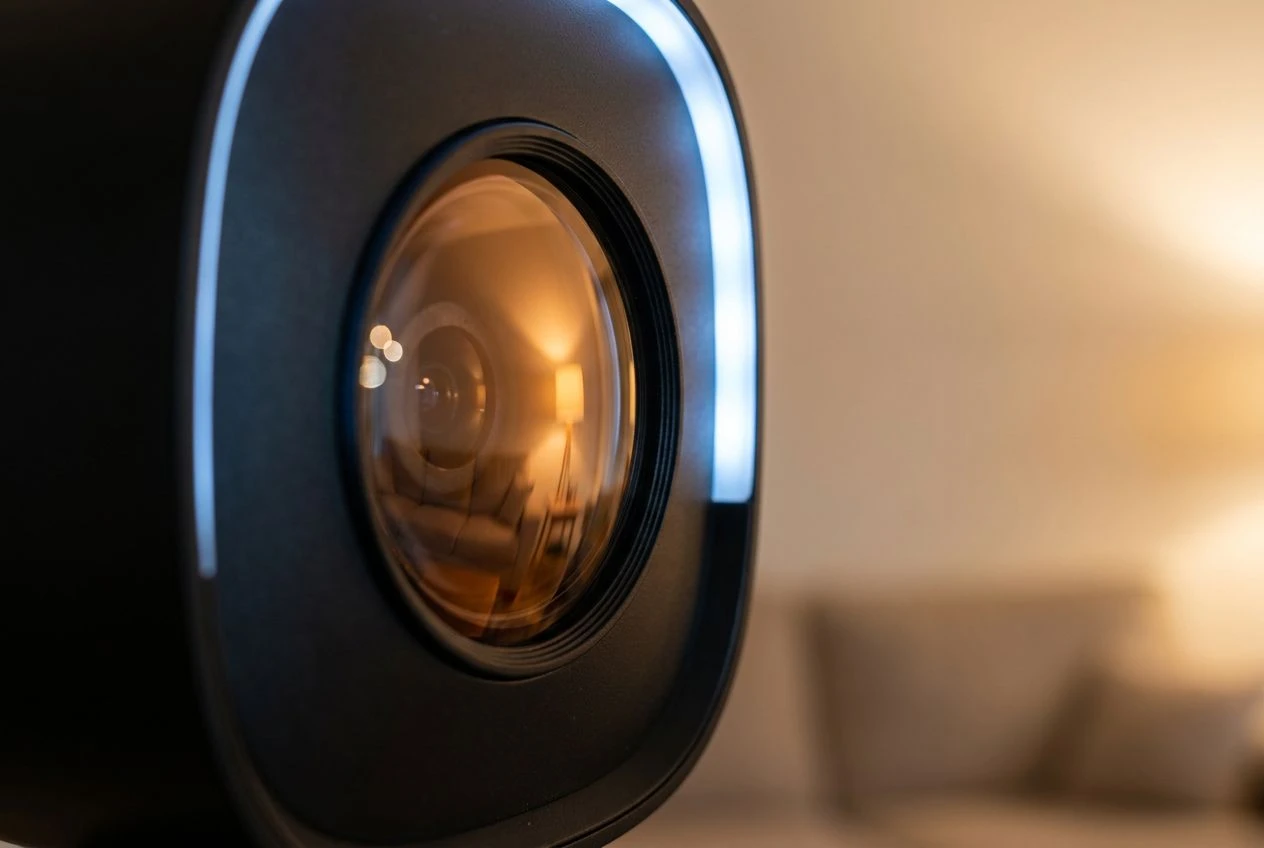
Google Home cameras can now recognize what they see and use that context to fire smart home routines, a shift that started rolling out to Public Preview users across 19 countries on May 27. Powered by Gemini’s scene understanding inside Google Home app version 4.17, the system means a raccoon near a trash bin can switch on security lighting, or a yoga mat with someone settled onto it can queue a meditation playlist without a voice command. Getting there requires compatible hardware and a Google Home Premium Advanced subscription at $20 per month.
From Motion Alert to Scene Report
The old logic of a smart home camera was blunt: something moved, a ping fires. Gemini for Home started shifting that in October 2025, when Google first gave Nest cameras the ability to produce AI-generated descriptions of what they captured. A generic “person detected” became “Alex holding flowers.” “Motion near bins” became “raccoon near trash bin.” The notification layer got smarter; the automation layer stayed mechanical.
The May update moves that visual reading out of notifications and into the engine that runs your routines. As Google’s May release notes for Google Home describe it, the update enables every other smart home device to use Gemini’s scene understanding as an automation starter. Nest cameras, and select third-party Gemini Built-in cameras, become what Google calls “intelligent, natural-language catalysts for your entire Google Home setup.”
Because your cameras can now actually understand what they see, your smart home can automatically react to almost anything happening around your home.
That’s Google’s framing from the May 27 rollout. The practical gap from old detection to new is wider than it looks on a changelog. Motion zones required drawing a box on a camera feed and accepting every false positive that crossed it. A Gemini visual trigger takes an English description of the condition and fires only when the model matches it, which means fewer phantom alerts and considerably more targeted responses.
The update also extends multi-step voice command handling, so a single spoken request can chain a timer, a light change, and a podcast start without separate instructions for each. That capability works through voice rather than camera feeds, but both run on the same Gemini inference layer that Google is building as the reasoning center for the home.
Setting Up a Visual Trigger
The automation editor in Google Home app version 4.17 handles setup without preset categories or drop-down menus. Open the editor, type a phrase describing what the camera should watch for, select the camera, and attach the action. The phrasing matters considerably.
Google’s guidance for the feature narrows what works well into four practical principles:
- Describe visible objects and scenes the camera can resolve clearly: “package on the porch,” “cat in the backyard,” “car leaving the driveway.”
- For people in general, use neutral terms: “person,” “people,” “someone,” or “child” all work reliably.
- For specific individuals, enable Familiar Faces first, then reference the saved name in the trigger phrase.
- Avoid descriptions that require the model to infer intent or context beyond what’s physically visible in the frame.
Familiar Faces makes the system considerably more specific. Google’s examples include “[specific individual] gets out of car” as a trigger, which can then unlock a door, open smart blinds, or adjust thermostat settings. The combination of ambient scene recognition and individual recognition is what separates this from earlier firmware-based detection, where a camera could tell you a person or vehicle was present but not which person or which vehicle.
One current limit worth flagging: visual automations fire on the presence of a condition, not its absence. “Person has left the driveway” doesn’t work as a trigger yet. And Google’s guidance to describe only what the camera can clearly see reflects where the model’s confidence sits now: lower light and tighter angles produce fewer reliable matches, so triggers are only as good as the camera’s visibility of the scene.
The Price of Vision
Visual automations sit exclusively in the Advanced tier of Google Home Premium’s two-tier subscription. The Standard plan at $10 per month covers 30 days of event video history, intelligent camera alerts, Gemini Live on smart speakers and displays, and the “Help me create” natural-language automation builder. Upgrading to the Advanced plan at $20 per month (or $200 per year on an annual commitment) adds the visual automation triggers, 60 days of event history, 10 days of continuous video recording, and daily Home Brief summaries of camera activity.
| Feature | Standard ($10/mo) | Advanced ($20/mo) |
|---|---|---|
| Event video history | 30 days | 60 days |
| Continuous video recording | None | 10 days |
| Gemini visual automations | No | Yes |
| Daily camera summaries (Home Brief) | No | Yes |
| Natural language video search | No | Yes |
| Gemini Live on speakers and displays | Yes | Yes |
Existing subscribers moved into this structure automatically when Google renamed the service in October 2025. Nest Aware became the Standard plan; Nest Aware Plus became Advanced, with no change to billing for current subscribers.
On the hardware side, Nest Cams and Nest Doorbells work with the feature from day one. Google expanded its Gemini Built-in program at Google I/O 2026 to make it easier for third-party manufacturers to qualify their devices. Walmart’s $35 Onn Outdoor Camera Plug-In was among the first to reach certification, which keeps the hardware entry point low for households that don’t already own a Nest device. The subscription costs the same regardless of which qualified camera is mounted.
Households already paying for Google AI Pro or AI Ultra get Google Home Premium included in their existing plans at no extra charge. For everyone else, Public Preview enrollment is required alongside the subscription, and the feature is currently limited to US English users.
The Race to Own the Camera Layer
Amazon’s Parallel Move
Google isn’t alone in treating the camera as a platform. Amazon’s Ring launched what it called an AI app store in March 2026, opening its camera installed base to third-party developers building AI applications for use cases ranging from elder care monitoring to small business security. The architecture differs: Ring opens a marketplace where developers bring their own models, while Google gates its own Gemini capabilities behind a subscription tier. The strategic logic is identical for both, which is turning cameras already installed in millions of homes into software platforms that generate recurring revenue without needing the homeowner to buy new hardware.
Ring’s hardware growth has a natural ceiling. There are only so many doorbells a household needs. A developer ecosystem running AI services on cameras already mounted on doors is a different kind of business, with higher margins and no hardware refresh cycle to depend on. Google faces the same ceiling and is solving it the same way, through its own inference layer rather than an open marketplace.
Apple’s response has been measured. HomeKit Secure Video ties camera cloud storage to iCloud+ subscription tiers but stops well short of AI-driven automations. Apple’s expected push into HomeKit camera hardware in 2026 would deepen its category presence, but the company has historically favored on-device processing over server-side inference, a choice that offers a privacy advantage alongside a capability ceiling, because the scale of scene understanding Google is running through Gemini isn’t currently feasible inside camera hardware without a cloud inference step.
Cameras as an Ecosystem On-Ramp
The hardware price in this race has become nearly incidental to the business model. The Onn Outdoor Camera at $35 qualifies for Gemini visual automations alongside a Nest Cam at several times the cost. What Google is charging for is monthly AI inference on the camera feed, and the fee doesn’t shift based on which camera is mounted. That’s precisely why Google expanded the Gemini Built-in program: more qualifying hardware means more households on the subscription, regardless of who manufactured the camera.
Industry research from IndexBox on the connected home surveillance market projects an 8.2% compound annual growth rate through 2035, with revenue shifting toward “higher-margin software and cloud services” as hardware sales become “a gateway for recurring subscription revenue from advanced AI features.” Google’s subscription architecture in May 2026 follows that model closely.
The switching cost compounds quietly. A household that builds routines around what their cameras see has rebuilt part of their home’s logic on top of Google’s inference layer. Moving to a rival ecosystem means starting over on every automation. The Onn camera costs $35 and takes ten minutes to mount. The habits the camera creates cost $20 a month and get harder to leave with each routine added.
When the System Gets It Wrong
Google attaches a specific warning to the visual automation feature: don’t use it for time-sensitive situations or life safety purposes. That’s not standard legal hedging. Running camera footage through a large language model adds real processing time, enough that a smoke detection routine or a critical security trigger would miss the window where it actually matters. Google says this directly, and any household building routines around what cameras see should treat it as a genuine constraint rather than a footnote in the terms.
The hallucination problem sits alongside the latency one. Large language models produce outputs probabilistically, which means a visual trigger can fire on a misread: a plastic bag drifting near the driveway, a shadow with the right silhouette, morning light hitting a surface from an unusual angle. In a notification, that’s a nuisance. In a routine that unlocks a door or cuts power to a system, the error carries more weight. Google’s Gemini for Home support documentation recommends checking responses for accuracy and notes that “results may vary,” an acknowledgment that the model isn’t infallible on home camera inputs.
There’s also a data trade embedded in the feature. Google gives users the option to share video clips for “product improvement and AI model training,” and separately notes it doesn’t use personal data to train generative AI models outside Google Home. But visual automations depend on server-side inference, meaning camera feeds travel beyond the local network to be processed. Apple’s on-device processing model is the exception in this space; Google’s approach sits closer to Ring’s and Amazon’s, where the intelligence lives in the cloud and the privacy trade is built into the architecture.
The practical guidance is that visual automations suit low-stakes ambient uses well: a raccoon trigger that switches on lights, a yoga mat routine that dims them. Something going wrong in those contexts is recoverable. Building routines around critical security functions or presence detection the household depends on is a different calculation, and Google’s own guidance makes that boundary explicit.
The software that turns cameras into context sensors started rolling out May 27; Google’s new Home Speaker, announced in October 2025 to anchor the broader push in the living room, still has no confirmed ship date.


Sony’s 10 Percent Disc Drop Leaves the 2028 Cutoff Intact

Chip Allocation Sidelines the Base iPhone 18 This Fall

Miami-Dade Fights the Vice City Brand It Already Wears

IFA 2026 Awards Put Tecno Ahead of Flagship Phones

USB-C Gadgets Made the Junk Drawer Rechargeable

Pixel 11 Pro Asks $1,099 for a Light Google Locked

The iPhone Ultra Sells Two Retired Minis as One Foldable

Google Opens Gmail to Voice and Gates Docs Live

Lenovo Prices the IdeaPad Vibe Against Apple’s $699 Neo

Xbox Caps Game Pass Cloud Gaming at 15 Hours

Oracle Cuts 21,000 Jobs in a Year, Cites AI in 10-K Filing

Fable 5 and Mythos 5 Return as US Lifts Anthropic Export Controls

SpaceX’s Google Deal Turns a Rocket Company Into a Cloud Landlord

CD Projekt Red Co-CEO: Redemption Arc Isn’t Done, Witcher 4 in 2027

XPL Rallies 30% Ahead of Plasma One Card Tier Launch

Google Search Profiles Build a Follow Graph Inside Discover

DGO App Brings Rs 549 Mobile Pass for FIFA World Cup 2026 in Nepal

Moonshot AI Targets $30 Billion in China’s Fastest AI Funding Sprint

Oppo’s ColorOS 17 Eligibility List Leaves A-Series Buyers Behind

Microsoft Xbox Layoffs Start in July as Sharma Slams 3% Margin
-
 AI3 months ago
Oracle Cuts 21,000 Jobs in a Year, Cites AI in 10-K Filing
-
 AI2 months ago
Fable 5 and Mythos 5 Return as US Lifts Anthropic Export Controls
-
 AI3 months ago
SpaceX’s Google Deal Turns a Rocket Company Into a Cloud Landlord
-
 GAMING3 months ago
CD Projekt Red Co-CEO: Redemption Arc Isn’t Done, Witcher 4 in 2027
-
 CRYPTO3 months ago
XPL Rallies 30% Ahead of Plasma One Card Tier Launch
-
 NEWS3 months ago
Google Search Profiles Build a Follow Graph Inside Discover
-
 APPS3 months ago
DGO App Brings Rs 549 Mobile Pass for FIFA World Cup 2026 in Nepal
-
 AI3 months ago
Moonshot AI Targets $30 Billion in China’s Fastest AI Funding Sprint