
NEWS
Nigeria’s Second South Africa Evacuation Lands, Onyema Calls Boycott
Nigeria’s second chartered evacuation flight from South Africa has landed in Lagos, as Air Peace CEO Allen Onyema calls for a non-violent economic boycott.

A chartered South African Airways flight carrying over 100 Nigerians landed in Lagos late on Wednesday night, the second batch of citizens evacuated from South Africa since xenophobic attacks began sweeping the country in April. The arrival coincided with a public call from Air Peace Chairman and CEO Allen Onyema for a non-violent economic boycott of South Africa, putting an economic edge on a humanitarian operation the Federal Government had framed as a consular duty.
The Nigeria evacuation South Africa xenophobia crisis has now moved beyond emergency flights into a longer contest over trade, investment, and the rules under which Nigerians live in their host country. Onyema’s boycott appeal, broadcast two days before the plane touched down, reframes the diplomatic dispute from one of consular protection into one of capital and commercial access. The Federal Government has yet to endorse an investment boycott, though it has covered the cost of every flight so far. Officials at Murtala Muhammed International Airport received the latest group and began the same documentation and profiling process used for the first batch.
A Chartered SAA Flight Out of Johannesburg
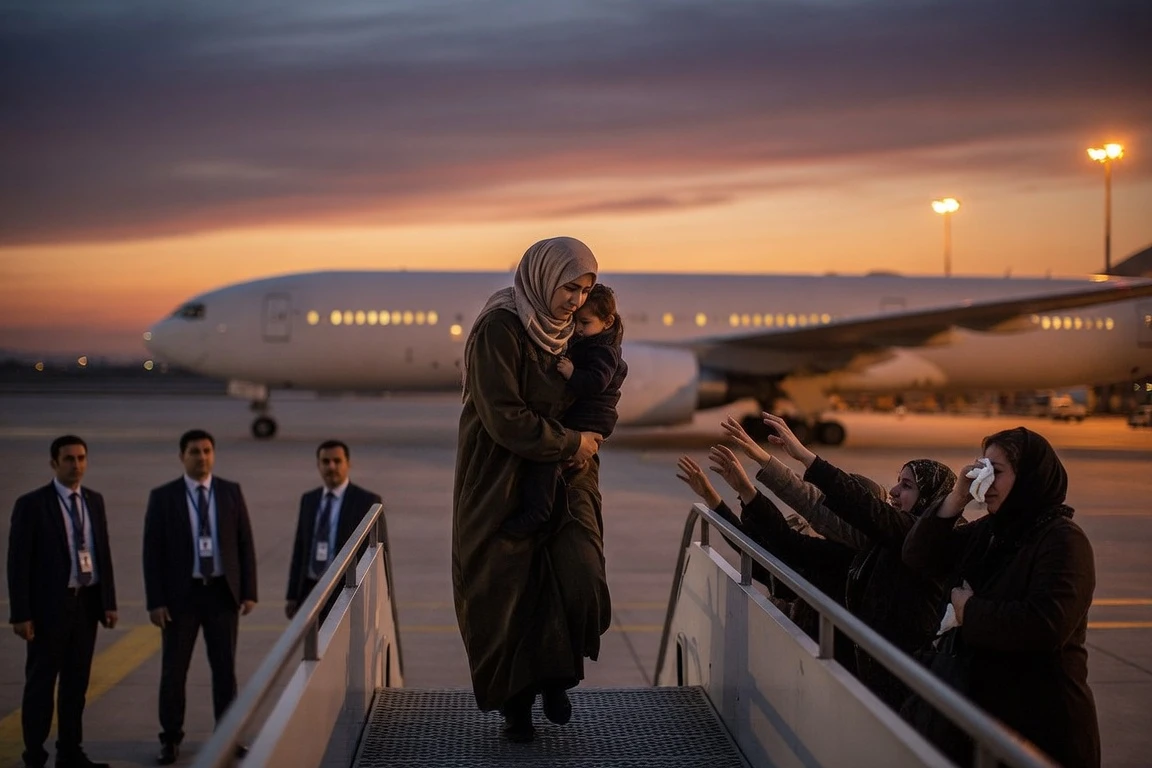
Another batch of over 100 Nigerians stranded in South Africa departed O.R. Tambo International Airport around 3:45pm South African time on Wednesday aboard a chartered South African Airways Airbus A330-300, the latest batch of Nigerian returnees from Johannesburg. The flight was the second evacuation leg of an exercise the Federal Government says will continue until every willing citizen is home. The returnees included adult men and women, children and minors.
Before boarding, Nigerian High Commission staff collected the returnees’ passports and phones, promising to return the phones once the aircraft was airborne. A consular officer told the group the devices had been taken to prevent disruption of the special flight. The same official advised compliance with arrival protocols in Lagos. After touchdown at Murtala Muhammed International Airport, the returnees were to undergo documentation and profiling before being reunited with their families.
Why the Operator Switched to a Charter
The operator change is the clearest sign that the Federal Government’s logistics are still settling. The first batch of 258 Nigerians had been flown in by Air Peace, the Air Peace first batch of 258 returnees in Lagos, the opening move of five evacuation flights President Bola Tinubu had approved to bring home more than 1,000 registered Nigerians. The Ministry of Foreign Affairs had originally scheduled the inaugural flight for Monday, then postponed it to Wednesday for “unforeseen logistical considerations.”
Minister of Foreign Affairs Bianca Odumegwu-Ojukwu said extra time was needed to complete screening being run with South African authorities. She disclosed that more than 1,000 Nigerians in South Africa had joined the screening, and that the number seeking repatriation continued to climb. The Nigerian High Commission in Pretoria also negotiated waivers with host authorities so Nigerians with immigration-related offences could leave through the repatriation programme. Those waivers, Odumegwu-Ojukwu said, were the condition that allowed the second flight to leave with passengers who might otherwise have been detained.
The transition from Air Peace to a chartered SAA wide-body marks the second operational shift inside a week. After the first phase, the Federal Government temporarily suspended the evacuation to address logistical and administrative issues. An evacuation exercise scheduled for last week was abruptly cancelled. The Guardian reported that the change to a charter was driven by capacity and routing rather than politics. Officials at the High Commission in Pretoria coordinated directly with South Africa’s Department of Home Affairs on each flight.
Onyema’s Non-Violent Retaliation
Two days before the second flight took off, Onyema turned the dispute into a commercial one. In an interview on Arise Television on Tuesday, Onyema issued Onyema’s call for a non-violent economic boycott of South Africa, urging Nigerians to halt investments there while inviting South African capital into Nigeria on terms set by Abuja. “The kind of retaliation I want is for Nigerians to boycott South Africa. Don’t invest in that country,” Onyema said on the programme. “If they want to invest in our country, let them bring their money and invest, and you determine how they take the money back. That is non-violence action,” he added.
Onyema framed the call as a direct counter to street-level reprisals and a parallel to Senator Adams Oshiomhole’s earlier demand for retaliation. He accused South African authorities of failing to deploy police or military during attacks on foreign nationals, questioning how crowds could march into homes and demand papers without security intervention. He also rejected the closure of South African-owned companies such as MTN, which employ Nigerians and in which Nigerians hold shares. The non-violent economic boycott he proposed would, in his telling, send a stronger signal than any street protest.
- 258 Nigerians in the first batch flown by Air Peace to Lagos
- over 100 Nigerians in the second batch flown by chartered SAA Airbus A330-300
- more than 1,000 Nigerians registered for voluntary evacuation
- 2 Nigerians confirmed killed in the latest wave of attacks
- June 30 deadline set by anti-migrant demonstrators for undocumented migrants to leave
The First Wave, in Numbers
The scale of what the chartered flights are absorbing shows up in the first wave. On June 11, the inaugural Air Peace flight carried 258 Nigerians, men, women and children, to the cargo terminal at Murtala Muhammed International Airport in Lagos. Officials from the Ministry of Foreign Affairs and the Nigerians in Diaspora Commission met the returnees on the tarmac and began the same documentation and reintegration routine now being used for the second group.
Acting High Commissioner Alexander Temitope Ajayi, who led the receiving team, said the returnees had endured a “traumatic experience” but were in “good spirits.” He disclosed that more than 1,000 Nigerians had registered for voluntary evacuation, and that President Tinubu had set up a daily hotline between the Presidency, the Ministry of Foreign Affairs, and the Nigerian mission in South Africa from the day the crisis started. A crisis monitoring unit was tracking the situation across South Africa’s nine regions, where anti-immigrant demonstrations had spread in recent weeks. The Federal Government, Ajayi said, had fully paid Air Peace for the operation, and the Presidency had directed as far back as April that all Nigerians willing to return home should be evacuated.
Two Nigerians were confirmed killed before the flights began: Amaramiro Emmanuel and Ekpenyong Andrew. The violence that drove them home erupted in April, with videos circulating online showing groups of South Africans assaulting Black foreign nationals and ordering them to leave the country.
The trauma registered in the returnees’ first interviews. One man told Premium Times that “Life and death was 50-50 for us” during the worst of the attacks; Minister of State for Foreign Affairs Sola Enikanolaiye told them migration “should not be criminalised” and pointed to the contribution of Nigerian professionals working in South African hospitals and universities.
The June 30 Deadline Closes In
The pace of the evacuation is now being driven by a deadline set by anti-migrant groups inside South Africa. Demonstrators have demanded that undocumented migrants leave the country by June 30, a date that has compressed the repatriation timeline for several governments on the continent. The Punch, reporting Onyema’s interview, tied the deadline directly to the Nigerian evacuation push as the immediate trigger for the chartered flights. The Federal Government has not endorsed the demonstrators’ deadline but is operating on the same compressed calendar.
Several governments have launched their own repatriation flights or pledged funding for them, matching Abuja’s all-expenses-paid approach. The response now spans at least six African governments, all of whom have advised citizens against non-essential travel to South Africa. For Nigerians still weighing whether to board, the choice has tightened with each passing week.
- Nigeria
- Ghana
- Kenya
- Malawi
- Zimbabwe
- Mozambique
The Nigerian Stake in South African Business
Onyema’s boycott call runs into a complication the Air Peace chief himself named. He said on Arise Television that he opposed any move to shut down South African-owned companies in Nigeria, including MTN, the telecoms operator with millions of Nigerian subscribers and a workforce that includes Nigerian staff. “I don’t want Nigeria to close down MTN or other people’s businesses. Some Nigerians have shares in those companies. After all, those people are employing Nigerians too,” he said on the programme. The distinction he drew matters because MTN’s Nigerian unit is one of the largest foreign employers in the country, and South African brands operate across banking, retail, and fast-moving consumer goods.
A full economic retaliation would hit Nigerian shareholders, workers and consumers before it touched Pretoria’s balance of payments. Onyema’s call is therefore selective: pull investment from South Africa, but keep South African capital and operations inside Nigeria.
I support Adams Oshiomhole, who says that we should retaliate. But the kind of retaliation I want is what we are doing. Let us do non-violence retaliation. I don’t want Nigerians to go to the street and attack any South Africans.
Onyema, Chairman and CEO of Air Peace, spoke those words on Arise Television on Tuesday. The Federal Government has said it will continue assisting Nigerians willing to return as it monitors developments in South Africa. The chartered SAA Airbus A330-300 that landed in Lagos on Wednesday night is the second plane in that pipeline; the Federal Government has promised the operation will continue until every willing citizen is home.


Lenovo Prices the IdeaPad Vibe Against Apple’s $699 Neo

Xbox Caps Game Pass Cloud Gaming at 15 Hours

GTA 6 DualSense Controllers Follow Sony’s Usual $84.99 Script

South Korea Retail Investors Face Reckoning After KOSPI AI Rally Collapses

Surrey AI Maps Three Heart Attack Paths and Their Molecular Roots

Germany Locks Neutral Apple ATT Prompts Across Most of Europe

Apple’s 5% EU Fee Quietly Rewrites Alternative App Store Math

Apple’s EU Fee Truce Cuts Complexity but Leaves Rivals Fuming

Pixel 11 Pro Fold Trades Thinness for Durability and Seven-Year Stay

Mayo AI Flags HCM Obstruction From Everyday Ultrasound Videos

Oracle Cuts 21,000 Jobs in a Year, Cites AI in 10-K Filing

Fable 5 and Mythos 5 Return as US Lifts Anthropic Export Controls

SpaceX’s Google Deal Turns a Rocket Company Into a Cloud Landlord

CD Projekt Red Co-CEO: Redemption Arc Isn’t Done, Witcher 4 in 2027

XPL Rallies 30% Ahead of Plasma One Card Tier Launch

Google Search Profiles Build a Follow Graph Inside Discover

DGO App Brings Rs 549 Mobile Pass for FIFA World Cup 2026 in Nepal

Moonshot AI Targets $30 Billion in China’s Fastest AI Funding Sprint

Oppo’s ColorOS 17 Eligibility List Leaves A-Series Buyers Behind

Microsoft Xbox Layoffs Start in July as Sharma Slams 3% Margin
-
 AI2 months ago
Oracle Cuts 21,000 Jobs in a Year, Cites AI in 10-K Filing
-
 AI2 months ago
Fable 5 and Mythos 5 Return as US Lifts Anthropic Export Controls
-
 AI3 months ago
SpaceX’s Google Deal Turns a Rocket Company Into a Cloud Landlord
-
 GAMING2 months ago
CD Projekt Red Co-CEO: Redemption Arc Isn’t Done, Witcher 4 in 2027
-
 CRYPTO3 months ago
XPL Rallies 30% Ahead of Plasma One Card Tier Launch
-
 NEWS3 months ago
Google Search Profiles Build a Follow Graph Inside Discover
-
 APPS3 months ago
DGO App Brings Rs 549 Mobile Pass for FIFA World Cup 2026 in Nepal
-
 AI3 months ago
Moonshot AI Targets $30 Billion in China’s Fastest AI Funding Sprint