
AI
Samsung Readies 1,000 Trillion Won AI Plan; Confirmation Still Pending
Samsung is set to unveil a 1,000 trillion won AI plan on June 29. The proposal remains unconfirmed and rests on regional politics, power, water, and talent.

Samsung Group will unveil a 1,000 trillion won (about $648 billion) AI investment plan on Monday, June 29, according to the Maeil Business Newspaper. Samsung Electronics and SK Hynix declined to comment on the report, which would direct spending across chips, AI data centers, batteries, and displays in South Korea’s southwest over the next decade.
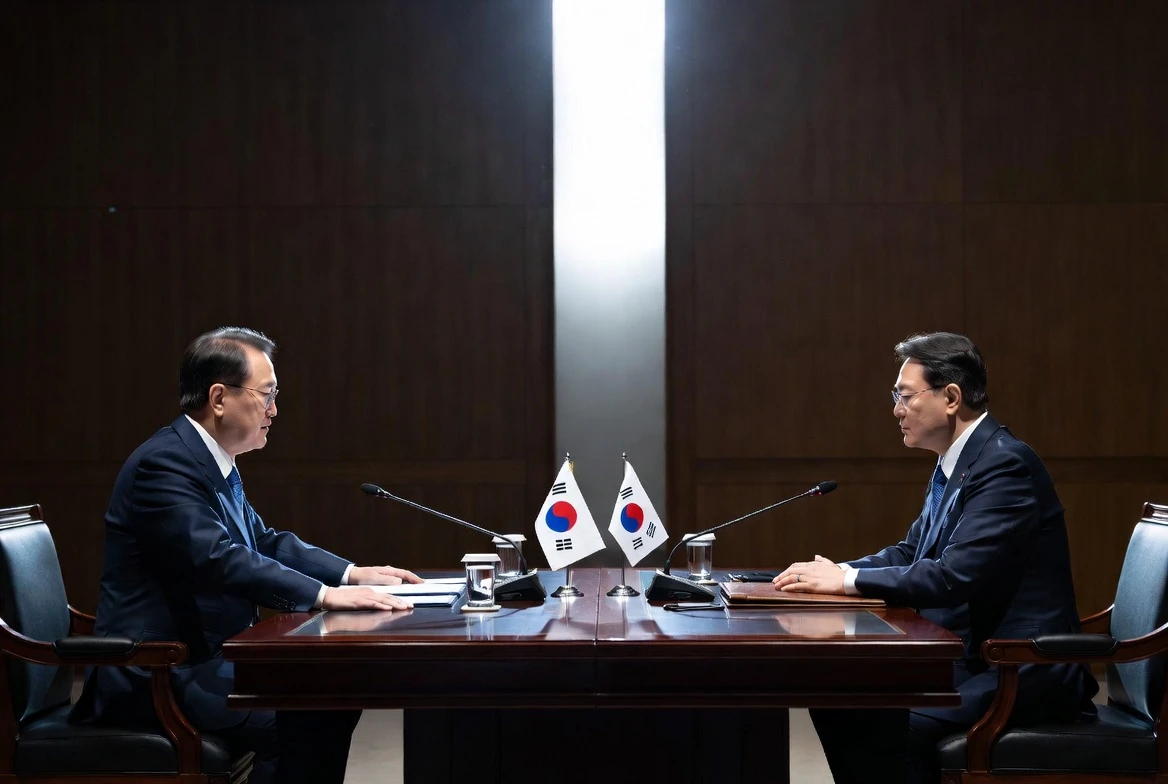
President Lee Jae Myung is set to host both companies at a “National Mega Project” briefing at the presidential office in Seoul. The proposal would also test Lee’s regional rebalancing push: the Seoul area still accounts for 52.8 per cent of national output, and the chip complex would anchor the “five poles and three special zones” architecture Lee has promoted since taking office.
Samsung’s 1,000 Trillion Won Bet, Still Unconfirmed
Samsung’s reported 1,000 trillion won ($648 billion) AI investment plan rests on a single newspaper report, not on a company statement or a regulatory filing. The Maeil Business Newspaper disclosed the proposal on June 26, citing no sources. Samsung and SK Hynix declined to comment when asked.
The head of the president’s policy staff, Kim Yong-beom, told a journalists’ forum this week that “very unusual” figures will be announced on Monday. He framed the briefing as one of three “mega-projects” to drive a national leap forward, without detailing the plan’s content. The wire story detailing Samsung’s trillion-won pledge runs through a media layer that neither the conglomerate nor its rival has signed off on. The conglomerate’s silence leaves every figure in the proposal as a press claim, not a company commitment.
That thin confirmation matters because the plan, if executed, would carry South Korea through the next phase of AI-era chip manufacturing. It would also anchor a regional-development push that reaches well beyond Seoul. Lee’s office has tied the briefing to a broader effort to spread the country’s industrial base into provinces the capital region can no longer absorb.
Where the Money Goes, by Sector
The breakdown of how Samsung would spend the money varies by report. Maeil Business told other outlets that the proposal would channel about 300 trillion won toward a chip complex in the southwest, around 60 trillion won to six fabrication plants at Yongin, and more than 350 trillion won to AI infrastructure that includes data centers. The remainder covers batteries, displays, and supporting work. None of the figures are split year-by-year or confirmed by either chipmaker.
| Sector | Reported Amount | Target / Region |
|---|---|---|
| Chip complex in the southwest | About 300 trillion won | Honam region (Gwangju and Jeolla provinces) |
| Yongin fabs | About 60 trillion won | Yongin National Industrial Complex, south of Seoul |
| AI infrastructure including data centers | More than 350 trillion won | Nationwide, sites to be confirmed |
The sectors span Samsung Group’s three flagship subsidiaries. Samsung Electronics’ memory and foundry work, Samsung SDI’s battery operations, and Samsung SDS’ IT services would all draw on the package, though the breakdown between them is not public. The plan also arrives amid reports that executive chairman Lee Jae-yong will unveil a separate data center investment plan in Asan, South Chungcheong Province, on July 2, two business days after Monday’s briefing. That Asan piece is one of the few data-center announcements to surface with a date attached. The wider trillion-won figure, by contrast, has been carried in headlines on the basis of a single newspaper’s report.
Two Chipmakers, One Presidential Briefing
Rival memory maker SK Hynix is also expected to announce spending plans at the same event. The Icheon-based firm has been on its own investment push: chairman Chey Tae-won said earlier this month that he intends to double capacity over the next half decade. SK Hynix is also planning a US$29 billion listing in the United States.
The two chipmakers together account for the bulk of global high-bandwidth memory (HBM) production, the chips that AI training systems stack onto every accelerator card. Samsung Electronics shipped samples of its next-generation HBM4E chip in May and said the chip was faster than its HBM4 product. Samsung’s cumulative sales of sixth-generation HBM chips, known as HBM4, surpassed $1 billion, four months after Samsung became the first in the world to begin mass production and shipments of HBM4 chips in February. The HBM4 milestone is one of the few numbers in this story tied to a company disclosure, not a press leak. SK Hynix, by contrast, has staked its near-term lead on HBM supplies to Nvidia and other AI accelerator vendors.
The room at Monday’s briefing reflects that market gravity. Samsung Electronics chairman Lee Jae-yong and SK Group chairman Chey Tae-won are both expected to attend, along with top executives from Samsung Electronics and SK Hynix. Samsung Electronics is the crown jewel of Samsung Group, South Korea’s biggest conglomerate, which also includes battery maker Samsung SDI and IT services company Samsung SDS. The two executives between them control most of the world’s memory capacity, and most of the pricing power that goes with it.
From a Chip Plan to a Regional Rebalancing
The bigger driver behind Monday’s briefing is not the trillion won itself but where the money would land. President Lee Jae Myung, inaugurated in June 2025, has made balanced regional development a centrepiece of his economic policy. The presidential office read-out on the Honam chip cluster frames the chip investment as the first major test of that push.
The Seoul metropolitan area accounted for 52.8 per cent of South Korea’s gross regional domestic product in 2024. Lee has promoted a plan to establish five regional hubs and three special self-governing provinces to counterbalance that dominance. The investment South Korea attracts over the next decade is intended to seed those hubs. The trillion-won package is the first project sized to make the architecture operational.
- Five regional hubs outside the Seoul metropolitan area, intended to absorb new fabs, data centers, and AI infrastructure
- Three special self-governing provinces, a governance category Lee has pushed since taking office
- A second semiconductor cluster outside the existing Yongin site, with the southwest Honam region under active review
That third piece is the centre of gravity. Kim Yong-beom told reporters at the Kwanhun Club this week that the Seoul metropolitan area is “unlikely to have sufficient space, electricity and water resources to support the next phase of expansion.” Asked whether Honam was the government’s working principle, he replied, “That is the principle we should be working from.”
Honam encompasses Gwangju, North Jeolla, and South Jeolla provinces. Local media have reported that Samsung Electronics is considering Gwangju as a potential investment site. That concentration of attention has put the southwest at the centre of the regional-development experiment. The question for Monday is whether the package commits real fab capacity there, or only the political gesture.
The Constraints the Headline Skips
Kim’s remarks point at the second-order story behind the headline figure. He said on Wednesday that Samsung Electronics and SK Hynix may need to accelerate projects originally slated for the 2040s into the mid-2030s because AI-driven memory demand is growing faster than expected. SK Hynix has already moved its 2044 facility plans forward by a decade, he said, and Samsung’s projects, currently planned through 2048, may need to move up to around 2034 or 2035. The capital region, in his telling, has no room, power or water for the next phase. That framing turns the trillion-won headline from a corporate expansion story into a national-grid story.
The discussions have moved beyond the initial stage and are approaching completion. Once the plan is finalized, the government ministries and the companies will come together to explain it to the public. I expect such an opportunity will arise in the near future.
Kim Yong-beom, presidential chief of staff for policy, made the comments at a forum hosted by the Kwanhun Club, a senior journalists’ association, in Seoul on Wednesday. Kim Yong-beom’s full forum remarks on the regional buildout lay out the constraints in detail. He also stressed that the existing Yongin cluster would not be sacrificed to build a second one elsewhere.
The bottleneck is not money but the grid. South Korea’s electricity supply, transmission, and water systems were sized for the current Yongin and Suwon footprint, not for a second cluster on a new region’s transmission lines. Cooling demand at advanced fabs and AI data centers compounds the load. Renewable generation, advanced transmission, and next-generation grids would need to expand at the same pace as the new fabs, or those fabs would face the same power and water limitations the capital region already runs into.
Skilled Workers Will Decide It
Kim Tae-yun, a professor of administration at Hanyang University, told Reuters the project will rise or fall on talent. “Securing skilled workers will be extremely difficult in the south-west, and that will determine whether the project succeeds or fails,” he said. Without a cutting-edge fab at the centre, he warned, the local economic impact would be limited, and the project would risk becoming little more than a construction project and a real estate boost.
The skills gap is concrete. The Yongin cluster already competes with Samsung’s Suwon headquarters for engineers, technicians, and clean-room specialists. A Honam build would compete with the same labour pool from the opposite direction. SK Hynix and Samsung are also both chasing the same restricted export channels for advanced lithography and packaging tools, which makes the talent question about more than hiring. A fab staffed by stretched workers would risk becoming the very “construction project” Kim warned about.
The resource picture behind Monday’s plan, in sourced figures:
- $1 billion in cumulative Samsung HBM4 sales, four months after February mass production
- $29 billion SK Hynix plans to raise through its US listing
- 43.6 trillion won in Samsung Electronics operating profit last year
- next half decade: SK Hynix chairman Chey Tae-won’s stated timeline to double capacity
The Politics of Where the Fabs Land
The regional angle has become a political flashpoint. Lee’s approval rating has fallen to 51 per cent, the lowest since his inauguration in June 2025, according to a Gallup Korea poll released on June 26. Candidates in multiple regions pitched their areas as the next semiconductor hub ahead of South Korea’s June 3 local elections, with proposals ranging from a 500 trillion won chip complex in the south-west to expanded clusters in Gyeonggi, Chungcheong, and Gangwon.
The opposition has accused the administration of tying investment sites to its party map more than to industrial logic. Local media have reported that Samsung Electronics is considering Gwangju, a key south-western city, as a potential investment site. The broader south-west region, including Gwangju and the Jeolla provinces, is a traditional stronghold of Lee’s Democratic Party. Lee won 49.42 per cent of the national vote in the June 2025 presidential election but secured about 85 per cent in Gwangju and South Jeolla. The vote share and the investment map now line up in the same region.
Where semiconductor factories are built should be decided by companies, not by the president.
Park Sung-hoon, spokesperson for the main opposition People Power Party, made the comment this week. How the AI trade rattled the Kospi this month captures the broader market reaction: an 8.2 per cent plunge on the Kospi triggered the second circuit breaker in a single week as investors weighed how chip-economy winners and losers are sorting out. Investors are watching how Monday’s announcement lands against this backdrop.
The political stakes are concrete. Lee’s “five poles and three special zones” policy needs a flagship project to make the architecture real, and the chip buildout is the most plausible candidate. Honam is the most plausible site, but Kim Tae-yun’s warning about a construction boom is the central risk. Monday’s announcement will tell South Koreans how much of the trillion-won figure is locked in, and how much is still a press report waiting for a company signature.
Frequently Asked Questions
How much is Samsung investing in AI?
Samsung Group is preparing to unveil a 1,000 trillion won investment plan, about $648 billion at the Reuters conversion, to be announced on Monday, June 29. The package covers chips, AI data centers, batteries, and displays over the next decade. Samsung and SK Hynix have declined to comment on the report.
What is in the 1,000 trillion won plan?
Maeil Business reported the package would include about 300 trillion won for a chip complex in South Korea’s southwest, about 60 trillion won for six chip fabrication plants at Yongin, and more than 350 trillion won for AI infrastructure including data centers. The remainder covers batteries, displays, and supporting work.
Why is Samsung investing in the Honam region?
President Lee Jae Myung has pushed for balanced regional development outside Seoul. The greater Seoul area accounted for 52.8 per cent of South Korea’s gross regional domestic product in 2024, and the Lee administration sees the southwest’s land, water, and power profile as better suited to next-generation AI-era chip and data center buildout than the saturated capital region.
When will the investment happen?
The reports do not specify timing within the ten-year horizon. Maeil Business told other outlets the report did not say when the investment would be made. Kim Yong-beom, the president’s policy chief, said some projects originally slated for the 2040s may need to move into the mid-2030s to keep pace with AI-driven memory demand.
Will SK Hynix also invest?
SK Hynix is expected to announce its own spending plan at the same presidential briefing on Monday. SK Hynix has signalled plans to expand production capacity to meet runaway demand for memory from the AI industry, and chairman Chey Tae-won said earlier this month that he intends to double capacity over the next half decade. The company is also planning a US$29 billion US listing.


Bit Reactor bets studio future on Star Wars Zero Company

AI Price Cuts Tighten Power Demand and Rewrite Capacity Deals

Honor Robot Phone sale starts with a gimbal that cuts both ways

Ethereum’s price lag hides its growing role as finance infrastructure

Designkit turns product photos into e-commerce videos at scale

Germany Forces Neutral Apple ATT Prompts Across Most of Europe

Korea AI Job Shift Erases Youth Roles While Seniors Gain

Meta Faces States Over Child Safety Claims in Oakland Trial

Nuke tests leave asteroid fragments fate still open

Apple must strip ATT warning prompts after German ruling

Fable 5 and Mythos 5 Return as US Lifts Anthropic Export Controls

Oracle Cuts 21,000 Jobs in a Year, Cites AI in 10-K Filing

SpaceX’s Google Deal Turns a Rocket Company Into a Cloud Landlord

CD Projekt Red Co-CEO: Redemption Arc Isn’t Done, Witcher 4 in 2027

XPL Rallies 30% Ahead of Plasma One Card Tier Launch

Google Search Profiles Build a Follow Graph Inside Discover

DGO App Brings Rs 549 Mobile Pass for FIFA World Cup 2026 in Nepal

Moonshot AI Targets $30 Billion in China’s Fastest AI Funding Sprint

Microsoft Xbox Layoffs Start in July as Sharma Slams 3% Margin

Oppo’s ColorOS 17 Eligibility List Leaves A-Series Buyers Behind
-
 AI2 months ago
Fable 5 and Mythos 5 Return as US Lifts Anthropic Export Controls
-
 AI2 months ago
Oracle Cuts 21,000 Jobs in a Year, Cites AI in 10-K Filing
-
 AI2 months ago
SpaceX’s Google Deal Turns a Rocket Company Into a Cloud Landlord
-
 GAMING2 months ago
CD Projekt Red Co-CEO: Redemption Arc Isn’t Done, Witcher 4 in 2027
-
 CRYPTO2 months ago
XPL Rallies 30% Ahead of Plasma One Card Tier Launch
-
 NEWS2 months ago
Google Search Profiles Build a Follow Graph Inside Discover
-
 APPS2 months ago
DGO App Brings Rs 549 Mobile Pass for FIFA World Cup 2026 in Nepal
-
 AI2 months ago
Moonshot AI Targets $30 Billion in China’s Fastest AI Funding Sprint