
AI
WEF Names 100 2026 Technology Pioneers Building AI’s Backbone
WEF picks 100 start-ups from 23 countries for its 2026 Technology Pioneers cohort, focused on AI agent infrastructure, energy systems, and compute.

The World Economic Forum named 100 early-stage start-ups from 23 countries to its 2026 Technology Pioneers cohort on 10 June. The list, announced in Geneva, shows where frontier capital is heading next, away from more chatbots and into the plumbing, power, and physical backbone those systems will need.
Two clusters dominate this year’s class. Eight companies are building the software foundations for autonomous AI agents, and another eight are chasing the energy and compute bottleneck that threatens to throttle the AI build-out. India sends nine companies, the most of any single country, while the Republic of Korea logs its strongest showing to date.
- 100 start-ups in the 2026 Technology Pioneers cohort
- 23 countries represented
- 9 companies from India, the most of any single country
- $26 billion in physical AI and robotics venture capital last year, up from $4.2 billion in 2019
- 2x the power data centres are expected to consume by 2030
The Agent Economy Now Needs Plumbing
AI investment has spent three years climbing the application layer, funding chatbots and vertical wrappers that sit on top of foundation models. The money is now sliding deeper, into the infrastructure that lets those applications act on the world. The Forum calls this shift an AI infrastructure layer, and eight of the 2026 pioneers are building it. AI accounts for more than 60% of all global venture capital, the Forum says, and the agent-economy bets are pulling from that pool.
These companies, none of which existed as commercial products three years ago, sit at the seams of an agent economy where software buys, bills, identifies itself, and signs contracts without a human in the loop. Skyfire provides verified identity and payments for AI agents. Paid handles billing, pricing, and subscription management for agent services. VESSL AI orchestrates GPU workloads at scale, and Adaption builds AI that learns continuously without expensive retraining cycles. Inception develops diffusion-based large language models the company says run several times faster than pattern-recognising autoregressive architectures, and Odyssey builds world models for agents that learn through simulation to predict and interact with the world.
Underpinning every one of those agent-economy plays is a physical infrastructure problem the start-ups cannot solve alone. That problem is energy.
| Company | What it builds |
|---|---|
| Skyfire | Verified identity and payments for AI agents |
| Paid | Billing, pricing, and subscription management for agent services |
| VESSL AI | GPU workload orchestration at scale |
| Adaption | AI that learns continuously without expensive retraining |
| Inception | Diffusion-based large language models |
| Odyssey | World models for agents that learn through simulation |
Eight Pioneers Are Chasing the Power Bottleneck
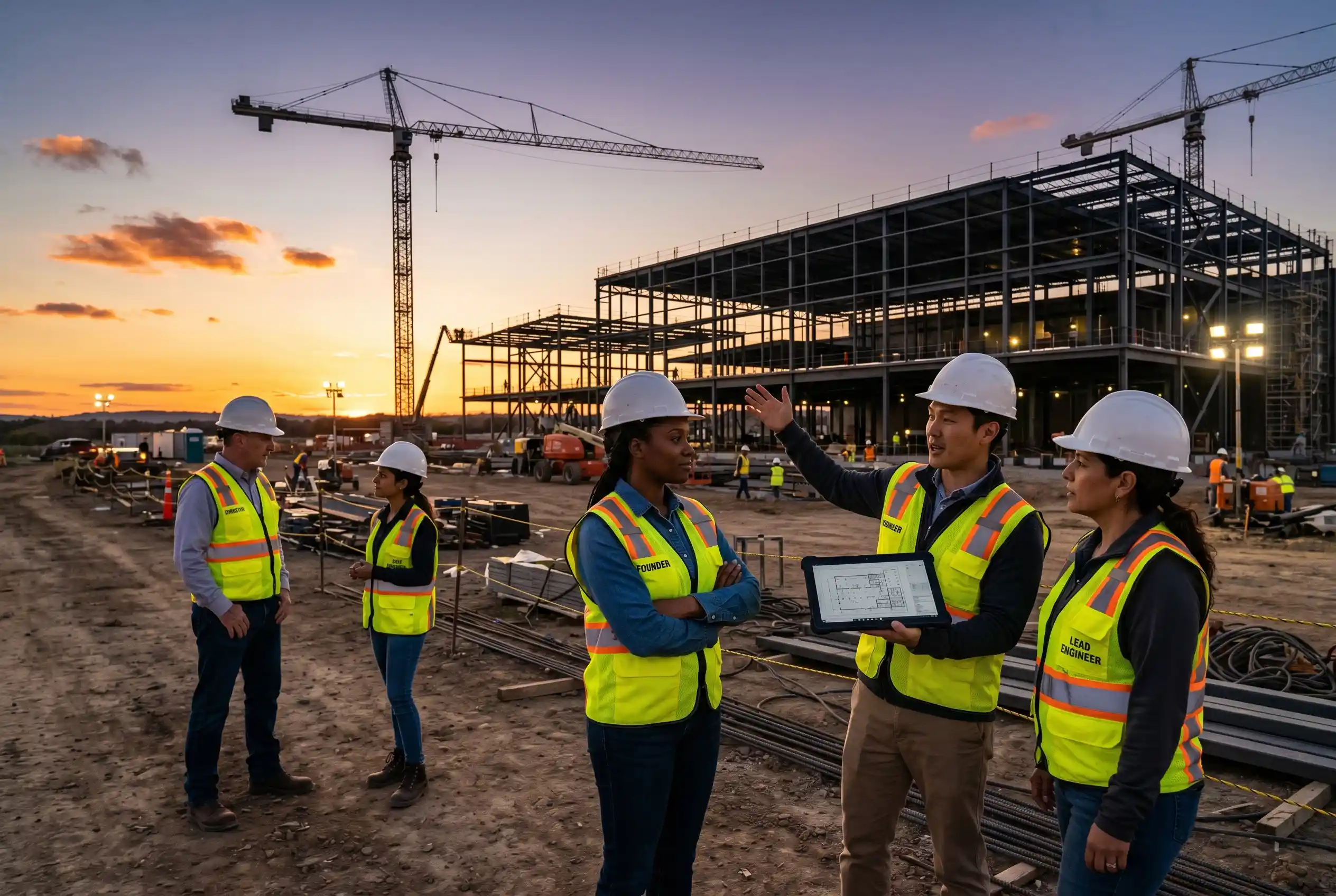
Data centres are expected to consume twice as much power by 2030 because of surging AI demand, the Forum’s analysis says. Eight of the 2026 Technology Pioneers are working on that equation from different angles, and the breadth of their approaches shows there is no dominant solution yet. The Forum groups them under the convergence of energy and compute.
Emerald AI and GridCARE work on grid orchestration and capacity forecasting for data-centre developers, helping facilities get online by using unused capacity on existing grids. IONATE is building hybrid intelligent transformers to replace ageing grid hardware. Overview Energy proposes beaming space-based solar via satellite to Earth’s grids. Realta Fusion and Mazama Energy are targeting clean power generation at industrial scale, in compact modular fusion systems and in geothermal energy that extracts heat from subsurface superhot rocks respectively.
Power to Hydrogen and Pure Lithium round out the cluster with new approaches to energy storage. Hyperscalers and start-ups are funding geothermal, fusion, space-based solar, hydrogen, and advanced batteries in parallel, and the 2026 cohort has companies working in all five. None has broken out, and eight of a hundred pioneers working the same seam puts the energy-compute interface at the top of the 2026 class by headcount.
The same convergence is showing up at national scale. A Thai conglomerate has committed to a multi-billion-dollar AI data centre build that pairs power and compute under one roof, a separate case of the same logic, as Thailand’s AI data centre push takes shape.
Where Is Frontier Tech Now Being Built?
The 2026 cohort is also a map of where frontier innovation is now being financed. India has the largest single-country showing in the 2026 class, with most of its entries focused on deep-tech and space, including 9 companies. The Republic of Korea records its strongest representation to date, with five companies working in AI and quantum computing.
The wider distribution reflects a cohort that the Forum says is deepening a trend that began with the 2025 class. Companies from the Middle East, Latin America, and South-East Asia are strengthening their presence in emerging technology hubs. Saudi Arabia’s intella is addressing a critically underserved language technology gap with Arabic-first speech AI built for 400 million speakers. Colombia’s Quipu is using AI credit assessment to bring informal workers into the formal financial system.
The cohort is now spread across 23 countries, with India, South Korea, Saudi Arabia, and Colombia all marking new or expanded presences in the 2026 class.
- India (9 companies): deep-tech and space innovation, the largest single-country showing in the cohort
- Republic of Korea (5 companies in AI and quantum): the country’s strongest representation to date
- Saudi Arabia (intella): Arabic-first speech AI for 400 million speakers
- Colombia (Quipu): AI credit assessment for informal workers
Two Kinds of Founders Dominate the List
The Forum identified two founder archetypes that recur through the 2026 class. The first is the lab veteran, a scientist-founder or researcher who has spent decades in a laboratory before commercialising the work. Several of the cohort’s most technically demanding companies fit this profile, from quantum interconnects in Japan to fermentation-based biomanufacturing in India. The second is the repeat builder, an infrastructure founder who has already exited the layer beneath their current company and is now tackling the next one up. The Forum flags GridCARE’s Amit Narayan, who built a software solution for virtual power plants and distributed energy resources before tackling grid AI, and RLWRLD’s Junghee Ryu, who started a computer vision technology company called Olaworks that was acquired by Intel, before building robotic foundation models.
The split tracks the broader pattern in the cohort, scientific depth paired with operational credibility. The class will spend the next two years in the Forum’s engagement programme, contributing to Forum initiatives on topics from AI governance to industrial decarbonisation. The selection was made by the Forum’s Innovator Communities team and announced on 10 June in Geneva.
Six Other Frontier Themes in the Cohort
Beyond the AI agent and energy clusters, the Forum groups the rest of the 2026 class into six further frontier themes. The themes track where global venture capital is moving, alongside what the WEF’s selection screens happen to flag. The list spans from nuclear fusion to lunar resource extraction.
Physical AI and robotics is attracting significant capital as systems that perceive, reason, and act in the physical world gain prominence. The Forum cites $26 billion in venture capital that went into the space last year, compared to $4.2 billion in 2019. In space, selected companies are mostly building value above and around launch: ground infrastructure, lunar resource extraction, and space-based energy. Launch vehicles themselves are largely absent from the cohort.
Quantum computing is transitioning from the laboratory to commercial infrastructure. Health companies in the cohort are addressing persistent gaps in medicine, from early cancer detection to drug discovery for age-related diseases.
- Physical AI and robotics: $26B VC last year, up from $4.2B in 2019
- Materials and critical minerals: about a dozen companies, from materials discovery to supply chains
- Space: ground infrastructure, lunar resource extraction, space-based energy
- Quantum computing: long-term bets by governments and enterprises, plus quantum-resistant security
- Bioeconomy: fermentation and synthetic biology as a manufacturing platform
- Health and healthcare: early cancer detection, drug discovery for age-related diseases
The Two-Year Run From Geneva to Dalian
The 2026 Technology Pioneers were announced on 10 June in Geneva. The cohort’s first major gathering is the Annual Meeting of the New Champions in Dalian, China, running 23-25 June. The Dalian meeting, sometimes called Summer Davos, is the main engagement milestone for the two-year programme. Pioneers contribute expertise to Forum initiatives on topics from AI governance to industrial decarbonisation, with the full list and programme available on the 2026 cohort announcement and the Annual Meeting of the New Champions 2026 page.
For 26 years, the Technology Pioneers community has been an early indicator of where technology is going. What’s new is that early-stage companies are now tackling challenges that until recently required enormous budgets, infrastructure and large teams. AI is not just what these companies are building; it is also what is making it possible.
The selection process is run by the Forum’s Innovator Communities team and pulls from thousands of applications each year, with the 2026 class being the 26th cohort. The 2026 cohort deep-dive walks through the five structural shifts the class signals. Verena Kuhn, the Forum’s head of innovator communities, made the comment in the 10 June announcement of the 2026 cohort.


South Korea Retail Investors Face Reckoning After KOSPI AI Rally Collapses

Surrey AI Maps Three Heart Attack Paths and Their Molecular Roots

Germany Locks Neutral Apple ATT Prompts Across Most of Europe

Apple’s 5% EU Fee Quietly Rewrites Alternative App Store Math

Apple’s EU Fee Truce Cuts Complexity but Leaves Rivals Fuming

Pixel 11 Pro Fold Trades Thinness for Durability and Seven-Year Stay

Mayo AI Flags HCM Obstruction From Everyday Ultrasound Videos

Indian Brands Quietly Scale Landmark Screens and Home Tech

Navin Vatsa Turns Grief Into a Lifetime of Quiet Seeing

Google Bets Pixel 11 Agentic AI Will Redefine Phones

Oracle Cuts 21,000 Jobs in a Year, Cites AI in 10-K Filing

Fable 5 and Mythos 5 Return as US Lifts Anthropic Export Controls

SpaceX’s Google Deal Turns a Rocket Company Into a Cloud Landlord

CD Projekt Red Co-CEO: Redemption Arc Isn’t Done, Witcher 4 in 2027

XPL Rallies 30% Ahead of Plasma One Card Tier Launch

Google Search Profiles Build a Follow Graph Inside Discover

DGO App Brings Rs 549 Mobile Pass for FIFA World Cup 2026 in Nepal

Moonshot AI Targets $30 Billion in China’s Fastest AI Funding Sprint

Oppo’s ColorOS 17 Eligibility List Leaves A-Series Buyers Behind

Microsoft Xbox Layoffs Start in July as Sharma Slams 3% Margin
-
 AI2 months ago
Oracle Cuts 21,000 Jobs in a Year, Cites AI in 10-K Filing
-
 AI2 months ago
Fable 5 and Mythos 5 Return as US Lifts Anthropic Export Controls
-
 AI3 months ago
SpaceX’s Google Deal Turns a Rocket Company Into a Cloud Landlord
-
 GAMING2 months ago
CD Projekt Red Co-CEO: Redemption Arc Isn’t Done, Witcher 4 in 2027
-
 CRYPTO3 months ago
XPL Rallies 30% Ahead of Plasma One Card Tier Launch
-
 NEWS3 months ago
Google Search Profiles Build a Follow Graph Inside Discover
-
 APPS3 months ago
DGO App Brings Rs 549 Mobile Pass for FIFA World Cup 2026 in Nepal
-
 AI3 months ago
Moonshot AI Targets $30 Billion in China’s Fastest AI Funding Sprint