
AI
Wonder Studios Wagers AI Shorts Can Become Hollywood’s Next IP
Wonder Studios funds AI shorts like The Trials and keeps full ownership, betting courts and wary audiences will eventually accept the IP.

Wonder Studios paid $25,000 to make The Trials, a 33-minute AI science-fiction short. It kept the finished film outright. The filmmaker who wrote, directed and shaped it for six weeks owns none of it.
The London studio calls that arrangement proof-of-concept IP: fund a short, take full ownership, then split whatever it becomes later. That trade now sits inside a converted East London church, the base for a studio that has raised more than $15 million chasing Hollywood’s next franchise, and it depends on courts and audiences that have not decided whether synthetic film deserves the same trust as the traditional kind.
A $25,000 Film the Studio Owns Outright
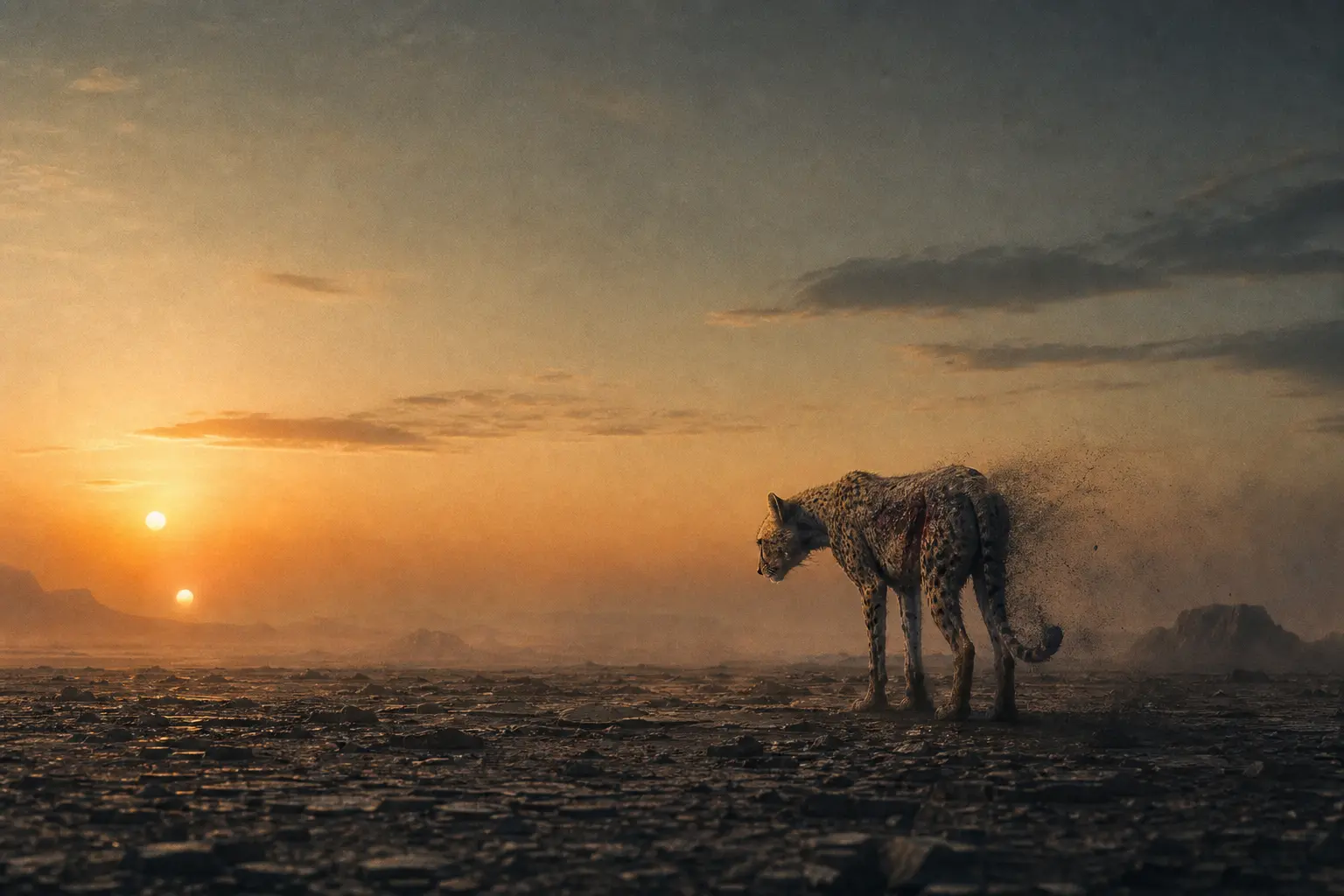
The Trials follows a grieving girl and an injured cheetah through an extraterrestrial contest that pits Earth’s apex predators against alien species, a kind of universe Olympics. Hal Watmough directed it. He is a BAFTA-winning film editor who spent years cutting British television, including the BBC’s The Repair Shop, before he started generating footage instead of only cutting it.
Wonder gave him $25,000. He built the film in six weeks, mostly at night once his children were asleep. A conventional production with the same creatures and scale would have needed close to $100 million, by his own estimate, a gap north of 4,000 times what Wonder actually spent.
“If AI didn’t exist, this wouldn’t exist,” he told Forbes, which first reported the film’s making after a private screening at Wonder’s headquarters in June.
The creature design shows the method behind that claim. Watmough spent four days in Lisbon with two concept artists, stripping the alien animals of their eyes before building emotion back in through texture and movement. One creature began as photographs of a pinecone, fed into an image model and refined over dozens of rounds.
The Money Behind Wonder’s East London Church
Wonder Studios launched in April 2025 under cofounders Xavier Collins and Justin Hackney, raising more than $3 million in pre-seed money before its first anthology episode ever aired. Atomico led their $12 million Seed round in October 2025, alongside existing backers LocalGlobe and Blackbird.
Total funding has since passed $15 million, and the company’s own materials put its valuation near $50 million, a fast climb for a studio not yet two years old.
That money funds Beyond the Loop Season 2, seven films distributed on YouTube and Wonder TV with CapCut and ElevenLabs credited as executive producers. The first season, opened by Emmy-nominated filmmaker Nik Kleverov’s Memory Maker, has drawn more than 1.5 million views.
The Trials premiered inside Wonder’s headquarters on June 4. Weeks later, Wonder held its own private New York screening timed to the Tribeca Festival, showing the film’s cold open alongside three others. It was not an official festival selection, only an adjacent event.
What Filmmakers Trade for the Budget
In exchange for the budget, Wonder keeps everything the short produces. Watmough gets tools, mentorship and an audience, not the copyright.
- Production funding, $25,000 in The Trials’ case
- Access to executive-producer tool partners including CapCut and ElevenLabs
- Mentorship from established filmmakers inside the anthology
- Distribution through Wonder TV, YouTube and festival-adjacent screenings
Then comes the ownership clause itself.
They own the IP of the finished piece.
Watmough, describing the deal after the screening. Asked if Wonder’s share was 100%, he said: “One hundred percent, yeah.”
The upside is deferred, not gone. If a short becomes a feature, series or commercial project, Watmough says future development splits 50/50 between him and Wonder. Xavier Collins, the studio’s cofounder and chief executive, describes the filmmaker as retaining half the IP once a project scales, with that stake following the work wherever it travels next.
Two weeks before the premiere, Watmough joined Wonder full time as filmmaker in residence. He says the original Trials deal stands untouched, while future projects will likely run on separate contracts inside the studio.
Does Hollywood’s Audience Even Want This?
Not always, and the backlash keeps landing on real releases. Young Washington opened in US theaters on July 3, and within days social media users were accusing its battle sequences of looking artificially generated, a reaction that echoes a wider trust gap between AI’s builders and the audience it needs.
- 14 percentage points: how far Gen Z’s trust in AI trails Millennials, according to Gallup data cited by Fortune
- July 3: the release date of Young Washington, whose battle scenes drew accusations of undisclosed AI use within days
- June 22: when actress Justine Bateman publicly attacked A24 over its Google DeepMind investment
Viewers online complained the effects looked artificial and dragged the pacing, with some vowing to skip any film using generative AI altogether. The film had premiered at Tribeca weeks earlier before its wider release through Angel Studios.
Weeks before that, Bateman, an actress and longtime AI critic, accused A24 of endangering its own directors’ work after the studio accepted DeepMind’s investment. A24 told reporters the partnership was for research and that it would not take its filmmaker relationships for granted.
The pattern echoes the reception that met Tilly Norwood, an AI-generated “actress” unveiled in 2025, when the actors’ union SAG-AFTRA said the character risked devaluing human artistry. Wonder’s own bet depends on the same audience eventually deciding otherwise.
Copyright Law Still Doesn’t Recognize AI Authorship
Underneath the contract sits a legal problem Wonder cannot negotiate away. United States copyright law requires meaningful human authorship for a work to qualify for protection, and the Copyright Office has repeatedly held that content generated entirely by AI, without significant human creative control, cannot be copyrighted on its own.
That matters directly for a business built on owning and later licensing IP. If regulators ever decide a Beyond the Loop short leaned too heavily on unsupervised generation, Wonder’s claim to the underlying characters could be worth far less than the contract implies.
Wonder’s answer is visible in how The Trials was actually finished. Watmough put the film through a traditional grade and sound mix, used human-made library music for the score, and performed several minor voices himself before processing them through ElevenLabs, one of the studio’s tool partners. Only the lead’s voice was generated outright.
Other Studios Are Making the Same Bet
Wonder is not alone betting that synthetic film can earn real legitimacy. Dreams of Violets, a 75-minute feature from the AI studio Fountain 0, became the first full-length AI film accepted into a major festival’s official lineup when it premiered at Tribeca on June 10.
Directors Ash and Pooya Koosha made it for about $2,000 using tools including Kling AI, Google’s Nano Banana and Anthropic’s Claude, dramatizing the killing of Iranian protesters in January. Tribeca cofounder Jane Rosenthal defended the selection publicly, while critics split sharply over whether the film worked as cinema. Variety’s chief film critic called the movie itself unsuccessful even as he found the underlying demonstration of AI’s capability more significant than the story it told.
Comments on the trailer ran overwhelmingly negative, CBC reported, with online calls for a boycott circulating before the premiere even happened.
| Project | Studio | Reported Budget | Festival Status |
|---|---|---|---|
| The Trials | Wonder Studios | $25,000 | Private company screening; adjacent New York event during Tribeca, no official festival slot |
| Dreams of Violets | Fountain 0 | About $2,000 | Official Tribeca Festival selection, premiered June 10, 2026 |
| Hell Grind | Independent | Not disclosed | Screened as a Cannes market side event, outside the official program |
None of the three has yet produced the thing every AI studio actually wants: a short or feature that converts into a licensed franchise with paying partners attached.
Season 2 Still Has Six Films Left to Prove the Model
Six of Beyond the Loop’s seven Season 2 films have yet to premiere. Wonder is also running an open competition through its creator app, offering one more filmmaker $25,000, mentorship and a slot in the anthology, the same terms Watmough received before he joined the studio full time.
No short from either season has converted into a feature, series or commercial license yet, the actual test Wonder built its entire model around. Six more Beyond the Loop premieres are still coming this year to find out whether one finally does.
Frequently Asked Questions
Who owns an AI short made through Wonder Studios’ Beyond the Loop program?
Wonder owns 100% of the finished short once it’s delivered, according to director Hal Watmough. Contracts appear to be negotiated per project rather than standardized across the anthology. Watmough’s own terms shifted once he joined Wonder full time as filmmaker in residence, with future projects expected to run on separate agreements from the one covering The Trials.
Can an AI-generated film be copyrighted in the United States?
Only if it shows meaningful human authorship. The Copyright Office has held that content generated entirely by AI without significant human creative control isn’t eligible for protection on its own, which is why hybrid pipelines that keep a human director controlling writing, editing and grading at every stage exist partly to preserve a legal claim, not just a creative one.
Has an AI-generated film ever played a major festival?
Yes. Dreams of Violets, made by Fountain 0 for about $2,000, became the first full-length AI film in an official major festival lineup when it opened at the Tribeca Festival on June 10, 2026, a selection Tribeca’s leadership had to publicly defend. A separate AI feature, Hell Grind, only reached Cannes as a market side event outside the official program.
What is Beyond the Loop?
It’s Wonder Studios’ flagship anthology series, now in its second season with seven films for YouTube and Wonder TV. It draws from a Wonder app community the studio describes as more than 200 AI-native filmmakers, and it runs an open competition offering new entrants the same $25,000 funding package Hal Watmough received for The Trials.


South Korea Retail Investors Face Reckoning After KOSPI AI Rally Collapses

Surrey AI Maps Three Heart Attack Paths and Their Molecular Roots

Germany Locks Neutral Apple ATT Prompts Across Most of Europe

Apple’s 5% EU Fee Quietly Rewrites Alternative App Store Math

Apple’s EU Fee Truce Cuts Complexity but Leaves Rivals Fuming

Pixel 11 Pro Fold Trades Thinness for Durability and Seven-Year Stay

Mayo AI Flags HCM Obstruction From Everyday Ultrasound Videos

Indian Brands Quietly Scale Landmark Screens and Home Tech

Navin Vatsa Turns Grief Into a Lifetime of Quiet Seeing

Google Bets Pixel 11 Agentic AI Will Redefine Phones

Oracle Cuts 21,000 Jobs in a Year, Cites AI in 10-K Filing

Fable 5 and Mythos 5 Return as US Lifts Anthropic Export Controls

SpaceX’s Google Deal Turns a Rocket Company Into a Cloud Landlord

CD Projekt Red Co-CEO: Redemption Arc Isn’t Done, Witcher 4 in 2027

XPL Rallies 30% Ahead of Plasma One Card Tier Launch

Google Search Profiles Build a Follow Graph Inside Discover

DGO App Brings Rs 549 Mobile Pass for FIFA World Cup 2026 in Nepal

Moonshot AI Targets $30 Billion in China’s Fastest AI Funding Sprint

Oppo’s ColorOS 17 Eligibility List Leaves A-Series Buyers Behind

Microsoft Xbox Layoffs Start in July as Sharma Slams 3% Margin
-
 AI2 months ago
Oracle Cuts 21,000 Jobs in a Year, Cites AI in 10-K Filing
-
 AI2 months ago
Fable 5 and Mythos 5 Return as US Lifts Anthropic Export Controls
-
 AI3 months ago
SpaceX’s Google Deal Turns a Rocket Company Into a Cloud Landlord
-
 GAMING2 months ago
CD Projekt Red Co-CEO: Redemption Arc Isn’t Done, Witcher 4 in 2027
-
 CRYPTO3 months ago
XPL Rallies 30% Ahead of Plasma One Card Tier Launch
-
 NEWS3 months ago
Google Search Profiles Build a Follow Graph Inside Discover
-
 APPS3 months ago
DGO App Brings Rs 549 Mobile Pass for FIFA World Cup 2026 in Nepal
-
 AI3 months ago
Moonshot AI Targets $30 Billion in China’s Fastest AI Funding Sprint