
AI
WPP and Google Cloud Turn $400M Into a Frontier AI Research Loop
WPP and Google Cloud’s new frontier research arm reports a 10% prediction accuracy gain on AlphaEvolve and a multilingual Duracell Bunny build.

WPP and Google Cloud launched a new WPP and Google Cloud frontier research initiative on June 25, 2026, folding Google DeepMind researchers directly into WPP’s marketing pipelines. The arm builds on a $400 million, five-year partnership signed in October 2025, and it has already shipped four production-grade tools spanning multilingual creative, predictive modelling, cultural forecasting, and real-time environmental data. The research sits inside WPP Open, the holding company’s agentic marketing platform, and turns a procurement contract into a deployment feedback loop with Google DeepMind.
The June announcement lands eight months after WPP chief executive Cindy Rose met Google Cloud chief executive Thomas Kurian in Mountain View to cement the deal. It follows the April 2026 integration of Google Earth AI into WPP Open, the first time a major media group has married planetary-scale geospatial data with marketing workflows. The frontier research initiative is the third structural milestone of the partnership, after the October 2025 deal and the April 2026 Earth AI release.
From a Five-Year Deal to a Research Loop
The October 2025 partnership was announced as a $400 million, five-year commitment from WPP for Google technologies, with early results including up to 70% efficiency gains and a 2.5x acceleration in asset utilisation on workflows powered by Veo and Imagen. Eight months later, the relationship has taken a different shape. The June 25, 2026 frontier research initiative pulls Google DeepMind researchers, Gemini-based tooling, and WPP’s marketing pipelines into the same workstream, with the results flowing back into WPP Open rather than being sold as discrete products.
What changed is the feedback direction. Under the old framing, WPP consumed Google AI; under the new research arm, WPP’s campaign data, audience signals, and creative performance metrics feed back into Google’s research process. Eleni Shaw, principal lead at Google DeepMind, framed the loop directly in the announcement: the feedback loop between research and application is what accelerates both sides, she said. Giuliana Coli, vice president of strategic partnerships at WPP, added that the human creative stays at the centre of the process. The proof points the partners chose to publish are not demos. Four are already in production across WPP’s client roster.
WPP-Google Cloud research arm at a glance: $400 million committed over five years (October 2025); four production proof points already running across WPP’s client base; up to 10% prediction accuracy gain and 7% recommendation lift on AlphaEvolve over competitive baselines; Cultural Intelligence Engine covering 50 cities and 50 categories; more than 80% of retail sales still happen offline, according to research cited by WPP and Google Cloud.
Four Proof Points, Already in Production
The June 25 announcement lists four working tools, not roadmap slides. Each one is already wired into WPP Open or a named client campaign.
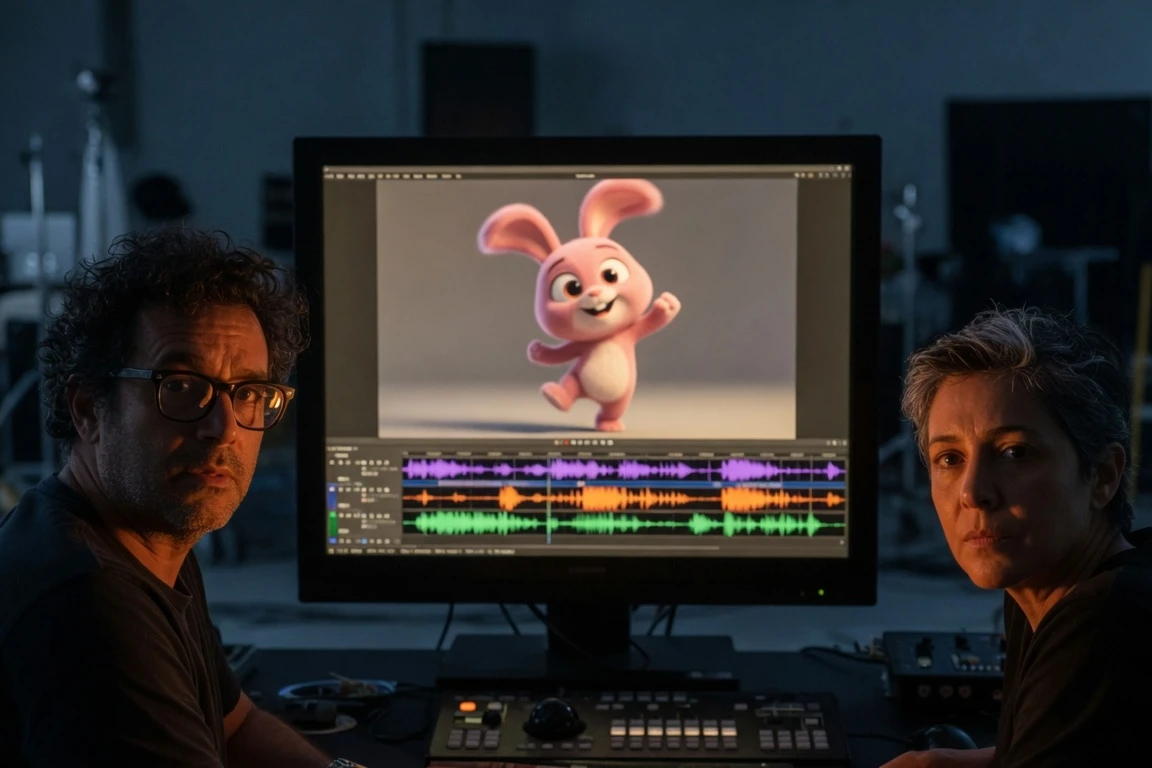
- Generative media for global campaigns: WPP and Google DeepMind built an animation pipeline that reanimates the Duracell Bunny across multiple languages for a global football campaign, keeping the character’s mouth movements and expressions consistent without generative artefacts.
- Autonomous marketing intelligence: AlphaEvolve, a Gemini-powered agentic framework, lifted WPP’s prediction accuracy up to 10% and recommendation scores up to 7% over competitive baselines.
- Real-time environmental intelligence: Population-level data plus live weather, air quality, and neighbourhood movement patterns feed WPP Open for hyper-local campaign planning.
- Predictive cultural forecasting: The Cultural Intelligence Engine clusters early social signals into cultural codes and forecasts diffusion across 50 cities and 50 categories.
Each proof point runs on a different layer of the marketing stack. The Duracell Bunny work sits in creative production, where DeepMind’s generative media models keep a single character’s mouth movements and expressions consistent across markets. AlphaEvolve runs inside WPP Research’s modelling pipelines, scoring and refining predictive architectures against historical campaign data. The environmental data layer pulls population, weather, and movement signals into audience intelligence. Cultural forecasting sits one layer up, scanning public content to anticipate where audiences are moving before campaigns need to land.
The four tools also generate data WPP and Google can use to refine the next round. The Duracell Bunny animation yields multilingual production data. AlphaEvolve’s evaluation results feed back into Google’s research process. Environmental signals recalibrate audience models as they change.
The Duracell Bunny, Reanimated for Each Market
The Duracell Bunny project is the most visible proof point. The Bunny, an anthropomorphic battery mascot, has fronted global campaigns for decades, and the practical problem has always been the same: how do you keep one character’s lip movements and expressions consistent across markets that speak different languages? WPP and Google DeepMind treated it as a generative media research problem. Their solution adapts the Bunny’s mouth shapes and facial expressions across multiple languages without the artefacts that usually betray machine-generated footage.
DeepMind’s generative media models handled the per-language re-animation. WPP’s creative teams wrote the briefs and held the character to brand standards. The Bunny shipped in markets WPP has not publicly enumerated, with the visual consistency surviving each translation.
At Duracell, we’re always looking for partners who share our appetite for pushing the boundaries of creativity. This collaboration with WPP and Google DeepMind delivered exactly that. It was a pioneering approach that allowed our Bunny to engage authentically across languages and markets during a major sporting moment. Innovation wasn’t just part of this project, it was the common thread from start to finish.
The quote sits with Marco Montanaro, Duracell’s marketing director, who described the work in WPP’s announcement. WPP calls the campaign only a major sporting moment, and the Bunny’s translated lips survived both the visual consistency bar and the cultural sensitivity checks Duracell’s brand team required. WPP and Google DeepMind used the project to show that generative media models can carry a brand character across markets without losing it.
The animation pipeline matters as a template, too. Once a character’s mouth shapes and expressions can be regenerated per language without artefacts, the same machinery can re-cut the same spot for regional humour, regulatory changes, or product swaps without re-shooting. WPP and Google have not priced the service publicly. They have named it as one of four production proof points in the research arm, which means other brands can expect access on terms WPP has yet to spell out.
AlphaEvolve and the 10% Prediction Lift
AlphaEvolve is the technical centrepiece of the research arm. It is a Gemini-powered agentic framework that reframes model development as an evolutionary search problem: the system proposes candidate model architectures, scores each one against a target metric, and iterates until the score stops improving. WPP Research has published a full AlphaEvolve Pod technical walkthrough that documents the seed programs, the evaluation functions, and the per-session results.
| Metric | Baseline | AlphaEvolve result |
|---|---|---|
| Prediction accuracy | Competitive baseline, including fine-tuned Gemma variants | Up to 10% improvement |
| Recommendation scores | Competitive baseline | Up to 7% improvement |
| Search strategy | Manual experimentation | Up to 1,000 evolutionary iterations, four candidates in parallel |
| LLMs driving evolution | Not applicable | Gemini 3 Pro plus Gemini 3 Flash |
The mechanics deserve a closer look. Each AlphaEvolve session starts with a seed program, a target metric, and an evaluation function that scores every candidate. The framework mixes large and small language models, in WPP’s case Gemini 3 Pro for higher-quality suggestions and Gemini 3 Flash for higher-volume candidates, generates diffs against the seed code, runs each candidate through the evaluator, and updates an evolutionary database inspired by the MAP-elites algorithm. Each WPP session ran for up to 1,000 evolutionary iterations with four concurrent candidate evaluations per step. The highest-scoring program at the end of each session moved into production.
WPP chose macro-average F1-score rather than raw accuracy as the target metric, because macro-F1 steers the search toward better-generalising solutions on imbalanced classes. The teams also flagged a useful side effect: AlphaEvolve spontaneously added informative comments to complex code segments it chose not to modify, improving readability for the next round of evolution. Eleni Shaw, principal lead at Google DeepMind and a lead on the project, summarised the architecture in two sentences for the June announcement: the feedback loop between research and application is what accelerates both sides. The Duracell Bunny campaign is the visible output of one such loop, and the AlphaEvolve models are the invisible one. For the parent lab’s broader view on creativity in the AI era, Demis Hassabis’s Cannes Lions argument on creativity from the same week makes the underlying case.
How Cultural Signals Travel Across 50 Cities
The Cultural Intelligence Engine is the newest of the four proof points. It is a multimodal, geospatial predictive AI system co-developed with Google Cloud, and it scans public content to anticipate cultural shifts before they break into the mainstream. The engine’s output is packaged as rapid creative seed packs that brands can drop into a campaign when a trend peaks.
The mechanism is signal clustering at scale. The engine pulls early social signals from public content, groups them into distinct cultural codes, and forecasts their diffusion across 50 cities and 50 categories. Cultural signals travel differently in different markets, and the city-level granularity is what makes the seed packs actionable rather than generic.
The engine plugs into WPP’s existing audience intelligence and the Earth AI environmental signals added to WPP Open in April 2026. A brand watching a cultural shift emerge in one market can pre-stage the creative, line up the media, and trigger the campaign on the day the signal peaks. Giuliana Coli, vice president of strategic partnerships at WPP, described the human-creative role this way in the announcement: the next phase of AI-driven creativity will be defined by placing the human creative at the centre of the process. The engine is the system that decides what the human creative sees.
What the engine has not yet published is a case study with the same specificity as the Duracell animation or the AlphaEvolve work. WPP describes the mechanism and the 50-city, 50-category scope but does not name a brand client for the engine. That makes the engine a working tool inside WPP Open and a research question that the next announcement will likely answer.
The Physical-World Layer Underneath
The research arm sits on top of WPP Open, the holding company’s agentic marketing platform. On April 22, 2026, WPP integrated Google Earth AI models and datasets into WPP Open, adding planetary-scale geospatial data, including population movement, traffic, and weather, directly into marketing workflows. The April release sits two months ahead of the June research announcement and was authorised by the same October 2025 deal. The dataset is the physical-world input the cultural and environmental layers draw from.
The first public case is an automotive one. WPP worked with a multi-market automotive client on an Electric Vehicle Readiness Index, using Google Maps Platform’s Places Insights data and Population Dynamics Insights to map charger availability across localities. The index then informed the Designated Market Area for media buys. The reported result was 77% higher performance relative to a standard DMA, with 15% lower cost to conversion.
Stephan Pretorius, WPP’s chief technology officer, framed the layer in the April Earth AI release: people don’t just live in the digital world, they live in the physical world. More than 80% of retail sales still happen offline, according to research cited by WPP and Google Cloud. The Earth AI integration is the dataset WPP now uses to model that offline behaviour for marketing, with the research arm layering cultural and environmental predictions on top. WPP has separately projected AI search advertising to reach $100 billion by 2030 in its midyear forecast, a parallel bet that the same data plumbing can move money across the open web.
Frequently Asked Questions
What’s actually new in the WPP-Google Cloud research arm?
A new frontier research initiative announced on June 25, 2026, building on the $400 million, five-year partnership signed in October 2025. The arm unites Google DeepMind and other Google teams with WPP Research, with the results flowing back into WPP Open rather than being sold as standalone products. Four proof points are already in production: generative media for the Duracell Bunny, AlphaEvolve for predictive modelling, real-time environmental intelligence, and the Cultural Intelligence Engine.
How does AlphaEvolve work, and what did it improve?
AlphaEvolve is a Gemini-powered agentic framework that runs an evolutionary search over candidate model architectures. Each session proposes candidates, scores them against a target metric, and iterates up to 1,000 times. Applied to WPP’s marketing intelligence pipelines, it lifted prediction accuracy up to 10% and recommendation scores up to 7% over competitive baselines, in a fraction of the time required by manual experimentation.
How much is WPP committing to Google Cloud under this deal?
WPP committed $400 million over five years to Google technologies, announced in October 2025. The spend covers access to Gemini, Veo, Imagen, and other DeepMind models, plus the research collaboration that has since produced AlphaEvolve, the Cultural Intelligence Engine, and the Duracell Bunny generative media pipeline.
Which brands have shipped campaigns using these tools?
Duracell is the named client for the generative media work, with its Bunny reanimated across multiple languages for a global football campaign. WPP has also cited work with a multi-market automotive client on an Electric Vehicle Readiness Index that lifted media-buy performance 77% over a standard DMA, with 15% lower cost to conversion. The automotive client was not named publicly, and the figures come from the April 2026 Google Cloud press release rather than an independent audit.
What is the Cultural Intelligence Engine, and what does it cover?
A multimodal, geospatial predictive AI system co-developed with Google Cloud. The engine pulls early social signals from public content, clusters them into cultural codes, and forecasts diffusion across 50 cities and 50 categories. Brands receive those forecasts as rapid creative seed packs, packaged assets ready to drop into a campaign when a trend peaks.


Pixel 11 Trails Galaxy Phones That Last as Long

OpenAI’s Research Intern Arrives With a Warning Attached

Robinhood Prices XRP Into a Two-Cent 9 a.m. Bet

Sony’s 10 Percent Disc Drop Leaves the 2028 Cutoff Intact

Chip Allocation Sidelines the Base iPhone 18 This Fall

Miami-Dade Fights the Vice City Brand It Already Wears

IFA 2026 Awards Put Tecno Ahead of Flagship Phones

USB-C Gadgets Made the Junk Drawer Rechargeable

Pixel 11 Pro Asks $1,099 for a Light Google Locked

The iPhone Ultra Sells Two Retired Minis as One Foldable

Oracle Cuts 21,000 Jobs in a Year, Cites AI in 10-K Filing

Fable 5 and Mythos 5 Return as US Lifts Anthropic Export Controls

SpaceX’s Google Deal Turns a Rocket Company Into a Cloud Landlord

CD Projekt Red Co-CEO: Redemption Arc Isn’t Done, Witcher 4 in 2027

XPL Rallies 30% Ahead of Plasma One Card Tier Launch

Google Search Profiles Build a Follow Graph Inside Discover

DGO App Brings Rs 549 Mobile Pass for FIFA World Cup 2026 in Nepal

Moonshot AI Targets $30 Billion in China’s Fastest AI Funding Sprint

Oppo’s ColorOS 17 Eligibility List Leaves A-Series Buyers Behind

Microsoft Xbox Layoffs Start in July as Sharma Slams 3% Margin
-
 AI3 months ago
Oracle Cuts 21,000 Jobs in a Year, Cites AI in 10-K Filing
-
 AI2 months ago
Fable 5 and Mythos 5 Return as US Lifts Anthropic Export Controls
-
 AI3 months ago
SpaceX’s Google Deal Turns a Rocket Company Into a Cloud Landlord
-
 GAMING3 months ago
CD Projekt Red Co-CEO: Redemption Arc Isn’t Done, Witcher 4 in 2027
-
 CRYPTO3 months ago
XPL Rallies 30% Ahead of Plasma One Card Tier Launch
-
 NEWS3 months ago
Google Search Profiles Build a Follow Graph Inside Discover
-
 APPS3 months ago
DGO App Brings Rs 549 Mobile Pass for FIFA World Cup 2026 in Nepal
-
 AI3 months ago
Moonshot AI Targets $30 Billion in China’s Fastest AI Funding Sprint