
AI
OCBC WoW AI Avatar App: 50 Premier Clients, S$1 Billion AI Pledge
OCBC opened its WoW AI avatar wealth app to 50 Premier Private Client customers holding at least S$1.5M AUM and pledged more than S$1 billion a year on AI.

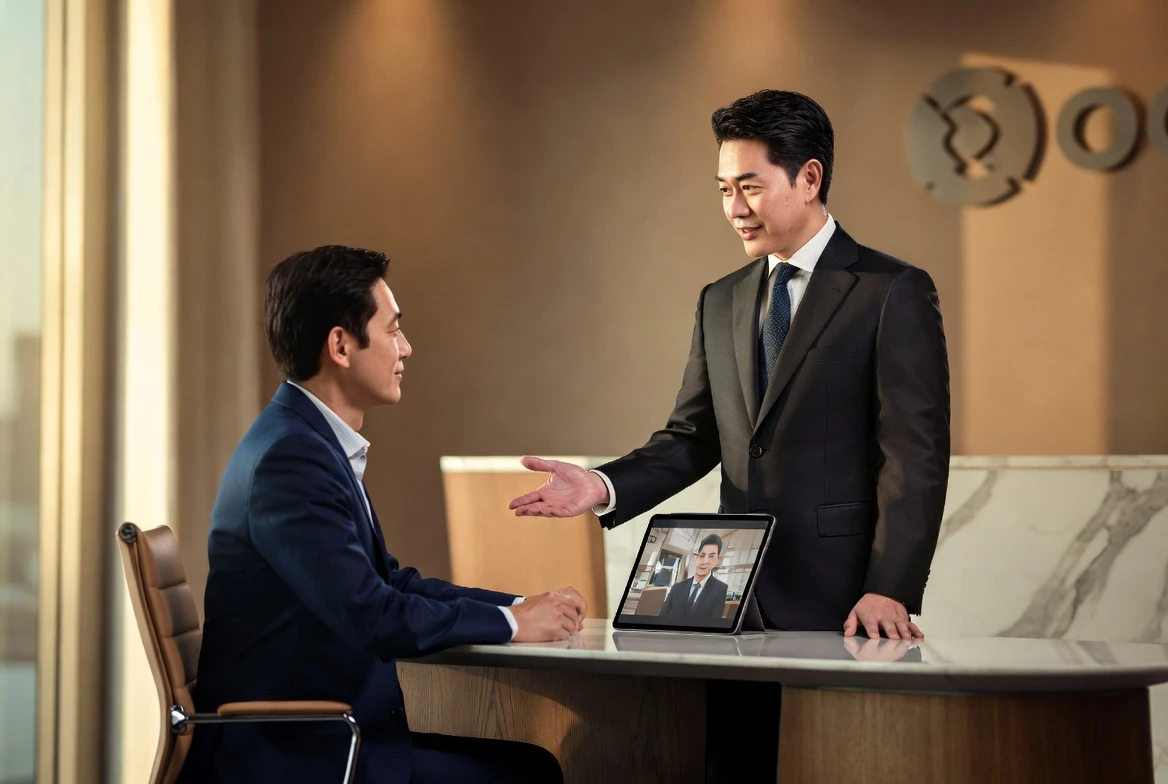
OCBC is opening an AI avatar app to 50 of its wealthiest customers in Singapore, the bank’s first client-facing test of a digital concierge that holds personalised conversations about their money. The OCBC WoW app, now in invitation-only beta, is offered first to clients who hold at least S$1.5 million in assets under management and are served by OCBC Premier Private Client Advisers. The bank plans to roll the app out to other wealth-segment clients over the 12 months after the six-month beta ends.
Group Chief Executive Officer Tan Teck Long told reporters at Wednesday’s launch that the bank expects to spend more than S$1 billion a year on its AI, digital and data push over the next few years, even as it adds 600 more relationship managers. He called the move “changing the face of banking” through avatars and personalised services, with wealth management as the starting point.
An AI Concierge Walks Into OCBC’s Premier Lounge
OCBC is Singapore’s second-largest bank, and the WoW app lands inside a wealth franchise that just produced record non-interest income. In the first three months of 2026, OCBC’s net profit climbed 5% year-on-year to S$1.97 billion (OCBC’s S$1.97 billion first-quarter 2026 result). The wealth engine has been the largest fee contributor inside that record result.
The beta pool is deliberately small. OCBC has invited 50 customers, each holding at least S$1.5 million in assets under management, to test the app for six months, alongside selected OCBC employees. The bank plans to open the app to other wealth-segment clients over the 12 months after that. The minimum S$1.5 million AUM threshold places invitees inside OCBC’s Premier Private Client tier, the top rung of its mass-affluent wealth stack, where relationship managers handle the most complex portfolios. The 50 invited clients are the first pool, not the only pool; the bank will add more inside the same tier before opening the app to Premier Banking.
OCBC’s 600 New Hires Alongside the AI Avatar
OCBC is hiring humans at the same time it ships the avatar. Tan said on Wednesday that the bank plans to add 600 relationship managers over the next three years, a sizable addition to the 900-strong advisor force the bank put on a generative AI coaching programme in April 2026. The two announcements were made in the same briefing. Tan, who formally succeeded former chief Helen Wong at the start of 2026, framed the simultaneous push as the shape of wealth banking in his tenure.
OCBC’s three wealth tiers, each with their own AUM threshold, are the operational backbone of that hiring. Personal banking clients hold under S$350,000; Premier Banking clients hold between S$350,000 and S$1.5 million; and Premier Private Client clients hold at least S$1.5 million. WoW lands in the top tier first, the segment OCBC is adding 600 more relationship managers to serve.
Each new relationship manager adds to OCBC’s Premier Private Client coverage. The avatar lands in the same tier those managers serve. The hire and the avatar are both part of the same wealth push Tan announced on Wednesday. OCBC has framed the AI as handling routine work and human advisers as handling judgement.
The S$1 Billion OCBC Is Pledging to AI
Tan said OCBC will spend more than S$1 billion a year on AI, digital and data over the next few years. That works out to US$771.78 million at the rate of S$1.2954 to the US dollar used in OCBC’s own briefing material.
- 600 relationship managers OCBC plans to hire over three years
- More than S$1 billion (US$771.78 million) annual AI, digital and data spend Tan expects over the next few years
- 50 invited clients on the six-month WoW beta
- S$1.5 million minimum AUM to join the beta
The commitment is larger than OCBC’s annual outlay on any single GenAI tool the bank has named publicly so far. Tan used the phrase “changing the face of banking” at the launch to describe the bank’s intention. The app will later add more languages, insurance products and banking services, OCBC said, suggesting the S$1 billion is a multi-year programme rather than a one-off project. The cost will be tested against results that have, until now, been limited to a single internal programme.
The GenAI training programme announced in April 2026 is OCBC’s first public AI return-on-investment number. That single programme is the only one OCBC has quantified so far. The WoW beta is the first client-facing test of whether the same economics survive contact with Premier Private Client customers.
OCBC has not committed to publishing the beta’s results. If the avatar stalls on usage, the S$1 billion annual figure will start to look like a spend without a tracked return.
The 50 Clients Testing the WoW Avatar
WoW is an avatar-led wealth app: the screen carries an animated face that holds a conversation about the user’s portfolio, rather than a list of buttons. The app starts with Premier Private Client customers because the bank has the most context on their holdings through their assigned Premier Private Client Adviser. The bank will roll WoW out to its wider wealth segment, including Premier Banking clients, over the 12 months after the six-month beta closes. OCBC has said more languages, insurance products and banking services will be added once the rollout broadens.
The product map is built on OCBC’s existing three-tier wealth structure. Personal banking, Premier Banking and Premier Private Client are the bank’s three mass-affluent tiers, each with its own AUM gate. WoW begins at the top because that is where each conversation carries the most assets.
| OCBC wealth tier | Minimum assets under management |
|---|---|
| Personal Banking | Under S$350,000 |
| Premier Banking | S$350,000 to S$1.5 million |
| Premier Private Client | At least S$1.5 million |
The table covers only the mass-affluent tiers; above them sits Bank of Singapore, OCBC’s private banking arm, which is not part of the WoW beta. The beta is structured as a 50-person, six-month test of whether an avatar can carry the front end of a Premier Private Client relationship before the bank lets Premier Banking customers onto the same app. Each Premier Private Client already has a designated adviser. The avatar is the new front line; the adviser remains the back line. Bank of Singapore’s UHNW clients sit above the WoW tier altogether.
What the GenAI Training Programme Already Proved
WoW is not OCBC’s first GenAI product. In April 2026 the bank rolled out a generative AI-powered skills training programme to its 900-strong wealth advisor force in Singapore, the first such programme by a bank in Singapore (OCBC’s April 2026 GenAI training programme for 900 wealth advisors). The programme cuts supervisor wait times that had run up to three weeks, with wealth advisors doubling weekly client appointments and recording a 50% revenue uplift in the three months after training began.
The April programme is now the only public return-on-investment figure OCBC has published for any of its AI work. The bank has not disclosed how the S$1 billion annual AI spend is split between products. WoW is the next test, and its six-month beta will be the first client-facing data point. Until that data arrives, the GenAI training programme is the only benchmark investors have.
In wealth management, these experiences are especially crucial because advisory requires empathy, judgment, and trust, qualities that only human advisors can bring. By marrying AI precision with the human touch, we ensure our advisors are not just well-trained, but future-ready for customers’ growing sophistication in their wealth management needs. We are enabling consistent, high-quality engagement across all our customer segments, while embedding AI into our core processes, including employee development.
The framing came from Sunny Quek, OCBC’s Head of Global Consumer Financial Services, at the launch of the April 2026 training programme. Quek’s point was that the AI removes bias and emotion from coaching while humans handle the judgement.
WoW extends that logic from coach to client. The avatar handles the routine, the human handles the judgement, and the bank’s Premier Private Client advisers are the human in the loop. Whether the same 50% revenue uplift applies to a client-facing avatar is the open question the beta will answer. The bet is that it does, which is the business case for the S$1 billion annual spend.
The Wealth Logic of OCBC’s Next Frontier
WoW, the GenAI training programme, the Premier Private Client hiring, and the S$1 billion AI spend all sit under one umbrella: The Next Frontier, OCBC’s corporate strategy announced in February 2026 (OCBC’s Next Frontier strategy page). The strategy rests on four broad strategic shifts designed to accelerate growth across Singapore, Malaysia, Indonesia, Hong Kong and Greater China. Wealth management is the through-line that ties the four shifts together, because it is the segment OCBC says will set the cadence for the rest of the plan.
Tan has been clear that wealth is the proof-of-concept for the rest of the strategy. Bank of Singapore, OCBC’s private banking arm, has anchored its future on a Singapore, Hong Kong and Dubai three-hub approach, with a target for the Middle East to account for up to 20% of its revenue and assets under management. The Next Frontier strategy is the public label for that cross-segment integration. OCBC’s wealth franchise posted record non-interest income in the first three months of 2026. Tan has said the wealth strategy was deliberately crafted to drive performance.
- S$1 billion annual AI, digital and data spend commitment, as stated by Tan Teck Long at the WoW launch.
- 900-strong wealth advisor force moved onto GenAI coaching in April 2026.
- 50 Premier Private Client customers invited to the WoW avatar beta, running for six months.
- 600 additional relationship managers to be hired over the next three years.
The four moves are sequenced so that the cheaper, internal tools land first and the more expensive, external-facing ones land later. The April training programme has already shown internal returns, which the bank has published. The WoW beta is the first external test, and the broader Premier Banking rollout is the third. The S$1 billion annual commitment is the envelope that holds the four together.
The Risk OCBC Has Not Yet Spelled Out
Tan has not put a number on what the avatar side of the strategy will earn. In his maiden full-year results briefing in February 2026, OCBC posted a S$7.42 billion net profit for FY2025 and a record S$14.6 billion in total income, but the S$1 billion AI spend and its expected return are not broken out separately. A the execution risks OCBC’s Next Frontier strategy still carries noted that Tan “hesitated to pin down hard targets, specific synergies or firm deadlines” for the integration work.
The same analysis flagged the execution risks that come with that silence. Cross-selling between OCBC’s insurance arm Great Eastern, Bank of Singapore and the wider OCBC branch network requires untangling misaligned compensation, client-ownership disputes and legacy IT. Tan has set up a wealth management committee with the chief executives of Great Eastern, Bank of Singapore and OCBC’s Global Consumer Financial Services to drive the integration. The same analysis warned that the cost-to-income ratio target in the low-to-mid-40% range leaves little room for the spend to balloon. Until WoW’s six-month beta closes, the avatar is an experiment with no published return target, inside a strategy with no published synergy number.
How the WoW Beta Will Be Measured
The six-month beta and the 12-month rollout that follows it are the public testing window for WoW. The first hard data points will come when the bank reports on the 50-client beta’s usage, satisfaction and revenue effect, if it does so publicly. OCBC has not committed to publishing those numbers.
The avatar’s success will be judged against a benchmark OCBC has already published: the GenAI training programme’s 50% revenue uplift and doubled weekly client appointments in the first three months. If WoW matches the training programme’s economics, the case for the S$1 billion annual spend gets stronger. If it does not, the next review of the Next Frontier strategy will be where the test lands.
The deeper test sits in the human-plus-AI pairing Tan keeps emphasising. WoW is the first OCBC product where the AI is the front line and the human is the back line, the inverse of the April training programme. Tan’s Next Frontier strategy has set the cadence for the rest of 2026 and into 2027, and the avatar is the first client-facing checkpoint.
Frequently Asked Questions
What is the OCBC WoW app?
WoW is an AI avatar wealth app launched by OCBC on July 1, 2026, in invite-only beta. It uses an animated avatar to hold personalised conversations about a client’s portfolio, starting with OCBC Premier Private Client customers.
Who can use OCBC WoW in the beta?
OCBC has invited 50 customers to test WoW for six months. To be eligible, a customer must hold at least S$1.5 million in assets under management and be served by an OCBC Premier Private Client Adviser. Selected OCBC employees are also in the beta.
When will OCBC WoW launch more broadly?
The 50-customer beta runs for six months from the July 1, 2026 launch. After that, OCBC plans to open WoW to other wealth-segment clients over the following 12 months. More languages, insurance products and banking services will be added as the rollout broadens.
How much is OCBC spending on AI?
Group CEO Tan Teck Long said on July 1, 2026 that OCBC expects to spend more than S$1 billion a year over the next few years on its AI, digital and data initiative. At OCBC’s quoted rate of S$1.2954 to the US dollar, that works out to US$771.78 million. The figure has not been broken down by product line.


South Korea Retail Investors Face Reckoning After KOSPI AI Rally Collapses

Surrey AI Maps Three Heart Attack Paths and Their Molecular Roots

Germany Locks Neutral Apple ATT Prompts Across Most of Europe

Apple’s 5% EU Fee Quietly Rewrites Alternative App Store Math

Apple’s EU Fee Truce Cuts Complexity but Leaves Rivals Fuming

Pixel 11 Pro Fold Trades Thinness for Durability and Seven-Year Stay

Mayo AI Flags HCM Obstruction From Everyday Ultrasound Videos

Indian Brands Quietly Scale Landmark Screens and Home Tech

Navin Vatsa Turns Grief Into a Lifetime of Quiet Seeing

Google Bets Pixel 11 Agentic AI Will Redefine Phones

Oracle Cuts 21,000 Jobs in a Year, Cites AI in 10-K Filing

Fable 5 and Mythos 5 Return as US Lifts Anthropic Export Controls

SpaceX’s Google Deal Turns a Rocket Company Into a Cloud Landlord

CD Projekt Red Co-CEO: Redemption Arc Isn’t Done, Witcher 4 in 2027

XPL Rallies 30% Ahead of Plasma One Card Tier Launch

Google Search Profiles Build a Follow Graph Inside Discover

DGO App Brings Rs 549 Mobile Pass for FIFA World Cup 2026 in Nepal

Moonshot AI Targets $30 Billion in China’s Fastest AI Funding Sprint

Oppo’s ColorOS 17 Eligibility List Leaves A-Series Buyers Behind

Microsoft Xbox Layoffs Start in July as Sharma Slams 3% Margin
-
 AI2 months ago
Oracle Cuts 21,000 Jobs in a Year, Cites AI in 10-K Filing
-
 AI2 months ago
Fable 5 and Mythos 5 Return as US Lifts Anthropic Export Controls
-
 AI3 months ago
SpaceX’s Google Deal Turns a Rocket Company Into a Cloud Landlord
-
 GAMING2 months ago
CD Projekt Red Co-CEO: Redemption Arc Isn’t Done, Witcher 4 in 2027
-
 CRYPTO2 months ago
XPL Rallies 30% Ahead of Plasma One Card Tier Launch
-
 NEWS3 months ago
Google Search Profiles Build a Follow Graph Inside Discover
-
 APPS2 months ago
DGO App Brings Rs 549 Mobile Pass for FIFA World Cup 2026 in Nepal
-
 AI3 months ago
Moonshot AI Targets $30 Billion in China’s Fastest AI Funding Sprint