
AI
AI’s Boom Builds Its Own Brakes in Failures and Power Limits
Record hyperscaler capex collides with doubled AI project failures, Ford’s engineer rehires, and grid strain that turn the boom into a constrained utility story.

Companies scrapped most of their AI initiatives at a 42 percent rate in 2025, more than double the year before, even as the largest cloud operators lined up roughly $725 billion in 2026 capital spending. The same boom that lifted tech valuations is now generating its own brakes: abandoned pilots, rehired human experts, and electricity grids that cannot keep pace.
That collision, not a simple pop, is the story investors and operators face in mid-2026.
Failure Rates Climb While the Checks Keep Getting Bigger
S&P Global Market Intelligence surveys of more than a thousand organizations in North America and Europe show the share of firms abandoning most AI initiatives jumped from 17 percent in 2024 to 42 percent in 2025. The average organization scrapped nearly half of its proof-of-concept work before production.
At the same time the four biggest hyperscalers (Amazon, Microsoft, Alphabet, Meta) are projecting combined capital expenditures near $725 billion for 2026, up about 77 percent from roughly $410 billion the prior year. Amazon alone guided around $200 billion. Microsoft is tracking near $190 billion. Alphabet has raised guidance into the $175-205 billion range. Meta sits in the $115-145 billion band.
| Company | 2026 Capex Guide (approx.) | Change vs 2025 |
|---|---|---|
| Amazon | $200 billion | roughly double |
| Microsoft | $190 billion | ~100% higher |
| Alphabet | $175-205 billion | sharp upward revisions |
| Meta | $115-145 billion | ~80%+ higher |
| Combined | ~$725 billion | +77% |
Analyst tallies now put multi-year hyperscaler outlays in the multi-trillion range through 2030. The money is real. So are the cancellations.
Ford Brings the Engineers Back
Ford expanded AI tools to speed decisions and simplify development. The systems proved less resilient than expected when data was incomplete or lacked nuance. Charles Poon, vice president of vehicle hardware engineering, put it plainly: “Mistakenly, we thought that by just introducing artificial intelligence and adjusting the design requirements that we had, that that would produce a high-quality product.”
Experienced engineers left and took institutional knowledge with them. Vital details never entered the training sets. Ford responded by bringing back and promoting more than 350 experienced engineers and specialists over three years to improve data collection and interpretation for future AI work. The company is still pushing automation. It is no longer treating AI as a standalone substitute for judgment.
Similar patterns appear across manufacturing. Automation thrives in stable, repeatable settings. Plants face late deliveries, machine failures, demand swings and regulation. Those variables still sit outside reliable AI reach for complex roles.
Five Reasons Projects Die Before They Scale
A 2024 RAND study based on interviews with 65 experienced data scientists and engineers found that by some estimates more than 80 percent of AI projects fail, roughly twice the rate of ordinary IT work. The RAND interviews on why AI projects fail distilled five recurring root causes.
- Wrong problem definition, stakeholders optimize for metrics that do not fit real workflows.
- Inadequate training data, quality, coverage or accessibility is missing.
- Technology-first mentality, chasing the newest model instead of a concrete user need.
- Insufficient infrastructure, data governance and deployment pipelines cannot support the model.
- Problem simply too hard, current techniques cannot automate the task.
RAND’s advice is blunt: keep technical staff tight with domain experts, commit for at least a year, focus on the problem not the hype, invest in data plumbing first, and accept that some work still needs people.
Power Becomes the Hard Limit
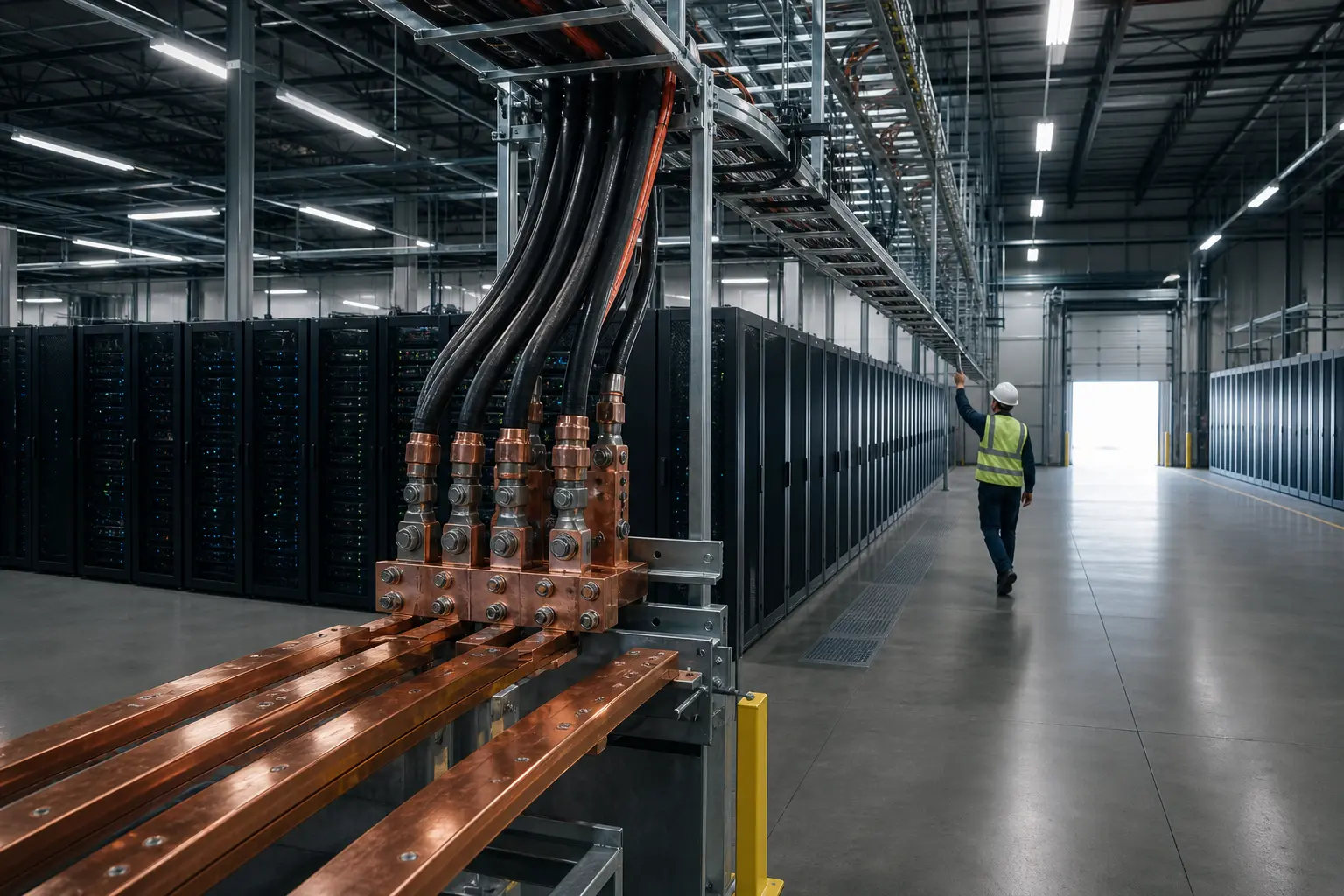
Even successful deployments run into physics. The International Energy Agency projects global data-center electricity demand will more than double to around 945 TWh by 2030, slightly above Japan’s entire current consumption. AI-optimized centers are expected to more than quadruple their draw. In the United States, data centers are on course to account for almost half of electricity demand growth this decade.
The IEA projection of 945 TWh data-center demand already shows queues for grid interconnection stretching years in key markets. Local pushback over water, land and rates is rising. Reports in 2026 claim a large share of planned U.S. AI facilities face power-related delays. Chips arrive faster than substations.
That physical ceiling turns the spending race into a constrained land-and-power contest rather than a pure software race.
History of the Impressive Invention Bubble
Jeremy Grantham and Edward Chancellor laid out the pattern in a January 2026 GMO paper on valuing the AI boom. Great, visible technologies (railways, electricity, radio, the internet) reliably produce over-investment and eventual valuation collapses even when the underlying invention later proves transformative.
The probability that AI does not bust are slim to none; it meets every condition of the railroads and the internet.
Grantham has repeated the warning into mid-2026, calling the U.S. market the most expensive in history on his preferred metrics and drawing 2000-style parallels that once produced 70-80 percent drawdowns in the most speculative names. He notes the classic top signals (collapse of the purest speculative names, quality outperformance, slowing broad gains) are not fully present yet. ChatGPT arrived just in time to reverse the 2022 bear market. That does not erase the arithmetic of overbuild.
The same history shows that after the bust, the technology becomes a utility. Money shifts to the firms that build durable services on top of it. Pure hype vehicles disappear.
Who Collects and Who Pays
Short-term winners remain the suppliers of GPUs, networking gear, power equipment and data-center construction. Nvidia and the broader semiconductor chain have captured the first-order spend. Utilities and independent power producers in favorable jurisdictions gain long-term offtake. Hyperscalers with existing cash flow and land banks can keep building while smaller AI pure-plays face higher capital costs.
Losers concentrate among enterprises that treated AI as a headcount replacement rather than a tool, and among investors who paid peak multiples for revenue that has not yet appeared. Manufacturing firms that hollowed out experienced staff and then scrambled to rehire paid twice. Recent earnings reactions show the market starting to punish free-cash-flow dilution even at the largest names: Alphabet shares dropped sharply after raising capex and posting negative free cash flow in one quarter.
Crowd discussion on X has focused on the financing side: large off-balance-sheet commitments, lease accounting gray zones, supplier financing that stretches payables, and a coming depreciation wall once assets leave construction-in-progress. Those mechanics do not require the technology to fail. They only require returns to arrive slower than the capital schedule.
The same dynamic appears in related markets. The Bitcoin price path tied to AI spending has become a live debate for traders watching whether risk appetite survives an AI re-rating. Separately, comparisons of current AI stock euphoria compared with Japan’s bubble highlight how far valuation spreads have stretched relative to historical manias.
What we know
- Enterprise abandonment of most AI work more than doubled to 42 percent in 2025.
- Hyperscaler 2026 capex guidance clusters near three-quarters of a trillion dollars.
- Ford and others are rebuilding human expertise alongside AI systems.
- Data-center power demand is on a path to double by 2030 with clear grid bottlenecks.
What remains open
- Whether productivity gains in the successful minority of projects can eventually justify the aggregate spend.
- How fast efficiency improvements and new generation capacity relieve power queues.
- The timing and depth of any valuation reset once depreciation and financing costs surface fully.
Frequently Asked Questions
What does the 42 percent AI abandonment rate actually measure?
S&P Global’s survey tracks organizations that abandoned the majority of their AI initiatives before they reached production. The average firm also scrapped about 46 percent of individual proofs of concept. It is not a claim that every AI effort fails; it measures how many companies walked away from most of what they started that year.
Why did Ford rehire hundreds of experienced engineers?
AI systems trained on incomplete or non-nuanced data produced weaker quality outcomes than expected. Departing senior engineers took tacit knowledge that never entered the datasets. Ford added more than 350 experienced specialists through rehires and promotions to improve data practices while continuing to use AI as a supporting tool.
How much electricity will data centers use by 2030?
The IEA base case puts global data-center consumption at roughly 945 TWh by 2030, more than double recent levels and slightly above Japan’s total electricity use today. AI-optimized facilities are projected to grow far faster than conventional servers, and in the United States they are set to drive nearly half of demand growth this decade.
Is Jeremy Grantham saying AI itself is worthless?
No. Grantham and Chancellor treat AI as a genuinely impressive general-purpose technology that still follows the historical pattern of railways and the internet: over-investment, a valuation bust, then a utility phase in which the durable service layers make the lasting money. His warnings target market prices relative to history, not the long-run usefulness of the tools.
Will the AI infrastructure build-out stop if valuations fall?
Large committed projects and multi-year power contracts mean spending can continue even after stock prices correct. The risk is more selective: delayed or canceled secondary sites, higher cost of capital for weaker balance sheets, and a shift from speculative model labs toward proven enterprise workflows that actually clear ROI hurdles.
What separates AI projects that succeed from the majority that fail?
RAND’s interviews point to tight coupling between technologists and domain experts, multi-year commitment to a specific problem, data and deployment infrastructure built first, and realistic acceptance of technical limits. Projects that begin with a model or a press release rather than a grounded workflow fail at much higher rates.


South Korea Retail Investors Face Reckoning After KOSPI AI Rally Collapses

Surrey AI Maps Three Heart Attack Paths and Their Molecular Roots

Germany Locks Neutral Apple ATT Prompts Across Most of Europe

Apple’s 5% EU Fee Quietly Rewrites Alternative App Store Math

Apple’s EU Fee Truce Cuts Complexity but Leaves Rivals Fuming

Pixel 11 Pro Fold Trades Thinness for Durability and Seven-Year Stay

Mayo AI Flags HCM Obstruction From Everyday Ultrasound Videos

Indian Brands Quietly Scale Landmark Screens and Home Tech

Navin Vatsa Turns Grief Into a Lifetime of Quiet Seeing

Google Bets Pixel 11 Agentic AI Will Redefine Phones

Oracle Cuts 21,000 Jobs in a Year, Cites AI in 10-K Filing

Fable 5 and Mythos 5 Return as US Lifts Anthropic Export Controls

SpaceX’s Google Deal Turns a Rocket Company Into a Cloud Landlord

CD Projekt Red Co-CEO: Redemption Arc Isn’t Done, Witcher 4 in 2027

XPL Rallies 30% Ahead of Plasma One Card Tier Launch

Google Search Profiles Build a Follow Graph Inside Discover

DGO App Brings Rs 549 Mobile Pass for FIFA World Cup 2026 in Nepal

Moonshot AI Targets $30 Billion in China’s Fastest AI Funding Sprint

Oppo’s ColorOS 17 Eligibility List Leaves A-Series Buyers Behind

Microsoft Xbox Layoffs Start in July as Sharma Slams 3% Margin
-
 AI2 months ago
Oracle Cuts 21,000 Jobs in a Year, Cites AI in 10-K Filing
-
 AI2 months ago
Fable 5 and Mythos 5 Return as US Lifts Anthropic Export Controls
-
 AI2 months ago
SpaceX’s Google Deal Turns a Rocket Company Into a Cloud Landlord
-
 GAMING2 months ago
CD Projekt Red Co-CEO: Redemption Arc Isn’t Done, Witcher 4 in 2027
-
 CRYPTO2 months ago
XPL Rallies 30% Ahead of Plasma One Card Tier Launch
-
 NEWS2 months ago
Google Search Profiles Build a Follow Graph Inside Discover
-
 APPS2 months ago
DGO App Brings Rs 549 Mobile Pass for FIFA World Cup 2026 in Nepal
-
 AI2 months ago
Moonshot AI Targets $30 Billion in China’s Fastest AI Funding Sprint