
AI
Asia-Pacific Stocks Climb as the AI Chip Trade Roars Back
Asia markets rose Friday on a chip rebound, KOSPI up 3.89%, with SK Hynix pricing a $26.5B US listing. Brent fell 2.2% on Thursday despite fresh US strikes on 90 Iranian targets.

Asia-Pacific markets climbed Friday on a renewed AI chip trade, with Japan’s Nikkei 225 up 1.77% and South Korea’s KOSPI jumping 3.89% as investors refocused on artificial intelligence demand after a recent memory-chip selloff. Hong Kong’s Hang Seng added 1.51%, and Australia’s S&P/ASX 200 ticked up 0.60%. Mainland China’s benchmarks were steadier, with the Shanghai Composite up 0.56% and the Shenzhen Component up 0.58%. The session opened with traders balancing two competing headlines: SK Hynix’s $26.5 billion US debut and President Donald Trump’s statement that Iran had reached out with proposals to return to negotiations.
Traders lifted the chip trade even after the US struck 90 Iranian military targets on Thursday and Iran fired back at US-allied Middle East states. Brent crude still settled 2.2% lower at $76.30 a barrel on Thursday, and West Texas Intermediate dropped 2.0% to $72.08. The reason oil barely flinched sits in a quieter layer underneath, the same Qatari and Pakistani mediators who helped broker the June ceasefire are still moving between Washington and Tehran.
Asia-Pacific Indexes Climb as the Chip Trade Returns
Tokyo’s lead came from chip and AI-adjacent names, with the Nikkei 225 printing 68,943.76 in the morning quote on the Nikkei index page, its largest single-day point gain so far this month. In Seoul, the KOSPI added 3.89% to 7,575.74 in a rebound bid that closed most of the gap from last week’s bear-market close. Sydney’s S&P/ASX 200 rose 0.60% to 8,814.70 as miners snapped a four-day losing streak and banks edged higher. Hong Kong’s Hang Seng advanced 1.51% to 24,393.99, with tech names pacing the bid.
The Korean rebound matters because the KOSPI had entered bear territory earlier this month, sliding more than 20% from its June 19 record high on AI skepticism from foreign investors and brutal single-day moves in Samsung Electronics and SK Hynix. The pair account for more than half the index’s weighting as of June, per Emmer Capital data. Friday’s session is the recovery bid, not yet a new bull case.
Mainland China’s benchmarks kept up the regional mood without leading it, with the Shanghai Composite up 0.56% to 4,059.07 and the Shenzhen Component up 0.58% to 15,487.95. Hong Kong’s Hang Seng, the most tech-heavy of the China-listed venues, paced the China trio with its 1.51% gain.
| Index | Latest | Change | Note |
|---|---|---|---|
| Nikkei 225 (Tokyo) | 68,943.76 | +1.77% | Confirmed at the index page |
| KOSPI (Seoul) | 7,575.74 | +3.89% | AI-led rebound |
| S&P/ASX 200 (Sydney) | 8,814.70 | +0.60% | Miners bounce, banks edge up |
| Shanghai Composite (SSEC) | 4,059.07 | +0.56% | Measured gain |
| Shenzhen Component (SZI) | 15,487.95 | +0.58% | Tech steady |
| Hang Seng (Hong Kong) | 24,393.99 | +1.51% | Tech proxy leads |
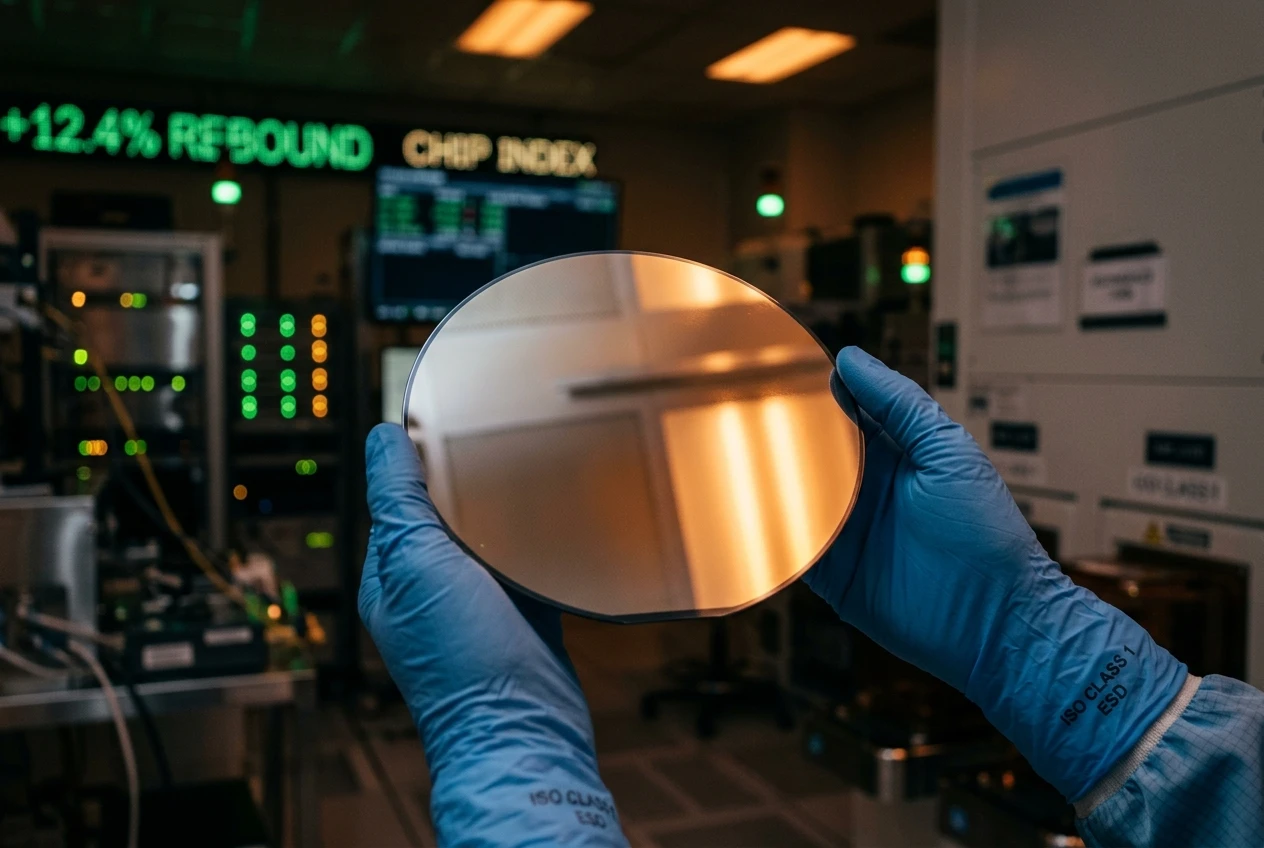
SK Hynix Lands on Nasdaq With a $26.5 Billion Raise
The anchor of the move is SK Hynix’s US listing. The South Korean memory giant priced its American depositary receipt sale at $149 on Thursday, raising $26.5 billion in what is the largest US-listed offering from a memory chipmaker to date. Demand ran at seven times the shares available, with the New York debut on Friday turning the trade into both a fund-raising event and a confidence vote in the memory cycle.
- S&P 500 (Thursday): 7,543.64 (+0.81%)
- Dow Jones (Thursday): 52,487.41 (+0.27%)
- Nasdaq Composite (Thursday): 26,206.89 (+1.30%)
- Cboe Volatility Index (Thursday): 15.84 (-6.27%)
US stocks had set the runway the night before, with the tech-heavy Nasdaq up 1.30% to 26,206.89 in Thursday’s session. The S&P 500 added 0.81% to 7,543.64 and the Dow Jones put on 0.27% to 52,487.41, with Wall Street shrugging off the fresh US-Iran strikes to focus on the chip trade ahead of Friday’s listing. The Cboe Volatility Index dropped 6.27% to 15.84, signaling orderly conditions in options markets. The PHLX Semiconductor Index added 3.1%, led by ARM Holdings, Micron and Marvell, the same names that frame Asia’s chip bid. Initial jobless claims came in steady, giving traders one more datapoint that did not stand in the way of the rebound.
The US chip bid translated directly into Asia’s morning because South Korea’s memory names sit at the same point in the cycle. Samsung Electronics recently reported blockbuster profit even as its share price sold off on AI-spending concerns, a gap Friday’s rebound starts to close. The wider memory squeeze has already shown up in consumer electronics, with Nintendo cutting its profit forecast and raising Switch 2 prices after LPDDR5X costs surged in a single quarter. SK Hynix’s $26.5 billion raise is the largest cash injection the memory trade has seen this year, with traders treating it as a vote in the cycle’s durability, and more on the Nintendo warning sits in the breakdown of the Switch 2 profit warning.
The chip trade stands to benefit from the same set of conditions. Asia’s opening on Friday carried the AI bid into the cash session, with Korean memory names leading Seoul and Tokyo’s chip suppliers following. Investors who follow SK Hynix’s cash and ADR markets simultaneously will get the cleanest two-way read on whether the memory cycle is turning over.
Oil Slid on Thursday Even as the US Struck 90 Targets in Iran
The kinetic track was loud on Thursday night. The US launched airstrikes on 90 Iranian military targets, and Iran retaliated by firing at targets in US-allied Middle Eastern states, the heaviest exchange in the fragile truce that followed the June 17 Memorandum of Understanding. Oil markets looked through it. Brent crude settled $1.72 lower at $76.30 a barrel, a 2.2% drop, and West Texas Intermediate fell $1.44 to $72.08 a barrel, a 2.0% decline. Friday morning saw only a fractional recovery, with Brent futures adding 18 cents, or 0.24%, to $76.48 a barrel and WTI futures rising 21 cents, or 0.29%, to $72.29 a barrel.
- Brent Thursday settle: $76.30 (-$1.72, -2.2%)
- WTI Thursday settle: $72.08 (-$1.44, -2.0%)
- Brent Friday morning: $76.48 (+$0.18, +0.24%)
- WTI Friday morning: $72.29 (+$0.21, +0.29%)
- Gold futures (Friday): $4,135.40/oz (-0.13%)
Gold futures slipped 0.13% to $4,135.40 an ounce, holding near the lower end of its three-month range. Gold usually catches a bid on geopolitical escalation, so the muted move is itself a signal that traders are not buying the strikes as a return to open war. The reaction did not extend into Friday’s marginal bounce.
Thursday’s pullback in oil marked a clear sign markets read the escalation as contained, per the energy recap on Thursday’s Iran strikes. Friday’s marginal bounce did not change that read.
Trump’s Comment That Iran Had Called Him Reset the Mood
What changed the read on the strikes was President Donald Trump’s statement on Thursday that Iran had reached out with proposals to return to negotiations. The market leaned on the diplomatic signal over the kinetic one, reading the new attacks as a contained test of the truce rather than an end to it. Stocks shrugged off the 90-target strike because the channel the strikes were supposed to break stayed open.
The channel runs through Doha. Qatari and Pakistani mediators are facilitating the dialogue between Washington and Tehran, passing proposals back and forth rather than seating the two sides across a table. Pakistan’s army chief, Field Marshal Asim Munir, carries a direct line to Trump and has been the operational node since the spring. Qatari officials have travelled to Tehran to keep the framework alive, with Qatar’s foreign ministry publicly confirming the mediation work. The full diplomatic picture sits in the wire-service account of how mediation ran through Doha.
Korea’s KOSPI Tests the AI Trade’s Concentration
South Korea’s KOSPI is the cleanest read on whether the AI trade can hold. Samsung Electronics and SK Hynix together account for more than half the index’s weighting, per Emmer Capital data. A 3.89% day in Seoul is, in practice, a Samsung-plus-SK-Hynix day dressed in market-wide language. Concentration of that size means a single memory-cycle call can flip the index from bear to rebound inside a week.
Ten trading days ago, that concentration was the same thing working against the KOSPI. The index fell more than 5% on Wednesday July 8, taking it 20% below its June 19 record high and into formal bear territory on LSEG data on AI skepticism from foreign investors, not on weak earnings from Samsung or weak demand from hyperscalers. Three concrete drivers frame the recovery bid going into Friday.
- The KOSPI volatility index is up over 200% year-to-date
- Samsung Electronics recently reported blockbuster Q2 operating profit
- SK Hynix is scheduled to release its second-quarter results later this month
The correction has been driven more by positioning than by a deterioration in fundamentals.
That was Jung In Yun, founder of Fibonacci Asset Management Global, in a CNBC analysis of the KOSPI correction.
Underneath the headline numbers, the demand story has not changed. A DP World supply-chain survey of 292 Chinese executives names AI deployment as the top growth driver for the next one to three years, with 50% of Chinese respondents citing it, per the separate analysis of the survey findings. The wider memory squeeze is the pressure on prices, not the signal that demand is rolling over. Hyperscalers are locking in multi-year supply with Samsung and SK Hynix, which sets up the cycle’s next leg into the back half of 2026. Friday’s session is the index starting to climb back into the trade that made it the year’s best-performing major market.
What Quietly Holds the Rally Together
The consequential force underneath Friday’s move is the diplomatic channel that Qatari and Pakistani mediators are holding open. The damage from the US strike on 90 Iranian targets was priced into Thursday’s oil drop, which means the market is treating the kinetic action as contained. The chip rally has room to keep running as long as the channel is open.
The channel matters because of the timing. A Memorandum of Understanding between the US and Iran was signed on June 17 with a 60-day deadline for a broader nuclear deal, and the next round of talks has been running in Switzerland through July. A senior Pakistani official and an Iranian official involved in those talks told MS NOW that the meetings went into the early hours, with both sides framing the atmosphere as constructive despite tough public statements. The August deadline for a final agreement sits at the end of that runway, and it is the next binding event for the strike-versus-deal balance, per the report on the Swiss talks that set the roadmap. Analysts at Axi told CNBC they expect Brent to trade between $75 and $82 a barrel in the near term if the agreement holds, a range that leaves room for the chip trade to run without an inflation shock.


South Korea Retail Investors Face Reckoning After KOSPI AI Rally Collapses

Surrey AI Maps Three Heart Attack Paths and Their Molecular Roots

Germany Locks Neutral Apple ATT Prompts Across Most of Europe

Apple’s 5% EU Fee Quietly Rewrites Alternative App Store Math

Apple’s EU Fee Truce Cuts Complexity but Leaves Rivals Fuming

Pixel 11 Pro Fold Trades Thinness for Durability and Seven-Year Stay

Mayo AI Flags HCM Obstruction From Everyday Ultrasound Videos

Indian Brands Quietly Scale Landmark Screens and Home Tech

Navin Vatsa Turns Grief Into a Lifetime of Quiet Seeing

Google Bets Pixel 11 Agentic AI Will Redefine Phones

Oracle Cuts 21,000 Jobs in a Year, Cites AI in 10-K Filing

Fable 5 and Mythos 5 Return as US Lifts Anthropic Export Controls

SpaceX’s Google Deal Turns a Rocket Company Into a Cloud Landlord

CD Projekt Red Co-CEO: Redemption Arc Isn’t Done, Witcher 4 in 2027

XPL Rallies 30% Ahead of Plasma One Card Tier Launch

Google Search Profiles Build a Follow Graph Inside Discover

DGO App Brings Rs 549 Mobile Pass for FIFA World Cup 2026 in Nepal

Moonshot AI Targets $30 Billion in China’s Fastest AI Funding Sprint

Oppo’s ColorOS 17 Eligibility List Leaves A-Series Buyers Behind

Microsoft Xbox Layoffs Start in July as Sharma Slams 3% Margin
-
 AI2 months ago
Oracle Cuts 21,000 Jobs in a Year, Cites AI in 10-K Filing
-
 AI2 months ago
Fable 5 and Mythos 5 Return as US Lifts Anthropic Export Controls
-
 AI3 months ago
SpaceX’s Google Deal Turns a Rocket Company Into a Cloud Landlord
-
 GAMING2 months ago
CD Projekt Red Co-CEO: Redemption Arc Isn’t Done, Witcher 4 in 2027
-
 CRYPTO2 months ago
XPL Rallies 30% Ahead of Plasma One Card Tier Launch
-
 NEWS3 months ago
Google Search Profiles Build a Follow Graph Inside Discover
-
 APPS3 months ago
DGO App Brings Rs 549 Mobile Pass for FIFA World Cup 2026 in Nepal
-
 AI3 months ago
Moonshot AI Targets $30 Billion in China’s Fastest AI Funding Sprint