
CRYPTO
Bolivia Studies Adding USDT Stablecoin to Its Payment System
Bolivia’s economy minister says regulators are studying whether USDT can circulate alongside the boliviano and dollar as banks already sell it.

Bolivia’s government is studying whether to let Tether’s USDT stablecoin circulate as official payment currency alongside the boliviano and the U.S. dollar, Economy Minister José Gabriel Espinoza said Friday. It is a technical review, not a rollout, and no timeline has been set.
The bigger shift is already done. Bolivian banks sell USDT, importers pay overseas suppliers in it, and the central bank is now trying to write rules for money it never issued and cannot print.
Espinoza Calls It a Technical Evaluation
Espinoza laid out the review during a Friday briefing first reported by the Bolivian newspaper La Razón. He said the ministry is still working through the basics.
We are working on and technically evaluating the possibility of including USDT in the Bolivian payment system so that it circulates as just another currency.
Espinoza, Bolivia’s economy and public finance minister, made the comment as part of a wider briefing on the country’s digital asset plans. He said comprehensive regulation is still lacking even though the central bank lifted its ban on digital assets two years ago.
The proposal, if adopted, would not make USDT legal tender. It would let the token circulate as a recognized payment instrument alongside the boliviano and the dollar, with no change to the boliviano’s status as Bolivia’s sole official currency. Neither the central bank nor lawmakers have published draft implementation rules.
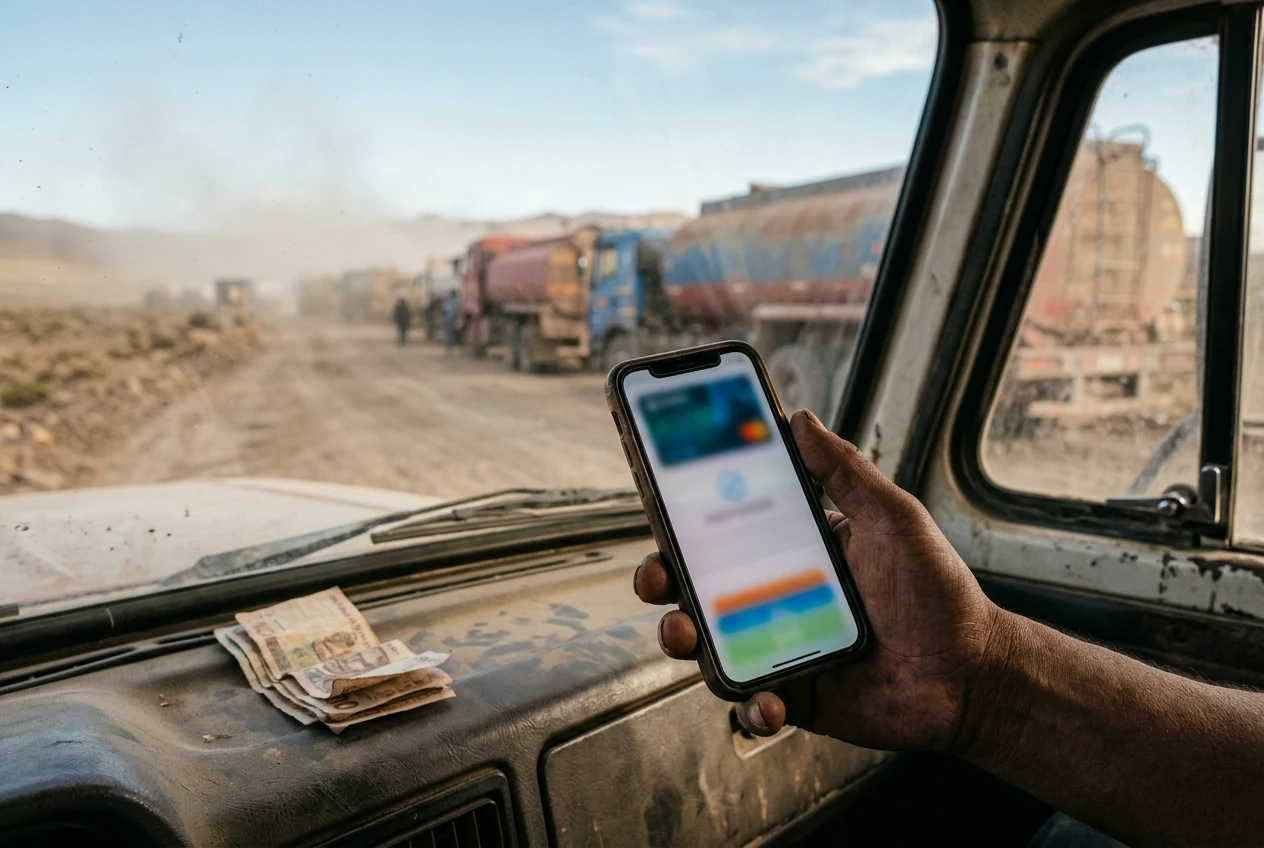
Fifteen Years of a Fixed Peg Just Broke
Bolivia held its exchange rate at 6.86 bolivianos per dollar for purchases and 6.96 for sales from 2011 until earlier this year. Mounting pressure on foreign reserves forced the central bank to abandon that peg and let the boliviano float.
The new range sits around 9.73 to 9.83 bolivianos per dollar, a decline of roughly 40% in the currency’s dollar value. Inflation averaged above 22% in the twelve months to October, according to Bolivia’s National Institute of Statistics.
Dollars themselves grew scarce well before the float. Banks limited withdrawals, sometimes to as little as $100 a week, and a parallel exchange market grew to absorb the overflow.
The central bank now says it will begin returning $933 million in frozen dollar deposits starting July 15, a phased effort meant to rebuild confidence in traditional banking now that the peg is gone.
The Banks Already Built the Rails
Formal government approval would mostly catch up to what Bolivian banks have already rolled out on their own.
| Institution | USDT Product | Launched | Detail |
|---|---|---|---|
| Banco Unión (state owned) | USDT through its Yasta e wallet | April 2026 | Works with EFY Finance for cross border transfers and remittances |
| Banco FIE | Crypto Account | 2026 | Lets customers buy and sell USDT inside its mobile app |
| Banco Bisa | USDT custody service | October 2024 | 200 USDT minimum, 10,000 USDT daily limit, fees from 35 to 100 bolivianos (about $4.90 to $14) |
| Oobit | Self custodial wallet spending | 2025 | Lets USDT holders pay at more than 150 million Visa enabled stores worldwide |
Acceptance has moved well past bank apps and into storefronts.
- Toyota, Yamaha and BYD dealerships began taking USDT for vehicle purchases in September 2025.
- State energy company YPFB has used crypto to help pay for fuel and energy imports.
- A Bolivian university pays some foreign professors in Bitcoin.
- A shop at El Alto International Airport lists candy and sunglasses in USDT.
Nearly 45% of Bolivians had no account with a bank or mobile money provider as of 2024, per World Bank figures Espinoza has cited, a gap officials hope wider stablecoin access could help close.
From a Total Ban to a Dollar Substitute
Bolivia’s central bank banned financial institutions from touching digital assets in 2014, citing risks to monetary stability and consumer protection. Banks were barred from any crypto activity, and peer to peer trading sat in a legal gray zone for a decade.
That ended with Board Resolution No. 082/2024 in June 2024, which lifted the ban and created a channel called Electronic Payment Instruments for virtual asset transactions.
Adoption moved fast from there. Virtual asset transaction volume climbed from $46.5 million in the first half of 2024 to $294 million in the same period of 2025, a jump the central bank put at 630%, though an independent recalculation by Central Banking puts the real increase closer to 532%. Separately, crypto transactions processed through the regulated financial system rose twelvefold between July 2024 and May 2025, reaching 10,193 operations worth more than $88 million.
Chainalysis tracked $14.8 billion in total crypto and stablecoin volume moving through Bolivia between July 2024 and June 2025, ranking the country 46th worldwide for crypto adoption.
President Rodrigo Paz Pereira took office in November 2025 promising to build on that momentum. Days later, Espinoza announced banks would be allowed to offer stablecoin linked savings accounts, credit cards and loans, and the central bank signed a cooperation agreement with El Salvador’s National Commission for Digital Assets to trade regulatory expertise.
Why Is Bolivia Still on the FATF Gray List?
Bolivia has been under increased monitoring by the Financial Action Task Force since June 2025, meaning international regulators see gaps in how the country polices money laundering and terrorist financing. The status does not bar Bolivia from using USDT, but it raises the bar for any formal framework, since foreign banks already scrutinize transfers tied to a flagged country.
The Financial Action Task Force has tracked Bolivia’s compliance gaps for years through its follow-up reviews on money laundering controls. As of its most recent update, Bolivia still appeared among jurisdictions still under increased monitoring, alongside Venezuela, Kenya and Lebanon.
Espinoza has been direct about the risk. Bolivia is on the gray list “yet another consequence of the problems they left us with in the past, and these crypto assets must be carefully evaluated,” he said, adding that regulators are drafting rules for people who adopted the tokens “in many cases out of necessity.”
What We Know
- Confirmed: Espinoza’s ministry is technically evaluating USDT circulation alongside the boliviano and the dollar.
- Confirmed: The proposal would not make USDT legal tender, and the boliviano stays Bolivia’s only official currency.
- Confirmed: Bolivia has sat on the FATF gray list since June 2025.
What’s Unconfirmed
- Unclear: No timeline exists for a final decision, and no draft rules have been published.
- Unclear: Whether Tether would need to register locally or issue Bolivia specific reserve attestations.
- Unclear: Whether merchants would ever be required to accept USDT or whether acceptance stays voluntary.
Tether Stands to Gain the Most
USDT is the world’s largest stablecoin, with a market capitalization above $184 billion and the third largest of any crypto asset. Tether Chief Executive Paolo Ardoino welcomed the news, posting on X that USDT is increasingly used as a “cornerstone” within emerging market economies.
Tether is a private company registered outside Bolivia. Its reserves are audited on its own schedule, most recently through a KPMG review announced in March 2026 covering roughly $185 billion in backing assets, but no Bolivian regulator signs off on that audit.
A formal payments role would put Bolivia in new territory. It would be leaning on a dollar proxy it cannot print, cannot audit independently, and cannot freeze on its own authority, issued by a company whose incentives are commercial rather than monetary.
Tether has kept pushing USDT into new corridors elsewhere too. Hyundai Motor America and Hyundai Motor Mexico piloted a cross border treasury payment on the Avalanche blockchain that moved $20,000 in about seven minutes, versus three to four hours for a conventional bank transfer.
That fits a broader pattern of institutional money quietly returning to crypto’s infrastructure layer rather than its price charts. Andreessen Horowitz, for one, put $2.2 billion behind crypto’s quiet cycle this year, wagering on the plumbing instead of the headlines. Statista’s market outlook for the country also notes that limited internet access curbs wider adoption outside the cities where banks and exchanges are concentrated, a reminder that the boom is real but not evenly spread.
Frequently Asked Questions
Is USDT Legal Tender in Bolivia?
No. The boliviano remains Bolivia’s only legal tender, and the proposal under review would let USDT circulate as a recognized payment option rather than replace the national currency. Under Bolivia’s existing tax rules, individual traders generally owe no capital gains tax on personal crypto profits, though commercial activity such as mining or staking faces a 25% corporate tax, a distinction regulators would likely carry into any USDT framework.
What Is the FATF Gray List?
The Financial Action Task Force gray list flags countries with weak anti money laundering and terrorist financing controls for increased monitoring. It is not a blacklist barring transactions, but it pushes foreign banks toward extra scrutiny of transfers connected to listed countries, including Bolivia since June 2025.
Which Bolivian Banks Already Offer USDT?
Banco Unión, Banco FIE and Banco Bisa all offer regulated USDT services today. Banco Bisa, for example, charges 280 bolivianos, about $39, for transfers of USDT to dollar accounts held abroad, on top of its standard custody fees.
How Much Has Crypto Use Grown in Bolivia?
Bolivia’s monthly crypto transaction volume hit a record $68 million in May 2025 alone, based on central bank figures, months before the government’s broader push into stablecoin banking that November.
When Will Bolivia Decide on USDT?
There is no confirmed date. Espinoza’s ministry says the evaluation remains in early stages, and any rollout depends on regulations that have not yet been drafted or published.
Disclaimer: This article is for informational purposes only and does not constitute financial, legal or investment advice. Cryptocurrency and stablecoin policy carries regulatory and market risk, and readers should consult a qualified financial or legal professional before acting on Bolivia’s evolving rules. Figures are accurate as of publication on July 14, 2026.


South Korea Retail Investors Face Reckoning After KOSPI AI Rally Collapses

Surrey AI Maps Three Heart Attack Paths and Their Molecular Roots

Germany Locks Neutral Apple ATT Prompts Across Most of Europe

Apple’s 5% EU Fee Quietly Rewrites Alternative App Store Math

Apple’s EU Fee Truce Cuts Complexity but Leaves Rivals Fuming

Pixel 11 Pro Fold Trades Thinness for Durability and Seven-Year Stay

Mayo AI Flags HCM Obstruction From Everyday Ultrasound Videos

Indian Brands Quietly Scale Landmark Screens and Home Tech

Navin Vatsa Turns Grief Into a Lifetime of Quiet Seeing

Google Bets Pixel 11 Agentic AI Will Redefine Phones

Oracle Cuts 21,000 Jobs in a Year, Cites AI in 10-K Filing

Fable 5 and Mythos 5 Return as US Lifts Anthropic Export Controls

SpaceX’s Google Deal Turns a Rocket Company Into a Cloud Landlord

CD Projekt Red Co-CEO: Redemption Arc Isn’t Done, Witcher 4 in 2027

XPL Rallies 30% Ahead of Plasma One Card Tier Launch

Google Search Profiles Build a Follow Graph Inside Discover

DGO App Brings Rs 549 Mobile Pass for FIFA World Cup 2026 in Nepal

Moonshot AI Targets $30 Billion in China’s Fastest AI Funding Sprint

Oppo’s ColorOS 17 Eligibility List Leaves A-Series Buyers Behind

Microsoft Xbox Layoffs Start in July as Sharma Slams 3% Margin
-
 AI2 months ago
Oracle Cuts 21,000 Jobs in a Year, Cites AI in 10-K Filing
-
 AI2 months ago
Fable 5 and Mythos 5 Return as US Lifts Anthropic Export Controls
-
 AI3 months ago
SpaceX’s Google Deal Turns a Rocket Company Into a Cloud Landlord
-
 GAMING2 months ago
CD Projekt Red Co-CEO: Redemption Arc Isn’t Done, Witcher 4 in 2027
-
 CRYPTO3 months ago
XPL Rallies 30% Ahead of Plasma One Card Tier Launch
-
 NEWS3 months ago
Google Search Profiles Build a Follow Graph Inside Discover
-
 APPS3 months ago
DGO App Brings Rs 549 Mobile Pass for FIFA World Cup 2026 in Nepal
-
 AI3 months ago
Moonshot AI Targets $30 Billion in China’s Fastest AI Funding Sprint