
CRYPTO
House Republicans Bet Crypto Tax Relief Can Beat the Midterm Clock
House Republicans are pushing six crypto tax bills through committee before Democrats could retake the chamber, and the staking tax fight remains unresolved.

Six crypto tax bills reached the House Ways and Means Committee on June 9, and the hearing exposed a rift Republicans didn’t expect this early. Committee Chairman Jason Smith, a Missouri Republican, called the current tax code untenable for the roughly 67 million Americans who now own digital assets. Democrats on his own committee spent the afternoon asking him to slow down.
Republicans are racing to pass the fix before November’s midterms might hand Democrats the gavel. The argument that broke out inside the hearing room was over who benefits most from the specific mechanism at the center of the package: a tax deferral for crypto miners and stakers that critics say could let a mining firm tied to President Trump’s family shelter income indefinitely.
Six Bills Meet a Wall of Democratic Caution
The committee examined a package built around six core bills, part of a broader slate of eight bills and discussion drafts Smith said the panel reviewed that day. Smith framed the stakes in blunt terms, telling the room that America needs clear rules to stay the digital asset capital of the world. His written statement put crypto ownership at a quarter of the country and the industry’s market value above $2 trillion.
Democrats weren’t convinced the fixes were ready. Rep. John Larson, a Connecticut Democrat, said there’s urgency but also real doubt about whether Congress is moving too fast without understanding the consequences.
“There’s far more questions than there seem to be answers,” Larson said during the hearing.
Ranking member Richard Neal, a Massachusetts Democrat, told reporters afterward he doesn’t expect a bipartisan deal on crypto tax policy until after the midterms. At the hearing itself he struck a softer tone, saying he’s aligned with the goal of a bipartisan bill, just not on this timeline.
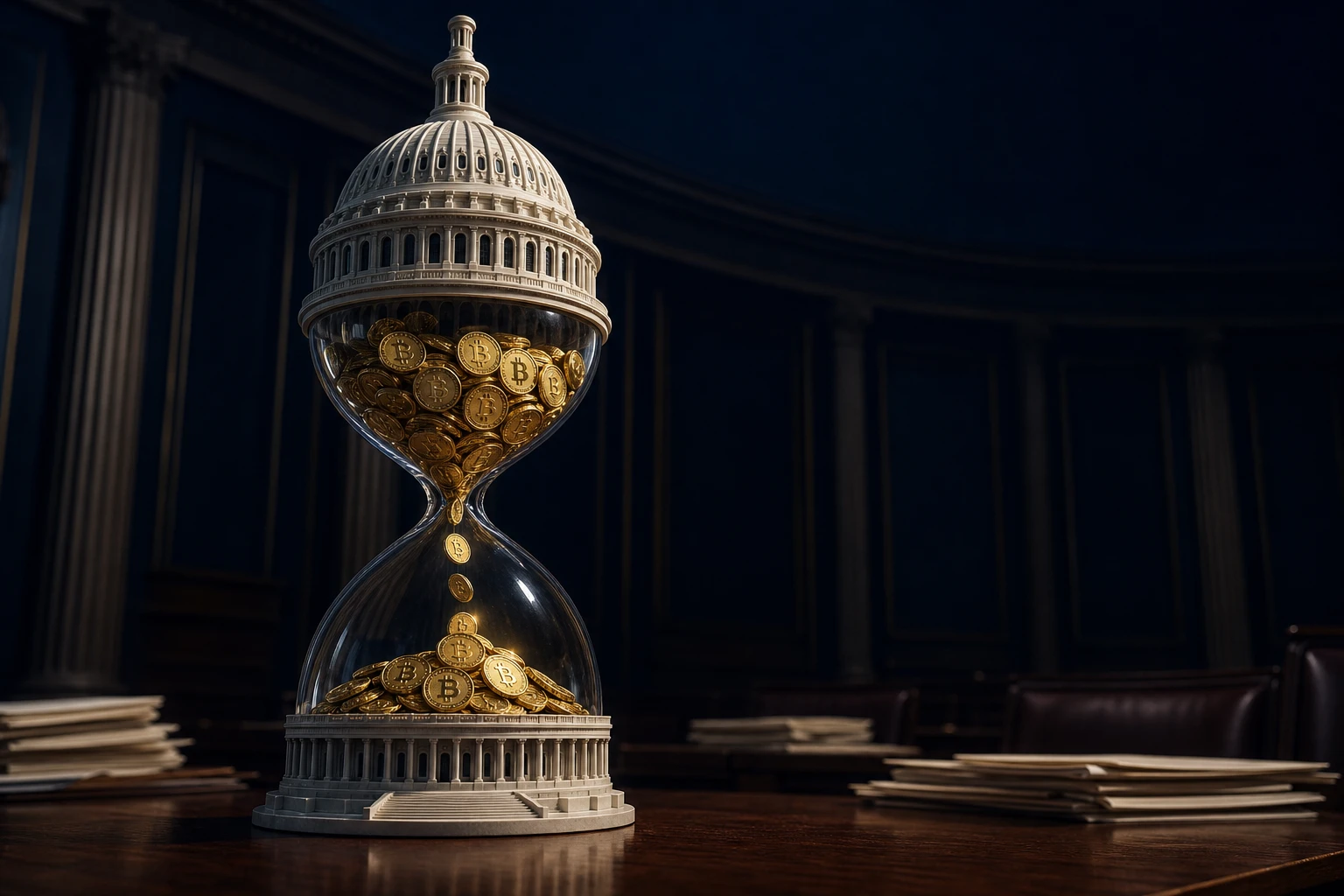
Republicans Are Racing a Midterm Deadline
Unspoken at the hearing but shaping everything around it: Democrats are widely favored to retake the House in November, a shift that would hand them the committee gavel Republicans now hold. Republicans in both chambers are trying to bank crypto wins while they still control Congress and the White House.
Smith has argued the U.S. risks losing ground to jurisdictions with clearer digital asset tax rules. Hong Kong is one example moving in that direction; its own crypto tax bill tied to a global reporting framework is now working through legislative review, part of the same competitive pressure Smith cited when he named Singapore and Switzerland as rivals for crypto capital.
The tax push is one piece of a bigger 2026 puzzle. Separately, regulators have been building out the SEC’s rulemaking agenda on tokens, custody and brokers, running alongside the tax bills and the market-structure fight over the Clarity Act in the Senate.
When Should Miners and Stakers Actually Owe Tax?
Under current IRS rules, someone who mines or stakes crypto owes ordinary income tax the moment they receive new tokens, valued at that day’s price, whether they sell or not. One bill in the package, the Tax Clarity for Mining and Staking Act, would let taxpayers elect instead to defer that income until they actually dispose of the asset.
Rep. Mike Carey, an Ohio Republican, introduced the bill. Democrats, including some who generally back crypto, worried Tuesday that deferring tax on mining and staking gains could make crypto more attractive than taxable investments like stocks and bonds, potentially reshaping how money flows through markets.
“It seems to be a real sticking point in all this, and it seems that maybe we’re at an impasse,” said Rep. Mike Thompson, a California Democrat who previously voted for both the GENIUS Act and the Clarity Act.
Mike Kaercher, deputy director of the Tax Law Center at NYU Law, testified that characterizing the rewards is “a battle of analogies.” He argued the rewards are “really a payment for service” rather than something “like harvesting your own crops or selling your own chair,” pointing to a recent Tax Court decision that leaned the same way. Rep. Lloyd Doggett, a Texas Democrat, went further, calling the deferral a “special tax advantage” for crypto and asking whether a market crash inside retirement accounts could eventually prompt a taxpayer bailout. Kaercher said a crash “would have an enormous impact on households’ retirement savings.”
The Paperwork Problem Behind the Push
Industry witnesses came at the hearing from the opposite direction, arguing the real burden falls on ordinary users making tiny purchases. Lawrence Zlatkin, Coinbase’s vice president of tax, made the industry’s clearest case for broadening a separate provision: a $10 exemption for network fees, also called gas fees, in the Less Tax Paperwork for Digital Asset Owners Act.
A consumer who uses Bitcoin to buy a pair of jeans still has to calculate and report a capital gain. That’s not good tax policy. Americans shouldn’t need an accountant to buy jeans.
Zlatkin testified that Coinbase alone pushes roughly 800 million transactions worth of data into the IRS, and that about half of those submissions involve amounts under $100. Rep. Ron Estes, a Kansas Republican, said half of all Form 1099-DA filings for 2025 covered amounts below $10, calling the current system “completely unworkable.”
- 67 million Americans, about a quarter of the country, now own some form of cryptocurrency, per Smith’s opening statement.
- $2 trillion-plus is the crypto industry’s current market value, which Smith says has outgrown the tax code built for it.
- 56 million tax forms Kraken alone filed with the IRS for 2025, with more than half covering transactions of $10 or less.
- $10 is the de minimis threshold one bill sets for exempting network fees from capital gains reporting.
Applying existing wash sale rules to digital assets, a separate anti-abuse measure in the package, could raise $23.5 billion for the federal government over a decade, according to Treasury’s own 2024 revenue estimate, even as other provisions in the same bundle reduce revenue elsewhere.
A Trump-Linked Miner Raises the Stakes
Outside critics zeroed in on who actually collects the benefit from a mining and staking deferral. The Revolving Door Project, a watchdog group that tracks industry influence in government, argued mining firms including American Bitcoin, in which President Trump’s sons Eric and Donald Jr. hold a significant stake, could defer taxes indefinitely while still profiting from their holdings.
The industry pushed back directly. The bill “does not provide unlimited deferral or full parity with all forms of self-created property,” trade groups wrote in a letter to the committee, adding that it “ensures income is recognized while avoiding immediate taxation before taxpayers can monetize the asset.” Summer Mersinger, chief executive of the Blockchain Association, said the tax code shouldn’t force people securing decentralized networks to sell assets before they can reasonably cash out just to cover a tax bill.
Advocacy group Americans for Tax Fairness raised a related concentration concern, noting that just three companies running mining pools control most Bitcoin mining activity. That framing cuts against the industry’s portrayal of miners as small operators and toward large, capital-intensive firms as the deferral’s biggest beneficiaries.
Banks weighed in too. The American Bankers Association said the deferral shows “clear favoritism for cryptocurrencies over other asset classes” and warned it could draw deposits away from traditional lenders.
Where Experts Disagree
- Industry groups, including the Blockchain Association, Crypto Council for Innovation and Digital Chamber, call the deferral a balanced compromise, not an unlimited tax shelter.
- Mike Kaercher of NYU’s Tax Law Center says the bill’s guardrails may still leave room for taxpayers to use business structures to avoid tax.
- The American Bankers Association says the provision favors crypto over every other asset class and could pull deposits out of banks.
The Senate Is Building a Parallel Track
The House isn’t the only chamber working this problem. The bipartisan PARITY Act, introduced in the House in March, tackles stablecoin taxation but stops short of a broad de minimis exemption, directing Treasury instead to study the idea and report back within a year.
On the Senate side, Finance Committee Chairman Mike Crapo has been building his own package since an October 2025 hearing. Sen. Steve Daines said the Senate’s framework is already drafted and “more similar than not” to the House committee’s approach, with a possible release by fall.
The de minimis idea itself has a long, mostly failed history in Congress. Then-Sens. Pat Toomey and Kyrsten Sinema pushed a $50 de minimis exemption back in 2022 that never advanced, and Sen. Cynthia Lummis tried to fold a $300 version into last year’s reconciliation package before it fell out of the final bill.
Time is a genuine constraint for the bill’s biggest champion. Lummis, widely seen as the Senate’s most forceful voice on crypto tax policy, is leaving the Senate in January 2027, narrowing the window for the version of relief she’s spent years pushing.
Neal has said he doesn’t expect a bipartisan deal on crypto taxes until after the midterms. Lummis departs the Senate two months after that.
Frequently Asked Questions
What would the $10 de minimis exemption actually cover?
The exemption in the Less Tax Paperwork for Digital Asset Owners Act only applies to network fees, the small gas charges paid to process a transaction, and to gains or losses on regulated stablecoins. It wouldn’t cover a full purchase like buying jeans with Bitcoin, which is the broader relief Coinbase and other exchanges are still pushing for. Separately, Treasury regulations already set a $10,000 aggregate de minimis reporting threshold for certain stablecoin transactions, an older and different rule than the $10 gas-fee exemption now before Congress.
How are staking and mining rewards taxed right now, before any bill passes?
Under current IRS guidance, miners and stakers owe ordinary income tax the moment they gain control of new tokens, based on fair market value that day, even if they never sell. IRS Notice 2014-21 set that standard for mined Bitcoin, and Revenue Ruling 2023-14 extended it to staking rewards. The pending bills would let taxpayers elect to defer that income until they actually sell.
Could Congress still pass a crypto tax bill before the midterms?
It’s possible but tight. The House committee took no votes at the June 9 hearing, and Senate Finance Committee Chairman Mike Crapo is aiming for a fall release, according to Sen. Steve Daines. Congress is scheduled to break for summer recess after Aug. 7, 2026, and campaign season eats into the calendar fast after that.
Are Democrats trying to block the crypto tax bills entirely?
No. Chairman Jason Smith has said repeatedly he won’t move the legislation without bipartisan support, and ranking Democrat Richard Neal has called himself supportive of the underlying goal. The disagreement is over timing and over specific provisions, especially the mining and staking deferral, not over whether crypto needs clearer tax rules at all.
What’s the difference between these tax bills and the Clarity Act?
The tax bills, written by the Ways and Means Committee, only change how crypto income and transactions get reported and taxed. The Clarity Act is a separate market-structure bill that would divide oversight of digital assets between the SEC and the CFTC, and it already cleared the Senate Banking Committee on a 15-9 vote. The two bills move on different tracks through different committees.
Disclaimer: This article is for informational purposes only and does not constitute tax, legal or financial advice. Crypto tax rules are actively changing and involve real financial risk and compliance obligations; consult a qualified tax professional before making decisions based on staking, mining or digital asset transactions. Figures in this article are accurate as of publication.


South Korea Retail Investors Face Reckoning After KOSPI AI Rally Collapses

Surrey AI Maps Three Heart Attack Paths and Their Molecular Roots

Germany Locks Neutral Apple ATT Prompts Across Most of Europe

Apple’s 5% EU Fee Quietly Rewrites Alternative App Store Math

Apple’s EU Fee Truce Cuts Complexity but Leaves Rivals Fuming

Pixel 11 Pro Fold Trades Thinness for Durability and Seven-Year Stay

Mayo AI Flags HCM Obstruction From Everyday Ultrasound Videos

Indian Brands Quietly Scale Landmark Screens and Home Tech

Navin Vatsa Turns Grief Into a Lifetime of Quiet Seeing

Google Bets Pixel 11 Agentic AI Will Redefine Phones

Oracle Cuts 21,000 Jobs in a Year, Cites AI in 10-K Filing

Fable 5 and Mythos 5 Return as US Lifts Anthropic Export Controls

SpaceX’s Google Deal Turns a Rocket Company Into a Cloud Landlord

CD Projekt Red Co-CEO: Redemption Arc Isn’t Done, Witcher 4 in 2027

XPL Rallies 30% Ahead of Plasma One Card Tier Launch

Google Search Profiles Build a Follow Graph Inside Discover

DGO App Brings Rs 549 Mobile Pass for FIFA World Cup 2026 in Nepal

Moonshot AI Targets $30 Billion in China’s Fastest AI Funding Sprint

Oppo’s ColorOS 17 Eligibility List Leaves A-Series Buyers Behind

Microsoft Xbox Layoffs Start in July as Sharma Slams 3% Margin
-
 AI2 months ago
Oracle Cuts 21,000 Jobs in a Year, Cites AI in 10-K Filing
-
 AI2 months ago
Fable 5 and Mythos 5 Return as US Lifts Anthropic Export Controls
-
 AI3 months ago
SpaceX’s Google Deal Turns a Rocket Company Into a Cloud Landlord
-
 GAMING2 months ago
CD Projekt Red Co-CEO: Redemption Arc Isn’t Done, Witcher 4 in 2027
-
 CRYPTO2 months ago
XPL Rallies 30% Ahead of Plasma One Card Tier Launch
-
 NEWS3 months ago
Google Search Profiles Build a Follow Graph Inside Discover
-
 APPS2 months ago
DGO App Brings Rs 549 Mobile Pass for FIFA World Cup 2026 in Nepal
-
 AI3 months ago
Moonshot AI Targets $30 Billion in China’s Fastest AI Funding Sprint