
AI
Intrado Pushes AI Into Every Layer of 9-1-1 Operations
Intrado launched three AI-enabled 9-1-1 tools: VIPER NextGen, VIPER Answer, and VIPER NextGen Cloud Backup. The launch lands as 88% of PSAPs face outages.

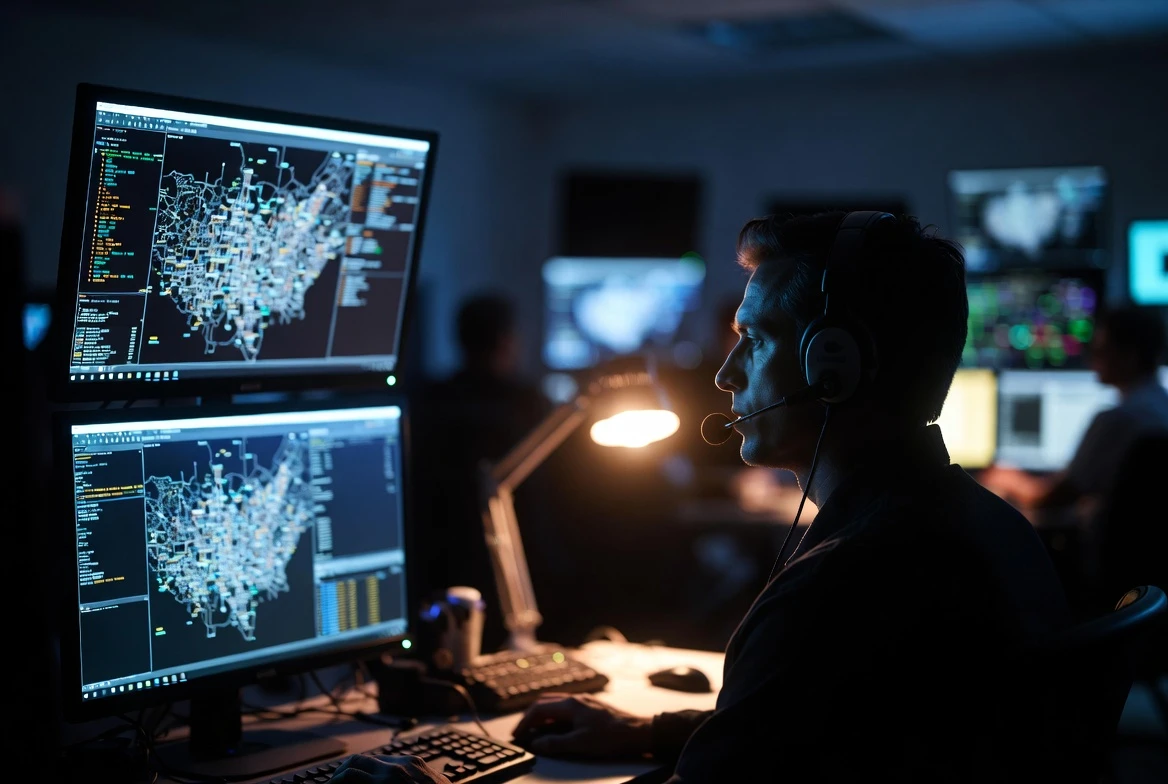
On June 17, Longmont, Colorado-based Intrado rolled out a portfolio of AI-enabled, cloud-native products aimed at the country’s public safety answering points, the emergency call centers that field 911 calls. The three offerings cover emergency call handling, non-emergency call automation, and cloud-based backup for 9-1-1 operations. Intrado CEO Joe Custer framed the launch as a way to put AI in the hands of understaffed telecommunicators without replacing them.
The push lands as PSAPs face a stubborn mix of burnout, technology outages, and cyber threats. The third-annual Pulse of 9-1-1 report, a joint project of Carbyne and the National Emergency Number Association, found that 88% of emergency communication centers experienced some kind of technology outage in the year before June 2025, up from 75% the year before. Nine percent of centers also reported a telephony denial-of-service attack or another cyberattack in the same window.
Inside the New Intrado Portfolio
The portfolio spans three Intrado products that target different parts of a 911 center’s day. The company’s launch language frames each as augmentation rather than replacement. Two of the three products handle live calls; the third covers what happens when the call system itself goes down. The portfolio release dates from June 17, 2026, and the company is pitching to a market where 86% of ECC professionals say they are comfortable with AI assisting on calls.
VIPER NextGen is the centerpiece of the launch, a cloud-native call-handling platform that unifies voice, text, mapping, and analytics inside a single interface. AI sits inside the platform as live transcription and translation rather than as an autonomous dispatcher. Intrado describes the platform as designed to support NG9-1-1 modernization initiatives, per the company’s June 17 announcement. The launch language stays narrow on what the AI can do: transcribe, translate, or escalate when a call looks like it crosses into a life-safety situation. Each of the three products carries language that frames the augmentation rather than the replacement.
The framing across the portfolio stays cautious about what AI does inside a 911 center. The release applies the same augmentation language to all three products, including the cloud-backup layer, which is positioned for resilience during outages rather than as another AI chat surface. The continuity piece is the resilience backstop, not a new model of call-handling.
- VIPER NextGen: a cloud-native call-handling platform unifying voice, text, mapping, and analytics, with AI-assisted transcription and translation.
- VIPER Answer: an AI-powered virtual agent for non-emergency calls across voice, SMS, and web, with intelligent triage and escalation to a human call-taker when needed.
- VIPER NextGen Cloud Backup: a cloud-based backup with automated failover for NG9-1-1 ESInet environments, built to keep 9-1-1 operations running during outages.
What the 2025 Pulse Data Documented
The launch lands on a market that NENA, the 9-1-1 Association, and Carbyne say is finally ready for AI. The two organizations released the third annual Pulse of 9-1-1 survey on June 23, 2025, drawing on responses from 1,379 public safety professionals. The headline finding on AI: 86% of respondents say they are at least somewhat comfortable with AI assisting in call-taking. More than three-quarters believe technology can ease staffing shortages. Burnout has overtaken hiring as the top workforce challenge, with the share of centers reporting open positions falling from 82% in 2024 to 74% in 2025.
The infrastructure behind those calls is fragile in ways that surprise outsiders. The same Pulse report found that 88% of emergency communication centers experienced some kind of technology outage in the year ending mid-2025, up from 75% the year before. The outages often sit outside the centers’ direct control, but they now rank among the top operational risks nationwide. Nine percent of centers reported a telephony denial-of-service attack or another cyberattack in the same window, a category the survey calls new and fast-growing.
Nearly 70% of telecommunicators report daily pre-shift stress, with reduced performance and productivity vaulting to the most cited six-month symptom of burnout. A 22% training failure rate among new hires is drawing new attention, with centers turning to modular learning to address it. Use of employer mental-health services climbed from 44% to 53% over the same period, and the report frames the sector as at a ‘critical inflection point’ in its lead.
NENA’s CEO, Brian Fontes, used a sharper frame than usual in the report’s release. He described the strain on 9-1-1 professionals as systemic fatigue that goes beyond day-to-day stress, and called the survey a wake-up call for new investment in training and wellness.
- 88%: share of emergency communication centers that experienced a technology outage in the year to mid-2025
- 74%: share of centers reporting open positions in 2025, down from 82% in 2024
- 86%: share of ECC professionals at least somewhat comfortable with AI assisting on calls
- 63%: share of centers whose non-emergency call volume sits between 50% and 80% of total traffic
- 9%: share of centers that reported a telephony denial-of-service attack or another cyberattack over the past year
The Cloud Backup Layer Is Doing the Heavy Work
The country’s long-running transition to next-generation 9-1-1 is one of the pressures named in Intrado’s June 17 release. Oregon is mid-rollout on that migration, with Intrado hired as one of two vendors to run the state’s call-routing across all 36 counties, in a slow national migration without a federal deadline. The third Intrado product in the portfolio, VIPER NextGen Cloud Backup, sits over the NG9-1-1 ESInet, the IP network that PSAPs share. It is a cloud-based backup with automated failover, built to keep 9-1-1 answering when the primary system goes down.
Intrado’s portfolio of AI products reflects the company’s vision for the future of emergency communications, where intelligent technologies augment rather than replace telecommunicators. By embedding real-time intelligence directly into work environments, Intrado aims to help agencies improve speed, accuracy, and operational effectiveness while human expertise remains central to critical decision-making.
Joe Custer, Intrado’s CEO, anchored that vision in the company’s June 17 portfolio release. The continuity framing lands against a documented outage record. Wikipedia’s entry on Intrado records a 2014 outage tied to the company that hit 14 states for hours and left more than 6,600 calls unanswered. A 2018 incident left millions without 911 access for 65 minutes across six states, drawing a $175,000 payment to the US Treasury. A 2020 episode again cut 911 for more than an hour across 14 states.
Motorola Put Similar Tools in Utah First
Intrado is not alone in this race. On July 1, 2025, the Utah Communications Authority announced a statewide deployment of Motorola Solutions’ Virtual Response AI tool for non-emergency line calls. The agency said an estimated 65% of Utah’s 911 PSAPs’ workloads are non-emergency line calls, the kind that include parking complaints and noise reports. The 27 PSAPs across Utah processed nearly 900,000 911 calls and over 2 million non-emergency line calls in the year before the announcement.
Utah’s deployment gives Motorola a year of operating data Intrado does not have on a comparable scale. Both offerings target the same call-center pain point: the volume of 10-digit non-emergency calls that tie up call-takers who should be answering 9-1-1. Motorola describes Virtual Response as able to respond via voice or text, answer questions in the caller’s language, and route callers to the right service for tasks like lost pets or planned brush fires. Tina Mathieu, executive director of the Utah Communications Authority, framed the move as a way to use AI on calls that do not require multi-pronged emergency response. Kevin Rose, executive director of the Weber Area Dispatch 911 & Emergency Services District, said the technology lets call handlers focus on the calls that need human empathy.
Motorola and Intrado are now both pitching to the same set of public safety buyers. Carbyne, which partnered with NENA on the Pulse report, sells a competing cloud-native emergency communications platform. PSAPs now buy this kind of tooling from more than one vendor, with Motorola bundling AI into its 9-1-1 software and Carbyne running on top of NENA’s ecosystem.
Where AI Inside 9-1-1 Still Has to Earn Trust
An AI tool answering a 911 line will get tested by regulators and by callers in ways a marketing release cannot anticipate. Custer’s launch comments leaned on the safety case for AI in PSAPs, with language about modernizing with purpose and minimizing operational risk. The Pulse survey already documents real pressure on the resilience story: nine percent of centers reported a telephony denial-of-service attack or another cyberattack in the year to mid-2025.
Intrado’s launch materials draw the line at augment rather than replace. The press release describes VIPER Answer as escalating calls to human call-takers when needed, and AI inside VIPER NextGen as transcription and translation rather than autonomous triage. The company frames the portfolio as the next step on a long history of 911 infrastructure, from the copper-based call-routing that Intrado grew up around to today’s cloud-native systems. Utah’s statewide deployment with Motorola Solutions shows that PSAPs are already buying this kind of tooling from more than one vendor. Carbyne CEO Amir Elichai, releasing the Pulse report in June 2025, predicted that AI will give dispatchers “a fighting chance in high-pressure environments” once the technology and the support follow the data the survey captured.


South Korea Retail Investors Face Reckoning After KOSPI AI Rally Collapses

Surrey AI Maps Three Heart Attack Paths and Their Molecular Roots

Germany Locks Neutral Apple ATT Prompts Across Most of Europe

Apple’s 5% EU Fee Quietly Rewrites Alternative App Store Math

Apple’s EU Fee Truce Cuts Complexity but Leaves Rivals Fuming

Pixel 11 Pro Fold Trades Thinness for Durability and Seven-Year Stay

Mayo AI Flags HCM Obstruction From Everyday Ultrasound Videos

Indian Brands Quietly Scale Landmark Screens and Home Tech

Navin Vatsa Turns Grief Into a Lifetime of Quiet Seeing

Google Bets Pixel 11 Agentic AI Will Redefine Phones

Oracle Cuts 21,000 Jobs in a Year, Cites AI in 10-K Filing

Fable 5 and Mythos 5 Return as US Lifts Anthropic Export Controls

SpaceX’s Google Deal Turns a Rocket Company Into a Cloud Landlord

CD Projekt Red Co-CEO: Redemption Arc Isn’t Done, Witcher 4 in 2027

XPL Rallies 30% Ahead of Plasma One Card Tier Launch

Google Search Profiles Build a Follow Graph Inside Discover

DGO App Brings Rs 549 Mobile Pass for FIFA World Cup 2026 in Nepal

Moonshot AI Targets $30 Billion in China’s Fastest AI Funding Sprint

Oppo’s ColorOS 17 Eligibility List Leaves A-Series Buyers Behind

Microsoft Xbox Layoffs Start in July as Sharma Slams 3% Margin
-
 AI2 months ago
Oracle Cuts 21,000 Jobs in a Year, Cites AI in 10-K Filing
-
 AI2 months ago
Fable 5 and Mythos 5 Return as US Lifts Anthropic Export Controls
-
 AI3 months ago
SpaceX’s Google Deal Turns a Rocket Company Into a Cloud Landlord
-
 GAMING2 months ago
CD Projekt Red Co-CEO: Redemption Arc Isn’t Done, Witcher 4 in 2027
-
 CRYPTO3 months ago
XPL Rallies 30% Ahead of Plasma One Card Tier Launch
-
 NEWS3 months ago
Google Search Profiles Build a Follow Graph Inside Discover
-
 APPS3 months ago
DGO App Brings Rs 549 Mobile Pass for FIFA World Cup 2026 in Nepal
-
 AI3 months ago
Moonshot AI Targets $30 Billion in China’s Fastest AI Funding Sprint