
NEWS
Manika Batra Says TTFI Breached Its Own Constitution Over Asian Games
Manika Batra alleges the TTFI’s 9-member selection panel breached its 7-member constitutional cap, escalating her fight over Asian Games exclusion.

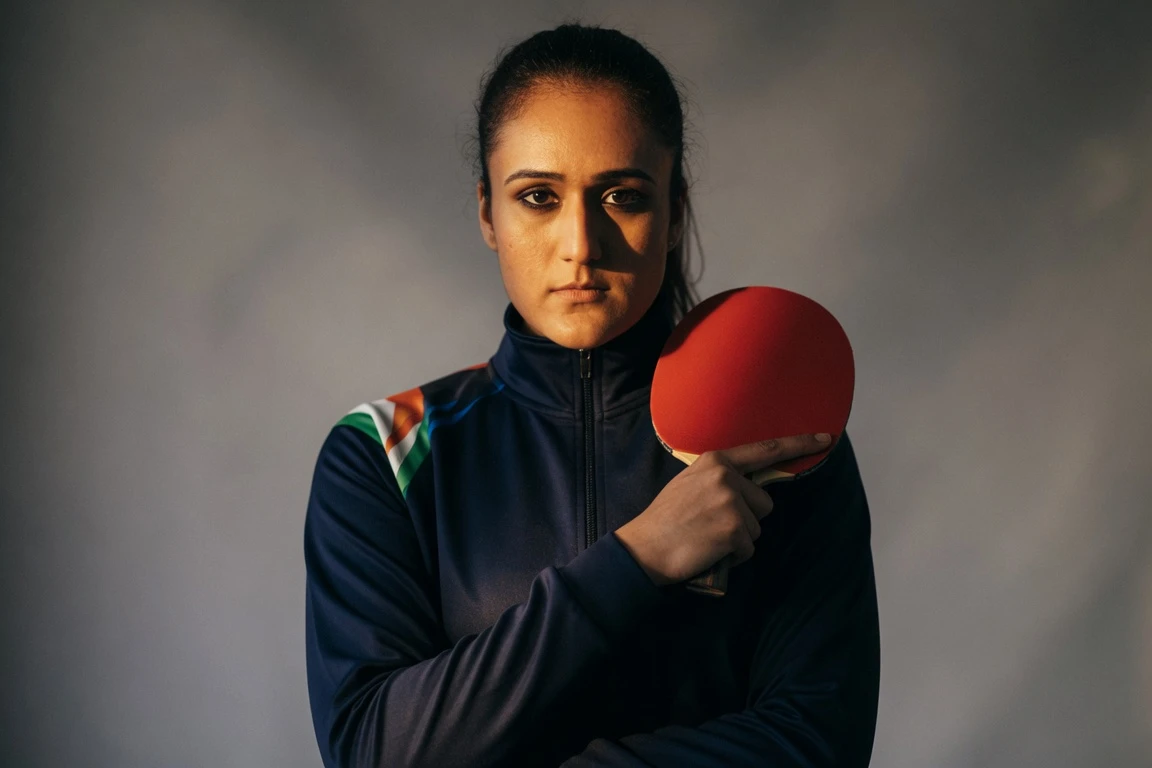
Indian table tennis star Manika Batra has accused the TTFI of breaching its own Constitution when a nine-member selection committee left her out of the country’s squad for the 2026 Asian Games. Batra, ranked World No. 51 in the latest International Table Tennis Federation list, posted the allegation on X on June 26, 2026, hours after the federation publicly defended the June 9 selection. The federation’s source said the process was fair and rule-bound; Batra is now threatening legal action and has asked the Prime Minister and the Sports Minister to intervene.
The TTFI has so far not addressed the constitutional point directly. Batra cited Article 24(C)(j) of the federation’s Constitution, which she says limits any Sub-Committee to seven members, and pointed to a 9-member panel that she says decided her fate. Her Batra’s post alleging a constitutional breach escalated a dispute that began within hours of the squad announcement on June 18. The federation has not said when, or whether, it will publish a fuller written reply or the committee’s attendance record.
The Constitutional Cap Batra Is Citing
The clause Batra is invoking is Article 24(C)(j) of the TTFI Constitution, which she says caps any Sub-Committee at seven members. In her post, she argued that the nine-member selection committee formed to pick the Asian Games squad crossed that line. TTFI has not published a line-by-line rebuttal of the constitutional reading. The clause she cites has not previously surfaced in any TTFI public document.
Her full allegation, posted in two paragraphs on her verified account on June 26, 2026, goes to the heart of the federation’s own defense. TTFI’s June 24 reply to Batra said the entire selection process was conducted strictly in accordance with the rules. Batra is now pointing to documents in her possession that she says show the committee that decided the squad was not the committee the rules allow. The federation has not, as of the latest reporting, published the attendance list of the June 7 and June 9 meetings.
TTFI, in its response to me, has stated that the entire selection process was conducted strictly in accordance with the rules. However, the documents available with me show that a 9-member Selection Committee decided the Asian Games team, while Article 24(C)(j) of the TTFI Constitution states that no Sub-Committee can have more than 7 members.
The accusation is the strongest legal-style claim Batra has made in a series of escalating statements since June 19, 2026, when she first publicly questioned her omission. It shifts the argument from a complaint about outcomes to a complaint about process legality. The federation’s silence on the constitutional point so far leaves that shift unanswered.
The Numbers Behind the Selection Math
The federation’s published selection policy allocates 50 percent weightage to national rankings, 40 percent to international rankings, and 10 percent to the discretion of the selection committee. The composition is meant to blend consistency in domestic competition with global form. Batra’s case interacts with the policy on every leg of that 100 percent.
- 50% weightage to national rankings
- 40% weightage to international rankings
- 10% weightage to selectors’ discretion
- Batra ranked World No. 51 in ITTF rankings
- Sreeja Akula ranked World No. 45 (India’s top woman)
- Squad finalized June 9, 2026; IOA entry deadline June 10, 2026
The policy contains an automatic-qualification clause for any woman inside the top 50 of the world rankings on the day the squad is finalized. Batra sat at World No. 51 when the committee met on June 9, one slot outside the cutoff. She had no national ranking because of her absence from domestic events, which removed the 50 percent national-ranking leg from her evaluation under the published framework. Sreeja Akula, the chosen squad leader at World No. 45, met the top-50 threshold; the other four selected women did not. The remaining 10 percent discretionary leg, the federation says, was applied through votes cast by committee members.
How the Nine-Member Committee Voted
The nine-member selection committee held two virtual meetings on June 7 and June 9, 2026, to finalize squads for both the Asian Games and the Commonwealth Table Tennis Championships, ahead of the IOA’s June 10 deadline. A TTFI source told Rediff the committee was unanimous on the first four women’s selections and voted on the fifth. The voting records were disclosed after Batra publicly challenged the process. The disclosure gave the public its first numerical look at how the 10 percent discretionary leg was actually applied.
- Fifth women’s team spot: Sutirtha Mukherjee secured 8 votes; Swastika Ghosh received no votes.
- First reserve position: Swastika Ghosh secured 6 votes; Manika Batra received 2 votes.
- Second reserve position: Manika Batra secured 8 votes; named second reserve.
The first four women’s selections were Sreeja Akula, Yashaswini Ghorpade, Diya Chitale and Syndrela Das, with Sutirtha Mukherjee winning the fifth spot 8 votes to 0 over Swastika Ghosh. The reserve order then went to Ghosh on the first slot, with Batra getting 2 votes to Ghosh’s 6, and to Batra on the second slot, where she secured 8 votes. The committee’s vote count is the only quantitative detail the federation has put on the record about how its decision was reached. Batra has asked for the committee’s minutes and attendance list, neither of which the federation has published.
The full women’s squad for Aichi-Nagoya is Sreeja Akula, Yashaswini Ghorpade, Diya Chitale, Sutirtha Mukherjee and Syndrela Das, with Ghosh and Batra as reserves. India’s full table tennis squad for Aichi-Nagoya 2026 is published on Olympics.com. The men’s squad is led by G Sathiyan and includes Harmeet Desai, Manav Thakkar, Manush Shah and Payas Jain, with Ankur Bhattacharjee and Ronit Bhanja in reserve.
Batra’s Counter: The Previous Cycle
Batra’s second line of attack is procedural: she says the federation applied its rules inconsistently across cycles. In her written statement, she noted that during the previous Asian Games selection cycle, players who were outside similar ranking thresholds in both world ranking and national ranking were still included. She framed those inclusions as the federation applying what she called special considerations and special privileges. The federation has not named which players benefited from that framing in the previous cycle.
The framing matters because Batra has formally requested a detailed explanation of the criteria used, per Sporting News India. The federation’s published response did not address the previous-cycle comparison directly. She has appealed directly to Sports Minister Mansukh Mandaviya and the IOA leadership to ensure the process remains transparent.
The previous Asian Games cycle in which Batra played was Hangzhou 2023, where India’s table tennis medals included the women’s doubles bronze secured by Sutirtha Mukherjee and Ayhika Mukherjee, per the ANI wire. The federation’s own selection policy, the closest published comparison, contains no public special-considerations carve-out. Batra has argued that the absence of any such carve-out makes the previous-cycle inclusions harder to square with the current exclusions, per her statement to Sporting News India. The federation has not addressed that point in its public response. The federation has not said when, or whether, it will publish the documentation for the previous cycle.
From TTFI Reply to Courtroom Threat
The TTFI’s first public response came on June 24, 2026, six days after the squad was named and one day after Batra publicly asked for an explanation. The federation told Rediff that her name had been duly considered and that the committee had strictly followed the existing criteria. A TTFI source then walked through the factors the committee weighed.
The decision was based on the cumulative assessment undertaken by the selection committee in accordance with the Selection Policy, including National performance evaluation, Global performance evaluation, Comparative assessment of competing players, Team composition considerations, Medal prospects and strategic suitability and the views expressed and votes cast by the Selection Committee members.
Batra’s response came two days later, on June 26, 2026, and went further than her earlier statements. She alleged the selection committee breached Article 24(C)(j) of the federation’s Constitution by exceeding the seven-member cap. She said she was mentally exhausted from this fight and putting her sword down on the public argument, while reserving the right to seek legal remedy. The TTFI has not, as of the latest reporting, published the attendance list or minutes from the committee meetings.
Batra has separately written to Prime Minister Narendra Modi and Sports Minister Mansukh Mandaviya asking for intervention in the matter. She has also sought a documented response from the Indian Olympic Association, the body that received the squad entries before the June 10 deadline. Her earlier statement to the federation asked for a structured and factual response backed by documented norms. The TTFI’s silence on the constitutional point so far leaves that shift unanswered. Batra has said she will pursue legal remedy if no satisfactory explanation is forthcoming.
Where the Dispute Stands
As of June 26, 2026, the dispute sits between a federation that says its process was clean and a player who says the process was, on its own constitutional terms, illegal. Both claims rest on documents the public has not seen in full: the TTFI’s complete selection policy and the minutes or attendance record of the nine-member committee’s June 7 and June 9 meetings. Batra says she has documents in her possession; the federation has not produced the same documents. The gap between the two versions is now the legal terrain of the dispute.
The Indian Olympic Association, the body that received the squad entries by the June 10 deadline, has not commented publicly on either the constitutional allegation or the previous-cycle comparison. The Sports Minister’s office has not announced any inquiry into the federation’s selection process. Batra has separately appealed to Prime Minister Narendra Modi, whose office has also not commented. The federation has not said when, or whether, it will publish a fuller written reply or the committee’s attendance record.
The September Window
The 2026 Asian Games are scheduled for Aichi-Nagoya, Japan, from September 19 to October 4, 2026. The table tennis competition runs September 20 to 28, per the Aichi-Nagoya 2026 tournament overview and the ANI wire. For Batra, a 31-year-old with three Olympic appearances and a 2018 Jakarta Asian Games mixed doubles bronze, the reserve slot names her to the contingent but not to the playing five.
The federation’s selection cycle for the Asian Games is closed, and the IOA’s entry window has passed. Any change to the women’s squad would require a formal substitution process, which the federation has not signalled it will initiate. Batra has said she will pursue legal remedy if no satisfactory explanation is forthcoming, but her legal team has not announced a filing date. The dispute now runs on two clocks at once: the sporting one in September and the legal one without a published date.
Frequently Asked Questions
Why was Manika Batra dropped from the 2026 Asian Games squad?
Batra was ranked World No. 51 in the ITTF rankings on June 9, 2026, the day the squad was finalized, one place outside the top-50 cutoff that would have given her an automatic spot. She had no national ranking because of her absence from domestic events, removing the 50 percent national-ranking leg from her evaluation under the TTFI’s published framework.
What is the TTFI selection policy weightage?
The federation’s policy gives 50 percent weightage to national rankings, 40 percent to international rankings, and 10 percent to the selection committee’s discretion, per the TTFI’s response to Batra as reported by Rediff and the ANI wire.
Where and when will the 2026 Asian Games table tennis competition be held?
The table tennis competition at the 2026 Asian Games runs September 20 to 28, 2026, in Aichi-Nagoya, Japan. The overall Games run from September 19 to October 4, 2026.
What constitutional rule does Batra say TTFI violated?
Batra alleges that a nine-member selection committee was formed to pick the squad, in breach of Article 24(C)(j) of the TTFI Constitution, which she says limits any Sub-Committee to seven members. The TTFI has not publicly addressed the constitutional reading as of June 26, 2026.


South Korea Retail Investors Face Reckoning After KOSPI AI Rally Collapses

Surrey AI Maps Three Heart Attack Paths and Their Molecular Roots

Germany Locks Neutral Apple ATT Prompts Across Most of Europe

Apple’s 5% EU Fee Quietly Rewrites Alternative App Store Math

Apple’s EU Fee Truce Cuts Complexity but Leaves Rivals Fuming

Pixel 11 Pro Fold Trades Thinness for Durability and Seven-Year Stay

Mayo AI Flags HCM Obstruction From Everyday Ultrasound Videos

Indian Brands Quietly Scale Landmark Screens and Home Tech

Navin Vatsa Turns Grief Into a Lifetime of Quiet Seeing

Google Bets Pixel 11 Agentic AI Will Redefine Phones

Oracle Cuts 21,000 Jobs in a Year, Cites AI in 10-K Filing

Fable 5 and Mythos 5 Return as US Lifts Anthropic Export Controls

SpaceX’s Google Deal Turns a Rocket Company Into a Cloud Landlord

CD Projekt Red Co-CEO: Redemption Arc Isn’t Done, Witcher 4 in 2027

XPL Rallies 30% Ahead of Plasma One Card Tier Launch

Google Search Profiles Build a Follow Graph Inside Discover

DGO App Brings Rs 549 Mobile Pass for FIFA World Cup 2026 in Nepal

Moonshot AI Targets $30 Billion in China’s Fastest AI Funding Sprint

Oppo’s ColorOS 17 Eligibility List Leaves A-Series Buyers Behind

Microsoft Xbox Layoffs Start in July as Sharma Slams 3% Margin
-
 AI2 months ago
Oracle Cuts 21,000 Jobs in a Year, Cites AI in 10-K Filing
-
 AI2 months ago
Fable 5 and Mythos 5 Return as US Lifts Anthropic Export Controls
-
 AI2 months ago
SpaceX’s Google Deal Turns a Rocket Company Into a Cloud Landlord
-
 GAMING2 months ago
CD Projekt Red Co-CEO: Redemption Arc Isn’t Done, Witcher 4 in 2027
-
 CRYPTO2 months ago
XPL Rallies 30% Ahead of Plasma One Card Tier Launch
-
 NEWS2 months ago
Google Search Profiles Build a Follow Graph Inside Discover
-
 APPS2 months ago
DGO App Brings Rs 549 Mobile Pass for FIFA World Cup 2026 in Nepal
-
 AI2 months ago
Moonshot AI Targets $30 Billion in China’s Fastest AI Funding Sprint