
AI
Paradromics Completes First Connexus BCI Implant in Connect-One Study
Paradromics completed the first Connexus BCI implant in the FDA-approved Connect-One study at the University of Michigan, with six years of follow-up planned.

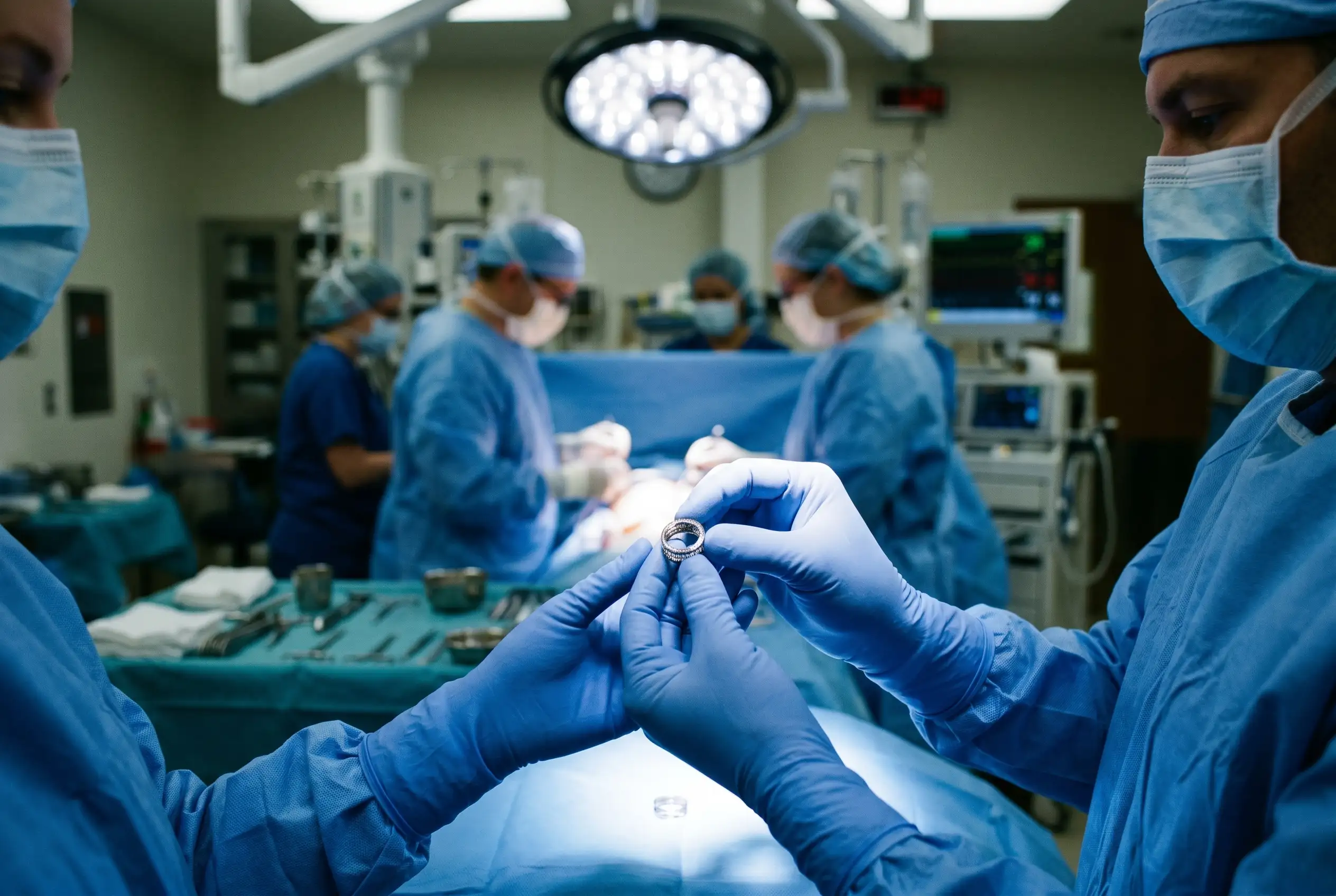
Paradromics has completed the first surgical implantation of its Connexus brain-computer interface in the FDA-approved Connect-One clinical study at the University of Michigan. The procedure was carried out by neurosurgeon Matthew Willsey, M.D., Ph.D., and Aditya S. Pandey, M.D., on a Michigan woman who has difficulty speaking because of motor neuron disease. She will be followed for six years, the company said in a June 17 announcement, and Connect-One is the first in a series of clinical applications Paradromics has planned for its BCI platform.
The Connexus device, designed to sit on the brain surface and read individual neurons, posted an industry-leading 200+ bits per second in preclinical models. The new implant follows a temporary Connexus placement at U-M Health in 2025, performed as part of epilepsy research, that confirmed the device could be placed into the brain, record signals, and be removed intact in under 20 minutes. Connect-One is the first chronic test of that hardware in a human patient. The full announcement is in the company’s June 17 announcement of the first Connect-One implant. The trial will run across three clinical sites, with two participants in the initial phase.
The First Participant and Her Six-Year Path
The first Connect-One participant is a Michigan woman who has difficulty speaking due to motor neuron disease, the same family of conditions that includes ALS. She was enrolled and implanted by Paradromics, the University of Michigan, and Dr. Willsey, the neurosurgeon and biomedical engineer who led the procedure. The Connect-One study is the first long-term clinical trial of the Connexus, distinct from the temporary placements the company has run before. The participant is the first person to live with a chronic Connexus implant, and her follow-up window runs for six years.
Connexus is being studied in people whose ability to speak and to move has been lost to neurological disease or injury. The Connect-One study targets ALS, spinal cord injury, and stroke, per MassDevice’s coverage of the trial. The study is built to evaluate the long-term use of the Connexus BCI for restoring speech and enabling computer control. The first Connect-One participant is also the first chronic Connexus implant in a person living with motor neuron disease. The Connect-One study, the company has said, is the first in a series of clinical applications planned for its BCI platform.
For the participant, a working BCI is the difference between being heard in a conversation and being absent from it. Willsey, who performed the procedure, called the device ‘new potential to help people who have lost their ability to communicate.’ ‘For people living with severe motor impairment, the ability to communicate is central to agency, identity, and connection,’ Angle said in the company’s June 17 statement.
This implant marks a major milestone for Paradromics and for the future of high-performance brain-computer interfaces. Our team has spent years building a device designed to restore communication in a way that reflects the speed, complexity, and individuality of human expression.
Matt Angle, Ph.D., CEO and founder of Paradromics, in the company’s June 17 announcement.
The participant’s case will be observed for six years under the Connect-One protocol. The trial will start with two participants in its initial phase across the three clinical sites.
Three Sites, Two Participants, One Narrow Lane
Connect-One is built around a small and tightly defined patient pool, and the FDA IDE that authorized the trial arrived in November 2025. The study will initially enroll two participants, both with impaired speech and limited extremity movement tied to severe loss of voluntary motor control, who live within four hours of one of three clinical sites. That narrow radius is a deliberate choice: the implant is in a feasibility study, and the team wants participants close enough for frequent in-person follow-up. The trial’s public enrollment page is on the patient-facing page for the Connect-One clinical study.
Each of the three sites is led by a separate investigator, and the FDA approval came in November 2025:
| Site | Principal investigator | Role |
|---|---|---|
| University of Michigan, Ann Arbor, MI | Matthew Willsey, M.D., Ph.D. | Neurosurgeon with dual appointments in Neurosurgery and Biomedical Engineering |
| UC Davis, Sacramento, CA | David Brandman, M.D., Ph.D. | Neurosurgeon and Associate Professor in the Department of Neurological Surgery; Lead Principal Investigator of Connect-One |
| Massachusetts General Hospital, Boston, MA | Daniel Rubin, M.D., Ph.D. | Critical care neurologist at Mass General Brigham; Assistant Professor of Neurology at Harvard Medical School |
The Connexus BCI reflects decades of progress across the intracortical BCI research community. With the Connect-One Study, we have an opportunity to evaluate that progress in a rigorous clinical setting and better understand its potential to help people regain communication.
David M. Brandman, M.D., Ph.D., Lead Principal Investigator of the Connect-One Study and Associate Professor of Neurosurgery at the University of California, Davis, in the company’s June 17 announcement.
Brandman, the trial’s lead principal investigator, has framed Connect-One as a rigorous test of intracortical BCI progress, per the November 2025 FDA approval announcement from Paradromics. The first surgery took place at the Michigan site, with Pandey assisting Willsey. Connect-One is an Early Feasibility Study on a roadmap that adds more sites and participants over time.
How the Connexus Device Works
Connexus is built to read the brain at the resolution of individual neurons, and the company has published a detailed walkthrough of its design choices. The micro-electrodes of the implant, each thinner than a human hair, are made of titanium and platinum-iridium, materials that are widely trusted in long-term medical implants for their safety and compatibility with the body. The active surface is a high-density microelectrode array that gathers raw neural data from the cortex. The full engineering design is laid out in the company’s own explanation of how the Connexus is built to last.
The signal moves through the Connexus in a fixed sequence:
- An implantable high-density microelectrode array on the brain surface records neural activity from individual neurons.
- The array sends the signal to a discrete transceiver implanted in the chest.
- The chest transceiver transmits the data wirelessly through the skin to an external receiver.
- An external computer with advanced AI decodes the signal into intended speech or computer control commands.
Once a participant’s neural activity is in an external computer, machine learning models translate the patterns into intended speech and computer-control signals. The Connect-One study is the first trial that will follow the full chain in a chronic human patient, with both text and synthesized speech as the planned outputs. The protocol also tests computer control, not only speech.
The Numbers Behind the Claim
Paradromics has put one specific number at the center of its pitch: 200+ bits per second of information transfer, recorded in pre-clinical models. The company calls that figure industry-leading, and it is the metric on which the Connexus’s high-data-rate claim rests. To put the number in context, Paradromics has separately pointed to three years of stable preclinical recordings as part of the basis for the FDA’s IDE approval. Connect-One is the first time that data rate will be tested in a chronic, long-term setting on a human patient. The 200+ bps figure is the company-stated target, and Connect-One is the trial that will put it to the test.
The 2025 temporary Connexus implantation at U-M Health added a different kind of data point: the device could be safely placed into the brain, record signals, and be removed intact in under 20 minutes. That surgery was an acute epilepsy-research case, not a chronic implant. The team that ran it was led by Willsey. Connect-One is the first time the same device is asked to perform over years, not minutes.
The figures below summarize the data points Paradromics has published so far. The Connect-One study will be the first test of the 200+ bps figure in a human patient.
- 200+ bits per second of information transfer in pre-clinical models (Paradromics, FDA approval announcement, November 2025)
- 3 years of stable preclinical recordings supporting the FDA’s IDE approval (Paradromics, November 2025)
- Under 20 minutes to remove the temporary implant intact (MassDevice, June 2026)
- ~1 centimeter in diameter, with electrodes thinner than a human hair (Paradromics)
- 6 years of follow-up planned for the first Connect-One participant (Paradromics, June 2026)
Where Paradromics Sits in the BCI Field
Paradromics is one of a handful of BCI developers that have moved from academic prototypes to FDA-regulated clinical trials. The set, as named in coverage by STAT, includes Neuralink, Synchron, and Precision Neuroscience. Morgan Stanley recently valued the broader BCI market at $400 billion, a figure that frames the financial stakes for the category.
The Connect-One IDE was the first granted to a fully implantable BCI for speech restoration, per the company’s November 2025 announcement. Other trials in the category were already running on different device architectures when Paradromics received its green light. Angle has been public about his criticism of competitors. In October, he published a blog post titled ‘Neuralink device limitation’ that made the case for a different BCI architecture, per STAT’s coverage.
Why the First Implant Is a Different Kind of Data Point
The Connect-One surgery is not Paradromics’ first time inside a human brain, but it is the company’s first chronic one. A temporary Connexus BCI was implanted at U-M Health in 2025, during an epilepsy resection surgery, as a way to record brain signals during the procedure. That earlier placement was acute, in a patient who was already undergoing brain surgery for an unrelated reason, and the device was removed within minutes.
Connect-One, by contrast, is chronic. The Connexus is meant to stay where it is, recording and decoding, for years. The company’s chief medical officer, Stephen Ryu, M.D., has called the trial a ‘new peak for neurotech development’ and a chance to ‘demonstrate the unmatched performance, safety, and reliability of our high-bandwidth BCI.’ The first Connect-One participant will be observed over the next six years under that framing.
Paradromics has framed Connect-One as the first in a series of clinical applications planned for its BCI platform. The company has not announced a specific date for the next clinical step.
Frequently Asked Questions
What Is the Connexus BCI?
The Connexus is Paradromics’ first product, a fully implantable brain-computer interface. It is built around a high-density microelectrode array of electrodes each thinner than a human hair, made of titanium and platinum-iridium, that records neural activity from individual neurons. The data travels from the array to a transceiver in the chest, which transmits wirelessly through the skin to an external computer that decodes the signal into text, synthesized speech, or computer control.
Who Can Join the Connect-One Clinical Study?
The trial is open to people with impaired speech and limited extremity movement tied to severe loss of voluntary motor control, who live within four hours of UC Davis, Massachusetts General Hospital, or the University of Michigan. Connect-One will initially enroll two participants, both drawn from the same enrollment criteria. The first is a Michigan woman with motor neuron disease; the second has not been named. The company has invited interested participants to join its community for future studies.
How Does the Connexus Differ from Neuralink’s Device?
Both are fully implantable intracortical BCIs, but the two companies have taken different positions on the data their devices can carry. Paradromics has reported 200+ bits per second of information transfer in preclinical models, a figure it calls industry-leading. Nature has called Paradromics ‘one of the closest rivals’ to Neuralink in the BCI field.
When Could the Connexus Reach Patients Outside the Study?
Connect-One will follow its first participant for six years, and the company has said it plans to add more sites and participants. A specific timeline for FDA clearance or commercial availability has not been announced.
Disclaimer: The Connexus BCI is an investigational device limited by United States law to investigational use. This article is for informational purposes only and does not constitute medical advice. Trial details and figures are accurate as of publication (June 18, 2026). Consult a qualified medical professional for any health-related decisions.


South Korea Retail Investors Face Reckoning After KOSPI AI Rally Collapses

Surrey AI Maps Three Heart Attack Paths and Their Molecular Roots

Germany Locks Neutral Apple ATT Prompts Across Most of Europe

Apple’s 5% EU Fee Quietly Rewrites Alternative App Store Math

Apple’s EU Fee Truce Cuts Complexity but Leaves Rivals Fuming

Pixel 11 Pro Fold Trades Thinness for Durability and Seven-Year Stay

Mayo AI Flags HCM Obstruction From Everyday Ultrasound Videos

Indian Brands Quietly Scale Landmark Screens and Home Tech

Navin Vatsa Turns Grief Into a Lifetime of Quiet Seeing

Google Bets Pixel 11 Agentic AI Will Redefine Phones

Oracle Cuts 21,000 Jobs in a Year, Cites AI in 10-K Filing

Fable 5 and Mythos 5 Return as US Lifts Anthropic Export Controls

SpaceX’s Google Deal Turns a Rocket Company Into a Cloud Landlord

CD Projekt Red Co-CEO: Redemption Arc Isn’t Done, Witcher 4 in 2027

XPL Rallies 30% Ahead of Plasma One Card Tier Launch

Google Search Profiles Build a Follow Graph Inside Discover

DGO App Brings Rs 549 Mobile Pass for FIFA World Cup 2026 in Nepal

Moonshot AI Targets $30 Billion in China’s Fastest AI Funding Sprint

Oppo’s ColorOS 17 Eligibility List Leaves A-Series Buyers Behind

Microsoft Xbox Layoffs Start in July as Sharma Slams 3% Margin
-
 AI2 months ago
Oracle Cuts 21,000 Jobs in a Year, Cites AI in 10-K Filing
-
 AI2 months ago
Fable 5 and Mythos 5 Return as US Lifts Anthropic Export Controls
-
 AI3 months ago
SpaceX’s Google Deal Turns a Rocket Company Into a Cloud Landlord
-
 GAMING2 months ago
CD Projekt Red Co-CEO: Redemption Arc Isn’t Done, Witcher 4 in 2027
-
 CRYPTO2 months ago
XPL Rallies 30% Ahead of Plasma One Card Tier Launch
-
 NEWS3 months ago
Google Search Profiles Build a Follow Graph Inside Discover
-
 APPS3 months ago
DGO App Brings Rs 549 Mobile Pass for FIFA World Cup 2026 in Nepal
-
 AI3 months ago
Moonshot AI Targets $30 Billion in China’s Fastest AI Funding Sprint