
GAMING
S&P Ranks Macau and Singapore Safest as Asian Gaming Growth Backfires
S&P Global Ratings says regulatory stability now outweighs demand in Asia-Pacific gaming credit, after a Philippine crackdown erased a quarter’s DigiPlus profit.

DigiPlus Interactive Corp’s quarterly profit collapsed 59% last year, right when the online gambling boom that built the company ran into Philippine banking regulators. It is the clearest proof yet behind a new S&P Global Ratings report: across Asia-Pacific, credit quality in the gaming sector now hinges less on demand and more on politics.
The ratings agency published the findings Wednesday, arguing that regional gaming revenue will keep growing 3% to 5% a year, but that number hides a split between operators sitting in politically stable markets and operators one policy shift away from a bad quarter. Macau and Singapore top the safe list. The Philippines, the region’s fastest-growing online market, just showed why the rest don’t.
A Ratings Agency Splits Asia’s Casino Map Into Four Tiers
S&P Global Ratings, the credit rating agency whose grades shape how cheaply gaming operators can borrow, said the sector faces a widening divide in credit quality across Asia-Pacific gaming firms, with policy decisions, capital allocation and market-specific risks increasingly deciding which operators perform.
“In our view, regulatory risk is structural and intrinsic to the Asia-Pacific gaming sector,” the agency said. “In many Asian jurisdictions, political incentives to prioritize social safeguards frequently override economic stability, leading to abrupt policy shifts. Cultural stigma and political rifts drive this volatility.”
To make sense of that volatility, S&P grouped every major jurisdiction into four tiers based on regulatory maturity, growth prospects and credit characteristics.
| Tier | Jurisdictions | What Defines It |
|---|---|---|
| Established Hubs | Macau, Singapore | Mature regulation, deep tourism infrastructure, high barriers to entry |
| Headwind Markets | Australia, New Zealand, Philippines | Regulatory tightening and softer consumer spending; New Zealand and the Philippines lean more lenient on online gambling specifically |
| Mid-Tier Markets | Malaysia, Cambodia | Lower taxes and monopoly operator status, offset by weaker pull for international visitors |
| Potential Markets | Thailand, Japan | Large long-term addressable demand, slowed by long development timelines and political uncertainty |
Market scale and regulatory stability matter more to that grading than gaming taxes or market dominance, S&P said. Nowhere does that show up faster than in the Philippines.
Growth That Bites Back
Online gaming revenue in the Philippines grew twenty-fold between 2022 and 2025, according to S&P. That kind of expansion is usually treated as an unqualified win. Here, it ignited public concern over addiction and pulled regulators in fast.
The Bangko Sentral ng Pilipinas (BSP), the country’s central bank, moved in August 2025, ordering GCash and Maya, the country’s two dominant e-wallet apps, to sever their direct links to online gaming platforms. Players could no longer fund betting accounts through the fastest payment rails available to them.
DigiPlus Interactive Corp, the dominant operator behind platforms including BingoPlus and ArenaPlus, absorbed the impact immediately.
- -59%: third-quarter net income, down to 1.71 billion pesos as the funding disruption hit players across its platforms
- -23%: third-quarter revenue, down to 19.05 billion pesos (US$325 million)
- -55%: third-quarter EBITDA, down to 2 billion pesos (US$34.1 million)
- +12%: full-year 2025 revenue growth anyway, to 84.2 billion pesos (US$1.4 billion)
Those last two numbers only look contradictory. DigiPlus entered the second half of 2025 growing so fast that even a policy shock severe enough to cut quarterly profit by more than half still left full-year net income roughly flat at 12.6 billion pesos (US$210.7 million). The first half of the year did the heavy lifting the third quarter couldn’t.
The company’s industry standing barely blinked either. DigiPlus has also picked up back-to-back wins at the Global Gaming Awards Asia-Pacific, a reminder that the same growth regulators now treat as a warning sign is what made DigiPlus the operator to beat in the first place.
Why Macau and Singapore Still Come Out Ahead
S&P’s established hubs share one trait the rest of the region lacks: regulators who don’t flinch. High barriers to entry, deep tourism infrastructure and low exposure to online gambling disruption keep cash flows predictable, even where competition is fierce.
Macau’s Crowded, Stable Table
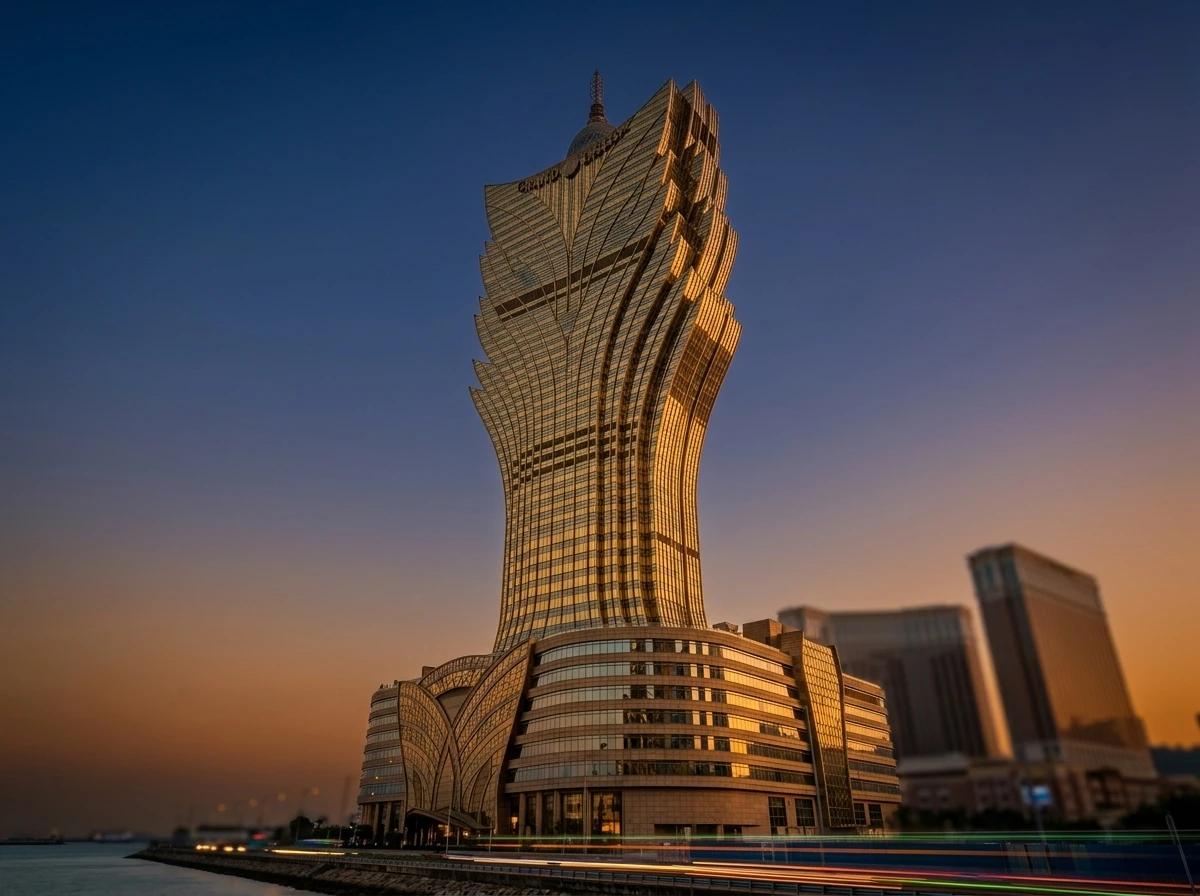
Competition among Macau’s licensed operators is intense, and S&P expects gaming revenue there to grow 5% to 7%, even as EBITDA growth slows under rising marketing and operating costs tied to the fight for premium mass players. Regulatory stability, not an easy competitive field, is what keeps Macau at the top of S&P’s list. The agency has separately tracked how the territory’s recovery still depends on fewer mainland Chinese players at the table returning to Macau’s casino floors than before the pandemic.
Singapore’s Billion-Dollar Bet on Itself
Singapore’s safety isn’t unconditional either. Las Vegas Sands Corp, which operates Marina Bay Sands, took a credit rating downgrade tied to its own spending: an $8 billion expansion of the resort, with construction that began in July 2025. Regulatory stability didn’t disappear. Capital allocation risk showed up anyway, inside the safest jurisdiction on S&P’s map.
Why Do Asian Regulators Move So Fast?
Regulators in much of Asia weigh the social cost of gambling far more heavily than their Western counterparts do, and public opinion gives them cover to act fast. Most adults across several major Asian markets call gambling morally wrong, versus a minority in the United States, which hands politicians a ready lever whenever growth starts to look uncomfortable.
A Pew Research Center survey of 25 countries, drawing on interviews with 28,333 adults conducted between January and April 2025, found 89% of Indonesian adults call gambling immoral, alongside 83% in India and 78% in South Korea. In the United States, just 29% said the same.
This social stigma acts as a political lever. When rapid industry growth triggers public outcry, legislators often respond with high-impact policy U-turns to maintain social order.
S&P Global Ratings wrote that line to explain the whole region at once, not just Manila. The Philippines happened to be the freshest example.
Malaysia and Cambodia Are Stuck in the Middle
Malaysia and Cambodia offer operators something Macau and Singapore don’t: lower gaming taxes and monopoly-style market positions that should, on paper, mean fatter margins. S&P said that advantage doesn’t translate into a higher credit tier, because both markets pull a smaller share of international visitors, who tend to prioritize the security and transparency that Singapore or Macau offer over a lighter tax bill.
That leaves Malaysia and Cambodia in the mid-tier category: real, functioning markets without the visitor volume or regulatory track record to climb higher, and without the political volatility that drags Australia, New Zealand and the Philippines into headwind territory.
Thailand’s Casino Dream Keeps Dying and Reviving
Thailand and Japan represent, in S&P’s words, significant long-term addressable markets. Both also come with a warning: long development timelines and political uncertainty mean they are unlikely to contribute materially to sector cash flow before the next decade. Thailand’s last eighteen months show exactly why.
- January 2025: Thailand’s cabinet approves the Entertainment Complex Bill, which would legalize casinos, in principle.
- March 2025: The cabinet formally passes the bill.
- July 2025: The bill is shelved after the Bhumjaithai Party quits the ruling coalition over the plan and street protests intensify.
- September 2025: A Senate committee rejects the legislation outright.
- May 2026: Coalition partners reportedly agree on a scaled-back framework allowing up to three licensed casino complexes, down from the five originally proposed.
Prime Minister Paetongtarn Shinawatra’s suspension over separate ethics allegations compounded the coalition’s troubles through the same stretch. Legal experts still think the bill could return before the end of 2026 if the Pheu Thai-led coalition holds together. Japan carries a quieter version of the same problem: real addressable demand, paired with a political timeline S&P isn’t willing to price into cash flow yet.
Thailand’s coalition now has to decide whether three casinos are worth the political cost that killed five. DigiPlus already found out what happens when regulators decide the growth wasn’t worth it at all.
Disclaimer: This article is for informational purposes only and does not constitute investment advice; gaming and casino stocks carry regulatory and market-specific risk, and figures cited reflect company and agency reporting available as of publication.


South Korea Retail Investors Face Reckoning After KOSPI AI Rally Collapses

Surrey AI Maps Three Heart Attack Paths and Their Molecular Roots

Germany Locks Neutral Apple ATT Prompts Across Most of Europe

Apple’s 5% EU Fee Quietly Rewrites Alternative App Store Math

Apple’s EU Fee Truce Cuts Complexity but Leaves Rivals Fuming

Pixel 11 Pro Fold Trades Thinness for Durability and Seven-Year Stay

Mayo AI Flags HCM Obstruction From Everyday Ultrasound Videos

Indian Brands Quietly Scale Landmark Screens and Home Tech

Navin Vatsa Turns Grief Into a Lifetime of Quiet Seeing

Google Bets Pixel 11 Agentic AI Will Redefine Phones

Oracle Cuts 21,000 Jobs in a Year, Cites AI in 10-K Filing

Fable 5 and Mythos 5 Return as US Lifts Anthropic Export Controls

SpaceX’s Google Deal Turns a Rocket Company Into a Cloud Landlord

CD Projekt Red Co-CEO: Redemption Arc Isn’t Done, Witcher 4 in 2027

XPL Rallies 30% Ahead of Plasma One Card Tier Launch

Google Search Profiles Build a Follow Graph Inside Discover

DGO App Brings Rs 549 Mobile Pass for FIFA World Cup 2026 in Nepal

Moonshot AI Targets $30 Billion in China’s Fastest AI Funding Sprint

Oppo’s ColorOS 17 Eligibility List Leaves A-Series Buyers Behind

Microsoft Xbox Layoffs Start in July as Sharma Slams 3% Margin
-
 AI2 months ago
Oracle Cuts 21,000 Jobs in a Year, Cites AI in 10-K Filing
-
 AI2 months ago
Fable 5 and Mythos 5 Return as US Lifts Anthropic Export Controls
-
 AI2 months ago
SpaceX’s Google Deal Turns a Rocket Company Into a Cloud Landlord
-
 GAMING2 months ago
CD Projekt Red Co-CEO: Redemption Arc Isn’t Done, Witcher 4 in 2027
-
 CRYPTO2 months ago
XPL Rallies 30% Ahead of Plasma One Card Tier Launch
-
 NEWS2 months ago
Google Search Profiles Build a Follow Graph Inside Discover
-
 APPS2 months ago
DGO App Brings Rs 549 Mobile Pass for FIFA World Cup 2026 in Nepal
-
 AI2 months ago
Moonshot AI Targets $30 Billion in China’s Fastest AI Funding Sprint