
NEWS
StepX Neo Puts StepFun’s Agent Under the App Layer
StepFun’s StepX Neo rebuilds the phone OS around Amoo and app protocols after screen-tapping agents hit WeChat blocks, with no price two months on.

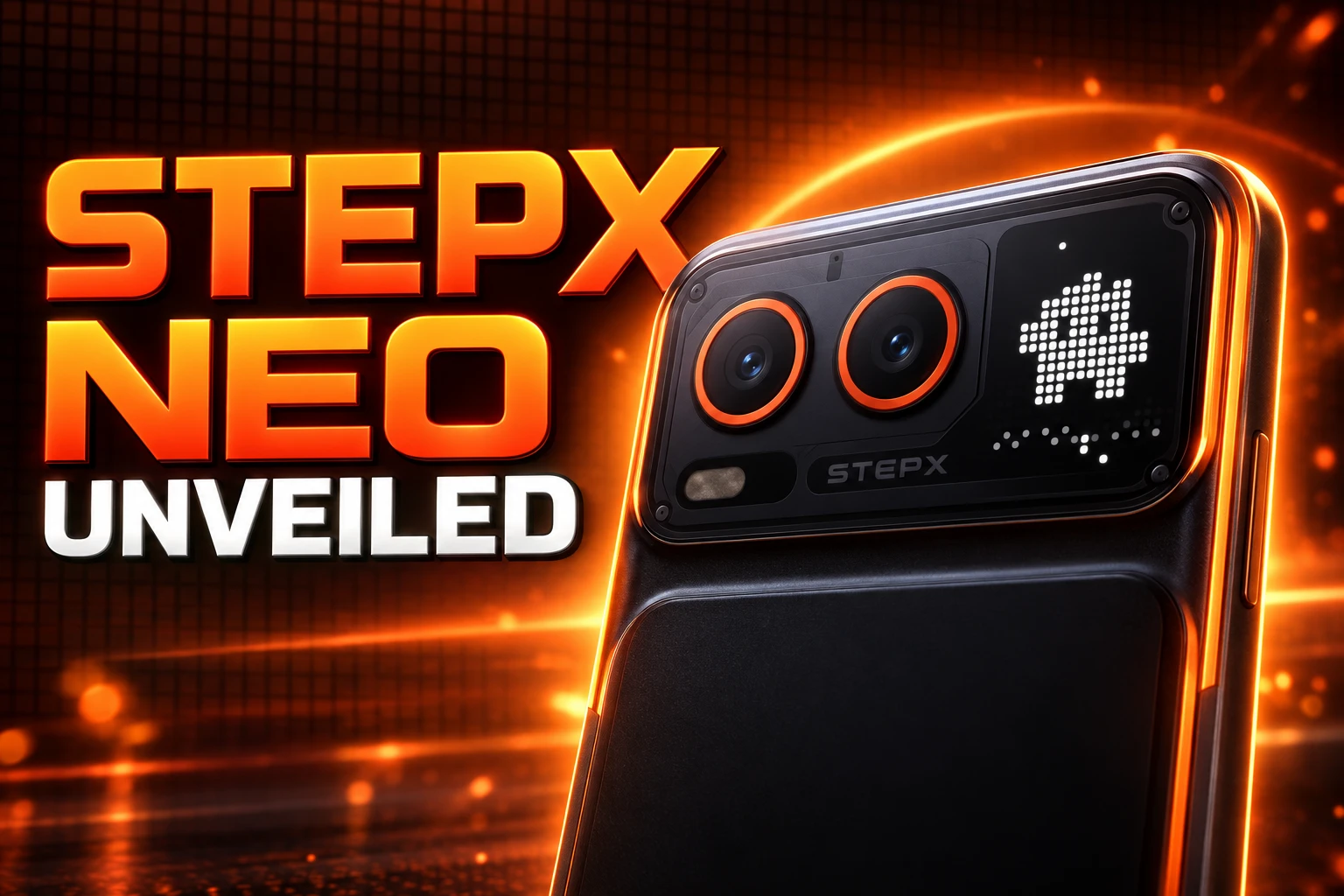
StepFun unveiled the StepX Neo in Shanghai on July 13, 2026, as a mass-market agentic smartphone. The company has not named a price or an on-sale date.
The durable change sits under the glass. After Doubao’s on-screen taps tripped WeChat and payment apps, StepFun rebuilt the OS so Amoo talks to Ctrip, Alipay and Didi through a protocol.
Step AOS Calls Apps by Protocol, Not by Fake Taps
The StepX Neo agentic phone launch put three pieces on stage at once: a terminal brand called STEPX, an OS named Step AOS, and a personal agent named Amoo. StepFun, the Shanghai model lab also known as Jieyue Xingchen, says the large model is the brain, the OS is the runtime, and the handset is how that agent touches the physical world.
Step AOS is not sold as an Android skin with a chatbot parked on top. The company says it rebuilt the stack from pieces of Android, Linux and a real-time OS, then wrapped the phone’s functions in what it calls an atomic capability engine. That engine splits the device into four buckets the agent can mix: communication, apps, files and system tools, using the Model Context Protocol as the common plug.
Amoo is the face of that plug. You talk to it like a chat bot. StepFun says core work can run offline, with a voice-and-vision layer called NUI that learns habits as you use the phone. Easy jobs stay on a small on-device model named Step Edge. Harder jobs go to heavier cloud models, with a two-domain memory that tries to keep what belongs to you separate from what belongs to the agent.
Security is the other half of the pitch. StepFun published white papers with the Shanghai Artificial Intelligence Laboratory that frame agent safety as trusted, visible, controllable and reversible. The company also describes trusted execution, audit trails, permissions that appear only when needed, and a one-tap undo when Amoo gets a task wrong.
THREE WAYS AN AGENT RUNS A PHONE
| Route | How it acts | Where it breaks | Who is on it |
|---|---|---|---|
| Screen taps | Reads pixels and injects touches | Fraud checks treat it as a bot | Doubao on the Nubia M153 |
| Protocol calls | Apps expose tools over MCP | Apps that refuse the plug stay dark | Step AOS and Amoo |
| App intents | OS calls functions the app publishes | Pays and sends wait for a tap | Apple Intelligence, Gemini |
The protocol path is older than the phone. In December 2025 StepFun released Step-GUI models at 4B and 8B parameters and a GUI-MCP protocol for on-device agents that keeps raw screenshots on the device and sends only a semantic summary to the cloud. The 8B model scored 80.2 percent on AndroidWorld in that paper. The same group already ships an open-source GUI agent stack under the GELab-Zero line, later branded Step-GUI Edge for the small on-device cut.
WeChat Already Shut the Screen-Tapping Shortcut
The reason a model lab would rebuild an OS sits in a cheaper phone from late 2025. ByteDance’s Doubao assistant shipped on ZTE’s Nubia M153 on December 1, 2025, at 3,499 yuan, with system rights that let it read the screen and tap like a thumb. The demo looked like magic until the apps that own Chinese daily life treated it as malware.
WeChat flagged the login as abnormal and forced people out. Taobao threw CAPTCHAs. Alipay and bank apps refused to play. ByteDance pulled WeChat control and cut off money apps and some games. The taps were too regular, the pauses too short, and the permission, INJECT_EVENTS, is the same class of access remote-access tools use. Super-apps built their fraud nets to catch exactly that pattern.
HOW THE TAP WAR UNFOLDED
- December 1, 2025: Nubia M153 ships with Doubao as a system-level GUI agent at 3,499 yuan.
- December 3, 2025: Users report WeChat logging them out; Doubao takes WeChat actions offline.
- Late December 2025: Taobao, Alipay, Meituan, Pinduoduo and maps apps restrict login or AI control.
- July 13, 2026: StepFun shows StepX Neo and Step AOS, built to call partners by protocol instead of taps.
- July 17, 2026: WAIC demos put Amoo on a live handset and hook Alipay’s A-Bao agent network.
- September 7, 2026: Nubia’s next agent phone drops simulated taps for MCP and A2A hooks.
Honor, Samsung and Google have been walking a milder version of the same road, with agents that read a screen or call published app functions, then pause before money moves. The contested claim on StepFun’s stage was “first.” Sascha Segan, who does PR for Qualcomm and was posting his own view, put the objection in one line.
“How is this different from the Softbank Natural AI Phone or Doubau Phone? It’s a big new trend but this seems to be the third, not the first,” Segan wrote the day of the unveil.
That objection holds if “agentic” only means an assistant that opens apps for you. StepFun’s narrower claim is that the agent is a resident of the OS and talks to services as tools, so a layout change or a CAPTCHA cannot kill the task. That only works if the service agrees to be a tool.
Why a Model Lab Is Building Its Own Phone
Friends in the device business told StepFun not to try.
We asked a lot of friends in the device business. They all told us to listen: don’t touch hardware. We really wanted to listen. In the end we did it anyway.
Yin Qi, StepFun chairman, Shanghai launch, July 13, 2026
Yin, co-founder of Megvii and chairman of Geely-linked Qianli Technology, took the StepFun chair in January 2026 as the lab closed a B+ round of more than 5 billion yuan. Jiang Daxin, a former Microsoft Research Asia scientist who founded the company in April 2023, remains CEO. Zhu Yibo, who worked at Microsoft and ByteDance, is CTO. Ni Jiayue, who previously ran Honor’s China business, leads the terminal unit.
The money is supposed to fund models and what the company calls an AI-plus-terminal plan. Tencent, Qiming Venture Partners and 5Y Capital rolled their bets. Phone-chain names joined them, including Huaqin Technology, one of the world’s large original design manufacturers. Huaqin also sits in the supply chain for the Neo, which is the whole point of the round: a model shop buying its way into glass, radios and a factory queue.
THE STACK STEPFUN ALREADY HAS
- Installed base: StepFun says its models already sit on more than 42 million phones from brands such as OPPO, Honor and ZTE, serving nearly 20 million people a day.
- Brand reach: It has also said it is in deep deals with about 60 percent of China’s leading handset brands, which makes a house brand a fight with its own customers.
- On-device cut: Step Edge is the phone-sized model; the company says it leads comparable edge models on 29 benchmarks and has not named those tests.
- Cloud cut: StepFun’s current model lineup still runs the heavy Step 3.x Flash models for tools, vision and long context, including a Flash model built for tool use.
If those 42 million installs were enough, Amoo could have lived as a licensed assistant inside Honor and OPPO software. Yin has said China’s model labs may not mint money the way coding copilots do in the United States, and that a closed loop of model, OS and device is the path the company believes. The cost of that belief is a consumer product with no channel, no service shops and a partner list that can vanish with one policy change at Tencent or Alibaba.
The Partner List Stops Short of WeChat
Amoo is only as useful as the services that take its calls. At launch, STEPX named Ctrip, Alipay, Didi, Meituan, WPS and CapCut, covering trips, pay, rides, local life, documents and short video. Later briefings also put Baidu, JD.com and Amap in the first group. The design is blunt: the user says “book tomorrow’s flight and get a car to the office,” and Amoo is supposed to hit Ctrip and Didi without bouncing through five icon grids.
Travel is the showpiece. StepFun says the Neo can translate live talk, calls, messages and camera text in 32 languages, including regional dialects, and can pull transit, saved itineraries, visa flags, customs forms and check-in reminders even when the radio is dead. That is a tourist phone with a wallet attached, which is why Alipay matters more than the camera.
At WAIC on July 17, 2026, Alipay’s A-Bao agent network was shown working with Amoo on a charging-stop-plus-coffee order. Amoo parsed the ask, planned around route and price, and handed a filled order to Alipay’s agents for a confirm, not a scavenger hunt through mini programs. Alipay had opened a similar skill network to OPPO’s assistant days earlier. The payment app is trying to remain the checkout even if the home screen goes blank.
WHO TAKES AMOO’S CALL
- In the first wave: Ctrip, Alipay, Didi, Meituan, WPS, CapCut, with Baidu, JD.com and Amap also named around the launch.
- Shown at WAIC: Feishu for calendar and slides, with Amoo asking for document rights before it rewrites a deck or moves a meeting.
- Not in the room: WeChat and Taobao, the two apps that still define chat and shopping for most people the phone would need to win.
That hole is not a footnote. An agent that cannot send a WeChat note or land a Taobao order is a travel gadget with a good microphone. The partners who did sign up sell rides, rooms, meals and payments. They want the order. Tencent and Taobao sell attention inside a walled app. Opening a clean tool interface hands the session to someone else’s agent. Until that math changes, Amoo will keep walking around the two apps people open first.
L3 Is the Grade 11 Phones Already Share
StepFun leaned on a national yardstick. The Neo passed L3 under GB/Z 177-2026, the AI terminal intelligence grading series. L3, labelled assistant grade, is the highest level with a full test script. It asks a device to parse fuzzy intent, split a job into steps, call tools, keep long and short memory, and work across devices. L4, collaborative grade, is still a sketch.
On launch night some recaps called the Neo the only agent phone with that certificate. Four days later a July 17, 2026 grading round listed 11 phones from eight makers at L3, including Huawei, Xiaomi, OPPO, vivo, Honor, Motorola, Lenovo and StepFun. L3 is a crowded ceiling, not a private trophy. The StepX Neo is one of the phones that passed, which is a real bar and not a unique one.
WAIC hands-on notes also puncture the “no apps” slogan. Units on the stand wore orange cases, used rounded icons, and showed third-party apps, some of them redrawn. A status bar reported when the agent was busy. Staff showed Amoo reading Feishu calendars and group chats, then asking permission before it built a slide deck. That is an OS with an agent in the middle, still carrying an icon grid for everything that has not signed the protocol.
A Rear Screen and No On-Sale Date
Hardware was the quiet part of the night. StepFun showed a dual-camera deck and an interactive secondary display on the rear, a small face for glances and agent talk without opening the main panel. Chipset, battery, weight and screen size were left unsaid. Leaked spec sheets that followed are not company figures, and they do not agree with each other, so they do not belong in a buyer’s notes.
STEPX also launched a Bilibili co-creation drive, the STEPX Fantasy Plan, in mid-August, asking the public for wishes and agent skills. That is a fun way to crowd-source features. It is also what a lab does when the SKU is not locked.
WHAT WE KNOW
- On stage: Step AOS, Amoo, Step Edge, a rear secondary display, dual cameras, L3 grade, and named protocol partners.
- On the floor: Live units at WAIC on July 17, 2026, running a normal-looking home screen with an agent status line.
- In software: Offline core tasks, 32-language translation, dual-domain memory, and a one-tap undo for bad agent moves.
WHAT IS UNCONFIRMED
- Commerce: No retail price, no carrier plan, no on-sale date, and no statement on how many units Huaqin is set to build.
- Silicon: No official chip, RAM or battery figure from StepFun.
- Daily use: No independent run of a full trip booking, a disputed payment, or a WeChat-class chat task on a retail unit.
A mass-market phone that cannot be bought is a prototype with better lighting. Chairman Yin did not disclose mass-production status when asked after the event. Through late August, buyer guides were still listing price and timing as unknown. Posts into September were still telling people to look the name up, not where to pay.
Nubia Moved to the Same Protocol in September
The copycat arrived before the original went on sale. On September 7, 2026, Nubia’s next agent phone, NaviX Ultra, dropped the fake-finger plan that got the M153 blocked. It is moving to MCP and agent-to-agent hooks, with Didi, JD.com, Ctrip and Qunar already on that path inside ByteDance’s own apps. WeChat opened a crack for voice notes and calls and still wants a human on pay and transfers. Taobao, Meituan, Alipay and bank apps were still withholding direct AI control in that roundup.
So the industry argument is over. Tapping another company’s UI is a demo. Calling a published tool is the product, if the tool exists. StepFun got there as a full OS bet, with Amoo as a system identity rather than an overlay. Nubia got there as a repair job. Apple and Google still route money through a confirm button and an intent the app has to ship.
The losers, if this holds, are icon grids that exist to show ads before a checkout, and OEM assistants that cannot finish a task without a partner’s blessing. The winners are the services that collect the order: Alipay on pay, Ctrip on trips, Didi on cars. StepFun wins only if those calls stay exclusive enough to justify a new brand, against the 42 million phones already running its models under someone else’s name.
Until WeChat and Taobao take the plug, and until a price appears on a box, the StepX Neo is a working argument about how an agent should talk to software. It is not yet a phone you can put on a plan.

Instagram Plus Tests a Read-Only Mode That Cuts Stories

Altman Asks the Public to Accept Some AI Harm

Google Freezes OSS VRP Product Reports After AI Flood

AI Agents Make Payment Rails the Scarce Prize

Turkey’s Crypto Boom Now Runs Through Three Banks

Fable 5 Came Back Under a Commerce On-Off Switch

Google’s SpaceX GPU Lease Has a Sept. 30 Deadline

Plasma One’s XPL Locks Face a 1.81 Billion Cliff

DGO’s Rs 549 World Cup Pass Cost Fans Sleep and Data

Moonshot AI’s $30 Billion Ask Became a $35 Billion Close
-
 AI4 months ago
Fable 5 Came Back Under a Commerce On-Off Switch
-
 AI4 months ago
Google’s SpaceX GPU Lease Has a Sept. 30 Deadline
-
 CRYPTO4 months ago
Plasma One’s XPL Locks Face a 1.81 Billion Cliff
-
 APPS4 months ago
DGO’s Rs 549 World Cup Pass Cost Fans Sleep and Data
-
 AI4 months ago
Moonshot AI’s $30 Billion Ask Became a $35 Billion Close
-

 NEWS4 months ago
ColorOS 17 Device List Spans Oppo, OnePlus and Realme
-

 GAMING4 months ago
Xbox Cuts 3,200 Jobs After Five Years of Thin Returns
-

 GAMING4 months ago
The RTX 4050 Under Rs 70,000 Hides a Wattage Gap