
NEWS
SpaceX Stock Climbs 6% After Massive Unlock Leaves Overhang Intact
SpaceX closed up 6% after 911.5 million shares unlocked without a crash, but staggered releases to 40% float by December keep the supply test alive.

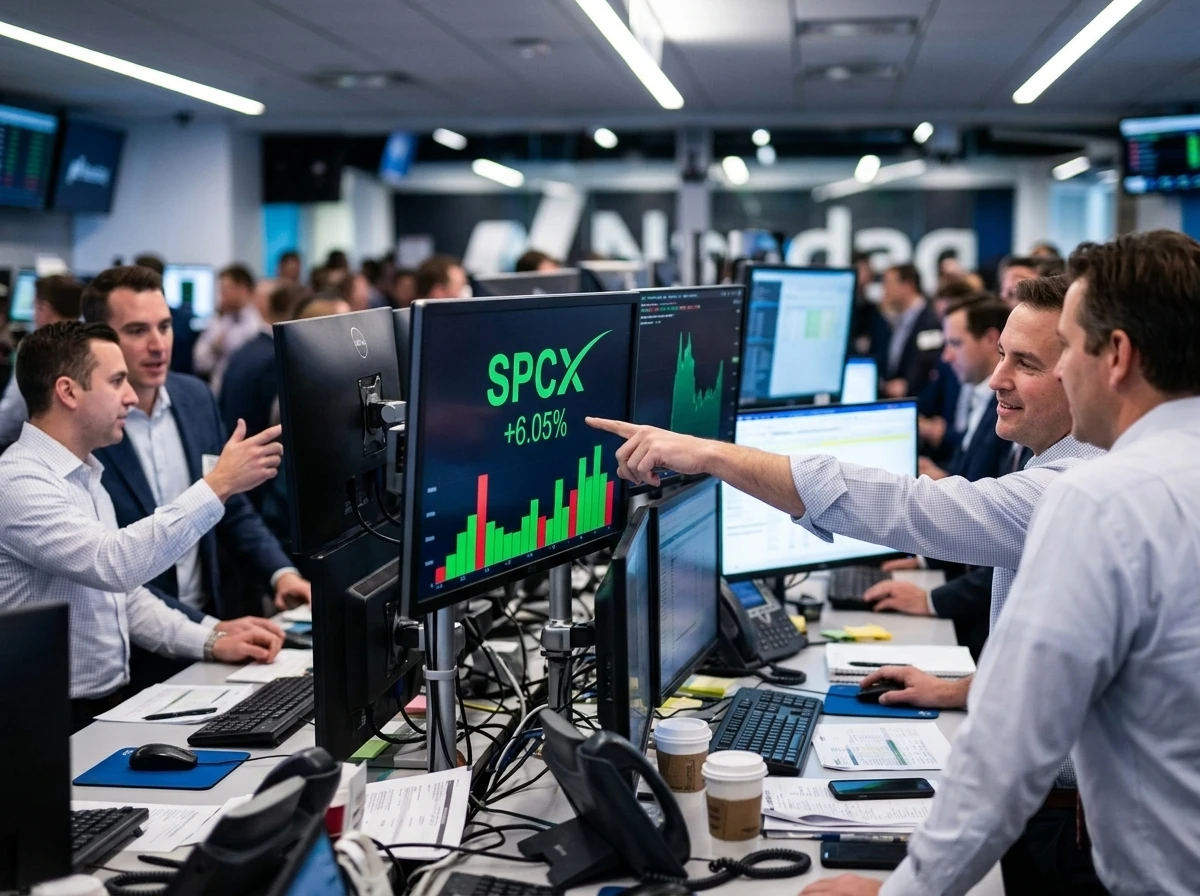
SpaceX shares closed at $114.92, up 6.14%, on the day roughly 911.5 million locked shares held by employees and early investors became eligible to trade. Volume hit about 255 million shares, more than double the recent average, yet the price finished near session highs after an early dip.
The move defied the heavy-selling script that had dominated previews. It also left the larger supply story untouched.
The Session That Doubled the Float
At the June IPO, only about 639 million shares, roughly 5% of the company, entered public hands. Thursday’s unlock more than doubled the tradable pool in a single step. Business Insider and Motley Fool both put the newly eligible total near 911.5 million shares, a notional value around $116 billion at recent prices.
The stock opened under pressure after Wednesday’s post-earnings drop, when a 92% revenue jump failed to offset investor worry over heavy AI-related capital spending. Intraday it traded as low as $105.11 before buyers stepped in. By the close the session range stretched to $115.75.
Market participants had spent days warning that early holders sitting on multi-year gains would race for the exits. Many of those holders bought at private-round prices far below even the current quote. The absence of a cascade suggested either patience or a decision to wait for better levels.
The early dip and later recovery compressed a full debate into one tape. Sellers tested the open. Buyers answered inside the same session. That sequence mattered more than the absolute print because it showed two-way interest at prices well below the IPO mark and far under the post-listing peaks.
Volume more than doubled the recent average while the close held near the high of the day. That combination is hard to square with pure distribution. It fits a market that absorbed the first wave and still found bids above $114.
Share Counts Before and After the First Unlock
The arithmetic is straightforward and large.
| Metric | Figure |
|---|---|
| Approximate IPO public float | 639 million shares |
| Shares unlocked Aug. 6 | ~911.5 million |
| Potential tradable after day-1 unlock | ~1.55 billion |
| Outstanding shares (approx.) | 13.1-13.6 billion |
| Aug. 6 close | $114.92 (+6.14%) |
| Volume Aug. 6 | ~252-255 million |
Even if only a fraction of the newly free shares actually change hands, the increase in available supply is material relative to normal daily volume. Forbes noted the unlocked block equaled roughly 140% of the original public pool. That scale is why the day drew such attention.
Put another way, the tradable base jumped from a thin IPO slice to a pool large enough to matter for index and active managers alike. The outstanding share count still dwarfs the new float. Roughly 1.55 billion potential tradable shares against 13.1 to 13.6 billion outstanding leaves most of the company restricted for now. The gap is why later tranches retain force.
Daily volume near 255 million shares still equals only a slice of the newly eligible block. Full digestion, if it ever comes, will take many sessions and several more unlock windows.
Short Interest and the Bounce That Followed
Short sellers had crowded the name hard in the weeks before the unlock. S3 Partners data cited by Forbes put short interest near 219 million shares, about 34% of the then-float and larger in dollar terms than Tesla’s short book at one point. That positioning created fuel for a squeeze if selling proved lighter than feared.
- Short interest: roughly 34% of float, ~219 million shares pre-unlock
- Notional short value: about $24.6 billion at the time of the estimate
- Day volume: more than double the three-month average
- Price recovery: from sub-$106 lows back above $114
Motley Fool analysts pointed to covering as one plausible driver of the late-day strength. Traders on X had mapped a path toward $75-$85, treating the unlock as an engineered flood. When the flood failed to appear in one session, some of those bears had to buy back. The green close therefore carried its own irony: the same crowded short trade that amplified downside fear also amplified the rebound when the worst case did not materialize immediately.
High volume without a net decline is consistent with two-way flow rather than one-sided dumping. It does not prove permanent demand has arrived.
A short book that large relative to the old float turns any upside surprise into forced buying. The path from the $105.11 low back through $114 did not require fresh long-only conviction alone. Covering by accounts positioned for $75 to $85 supplied mechanical bids once the cascade thesis broke.
The Staggered Calendar Still Ahead
SpaceX and its banks designed the lockup schedule to avoid a single massive release. That choice muted Thursday’s impact. It also guarantees repeated tests.
- Aug. 6, 2026: First 20% of eligible insider shares free (the ~911.5 million event)
- Aug. 20: Additional ~7% tranche
- Sept. 9: Another ~7%
- Sept. 24 and Oct. 9/24: Further ~7% steps
- Nov. 19: Up to additional 28% after Q3 earnings
- Dec. 8: Remaining shares push tradable float toward 40% of the company
- Mid-2027 (approx. day 366): Elon Musk’s large stake and final restricted shares become eligible
Reuters reported that by the middle of next year an additional 12.9 billion shares will have been freed across the full process. Starting Dec. 8 the public float can reach as much as 40%. Musk’s own holding, variously described near 42%, stays locked under a separate one-year agreement. The design spreads pain, but it does not eliminate the overhang. Each new window gives holders another chance to sell and forces the market to re-price available supply.
The calendar clusters several ~7% steps inside a few weeks of late summer and early fall. That spacing keeps each individual release smaller than Thursday’s opener, yet the cumulative effect still points toward a float measured in tens of percent of the company before year-end. November’s larger post-earnings window and the December step toward 40% remain the heavier markers on the map.
Why Many Early Holders Can Afford to Wait
Cost basis explains much of the calm. One early investor cited in coverage bought near $19 and said he would only sell the entire stake below $50; at current levels he prefers to watch. Employees who received stock as compensation over years sit on gains even after the post-IPO drawdown from highs above $200. Venture funds face their own distribution clocks, yet many remain long-term believers.
That cushion is double-edged. Holders who are still deeply profitable can sell later without pain. They can also refuse to sell into weakness, supporting the price in the short run. Gabriel Shahin of Falcon Wealth Planning told Reuters his contacts among insiders showed little eagerness to exit, calling them long-term believers. Robert Hackel of R.F. Lafferty, by contrast, expected “a lot of exits” as pre-IPO money rotated into newer private names such as Anthropic or Anduril.
This has to be the most talked-about lockup in the history of IPO lockups.
Hackel’s line captured the pre-event noise. The actual tape on Aug. 6 was quieter than the chatter.
Early backers include funds such as Founders Fund, Craft Ventures, Valor Equity and Alphabet’s early SpaceX backing and compute deals. Their eventual behavior will matter more than one day’s print. Institutional ownership disclosures in coming weeks will give clearer evidence of who trimmed and who held.
The gap between a sub-$20 cost basis and a quote near $115 creates optionality. Holders can wait for strength, drip out inventory across later windows, or simply hold through the full schedule. That flexibility reduces the odds of a single forced wave even as it keeps supply available for months.
How the Overhang Compares With Past Mega IPOs
History offers mixed lessons, and the article already flags the main ones. Facebook’s 2012 lockup period produced further weakness before the long recovery. Other mega-IPOs have seen the overhang linger for quarters. SpaceX’s staggered design is more sophisticated than the classic six-month cliff, yet the cumulative math is larger than most precedents.
The comparison turns on structure more than size alone. A single cliff forces the market to clear a big block on one date. SpaceX’s schedule breaks that pressure into the August opener, the string of ~7% steps, the November post-earnings release, and the December move toward a 40% float. Musk’s separate one-year lock on a stake near 42% adds another layer that classic deals rarely matched.
- Classic cliff: one large release after roughly six months
- SpaceX design: first 20% on Aug. 6, then repeated smaller tranches
- Year-end target: public float as high as 40% starting Dec. 8
- Final layer: Musk and remaining restricted shares around mid-2027
Sophistication does not erase supply. It only changes the rhythm. Each window still invites the same question the market answered on Thursday: how much inventory wants out at the prevailing price, and how much fresh demand shows up to meet it.
Why the First Green Close Does Not End the Test
Thursday’s gain settled the narrow question of whether the first unlock would crush the stock in a single session. It left the broader supply path intact. The stock remains well below its $135 IPO price. It also sits roughly 40-50% under the post-listing peaks near $201-$225. Scarcity that once supported richer multiples is already gone from the float math and will fade further as the calendar advances.
Wall Street’s bullish consensus, with dozens of buy ratings and average targets well above the current quote, rests on Starlink scale and AI infrastructure ambitions. Those targets assume execution that already delivered a 92% revenue jump in the first public quarter. They also assume the market can keep absorbing new shares without lasting multiple compression.
The next checks are concrete and close:
- Volume persistence after the initial unlock spike
- Form 4 filings from larger holders in coming weeks
- Price action into the August 20 and September tranches
- November and December windows that enlarge the float toward 40%
Two-way flow on day one is evidence of demand at these levels. It is not proof that demand will match every later release at the same price. The staggered calendar was built to spread the test. The market will now take that test one window at a time.
What the Green Close Leaves Unsettled
Thursday removed the first and most watched cliff. It did not remove the multi-month supply ramp. The stock remains well below its $135 IPO price and roughly 40-50% under the post-listing peaks near $201-$225. Scarcity that helped inflate the early valuation is gone for good once float expands.
Wall Street still carries a bullish consensus, with dozens of buy ratings and average targets well above the current quote, often citing Starlink scale and AI infrastructure ambitions. Those targets assume the company executes on growth that already produced a 92% revenue jump in the first public quarter. They also assume the market can digest the new shares without permanent multiple compression.
History offers mixed lessons. Facebook’s 2012 lockup period produced further weakness before the long recovery. Other mega-IPOs have seen the overhang linger for quarters. SpaceX’s staggered design is more sophisticated than the classic six-month cliff, yet the cumulative math is larger than most precedents.
For now the tape showed demand existed at these levels when the first wave hit. Short interest building against SpaceX stock had to respect that fact. Pre-IPO perpetual futures traders who rode the private-to-public path have watched similar volatility for months. The next decisive data will be volume persistence, Form 4 filings from larger holders, and price action into the August and September tranches.
The 6% gain was real. The overhang is also real. Both can be true at once, and the calendar ensures the market will keep testing which force dominates.
Details of the original offering structure appear in SpaceX’s June IPO registration statement. Investors watching float expansion will keep that document and the subsequent unlock schedule close at hand through the rest of 2026.


South Korea Retail Investors Face Reckoning After KOSPI AI Rally Collapses

Surrey AI Maps Three Heart Attack Paths and Their Molecular Roots

Germany Locks Neutral Apple ATT Prompts Across Most of Europe

Apple’s 5% EU Fee Quietly Rewrites Alternative App Store Math

Apple’s EU Fee Truce Cuts Complexity but Leaves Rivals Fuming

Pixel 11 Pro Fold Trades Thinness for Durability and Seven-Year Stay

Mayo AI Flags HCM Obstruction From Everyday Ultrasound Videos

Indian Brands Quietly Scale Landmark Screens and Home Tech

Navin Vatsa Turns Grief Into a Lifetime of Quiet Seeing

Google Bets Pixel 11 Agentic AI Will Redefine Phones

Oracle Cuts 21,000 Jobs in a Year, Cites AI in 10-K Filing

Fable 5 and Mythos 5 Return as US Lifts Anthropic Export Controls

SpaceX’s Google Deal Turns a Rocket Company Into a Cloud Landlord

CD Projekt Red Co-CEO: Redemption Arc Isn’t Done, Witcher 4 in 2027

XPL Rallies 30% Ahead of Plasma One Card Tier Launch

Google Search Profiles Build a Follow Graph Inside Discover

DGO App Brings Rs 549 Mobile Pass for FIFA World Cup 2026 in Nepal

Moonshot AI Targets $30 Billion in China’s Fastest AI Funding Sprint

Oppo’s ColorOS 17 Eligibility List Leaves A-Series Buyers Behind

Microsoft Xbox Layoffs Start in July as Sharma Slams 3% Margin
-
 AI2 months ago
Oracle Cuts 21,000 Jobs in a Year, Cites AI in 10-K Filing
-
 AI2 months ago
Fable 5 and Mythos 5 Return as US Lifts Anthropic Export Controls
-
 AI3 months ago
SpaceX’s Google Deal Turns a Rocket Company Into a Cloud Landlord
-
 GAMING2 months ago
CD Projekt Red Co-CEO: Redemption Arc Isn’t Done, Witcher 4 in 2027
-
 CRYPTO3 months ago
XPL Rallies 30% Ahead of Plasma One Card Tier Launch
-
 NEWS3 months ago
Google Search Profiles Build a Follow Graph Inside Discover
-
 APPS3 months ago
DGO App Brings Rs 549 Mobile Pass for FIFA World Cup 2026 in Nepal
-
 AI3 months ago
Moonshot AI Targets $30 Billion in China’s Fastest AI Funding Sprint