
NEWS
The BBC Feed Mandate Takes Rank From Creators
Washington asked London to drop a plan that would hoist BBC news above independent creators in social feeds after the consultation closed.

The United States has asked Britain to drop a plan that would force YouTube and other platforms to hoist BBC news up the feed. Washington filed that request after a 10-week consultation closed on 31 August 2026, arguing that a ranked-feed mandate is not meaningfully different from taking other voices down. The Department for Culture, Media and Sport is still analysing replies to Watch this Space, the green paper that explores a law to make news from the BBC, ITV, Channel 4 and other public service broadcasters prominent in social apps.
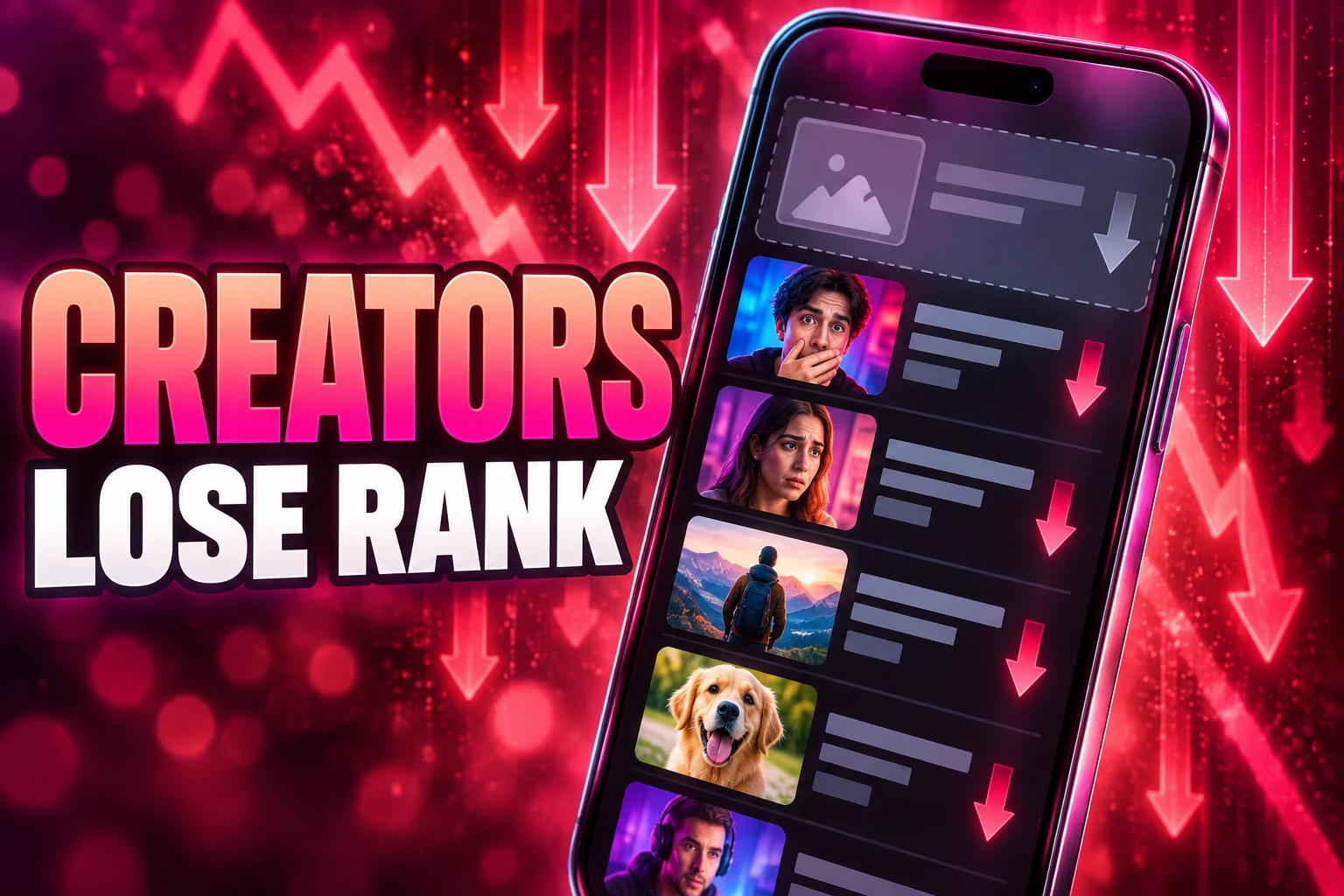
The viewing shift behind the paper is real. The hitch is mechanical. A recommendation feed has a finite top, so a reserved lift for named broadcasters is a demotion of whoever held that rank, from Sky to a kitchen-table channel that never makes the list.
A Reserved Slot in Every News Feed
On 23 June 2026 DCMS published Watch this Space: A New Strategic Direction for UK Media and opened a consultation that ran from 9:30am that day until 11:59pm on 31 August. The paper, presented to Parliament as command paper CP 1594, says people now get news in individually curated feeds, and that those feeds make it easier for inaccurate material to travel. It then sets out legislative options to require social media to make news from public service media, and potentially national and local publishers, prominent and easy to find.
That is the same direction first sketched when ministers moved to put BBC first in social media news feeds. Culture Secretary Lisa Nandy tied the move to false information online. “It is vital that we make sure that people have better access to trusted and accurate news and that our regulated public service media is seen and heard in the fierce battle against mis and disinformation,” she said in the department’s plans for prominence of trusted news.
The named public service group is the BBC, ITV, STV, Channel 4, S4C and Channel 5. The same rules could pull in “a range of national and local news publishers,” the department said, so those titles sit nearer the top of a feed when someone looks for news. Officials also flagged times of social unrest or crisis as moments when that lift would matter most. The paper’s own preference is still a voluntary deal. Ian Murray, the minister for creative industries, media and arts, wrote that partnerships should come first, with a law in reserve if they do not go far enough.
WHAT WATCH THIS SPACE PUTS ON THE TABLE
- The news lift: Platforms would have to make public service news, and maybe national and local papers, prominent in feeds, search and recommendations.
- The wider TV ask: Ministers are also looking at making other public service shows easy to find on third-party video sites, not only in news modules.
- The open door: Other broadcasters and YouTube channels could be designated as public service providers later, if the system is made more flexible.
- The order of operations: Industry deals first, including the BBC-YouTube pact already cited in the paper, with legislation if those deals fall short.
GOV.UK now marks the consultation closed and says the department is analysing feedback. A White Paper with final positions is due later in 2026. No platform has been given a legal order to rewrite its ranker.
The BBC Already Built a YouTube Business
The green paper treats third-party platforms as places public service shows still struggle to enter. The BBC’s own January deal with YouTube cuts against that picture. On 21 January 2026, BBC Group and YouTube announced a partnership for YouTube-first programmes in entertainment, news and children’s content, with the same titles going up on iPlayer and Sounds at the same time.
The corporation said it would add targeted channels for children and young adults, including seven new children’s channels and a documentary strand with the working title Deepwatch. One of those children’s channels, The Epic Facts, is due to draw on CBBC brands such as Operation Ouch, Horrible Histories, Horrible Science and Deadly 60. A joint training scheme, led by the National Film and Television School, will invite 150 media professionals to workshops at BBC hubs in Salford, Birmingham, Glasgow, Newcastle, Belfast and Cardiff.
This is not a toe in the water. BBC figures released with the deal put 15 billion annual YouTube views on BBC Studio content, with watch time nearly doubling year on year. Tim Davie, the director-general, said the pact would help the BBC “connect with audiences in new ways” and give lighter users “different routes into BBC services like BBC iPlayer and Sounds.” Pedro Pina, YouTube’s vice president for Europe, the Middle East and Africa, called it a way to take BBC work to a younger, more global audience.
So the fight in 2026 is not about whether BBC video can live on YouTube. It already does, at industrial scale, under a deal the government itself holds up as progress. The live argument is whether that presence should also come with a statutory shove up the ranker, which is a different product from a commercial upload.
Nine Tiles and Three Slots for Everyone Else
Ministers are copying a television habit onto a feed. Linear rules already guarantee that the first five channels on a TV guide are public service. The Media Act 2024 then dragged that habit onto smart TVs, streaming sticks and set-top boxes, so BBC iPlayer and other designated players have to be available and prominent on the big connected platforms.
Ofcom’s draft code for those screens shows how tight the squeeze gets once you reserve the furniture. On UK-wide connected TV menus, the six public service apps should sit in the first nine tiles, in this order: BBC iPlayer, ITVX, the Channel 4 player, the Channel 5 player, S4C Clic and the STV player. Six reserved apps in nine holes leave three openings for Netflix, Amazon, a platform’s own app, and everyone else.
The government’s impact assessment for that Act already warned that non-public service media, including commercial broadcasters, newspapers and independent creators, “may suffer in terms of discoverability.” A social feed is even less like a shelf of tiles. It reorders clips in real time from what a person watched, skipped and shared. Parking a named publisher above that behaviour does not add a new row. It takes the row from whoever earned it.
Ofcom spent 2025 asking for this next step. In a 21 July 2025 report it said public service media risked becoming an “endangered species,” and that “time is running out to save this pillar of UK culture and way of life.” Its first recommendation was prominence on third-party platforms. Broadcasters, it said, should work urgently with YouTube on fair commercial terms, above all for news and children’s shows, and there was “a strong case for the Government to legislate.”
What the Three-Minute Reach Figures Show
Barb, the UK ratings body, began measuring YouTube in the last three months of 2025. In December it recorded 51.9 million people who watched YouTube for at least three consecutive minutes across TV sets, phones, tablets and computers, against 50.8 million for the BBC, a gap of 1.1 million. That is a reach metric, not a measure of hours, and it is the number that ended the BBC’s claim to be the default screen in British homes.
DECEMBER 2025 MONTHLY REACH
| Service | All-screen, 3-minute reach | TV-set only |
|---|---|---|
| YouTube | 51.9 million | 37.5 million |
| BBC | 50.8 million | 50 million |
On the TV set itself the BBC still led, at 50 million against YouTube’s 37.5 million. A BBC spokesperson said UK audiences watched 351 million hours on the BBC each week in 2025, “far ahead of anyone else,” and that on a 15-minute test, which the corporation prefers for long-form shows, the BBC still leads. The three-minute race is the one YouTube won, because that is the clock that counts a short clip the same as a drama.
WHERE YOUNGER VIEWING ALREADY WENT
- News habit: Ofcom finds social media is the main way three-quarters of people aged 16 to 24 get news, and more than half of UK adults now include it as one of their sources.
- Video time: In 2024 to 2025, video-sharing platforms and streaming services took 74% of video time among 16 to 24-year-olds, and 69% among 25 to 34-year-olds.
- Children: YouTube is the most-watched service for children aged 4 to 15, at 28% of their video viewing, according to the green paper.
- On-demand split: Ofcom has put public service on-demand players at 9% of all viewing, against 15% for subscription services and 19% for video-sharing platforms such as YouTube.
The paper also says half of all news is now reached through social media, and that only 45% of adults feel confident judging whether a source is truthful. Those figures are why Nandy talks about a fight over false information. They are also why a reserved hoist is such a blunt tool: the audience already left, and the proposed fix is to meet them with a publisher list written in Whitehall.
Independent Creators Lose the Rank They Earned
YouTube’s public-policy shop saw this coming months before the green paper. On 15 April 2026, David Wheeldon, senior director of government affairs and public policy for YouTube in Europe, wrote that prominence rules under discussion in the UK and the EU would distort discovery by forcing the site to prefer “government-picked” channels.
These rules could force YouTube to give special treatment to a small group of organisations hand-picked by a government. For creators and media companies that are not chosen, the risk is real. By forcing these channels to the front of the line, everyone else gets pushed back, regardless of what viewers actually want to see. This makes it harder for creators to grow an audience and earn a living. If governments start picking the winners, independent creators become the losers.
David Wheeldon, Senior Director of Government Affairs and Public Policy, YouTube Europe, Google Europe blog
That is the zero-sum the TV impact assessment already admitted, applied to a product where rank is the entire business. In late August, during the live consultation, Pina pressed the same point in Edinburgh. Forced prominence, he said, would put a few chosen creators at the top of the feed, and “a lot of independent creators, producers and publishers, who have spent a lot making sure their content is discoverable and make a living from it, will be pushed down.” If it became law, “many UK-based creators and production companies will see their livelihoods threatened,” and viewers would “wade through content they may not want.”
Carolyn McCall, chief executive of ITV, welcomed the paper from the other side of the line. “UK viewers still love original British content from the PSBs and trust and value PSB News which helps to underpin our democracy,” she said. That is the winner’s case: public service news still commands trust, and the commercial PSBs want it findable where people actually watch. The loser is not ITV. It is the unlisted maker who already did the work of being found, and the local reporter who is a journalist but not a “recognised news publisher” unless the final test says so.
Watch this Space even notes that creator-led models, including newsletters and video platforms, now let individual journalists reach people directly. Those voices are in the market chapter. They are not in the reserved slot.
A Formal U.S. Request to Withdraw the Plan
On 4 September 2026 the State Department’s Digital Freedom account said the United States had filed into the closed consultation and asked Britain to withdraw any plans to mandate amplification of government-preferred media. The thread is the official short version of that filing.
The UK government recently concluded a public consultation period on proposals that could require social media platforms to give greater visibility to UK public service media like the BBC and other “trusted news” sources in users’ feeds.
This week, the U.S. government provided… pic.twitter.com/XzJhBs9rIb
— Digital Freedom – U.S. Department of State (@State_DF) September 4, 2026
A framework that lets governments influence which news sources get preferential visibility, the account wrote, “risks becoming a tool to enact viewpoint-based censorship.” The effect on disfavored speakers, independent journalists and outlets “is not meaningfully different than censorship by outright removal or state-mandated de-amplification.” Because the regime would land mainly on US-headquartered platforms that also serve American users, the design of the algorithm would leak beyond Britain. The same thread tied the plan to the Online Safety Act, which already gives “recognised news publishers,” including the BBC and firms with a UK registered address, protections from takedown that ordinary users do not have, and which can fine platforms up to 10% of global revenue.
HOW THE RANK FIGHT GOT HERE
- 21 July 2025: Ofcom publishes its six-point plan and says there is a strong case to legislate for public service prominence on YouTube.
- 21 January 2026: BBC Group and YouTube announce a partnership for YouTube-first shows, children’s channels and a UK creator training scheme.
- 15 April 2026: Wheeldon warns that prominence rules would push unlisted creators back, whatever viewers came to watch.
- 23 June 2026: DCMS publishes Watch this Space and opens the 10-week consultation on a social-media news lift.
- 31 August 2026: The consultation closes at 11:59pm. GOV.UK switches the page to “we are analysing your feedback.”
- 4 September 2026: The US government says it has filed and asks the UK to withdraw a mandate to algorithmically amplify government-preferred media.
In July, Jim Jordan, chair of the US House Judiciary Committee, had already written to Nandy calling the idea a “tiered information system.” DCMS replied then that it had “no intention of restricting or censoring content,” that the aim was trustworthy information from a range of providers, and that the test for a trustworthy outlet would be set “in an open and transparent manner.” Washington’s September filing treats that promise as unproven.
No Published Test for a Trustworthy Source
The paper never publishes a final scorecard. It names the public service broadcasters. It floats national and local publishers. It leaves the door open to other YouTube channels becoming public service providers. It does not say, in the text released on 23 June, which newsletter, which live-news streamer, or which local site would qualify, or who would lose the slot on a Friday night when a crisis tab is open.
Officials have pointed to the Online Safety Act’s recognised news publisher category as a possible starting point, a definition that already turns on a UK business address and a list of editorial tests. Using that hook would pull some newspapers into the winning group and still leave creator-journalists, foreign titles and anyone who fails the paperwork on the other side of the line. The unrest-and-crisis clause is the sharp edge of the same problem: the state wants the lift most at the moment when people are least willing to accept a government-written playlist.
Murray’s foreword says the aim is not to stop change, but to put technology in the public’s service. Nandy says public service media must be seen in a fight over false information. Wheeldon says a government-picked shortlist makes unlisted makers poorer. The US filing says a preference in the ranker is a form of removal by another name. Those four claims can sit in the same White Paper process. They cannot all be true of the same slot in the same feed.
DCMS is reading the responses. The White Paper is due later in 2026. Until that paper names the test, the winners are the broadcasters already written into the draft, and the losers are everyone who has to compete for the holes that remain.

Instagram Plus Tests a Read-Only Mode That Cuts Stories

Altman Asks the Public to Accept Some AI Harm

Google Freezes OSS VRP Product Reports After AI Flood

AI Agents Make Payment Rails the Scarce Prize

Turkey’s Crypto Boom Now Runs Through Three Banks

Fable 5 Came Back Under a Commerce On-Off Switch

Google’s SpaceX GPU Lease Has a Sept. 30 Deadline

Plasma One’s XPL Locks Face a 1.81 Billion Cliff

DGO’s Rs 549 World Cup Pass Cost Fans Sleep and Data

Moonshot AI’s $30 Billion Ask Became a $35 Billion Close
-
 AI4 months ago
Fable 5 Came Back Under a Commerce On-Off Switch
-
 AI4 months ago
Google’s SpaceX GPU Lease Has a Sept. 30 Deadline
-
 CRYPTO4 months ago
Plasma One’s XPL Locks Face a 1.81 Billion Cliff
-
 APPS4 months ago
DGO’s Rs 549 World Cup Pass Cost Fans Sleep and Data
-
 AI4 months ago
Moonshot AI’s $30 Billion Ask Became a $35 Billion Close
-

 NEWS4 months ago
ColorOS 17 Device List Spans Oppo, OnePlus and Realme
-
 GAMING4 months ago
Xbox Cuts 3,200 Jobs After Five Years of Thin Returns
-

 GAMING4 months ago
The RTX 4050 Under Rs 70,000 Hides a Wattage Gap